Buy Kennedy Half Dollars (40% & 90% Silver) Online
Our catalog of Kennedy half dollars spans two distinct silver compositions, giving buyers direct access to some of the most widely recognized U.S. silver coinage of the 20th century. You'll find 90% silver 1964 Kennedy halves across multiple grades, including average circulated, AU (About Uncirculated), BU (Brilliant Uncirculated), and proof strikes, alongside 40% silver Kennedy halves from the 1965 to 1969 transition era in both circulated and BU condition. The Robert F. Kennedy 1998-S silver commemorative dollar, struck at the San Francisco Mint in 0.900 fine silver, is also part of this lineup in both BU and proof finishes.
All products are sourced directly from the United States Mint or through vetted wholesale channels. Bullion Standard's pricing reflects real-time silver spot conditions, and our two-way market structure means you can evaluate both acquisition cost and expected resale value before completing a purchase. Whether you're focused on silver content, coin grade, or a specific year, the listings here are organized to make comparison straightforward.
Face value designations such as $1 face value represent two half-dollar coins, each carrying a $0.50 denomination. This standard packaging convention is common across the junk silver and semi-numismatic market and reflects how these coins are typically traded in volume.
What Are Kennedy Half Dollars (40% & 90% Silver)?
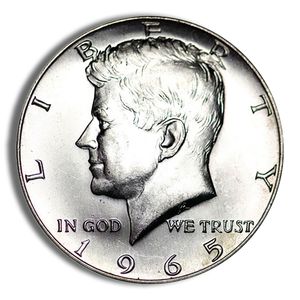
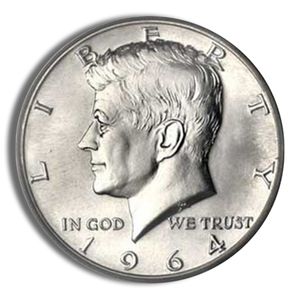
Kennedy half dollars are 30.6mm diameter coins produced by the United States Mint beginning in 1964 as a tribute to President John F. Kennedy following his assassination in November 1963. The coin's obverse features a portrait of Kennedy designed by Gilroy Roberts, while the reverse carries a heraldic eagle adapted from the Presidential Seal, designed by Frank Gasparro. The series has remained in continuous production, though its silver content changed significantly over the first several years.
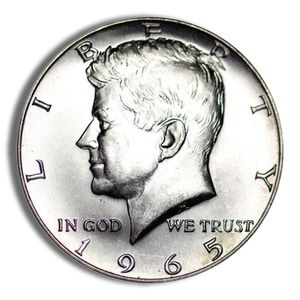
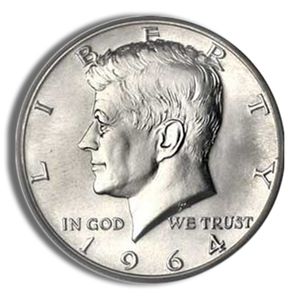
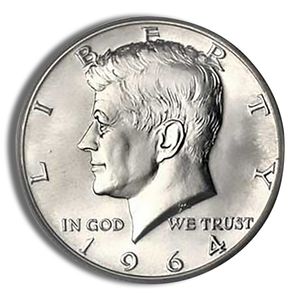
The 1964 issue is the only year the Kennedy half was struck in 90% silver (0.9000 fine), containing approximately 0.3617 troy ounces of silver per coin. Starting in 1965, Congress reduced the silver content to 40% (0.4000 fine) as silver prices rose and coins began disappearing from circulation. These 40% silver clad halves were produced through 1969 for general circulation and through 1970 for collector sets. After 1970, circulating Kennedy halves were struck in copper-nickel clad with no silver content at all, making the 1964 and 1965 to 1969 dates the only issues with meaningful silver composition.
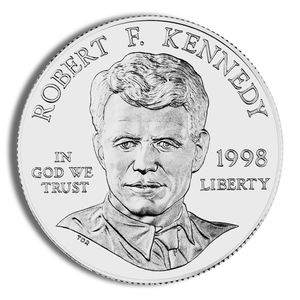
The 1998-S Robert F. Kennedy commemorative dollar is a related but distinct coin, struck in 0.900 fine silver as part of the U.S. Mint's commemorative coin program. It is larger than a standard half dollar at 38.1mm in diameter and carries 0.7734 troy ounces of silver. While it shares the Kennedy legacy connection, it belongs to the commemorative program rather than the standard circulation series.
History and Background
The Kennedy half dollar emerged from one of the most emotionally charged moments in American numismatic history. Within weeks of President Kennedy's death in November 1963, Congress authorized a redesign of the Franklin half dollar to honor the fallen president. The coin entered production in early 1964 and was released to the public in March of that year. Public demand was so intense that most of the coins were immediately removed from circulation and saved as keepsakes, which is why even well-worn 1964 halves can be relatively scarce in high grades today.
The Coinage Act of 1965 fundamentally changed the composition of U.S. silver coinage. Facing rising silver prices and a growing shortage of circulating coins, Congress eliminated silver from dimes and quarters entirely while reducing the Kennedy half dollar's silver content to 40%. This decision transformed the 1964-dated coins into the only 90% silver Kennedy halves ever produced for circulation. The 40% silver issues from 1965 through 1969 occupy a middle tier in the junk silver market, carrying less silver per coin than their 1964 predecessors but still representing meaningful silver content relative to their face value.
The 1998-S Robert F. Kennedy commemorative reflects a different chapter in the Kennedy legacy. Released during the 35th anniversary year of President Kennedy's death, the program also honored his brother Robert F. Kennedy, who was assassinated in 1968. The coin was struck at the San Francisco Mint as both a BU and proof issue, and proceeds from sales supported the Robert F. Kennedy Memorial Foundation. Its place in this catalog connects it to the broader Kennedy numismatic tradition while representing the modern commemorative silver dollar format.
Purity, Weight, and Specifications
The 1964 Kennedy half dollar is composed of 90% silver and 10% copper, with each coin containing 0.36169 troy ounces of pure silver. The $1 face value designation covers two coins totaling 0.715 troy ounces of silver, which is the standard junk silver calculation used in the industry. Coin dimensions are 30.61mm in diameter and 2.15mm thick, with a total coin weight of 12.50 grams per individual piece.
The 40% silver Kennedy halves (1965 to 1969) share the same 30.6mm diameter and 2.15mm thickness but have a different alloy structure. The outer layers are 80% silver bonded to an inner core of 21% silver, resulting in an overall silver content of 40% per coin. Each coin contains approximately 0.1479 troy ounces of silver, and the $1 face value lot (two coins) yields approximately 0.2958 troy ounces of silver. The silver-clad composition gives these coins a noticeably different luster compared to the solid 90% silver 1964 issues.
The 1998-S Robert F. Kennedy commemorative dollar is struck in 0.900 fine silver with a total silver content of 0.7734 troy ounces per coin. The coin measures 38.1mm in diameter and 2.58mm in thickness, following standard U.S. commemorative silver dollar specifications. Proof versions carry a mirrored field with frosted design elements and are struck multiple times under high pressure to achieve their distinctive finish.
Available Brands, Mints, and Product Variations
Every silver Kennedy half dollar in our catalog was produced by the United States Mint, which operates multiple facilities including Philadelphia, Denver, San Francisco, and West Point. The 1964 and 1965 to 1969 issues were struck at both the Philadelphia and Denver Mints, which is why listings note "Various" for the mint mark. The Philadelphia Mint did not apply a mint mark to most coins during this era, while Denver coins carry a "D" designation. The specific mint mark on any given coin in a random-year or mixed-mint lot will vary.
The 1998-S commemoratives were struck exclusively at the San Francisco Mint and carry the "S" mint mark. San Francisco Mint production is associated with high-quality strikes and is the U.S. Mint's primary facility for proof and collector-grade coinage. Both the BU and proof versions of the 1998-S RFK commemorative listed here reflect that manufacturing standard.
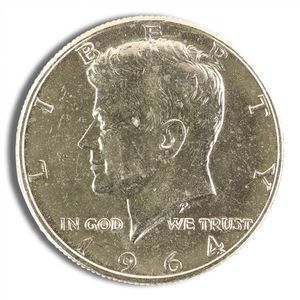
Condition variations within the 1964 Kennedy halves range from average circulated, which shows moderate wear on the high points of Kennedy's portrait and the eagle's feathers, through AU (About Uncirculated) with only slight friction on the highest surfaces, to BU (Brilliant Uncirculated) with no wear and original mint luster intact. Proof strikes are produced using polished dies and planchets and are intended for collector use rather than circulation. Each grade tier corresponds to a different price point, and buyers focused purely on silver content will generally find average circulated examples the most cost-efficient option.
Pricing, Premiums, and Market Factors
Silver Kennedy half dollar pricing is directly tied to the spot price of silver, with premiums layered on top based on grade, condition, and product format. Average circulated 1964 halves and 40% silver issues tend to carry the tightest premiums because they trade primarily as silver content plays rather than numismatic pieces. BU and proof examples command higher premiums due to their superior condition, original packaging associations, and collector demand, though they remain fundamentally silver bullion products from a pricing mechanics standpoint.
The 40% silver Kennedy halves occupy a distinct pricing tier because they contain less silver per coin than the 90% issues, yet they carry the same denomination. Buyers comparing these two formats should focus on the per-ounce silver cost rather than the face value designation. A $1 face value lot of 40% silver halves contains roughly 0.296 troy ounces of silver, while the same $1 face value in 1964 90% silver halves contains approximately 0.715 troy ounces. The premium structure reflects this difference.
Bullion Standard's pricing is updated in real time based on current spot conditions. Our transparent bid/ask spread model allows buyers to evaluate not just the purchase price but the expected resale value at the time of purchase. Premiums on circulated junk silver can shift meaningfully during periods of elevated retail demand or silver price volatility, so checking live pricing before transacting gives you the most accurate picture of current market conditions.
Condition, Packaging, and What to Expect
Average circulated Kennedy half dollars are coins that have seen general use and show varying degrees of wear. Surface marks, light scratches, and softened design details are expected and do not affect the silver content. These coins are not graded by a third-party service and are sold based on silver weight rather than numismatic condition. The actual coins you receive will vary in appearance within the circulated spectrum, which is standard across the junk silver market.
BU examples show no wear and retain original mint luster, though they may exhibit minor contact marks from handling or bag storage. These marks are common in BU bullion coins and are distinct from wear caused by circulation. Proof coins feature sharp, well-defined devices on mirrored fields and are generally sold in protective packaging consistent with their collector orientation. The 1998-S RFK commemoratives, whether BU or proof, were originally issued with U.S. Mint packaging, though secondary-market examples may or may not include original government presentation materials.
Random-year lots such as the 40% silver halves will include coins from 1965 through 1969 at the discretion of available inventory. Specific year requests cannot be accommodated in random-year listings. All products ship securely packaged to protect against transit damage, and orders are processed through Bullion Standard's verified fulfillment system.
Authenticity and Verification
Every Kennedy half dollar in our catalog is a genuine United States Mint issue verified through our sourcing and receiving process. Coins are checked for correct weight, diameter, and expected visual characteristics before being listed or shipped. The U.S. Mint's silver coinage carries inherent authentication advantages, including well-documented specifications that are straightforward to verify against established reference standards.
Counterfeit 90% silver Kennedy halves exist in the market, primarily produced in base metals and plated to mimic the appearance of genuine silver coinage. A basic specific gravity test or a precision scale measurement against the known 12.50-gram weight standard will identify most fakes. High-quality electronic testing devices, including XRF analyzers, can confirm silver composition non-destructively. Buyers sourcing from reputable, established dealers significantly reduce exposure to counterfeit risk compared to private party or auction purchases.
The 1998-S commemorative dollars, as modern U.S. Mint issues with high collector visibility, are also verifiable against published Mint specifications. Proof examples have distinctive visual characteristics that are difficult to replicate convincingly, and their heavier weight and larger diameter relative to standard half dollars make basic verification accessible without specialized equipment. Bullion Standard is an authorized dealer for both PCGS and NGC, and certified examples of these coins, when available, carry the additional authentication backing of a third-party grading service.
Liquidity and Resale Considerations
Kennedy half dollars in 90% and 40% silver are among the most liquid forms of junk silver in the United States market. Dealers, coin shops, precious metals wholesalers, and online platforms all actively purchase these coins, and bid pricing is generally close to spot-based silver value for circulated examples. The widespread familiarity of the Kennedy design, combined with the well-established junk silver trading conventions, means these coins face minimal buyer resistance in resale scenarios.
Grade and condition affect resale outcomes for BU and proof examples. A well-preserved BU or proof Kennedy half may attract numismatic buyers in addition to bullion buyers, which can support premiums above the raw silver melt value. Circulated examples trade almost entirely on silver content and are priced accordingly. The 1998-S RFK commemorative carries its own collector demand base separate from the standard Kennedy half market, and its resale will typically involve both bullion and commemorative collectors.
Lot size also influences resale efficiency. Larger face value lots of junk silver typically transact more smoothly in dealer buyback environments than small individual pieces, as they align with how the wholesale market prices and moves this type of product. Understanding the lot conventions relevant to your holdings is part of approaching the resale process with realistic expectations.
Storage and Security
Circulated silver Kennedy halves in junk silver quantities are commonly stored in cloth bags, coin tubes, or sealed plastic bags without special protective measures. Because the numismatic premium on circulated coins is minimal, additional protective packaging beyond basic containment is generally unnecessary. BU and proof examples deserve more care, as fingerprints, scratches, and environmental exposure can degrade surfaces and affect resale value in the numismatic tier.
For home storage, a quality fireproof safe rated for both fire and water resistance provides reasonable protection for moderate quantities. Larger holdings benefit from dedicated vault storage or third-party custodial services, which provide institutional-grade security, insurance, and documented chain of custody. Bank safe deposit boxes offer an accessible middle-ground solution, though they carry their own access and insurance limitations worth understanding before committing long-term.
Silver is susceptible to toning and tarnish from exposure to humidity, sulfur compounds, and certain materials including rubber bands and low-quality plastic. Storing coins in an environment with controlled humidity and using inert packaging materials extends the appearance quality of your holdings over time, particularly for BU and proof pieces where original surface quality matters to future buyers.
Selling and Buyback Options
Bullion Standard operates a two-way market, meaning you can sell silver Kennedy half dollars back through our platform as well as purchase them. Our purchasing team prices buyback offers based on current silver spot, product type, condition, lot size, and real-time wholesale market conditions. Circulated 90% and 40% silver halves are quoted primarily on their silver content, while BU and proof examples may qualify for condition-adjusted pricing depending on current demand and market conditions at the time of the transaction.
The buyback process begins with an online quote request, after which you ship your coins to our facility using insured and trackable shipping. Upon receipt, our team verifies weight, composition, and condition, then issues payment through your preferred method. Packaging your coins securely and documenting your lot before shipping protects both parties and speeds up the verification process on our end.
Product condition and original packaging, where applicable, influence the buyback offer you receive. Proof and BU coins in undamaged original packaging may command slightly better pricing than loose examples of equivalent grade, depending on current collector demand. For the 1998-S RFK commemorative, original U.S. Mint packaging with the original certificate of authenticity can also be a factor in the final offer. Reviewing our live bid pricing before initiating a sale gives you a transparent starting point for your expectations.
Why Buy Kennedy Half Dollars (40% & 90% Silver)?
Kennedy half dollars occupy a practical sweet spot in the silver market. They're government-issued U.S. Mint products with instant market recognition, straightforward silver content calculations, and broad dealer familiarity. For buyers who want silver in a form that's easy to verify, easy to trade, and widely understood across the dealer network, these coins deliver that without the premium overhead of more complex numismatic products.
The availability of multiple condition tiers, from average circulated through proof, gives buyers flexibility based on their priorities. Someone focused purely on acquiring silver at the tightest spread will gravitate toward circulated examples. A buyer interested in the historical significance of the 1964 90% silver inaugural year, or the commemorative weight of the 1998-S RFK dollar, has options within the same product family that serve different objectives without leaving the Kennedy half dollar market entirely.
The 40% silver halves from 1965 to 1969 represent a distinct sub-segment that's often overlooked in favor of 90% silver junk. Their lower silver content per coin means smaller lot sizes carry less absolute silver value, which can make them accessible entry points for buyers accumulating smaller quantities of physical silver at a time. They also carry genuine historical interest as transitional coinage produced during a pivotal period of U.S. monetary policy change.
Why Buy from Bullion Standard?
Bullion Standard was founded in San Diego in 2010 with a straightforward philosophy: treat buyers like informed adults, price transparently, and build a marketplace that prioritizes long-term trust over short-term margin. Over more than a decade, that approach has shaped every aspect of how we source products, display pricing, handle customer inquiries, and process both purchases and buybacks. Our A rating with the Better Business Bureau and active memberships in the American Numismatic Association and the National Coin and Bullion Association reflect an institutional commitment to operating with verifiable credibility.
Pricing on our platform is live and reflects real market conditions rather than static retail markups. Each product page displays both the ask price and our current bid, giving you a complete picture of the transaction economics before you commit. This bid/ask transparency is core to how we believe a precious metals marketplace should operate, and it distinguishes our model from traditional dealers who price opaquely and reveal buyback offers only at the point of sale.
Our sourcing is restricted to reputable mints, authorized distributors, and verified wholesalers. Every product goes through authentication and weight verification before it reaches our customers. Checkout is secured through industry-standard encryption, and payment options include Visa, Mastercard, American Express, Discover, PayPal, bank-connected payments through Plaid, wire transfer, paper check, and cryptocurrency via BitPay. Fulfillment is handled through a reliable, insured shipping process designed to protect your order from warehouse to delivery.
Get Near-Spot Pricing with Bullion Standard Pro
Bullion Standard Pro is designed for buyers who want to transact closer to wholesale market prices. Members gain access to live executable wholesale bid and ask pricing across a broad range of silver products, including silver Kennedy halves and other junk silver formats. Rather than pricing through a fixed retail markup structure, Pro members transact at prices that reflect actual wholesale market supply and demand, with spreads that fluctuate naturally based on current conditions rather than static dealer margins.
The platform also provides members with real-time portfolio valuation based on live wholesale bid pricing, which gives a more accurate picture of current liquidation value compared to estimated retail-based calculations. Historical premium data, spread analytics, and proprietary market intelligence tools allow Pro members to evaluate silver Kennedy halves and other bullion products using objective metrics rather than marketing language alone. These tools are particularly useful for identifying periods when premiums on junk silver compress or expand relative to their historical ranges.
For buyers accumulating silver with any regularity, the pricing efficiency available through Bullion Standard Pro can make a meaningful difference in the effective cost per ounce over time. The platform's goal is to bring the transparency and analytical depth common in traditional financial markets to the physical precious metals space, reducing the information gap that has historically disadvantaged retail buyers relative to wholesale market participants.


 (833) 278-4653