Buy 1 Gram Silver Bars Online
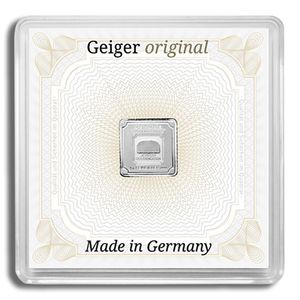
Our catalog of 1 gram silver bars offers buyers a precise, compact entry point into physical silver ownership. The selection includes the 1 Gram Silver Bar from Geiger Edelmetalle, presented in a tamper-evident assay card that certifies authenticity and purity directly at the point of packaging, as well as a 1 Gram Silver Bar (Random Brand) option that sources product from various reputable refiners at a straightforward, accessible price point.
Both options carry a fineness of .999 silver and conform to the standard 1 gram weight used across the global bullion market. Whether you're acquiring a single bar or building up a collection of fractional silver pieces over time, Bullion Standard presents these products through a transparent marketplace designed to help you understand exactly what you're buying and what it's worth on both sides of the transaction.
Pricing reflects real-time market conditions with no hidden markups, and each product page displays current bid and ask data so you can evaluate the full cost of ownership before you commit.
What Are 1 Gram Silver Bars?
A 1 gram silver bar is among the smallest standardized bullion formats produced by commercial refineries and mints. Weighing approximately 0.03215 troy ounces, these bars contain a precisely measured quantity of .999 fine silver in a flat, rectangular form that is easy to handle, store, and authenticate. The minted bar format typically features clean, die-struck faces with sharp lettering and defined edges, which distinguishes it from the rougher surface texture of cast silver bars.
Buyers tend to choose this format for its divisibility. A 1 gram bar allows for incremental accumulation of physical silver without committing to the larger outlay required for 1 oz or 10 oz bars. They're also commonly gifted, included in gift sets, or used in educational settings to introduce new buyers to the physical properties and characteristics of silver bullion.
Because of their small size, 1 gram silver bars are almost always packaged in individual assay cards or blister-sealed packaging that protects the bar and provides verification details. This packaging is part of what makes the format functional at such a small weight, since handling a bare bar of this dimension would be impractical and increase the risk of surface damage.
History and Background
The production of small-format silver bars became commercially viable as refinery technology and automated minting processes advanced throughout the latter half of the twentieth century. While silver has been refined and shaped into tradeable bars for centuries, the precision required to consistently produce bars at fractional gram weights with certified purity only became cost-effective at industrial scale relatively recently. German refiners, including Geiger Edelmetalle, were among the early adopters of small-format minted bar production in Europe.
Geiger Edelmetalle, founded in the city of Güssing and later operating out of Leipzig, Germany, established itself as one of the more technically sophisticated private mints in Continental Europe. The company built its reputation around security-focused packaging formats and consistent metallurgical standards. Its assay card products became widely recognized in both European and international bullion markets as a reliable form of small-format precious metal product.
The broader market for 1 gram silver bars grew alongside increased consumer interest in fractional precious metals during the early 2000s and accelerated further as online bullion retail made it easier for buyers to purchase small quantities of silver without visiting a physical dealer. Today, these bars are produced by dozens of refiners and mints worldwide, making random-brand and multi-source products a common and well-accepted category in the global silver market.
Purity, Weight, and Specifications
Every 1 gram silver bar in our catalog carries a purity of .999 fine silver, which is the widely accepted commercial standard for silver bullion bars. This level of fineness means the bar is 99.9% pure silver by weight, with trace amounts of other metals present at levels below one-tenth of one percent. Some refiners produce .9999 four-nines silver, but .999 remains the dominant standard for bars in this size range.
The 1 gram weight standard corresponds to approximately 0.03215 troy ounces. Troy ounces remain the global unit of measure for precious metals pricing, so understanding that conversion is relevant when comparing premiums across different bar sizes. The Geiger bar in our catalog measures 10.6 mm in both length and width, giving it a square profile that fits neatly into its assay card housing.
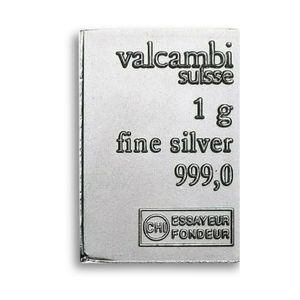
Assay markings on minted bars typically include the refiner or mint name, the metal type, the weight in grams, and the purity designation. These engravings serve both as product identifiers and as part of the authentication process, since the consistency of die-struck markings is one of the first things examined when verifying a bar's legitimacy.
Available Brands, Mints, and Product Variations
The Geiger Edelmetalle 1 Gram Silver Bar in Assay Card is the flagship offering in this segment of our catalog. Geiger is a well-regarded German mint and refinery known for producing minted bars with clean finishes and proprietary security packaging. The assay card format used by Geiger encases the bar in a tamper-evident housing that displays the bar's weight, purity, and origin without requiring the bar to be removed for inspection. This packaging is particularly well-suited for buyers who plan to store or gift the bar in its original sealed state.
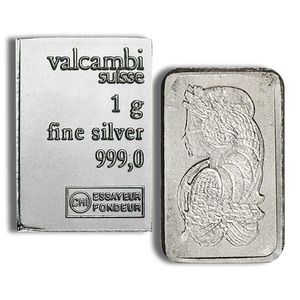
The 1 Gram Silver Bar (Random Brand) is sourced from a rotating selection of reputable refiners and mints based on current availability and pricing. Products may originate from various domestic and international producers, and while the specific brand is not guaranteed, all bars sourced under this listing conform to the same .999 purity and 1 gram weight standard. Random-brand products are a practical option for buyers who prioritize silver content and price over brand-specific packaging or collector appeal.
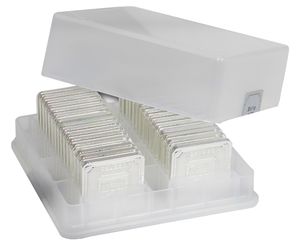
For buyers building a larger position in fractional silver, it's worth noting that the Geiger bar is available in inner packs of 30 units and outer packs of 480, which reflects its suitability for both individual purchase and bulk ordering contexts.
Pricing, Premiums, and Market Factors
Premiums on 1 gram silver bars tend to run higher on a per-ounce basis than those on larger bar formats. This is a direct result of the economics of small-format production. The cost of minting, assay packaging, and individual handling is distributed over a much smaller amount of silver, which means the premium as a percentage of spot price is proportionally larger. Buyers who are primarily focused on acquiring silver content at the tightest possible premium typically find larger bar formats more cost-efficient.
That said, the premium structure for 1 gram bars reflects what they are: a packaged, certified, individually handled product. The Geiger assay card, for example, adds material and labor costs that are reflected in its price but also deliver authenticated, tamper-evident packaging that a loose bar does not provide. Random-brand options typically carry a lower premium because packaging costs are reduced and brand specificity is not a factor.
Bullion Standard's pricing on all silver bar products is tied to real-time spot price movement, and each product page displays both the purchase price and the current bid price so buyers can see the full spread before transacting. This transparency is central to how we operate, allowing buyers to compare the acquisition cost against the current resale value with no guesswork involved.
Condition, Packaging, and What to Expect
The Geiger 1 gram silver bar arrives sealed within its original assay card. The card itself serves as both packaging and certification, and buyers should expect to receive it in sealed, unopened condition. Surface marks or minor handling variations on the bar itself are not unusual at this size, though the assay card format significantly reduces direct contact with the bar during distribution.
Random-brand 1 gram bars may arrive in a variety of packaging formats depending on the source refinery. Some may come in individual blister packs or assay cards, while others may be delivered in protective sleeves or bulk packaging. Regardless of packaging format, all bars meet the listed .999 purity and 1 gram weight specifications.
Buyers should be aware that random-brand products may not arrive in collectible or display-ready packaging, and the bar's surface may carry minor contact marks consistent with standard distribution handling. This is considered acceptable and normal for bullion-grade products not designated as proof or specimen finish.
Authenticity and Verification
Authenticity is handled at multiple levels for the products in our catalog. The Geiger assay card is designed to make tampering immediately visible, since the seal must be broken to access the bar. This means a sealed Geiger card in intact condition provides built-in verification at the packaging level, without requiring the buyer to perform additional testing on the bar itself.
For random-brand bars, Bullion Standard's sourcing process ensures that all products are acquired through established refinery channels, wholesalers, and distributors with documented supply chains. Every product is verified for authenticity, weight, and purity before it is fulfilled to a customer.
Buyers who prefer additional verification after receiving a product can use non-destructive testing methods such as a precision gram scale or, for higher-value holdings, professional XRF analysis. Because 1 gram bars are small and relatively uniform, even minor weight discrepancies outside of acceptable tolerance would be immediately apparent on a calibrated scale. The standardized format of minted bars also makes visual authentication more straightforward than assessing cast bars of the same weight.
Liquidity and Resale Considerations
Liquidity for 1 gram silver bars is narrower than for larger, more widely traded formats like 1 oz silver bars or 10 oz bars. The smaller size means the total silver value per unit is low, which can reduce dealer interest in individual bars and result in wider bid/ask spreads on a per-ounce basis. Buyers should factor this into their planning when considering how and when they might eventually sell.
Brand recognition does matter in the resale environment. The Geiger name carries meaningful recognition in the European and international bullion markets, and the assay card format adds a layer of marketability that a plain, unpackaged bar lacks. Random-brand bars without recognizable markings may be subject to additional scrutiny or slightly lower buyback pricing depending on the dealer and current market conditions.
Selling through a dealer with an established buyback program, like the one Bullion Standard operates, is typically more efficient than attempting to sell small-format silver through peer-to-peer platforms, where buyers may be unfamiliar with obscure refinery names and where the overhead of individual transactions can erode the net proceeds from a small silver position.
Storage and Security
At 1 gram per bar, individual units are extremely compact and lightweight, making storage straightforward from a space standpoint. A small fireproof safe or lockable security box is adequate for most buyers holding a modest quantity. For buyers accumulating larger numbers of 1 gram bars over time, a dedicated precious metals storage solution becomes more appropriate.
Assay cards should be kept sealed and stored flat to prevent bending or cracking of the card itself. Moisture and humidity can degrade the packaging over time, so keeping bars in a dry, temperature-stable environment extends both the condition of the bar and its packaging. Avoid stacking heavy objects on top of assay-packaged bars.
For buyers with larger silver holdings that include 1 gram bars alongside heavier formats, segregated storage by product type and size simplifies inventory management and reduces the handling needed during retrieval. Third-party vault storage is also available for those who prefer to hold physical silver outside of a home environment, and Bullion Standard can provide guidance on secure storage options suited to your holdings.
Selling and Buyback Options
Bullion Standard maintains a two-way market structure, meaning customers can both buy and sell silver bars through the same platform. When you're ready to sell 1 gram silver bars, our purchasing team evaluates product condition, packaging integrity, brand recognition, and current market conditions to determine a competitive buyback price. Bars that arrive sealed in their original assay cards typically receive the most straightforward evaluation process.
Buyback pricing for small-format silver bars reflects the realities of the wholesale market, where per-ounce spreads on fractional product are wider than on standard 1 oz or larger bars. The brand and packaging of the bar influence the outcome. Geiger-branded bars in intact assay cards are generally easier to reroute back into the market than unbranded or damaged product.
We encourage buyers to consider liquidity before making a purchase, not only when it is time to sell. Each product page on Bullion Standard displays current bid pricing alongside the ask, giving you a real-time snapshot of where the product trades on both sides of the market. This is a core part of how we operate, and it applies equally to 1 gram silver bars as it does to any other product in our catalog.
Why Buy 1 Gram Silver Bars?
The primary appeal of 1 gram silver bars is their accessibility. At a fraction of the cost of a full troy ounce of silver, they allow buyers to acquire a genuine, certified piece of physical silver without a significant upfront commitment. They're a natural choice for gifting, for introducing someone to physical precious metals for the first time, or for adding a small, tangible silver holding to a broader collection.
Their compact, assay-packaged format makes them easy to handle and share without compromising the bar itself. The Geiger assay card, in particular, presents well as a gift because the packaging communicates authenticity and value clearly, even to recipients unfamiliar with the bullion market.
For buyers already holding larger silver formats, 1 gram bars offer a complementary level of divisibility. Silver's industrial applications across electronics, solar energy production, and medical technology mean demand for the metal comes from multiple sectors simultaneously, which is part of what makes physical silver ownership in any denomination a widely followed practice among both retail buyers and institutional participants.
Why Buy from Bullion Standard?
Bullion Standard was founded in 2010 in San Diego, California, and has grown into a nationally recognized precious metals marketplace by prioritizing transparency at every stage of the transaction. We carry an A rating with the Better Business Bureau, hold memberships with the American Numismatic Association (ANA) and the National Coin and Bullion Association (NCBA), and are an authorized dealer for both PCGS and NGC. Every product we fulfill has been verified for authenticity, weight, and purity through our sourcing and receiving process.
Our pricing is tied to live market data, and every product page displays both the current purchase price and the current bid price, so you can evaluate the spread before committing to a purchase. This is not common practice across the industry, and it reflects our commitment to treating buyers as informed participants rather than passive consumers. We don't operate a high-pressure sales environment, and we don't layer in hidden fees.
Checkout is supported by a wide range of payment methods, including Visa, Mastercard, American Express, Discover, PayPal, bank-connected payments through Plaid, wire transfer, paper check, and cryptocurrency through BitPay. Fulfillment is handled with a focus on security and reliability, and our customer service team is accessible throughout the post-purchase process. Whether you're buying your first 1 gram silver bar or managing a diversified precious metals portfolio, the experience is built to support informed, confident decisions.
Get Near-Spot Pricing with Bullion Standard Pro
Bullion Standard Pro is designed for buyers who want direct access to executable wholesale pricing without the markups associated with the traditional retail dealer model. Members transact at live wholesale bid and ask prices that reflect actual supply and demand conditions within the institutional silver market, rather than fixed retail price structures that can obscure true market value.
For buyers accumulating fractional silver products like 1 gram bars, the pricing efficiency available through Bullion Standard Pro can make a meaningful difference over time. The platform also provides access to real-time portfolio valuation using live wholesale bid pricing, which gives members a more realistic view of what their holdings are worth at current liquidation values rather than estimated retail figures.
Beyond pricing, Pro members gain access to proprietary market intelligence tools including historical premium analysis, spread analytics, liquidity metrics, and market sentiment indicators. These tools are designed to reduce the information asymmetry that has traditionally disadvantaged individual buyers in the physical precious metals market, making it easier to evaluate products, compare options, and understand where a given product sits relative to broader market conditions at any point in time.


 (833) 278-4653