Buy Platinum Maple Leafs Online
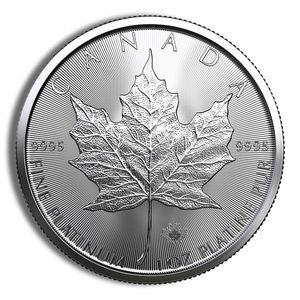
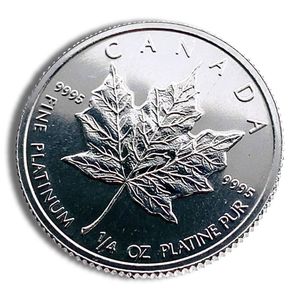
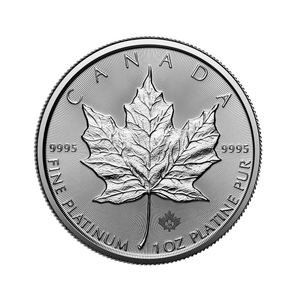
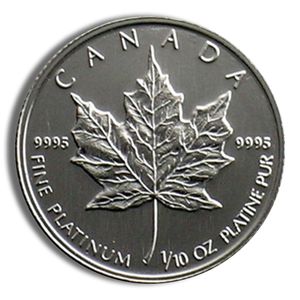
Our catalog of platinum maple leaf coins spans the full range of sizes struck by the Royal Canadian Mint, from the fractional 1/20 oz and 1/10 oz denominations up through the 1/4 oz, 1/2 oz, and the flagship 1 oz coin. Both dated and random year options are available, giving buyers flexibility based on how much they value a specific mint year versus the most straightforward entry point on price. The 2024 and 2025 1 oz coins are listed individually for buyers who prefer a current-year coin with a confirmed production date.
Every coin in this lineup is struck in .9995 fine platinum and carries legal tender status under the Canadian government, which contributes to the consistent global recognition these coins carry in the wholesale bullion market. At Bullion Standard, pricing on platinum maple leafs is tied directly to real-time spot pricing with full transparency around the premium structure, so you know exactly what you're paying above the underlying metal value.
What Are Platinum Maple Leafs?
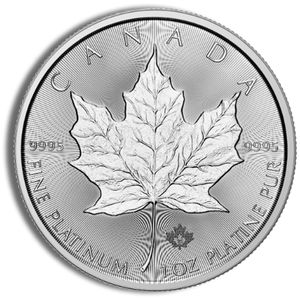
Platinum maple leafs are government-issued bullion coins produced by the Royal Canadian Mint. They are struck in .9995 fine platinum, which places them among the purest platinum coins in the global bullion market. Each coin carries a Canadian dollar face value and is considered legal tender in Canada, though their actual market value is determined entirely by platinum spot pricing and prevailing premiums in the wholesale bullion market.
The coins are available in multiple fractional weights alongside the standard 1 oz size. The 1/20 oz, 1/10 oz, 1/4 oz, and 1/2 oz denominations allow buyers to acquire platinum in smaller, more manageable increments, though fractional sizes typically carry a higher premium per troy ounce than the full 1 oz coin. The format is consistent across sizes: a struck coin with the iconic maple leaf reverse and the effigy of the reigning monarch on the obverse, produced to brilliant uncirculated standard.
Buyers are drawn to platinum maple leafs for a combination of reasons: high purity, government-backed issuance, international recognition, and the consistent production standards of the Royal Canadian Mint. Compared to platinum bars and rounds, the maple leaf carries stronger name recognition in both retail and wholesale bullion markets, which can have practical implications when it comes time to sell.
History and Background
The Royal Canadian Mint introduced the platinum maple leaf coin program in 1988, following the success of the gold maple leaf series launched a decade earlier. Canada's entry into the platinum bullion coin market came at a time when platinum was commanding significant market attention due to strong industrial demand, particularly from the automotive sector where the metal was being adopted at scale in catalytic converter manufacturing. The timing positioned the platinum maple leaf as a serious bullion product rather than a novelty.
Through much of the 1990s and into the 2000s, the Royal Canadian Mint produced platinum maple leafs in a full range of fractional weights alongside the 1 oz coin, establishing a tiered product structure that remains largely intact today. The program has not been issued continuously every year, and certain vintage years carry additional numismatic interest in secondary markets, though the coins in our catalog are traded primarily as bullion.
The broader platinum bullion coin market has remained smaller than its gold and silver counterparts in terms of total production volume, which reflects both platinum's higher price per ounce and its more concentrated industrial demand profile. For the Canadian Mint specifically, the maple leaf programs across all metals have been central to the institution's commercial bullion identity for more than four decades.
Purity, Weight, and Specifications
Every platinum maple leaf is struck to a fineness of .9995, which is the standard purity designation for investment-grade platinum. This purity level is recognized across the global wholesale bullion market and is accepted by major exchanges and institutional buyers without additional assaying in most contexts. The .9995 purity figure refers to 9,995 parts platinum per 10,000 total parts, which makes these coins among the purest platinum bullion products produced anywhere.
The 1 oz coin measures 30mm in diameter and 2.62mm in thickness. Moving down through the fractional sizes, the 1/2 oz coin measures 25mm across and 2.23mm thick, while the 1/4 oz comes in at 20mm with a 1.78mm profile. The 1/10 oz coin measures 16mm in diameter and 1.13mm thick. The 1/20 oz is the smallest in the series and does not carry published dimensional specifications in our current data, but it is proportionally smaller than the 1/10 oz. All coins are struck to brilliant uncirculated standard, meaning they leave the mint in pristine, unhandled condition.
Weight is expressed in troy ounces, the standard unit of measure for precious metals. One troy ounce equals approximately 31.1 grams, which is meaningfully heavier than the avoirdupois ounce used in everyday commerce. The 1 oz denomination on the coin's face value refers to one troy ounce of platinum content. The 50 Canadian dollar face value on the 1 oz coin, 20 dollars on the 1/2 oz, 10 dollars on the 1/4 oz, 5 dollars on the 1/10 oz, and 1 dollar on the 1/20 oz are legal tender designations that have no bearing on market pricing.
Available Brands, Mints, and Product Variations
The entire platinum maple leaf lineup in our catalog originates from a single source: the Royal Canadian Mint. Founded in 1908 and operating as a Crown corporation of the Canadian government, the Royal Canadian Mint is one of the most respected sovereign minting institutions in the world. Its quality controls, design consistency, and global distribution reach make its products highly recognizable among bullion buyers and dealers across North America, Europe, and Asia.
Within our catalog, buyers will find two distinct product types. The random year listings cover the full range of fractional sizes as well as the 1 oz coin. These are genuine Royal Canadian Mint platinum maple leafs struck to the same specifications as any dated coin, but the specific production year is not guaranteed. Random year coins typically offer a slightly more accessible entry price than their dated counterparts, making them the preferred choice for buyers focused purely on the metal content rather than a specific calendar year. The mint mark on random year products is listed as "Various," reflecting the range of possible years that may be fulfilled.
The dated products in our catalog are the 2024 and 2025 1 oz platinum maple leafs, both struck to the same .9995 fine standard and identical physical specifications as the random year 1 oz. These are the most current production runs from the Royal Canadian Mint and are the natural choice for buyers who prefer the assurance of a known mint year. Both the 2024 and 2025 coins are packaged in tubes of 10 with outer packaging accommodating 500 coins per case, reflecting the standard distribution format for wholesale-sourced Royal Canadian Mint products.
Pricing, Premiums, and Market Factors
Platinum maple leaf pricing at Bullion Standard is anchored to the live spot price of platinum, expressed in U.S. dollars per troy ounce. The premium above spot reflects the combined cost of minting, distribution, and market demand for the physical coin in its specific format and condition. The 1 oz coin typically carries the lowest per-ounce premium within the maple leaf series, while fractional sizes carry progressively higher premiums as the denomination decreases. This relationship is consistent across the broader bullion market and is a function of the fixed manufacturing costs being spread across a smaller metal content per coin.
Platinum premiums respond to supply and demand conditions within the physical bullion market independently of spot price movement. When physical platinum coin supply is constrained, whether due to reduced mint production, logistical disruptions, or elevated buying pressure, premiums can widen substantially above their baseline. The premium profile of platinum coins also reflects the metal's relatively smaller retail bullion market compared to gold and silver, which means liquidity conditions can shift more visibly in response to demand changes.
At Bullion Standard, the bid/ask spread for each platinum maple leaf is displayed directly on the product page and is updated to reflect current wholesale market conditions. This transparency allows buyers to evaluate the complete cost of ownership rather than focusing solely on the listed price. The relationship between the purchase premium and the current buyback price is a meaningful data point, and our platform is designed to make both sides of that equation visible before a transaction is ever completed.
Condition, Packaging, and What to Expect
Platinum maple leafs are struck and distributed in brilliant uncirculated condition, meaning they have not been circulated, cleaned, or altered after leaving the mint. However, BU coins are not certified or slabbed, so minor handling marks, contact marks, or superficial surface variations can occur during the packaging and distribution process. These are considered normal for raw bullion coins and do not affect the coin's metal content or its value in the wholesale bullion market.
The 1 oz coins, including both the dated and random year options, are packaged in tubes of 10 by the Royal Canadian Mint. These tubes are the standard distribution format and protect the coins from direct contact and environmental exposure during transit and storage. Fractional platinum maple leafs are typically sold individually or in smaller packaging configurations and do not share the tube format used for the 1 oz coins.
Buyers selecting random year options should understand that the specific year received is determined by our fulfillment team based on current inventory. The year cannot be requested or specified, and the same order may include coins from multiple production years if multiple coins are purchased. The coins themselves are identical in specification, purity, and quality regardless of the production year assigned.
Authenticity and Verification
All platinum maple leafs sold by Bullion Standard are sourced directly through verified supply channels including authorized wholesalers, distributors, and mint-authorized sources. Every product is verified for authenticity, weight, and purity before it enters our inventory. We do not sell coins from unverified or uncertain sources, and our sourcing standards are designed to ensure that the product a customer receives matches the published specifications without exception.
The Royal Canadian Mint builds several anti-counterfeiting features into its platinum maple leaf coins. These include a radial line security pattern applied to the coin's background fields, which produces a precise visual effect that is extremely difficult to replicate with non-mint equipment. The Mint's quality assurance processes also include dimensional and weight tolerances that are tightly controlled across production batches. Buyers with concerns about a specific coin can use calibrated precision scales and reference the published specifications to cross-check weight, while diameter can be confirmed with digital calipers against the mint's published measurements.
Bullion Standard holds an A rating with the Better Business Bureau and maintains active membership in the American Numismatic Association and the National Coin and Bullion Association. We are also an authorized dealer for both PCGS and NGC grading services. These affiliations reflect our commitment to operating within established industry standards and providing a level of institutional accountability that buyers can verify independently.
Liquidity and Resale Considerations
Platinum maple leafs are among the most recognized platinum bullion coins in the global market, which has direct implications for their resale characteristics. A coin's liquidity is closely tied to how easily a buyer can be found for it at fair market value, and widely recognized government-issued platinum coins from a major sovereign mint like the Royal Canadian Mint benefit from deep familiarity among dealers, refiners, and secondary market buyers worldwide.
The 1 oz platinum maple leaf is the most liquid format in the series due to its standard weight, high purity, and status as the primary denomination for institutional and wholesale platinum transactions. Fractional sizes can be traded readily as well, but they represent a smaller share of the overall platinum bullion market and may carry wider bid/ask spreads as a result. Understanding the liquidity profile of each denomination before purchasing is a practical step that our platform is designed to support through transparent pricing data.
Product condition and packaging also factor into resale pricing. Coins that remain in their original mint tubes or are kept in protective flips without being handled excessively tend to present better in buyback and secondary market transactions. Coins with visible damage, cleaning, or significant contact marks may be evaluated at a discount relative to their undamaged equivalents, depending on the buyer's standards.
Storage and Security
Platinum maple leafs, like all platinum bullion products, require proper storage to maintain their condition and protect against loss, theft, or environmental damage. For small quantities, a quality home safe rated for both fire and theft resistance provides a reasonable baseline of protection. Safes should be bolted to the structure of the building to prevent removal and kept in a location not easily identified by visitors.
For larger holdings, a fully insured private vault facility or a bank safe deposit box offers a stronger security profile. Private vault storage through an established precious metals storage company typically includes segregated or allocated storage options, insurance coverage, and audited access records. Bank safe deposit boxes provide physical security but are generally not insured by the bank itself, so supplemental insurance coverage is worth considering.
Platinum does not tarnish or oxidize under normal conditions the way silver does, which simplifies its environmental storage requirements. That said, coins should be kept in a dry environment and handled minimally and carefully to preserve their brilliant uncirculated surfaces. Storing coins in their original tubes or in individual protective coin flips prevents contact damage from adjacent coins or other surfaces during storage.
Selling and Buyback Options
When it comes time to sell, platinum maple leafs transact across a well-established network of bullion dealers, wholesale buyers, and secondary market participants. The process of selling to a dealer typically involves submitting the product for evaluation, receiving a buyback quote based on current spot pricing and applicable premiums, and completing the transaction once both parties agree to terms. Buyback pricing is influenced by the current platinum spot price, the product's recognition and marketability, its condition and packaging, and the dealer's current inventory position.
At Bullion Standard, our two-way market structure means customers can both purchase and sell precious metals within the same platform. Our purchasing team evaluates buyback requests based on live market pricing, product type, condition, and packaging. The 1 oz platinum maple leaf typically commands the strongest buyback terms within the series due to its standardization, weight, and broad market recognition. Fractional sizes are also accepted, though buyback spreads may reflect the narrower secondary market for those denominations.
We believe liquidity should be considered before a purchase is made, not only when it is time to sell. Our platform displays current bid pricing alongside the purchase price on each product page, providing a real-time view of both sides of the transaction. This allows buyers to evaluate the spread they are accepting at the time of purchase rather than discovering it only when they are ready to exit their position.
Why Buy Platinum Maple Leafs?
Platinum occupies a distinct position in the precious metals market due to its combination of rarity and industrial utility. The metal is used extensively in catalytic converters, fuel cells, chemical processing, medical devices, and laboratory equipment. Global platinum supply is highly concentrated geographically, with the majority of primary mine production coming from South Africa and a smaller but significant contribution from Russia. This supply concentration, combined with diverse industrial demand, gives platinum a market dynamic that is structurally different from gold or silver.
Within the platinum bullion coin market, the maple leaf's .9995 purity sets it apart from several competing products that are struck to the slightly lower .9990 fine standard. For buyers who prioritize maximum metal purity in their platinum holdings, this distinction is meaningful. The Royal Canadian Mint's long-running reputation for production quality and consistent specification adherence adds another layer of confidence for buyers who are less familiar with platinum's characteristics compared to gold or silver.
The range of available sizes, from the 1/20 oz fractional up to the full 1 oz coin, makes platinum maple leafs accessible to buyers working across a range of budgets. The 1 oz coin offers the best premium efficiency and the strongest resale profile, while the fractional denominations allow buyers to add platinum exposure in smaller increments without committing to the higher capital outlay of the full-ounce product.
Why Buy from Bullion Standard?
Bullion Standard was founded in San Diego, California in 2010 and has grown from a regional operation into a nationally recognized online precious metals marketplace. Our business is built around a single operating principle: that buyers deserve transparent, honest information and fair pricing at every point in the transaction, from the first page visit through to post-purchase support and eventual resale. That philosophy is reflected in everything from how we display pricing to how our purchasing team evaluates buyback requests.
Every platinum maple leaf in our catalog is sourced from verified supply channels and authenticated for weight, purity, and origin before reaching our customers. We maintain an A rating with the Better Business Bureau and are active members of the American Numismatic Association and the National Coin and Bullion Association. Our authorized dealer status with PCGS and NGC reflects the depth of our commitment to operating within established industry standards rather than around them.
Payment options at Bullion Standard include Visa, Mastercard, American Express, Discover, PayPal, bank-connected payments through Plaid, wire transfer, paper check, and cryptocurrency payments through BitPay. Our fulfillment process is designed for reliability and security, with every shipment handled according to strict packaging and insurance standards. Whether you're making your first platinum purchase or adding to an existing position, the experience is designed to feel straightforward and transparent rather than high-pressure or opaque.
Get Near-Spot Pricing with Bullion Standard Pro
Bullion Standard Pro is built for buyers who want access to the pricing efficiency normally available only to wholesale market participants. Members transact at live, executable wholesale bid and ask prices across our precious metals catalog, including platinum maple leafs. Unlike the standard retail model, Pro does not layer additional dealer markups or fixed spreads on top of wholesale pricing. Instead, premiums and bid/ask spreads fluctuate naturally in response to real supply and demand conditions in the underlying wholesale market.
For platinum specifically, where price per ounce is substantially higher than silver and where market liquidity can shift more noticeably in response to institutional activity, having access to real-time wholesale pricing data is a meaningful advantage. Pro members can monitor how platinum maple leaf premiums and spreads evolve over time, compare pricing efficiency across product sizes and formats, and make purchasing decisions based on objective market data rather than static retail listings.
Portfolio valuation within Bullion Standard Pro uses live executable wholesale bid pricing rather than estimated retail values, giving members a more accurate picture of current liquidation value across their holdings. Combined with our two-way market structure, transparent pricing tools, and proprietary market analytics, Bullion Standard Pro is designed to bring the kind of pricing transparency and market intelligence that has long existed in traditional financial markets to the physical platinum market.


 (833) 278-4653