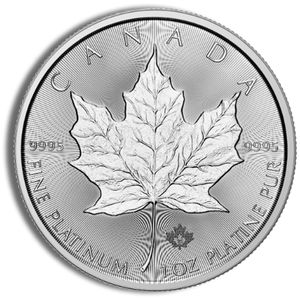
Buy 1 oz Platinum Coins Online
Our catalog of 1 oz platinum coins draws from some of the most respected sovereign mints and private refineries in the world, including the Perth Mint, the United States Mint, the Royal Canadian Mint, the Austrian Mint, and the Royal Mint of Great Britain. Whether you're looking for a bullion-grade coin to hold as a physical asset or a certified example from NGC or PCGS, the selection here covers a broad range of formats, origins, and packaging styles.
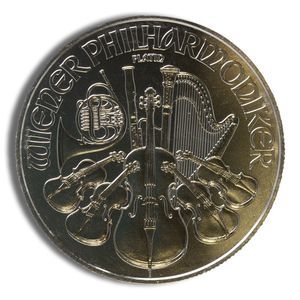
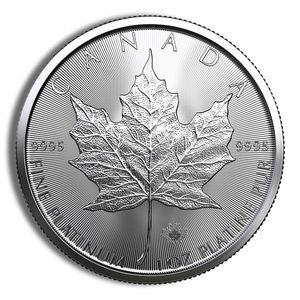
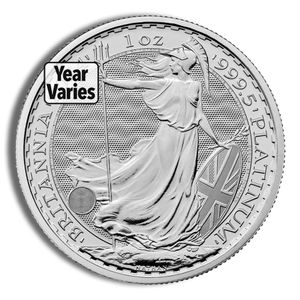
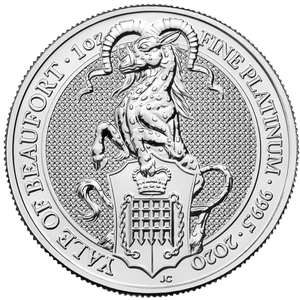
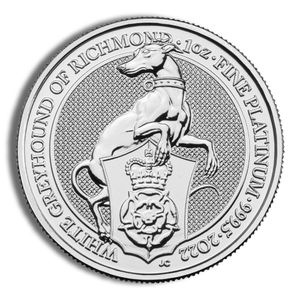
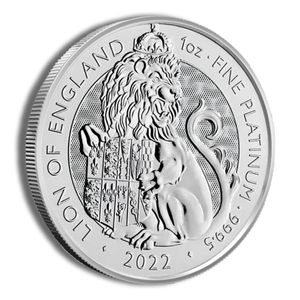
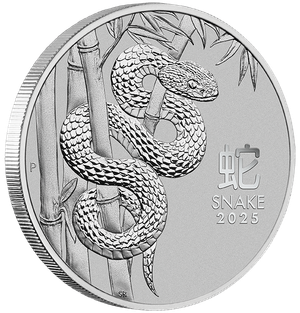
Buyers will find both random year and dated coins, with options spanning BU finishes, proof strikes, burnished editions, and graded examples across multiple years. Specific offerings include the Platinum American Eagle, the Platinum Maple Leaf, the Australian Platinum Kangaroo, the Austrian Philharmonic in platinum, and the British Platinum Britannia, among others. Several products are also available in limited-run formats such as the Queen's Beasts series and the Australian Lunar Series III.
Bullion Standard is designed around transparent pricing and a two-way market structure, meaning you can evaluate both the acquisition cost and the expected resale value before completing a purchase. Each product page reflects real-time market conditions, and our bid/ask spread is visible so buyers can make informed decisions rather than relying on assumptions.
What Are 1 oz Platinum Coins?
A 1 oz platinum coin is a government or sovereign-mint issued coin containing one troy ounce of platinum at a purity of .9995 or higher. Unlike rounds produced by private mints, these coins carry legal tender status in their country of origin and are backed by the issuing government for their stated weight and purity. That backing adds a layer of recognizability that matters when it comes time to resell or exchange the product.
The one-troy-ounce format is the most widely traded weight for platinum coins and represents the standard against which premiums, spreads, and liquidity are most commonly measured. Coins in this format are individually handled and transacted, making them practical for buyers who prefer flexibility over the bulk pricing that comes with larger bars. The format also supports easy verification and direct comparison across mints and years.
Within this product type, buyers will encounter meaningful variation in finish, packaging, and certification. BU coins are struck for bullion purposes and intended for purchase at premiums close to spot. Proof coins are struck with polished dies and a frosted relief, producing a higher-quality finish intended for collectors or buyers who prioritize presentation. Burnished coins fall between the two, offering a distinct satin-like surface produced through a specialized planchet preparation process.
History and Background
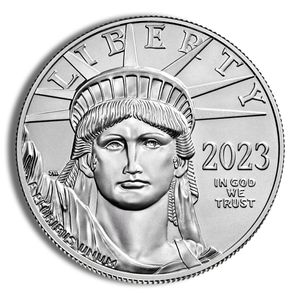
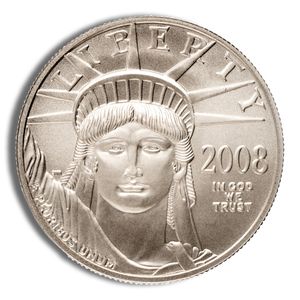
Platinum's entry into the modern bullion coin market came later than gold or silver, largely due to the metal's scarcity and its industrial profile. The platinum American Eagle program launched in 1997, becoming the first platinum bullion coin struck by the United States Mint. Its introduction followed growing interest in platinum as a tradeable precious metal distinct from gold, with its own supply dynamics and industrial characteristics rooted primarily in South African mining output.
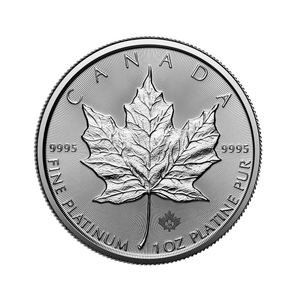
Other sovereign programs followed in the years surrounding the Eagle's debut. The Royal Canadian Mint introduced the platinum Maple Leaf in 1988, predating the American Eagle and establishing one of the earliest standardized platinum coin programs globally. The Austrian Mint launched its platinum Philharmonic more recently, and the Perth Mint has produced platinum versions of its Kangaroo, Koala, and Lunar series at various points in the coin's program history.
The collectible and specialty segment of the platinum coin market has grown considerably, with programs like the Queen's Beasts from the Royal Mint, the Tudor Beasts series, and the Australian Lunar Series introducing limited-run designs that appeal to a broader range of buyers. Certified platinum coins graded by NGC and PCGS have also become more prominent, particularly burnished and proof Eagle issues from the early 2000s that remain in circulation across the secondary market today.
Purity, Weight, and Specifications
Virtually all sovereign platinum coins in this catalog are struck to a purity of .9995, which is the standard for modern platinum bullion coinage. This purity level is consistent across the American Eagle, Maple Leaf, Kangaroo, Koala, Britannia, Philharmonic, and Panda programs. The .9995 fineness designation means that 9,995 parts out of 10,000 are pure platinum, with the remaining trace elements generally consisting of iridium or other platinum-group metals used to harden the coin during the striking process.
In terms of dimensions, most 1 oz platinum coins range between 30 and 37 millimeters in diameter, with thickness varying by mint and design. The American Eagle and the British Britannia both measure approximately 32.7 millimeters in diameter with a thickness near 2.4 to 3 millimeters, while the Austrian Philharmonic is notably larger at 37 millimeters in diameter but considerably thinner at around 1 millimeter. The Canadian Maple Leaf is slightly smaller at 30 millimeters, and the Australian Kangaroo and Koala both fall near 32.6 millimeters.
Each coin carries specific mint markings, date stamps where applicable, and denominational markings in the legal currency of its country of origin. The American Eagle carries a face value of $100 USD, the Maple Leaf $50 CAD, the Britannia £100 GBP, the Philharmonic 100 Euros, and the Kangaroo $100 AUD. These face values are symbolic rather than reflective of market value, which is determined by the platinum spot price and the applicable premium at the time of purchase.
Available Brands, Mints, and Product Variations
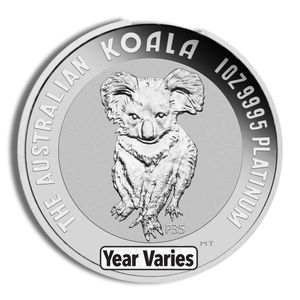
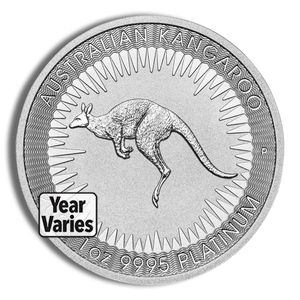
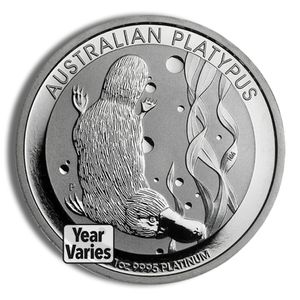
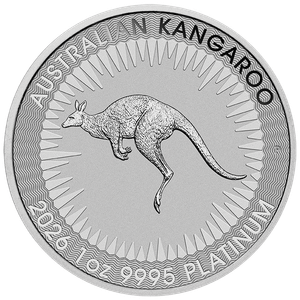
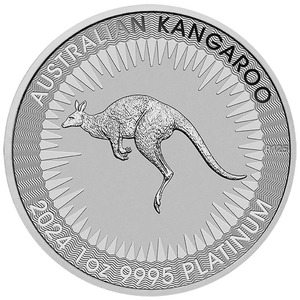
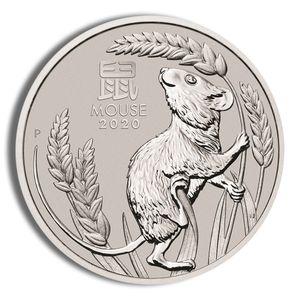
The Perth Mint produces several platinum coin programs visible in this catalog, including the Platinum Koala, Platinum Kangaroo, Platinum Platypus, and the Australian Lunar Series III. The Lunar Series commemorates the Chinese zodiac cycle with a new animal design each year, and the 2020 Mouse and 2023 Rabbit editions represent two recent releases in that ongoing program. The 2025 Snake and both 2024 and 2025 Kangaroo coins round out the Perth Mint's current offerings here, with inner pack quantities of 20 coins and outer configurations of up to 100 coins per master box.
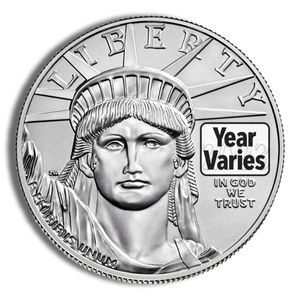
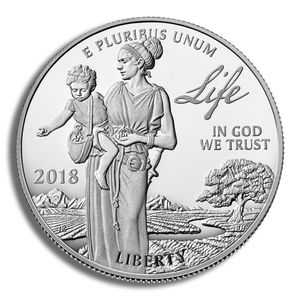
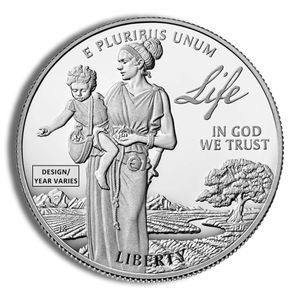
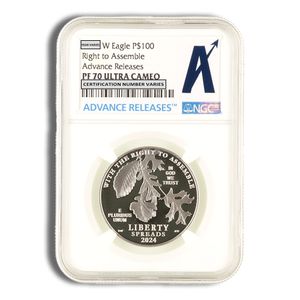
The United States Mint contributes the largest variety of coin types in the catalog, ranging from standard BU Eagles available in random year format to burnished editions from 2006, 2007, and 2008 with West Point mint marks. Proof Eagles are also represented in multiple formats, including box and COA configurations and cap-only examples without original packaging. The 2024-W Proof Platinum Eagle graded NGC PF70 in Advance Release packaging and the 2026 Proof Eagle tied to the Charters of Freedom series expand the certified and collector-focused options significantly.
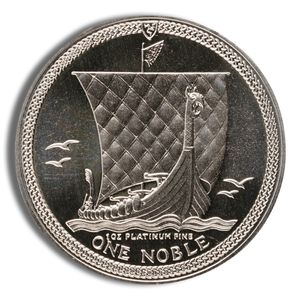
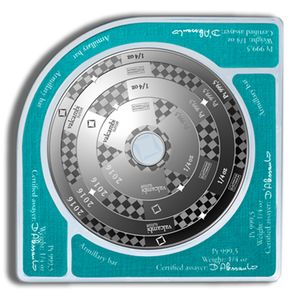
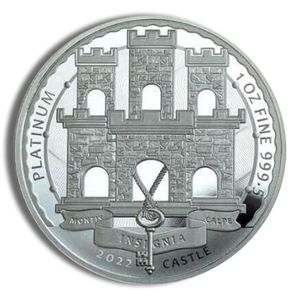
Beyond the major programs, the catalog includes the Austrian Philharmonic from the Vienna-based Austrian Mint, the Platinum Britannia and Queen's Beasts series from the Royal Mint of Great Britain, the Platinum Maple Leaf from the Royal Canadian Mint, and more specialized offerings such as the Chinese Platinum Panda from the Central Mint of China and the Isle of Man Noble from Pobjoy Mint. Specialty items like the 2016 Valcambi Armillary round coin, the 2022 Gibraltar Castle from PAMP, and the South African Big 5 Buffalo and Leopard proof coins from the South African Mint provide additional variety for buyers with specific geographic or thematic preferences.
Pricing, Premiums, and Market Factors
The price of a 1 oz platinum coin is determined by the current platinum spot price plus a premium that reflects the cost of fabrication, distribution, mint program fees, and market demand. Premiums on sovereign platinum coins tend to be higher than those seen on comparable gold or silver products, in part because platinum is a smaller and less liquid market with lower annual coin production volumes. This dynamic means that supply constraints at the mint level, periods of strong collector interest, or unusual industrial demand shifts can all affect the premium structure meaningfully.
Product-level pricing differences within this catalog are real and worth understanding. BU bullion coins in random year format typically carry the lowest premiums because buyers are not selecting a specific date and the products are sold from existing inventory. Proof coins with original box and certificate of authenticity command higher premiums due to their production complexity and collector positioning. Burnished coins from the early 2000s with NGC or PCGS certification carry premiums that reflect both the grading cost and the relative scarcity of high-grade examples from those mintages.
Bullion Standard's pricing reflects real-time platinum market conditions and is updated continuously to stay aligned with the underlying spot market. Our two-way market structure means that both the buy price and the bid price are visible on each product page, giving buyers a clear view of the bid/ask spread before committing to a purchase. This level of transparency helps buyers evaluate whether they're purchasing at an efficient price relative to current market conditions rather than making decisions based on incomplete information.
Condition, Packaging, and What to Expect
Most BU platinum coins in this catalog ship in their original mint packaging, which typically consists of a protective plastic capsule and, for tubed products, a sealed mint tube containing 10, 20, or 25 coins depending on the program. The Perth Mint Kangaroo, for example, ships in tubes of 20, while the Canadian Maple Leaf is typically packed in tubes of 10 with outer cartons of 500 coins. Buyers purchasing individual coins will receive them in capsules or loose within a mint tube, depending on how the inventory is held.
Random year products, which represent a significant portion of this catalog, are fulfilled from existing inventory and may include coins from any year that the program was active. The specific year is not selectable and will be determined by available stock at the time of fulfillment. BU coins are expected to show no wear but may exhibit minor contact marks, bag marks, or light hazing consistent with handling and packaging during the normal mint distribution process. These characteristics do not affect the coin's weight, purity, or bullion value.
Proof coins and burnished editions come in formats that range from full original box and certificate of authenticity sets to cap-only presentations without the outer display box. Product listings clearly indicate whether a box and COA are included, and buyers should review this carefully before purchasing if presentation or completeness matters for their intended use. Certified coins from NGC or PCGS arrive in tamper-evident plastic slabs with the assigned grade clearly labeled on the holder.
Authenticity and Verification
Every 1 oz platinum coin sourced through Bullion Standard comes from reputable mints, authorized distributors, or established wholesale channels. Products are verified for authenticity, weight, and purity prior to reaching the customer, and sourcing is limited to channels with documented product provenance. Bullion Standard is an authorized dealer for both PCGS and NGC, which is directly relevant for the certified coins in this catalog where grading integrity is part of the product's value.
Sovereign platinum coins carry built-in authenticity features specific to each mint program. The U.S. Mint uses die-polished surfaces and reeded edges on its proof issues. The Royal Canadian Mint incorporates micro-engraved radial lines visible under magnification into its Maple Leaf series as an anti-counterfeiting feature. The Perth Mint uses distinctive reverse designs with the Mint's "P" mark and issues coins on carefully controlled planchets. These features allow for visual verification by experienced handlers and, in the case of graded coins, have been independently evaluated by a third-party grading service.
For buyers who want additional peace of mind, purchasing certified products from NGC or PCGS eliminates most authenticity concerns, as both services use multi-step examination processes before encapsulating any coin. Uncertified BU coins purchased through authorized dealer networks like Bullion Standard carry the implicit verification of a documented supply chain. We encourage buyers to remain cautious when purchasing from unverified third-party sellers where provenance documentation may be unavailable.
Liquidity and Resale Considerations
Not all platinum coins trade with equal ease. The most liquid products in this category are those with the widest market recognition: the American Eagle, the Canadian Maple Leaf, and the Australian Kangaroo. These coins are recognized by dealers globally, are accepted in most buyback programs without additional verification steps, and have established secondary market pricing that tracks closely with spot. Niche programs, specialty coins with low mintages, or proof sets without original packaging may be somewhat harder to resell quickly or at competitive prices.
Platinum as a metal trades in a smaller market than gold or silver, and that affects the liquidity profile of platinum coins broadly. Buyers should be aware that bid/ask spreads on platinum coins can be wider than those on comparable gold products, reflecting the metal's lower trading volume and smaller pool of active buyers and sellers. This doesn't make platinum coins illiquid, but it does mean that understanding spread conditions before purchasing is worthwhile.
Bullion Standard's platform is designed to make the liquidity dimension of platinum coin ownership more visible. Our product pages display the current bid/ask spread, and Bullion Standard Pro members have access to live executable wholesale bid pricing that shows current wholesale market conditions rather than estimated retail resale values. This gives buyers a clearer sense of what their holdings are worth at the wholesale level at any given point in time.
Storage and Security
Individual 1 oz platinum coins are compact enough to store in a wide range of settings, from home safes to professionally managed vault facilities. For buyers holding a small number of coins, a quality home safe with fire and burglary ratings provides a practical and cost-effective solution. Coins should remain in their original capsules or holders to prevent surface contact, which can cause hairlines or marks that may affect visual appeal when reselling certified or proof-finish products.
For larger holdings, third-party vault storage through an insured precious metals depository offers segregated or allocated storage options with regular auditing and full insurance coverage. This approach eliminates the security and insurance burden of home storage and ensures that products remain in verified, authenticated condition. Bank safe deposit boxes are another option, though they typically lack the same insurance coverage as purpose-built precious metals vaults.
Platinum is a dense, chemically stable metal that doesn't oxidize or tarnish under normal storage conditions. However, coins in proof or burnished finishes are more sensitive to environmental handling than standard BU bullion and should be handled by the edges when removed from their capsule. Maintaining original packaging wherever possible is the simplest way to preserve both the coin's condition and its resale appeal over time.
Selling and Buyback Options
Selling platinum coins follows a similar process to selling any sovereign bullion product. Buyers should expect that buyback pricing will be based on the current platinum spot price adjusted by the dealer's bid, which reflects the coin's type, condition, mint origin, and current demand in the wholesale market. Products with high market recognition, such as the American Eagle or Canadian Maple Leaf, will typically receive stronger bids than limited-edition or specialty coins that require more effort to resell downstream.
Condition and packaging matter during the buyback process. BU coins in original capsules or mint tubes are straightforward to evaluate and process. Proof sets with original box and certificate of authenticity are also well-understood by dealers and can be quoted promptly. Coins that have been removed from their slabs, are missing COAs, or show unusual damage may be assessed differently depending on how significantly the condition diverges from standard expectations. Graded coins in NGC or PCGS holders retain their certification value as long as the holder remains intact and unaltered.
Bullion Standard operates a structured buyback program as part of our two-way market model. Our purchasing team works from competitive wholesale bids that reflect real-time market conditions, and customers can initiate the selling process directly through our platform. We believe liquidity should be a consideration before a purchase is made, not only at the point of sale, and our pricing structure is designed to make the full transaction cycle as transparent as possible from the outset.
Why Buy 1 oz Platinum Coins?
The 1 oz coin format occupies a practical middle ground for buyers who want individually verifiable, government-backed platinum in a convenient and recognized form. Unlike larger bar formats, individual coins can be bought and sold one unit at a time without committing to a single large position. The sovereign backing from mints like the U.S. Mint, Perth Mint, and Royal Canadian Mint also means these products are widely recognized in both domestic and international dealer markets.
Platinum's relatively limited annual supply, concentrated primarily in South Africa and Russia, gives it a supply profile that differs meaningfully from gold or silver. The metal's deep integration into catalytic converter manufacturing for automotive applications, as well as growing applications in hydrogen fuel cell technology, jewelry, and chemical processing, means its industrial demand base is substantive. For buyers who want exposure to a metal with a distinct supply and demand profile, platinum coins represent one of the most accessible entry points.
From a practical standpoint, the coin format also offers versatility across different buyer profiles. Bullion-grade BU coins appeal to buyers focused on low premiums and straightforward liquidity. Proof and burnished editions attract buyers interested in presentation and collector-grade examples. Certified coins graded by NGC or PCGS appeal to buyers who prioritize third-party verification and grade-specific scarcity. The range of options within a single ounce format means buyers can tailor their approach without changing the metal or weight class.
Why Buy from Bullion Standard?
Bullion Standard was founded in 2010 and is headquartered in San Diego, California. Over the past decade and a half, we've built our reputation on pricing transparency, reliable sourcing, and a customer-first approach that prioritizes long-term relationships over short-term sales volume. Every product in our catalog is verified for authenticity, weight, and purity before it ships, and our sourcing is limited to reputable mints, authorized distributors, and established wholesale channels.
We are an authorized dealer for both PCGS and NGC, a member of the American Numismatic Association, and a member of the National Coin and Bullion Association. Our A rating with the Better Business Bureau reflects a consistent track record of service quality across thousands of transactions. Customers can pay using Visa, Mastercard, American Express, Discover, PayPal, Plaid-connected bank transfers, wire transfer, paper check, or cryptocurrency through BitPay, giving buyers meaningful flexibility in how they transact.
Our two-way market model is a core differentiator. We believe that liquidity should be a transparent, visible part of the buying process, not an afterthought. By displaying bid and ask pricing on individual product pages and operating an active buyback program, we make it easier for customers to evaluate platinum coin purchases with a realistic understanding of what they're paying and what resale looks like. That kind of clarity is at the center of everything we do.
Get Near-Spot Pricing with Bullion Standard Pro
Bullion Standard Pro is designed for buyers who want access to the pricing efficiency of the wholesale precious metals market. Members transact at live, executable wholesale bid and ask prices rather than standard retail pricing, which means premiums and bid/ask spreads reflect actual wholesale market conditions rather than fixed dealer markups. For buyers purchasing 1 oz platinum coins on a regular basis or in meaningful quantities, this pricing structure can represent a significant efficiency gain over time.
The platform also provides access to live portfolio valuation based on current wholesale bid pricing, which gives members a more accurate picture of their holdings' liquidation value than retail-based estimates. Historical premium analytics, spread tightness metrics, and proprietary liquidity and volatility data are available for individual products, allowing members to evaluate platinum coins across multiple dimensions before making a purchase. These tools help surface whether a specific coin is trading at a historically wide or narrow premium relative to spot, which is useful context that isn't visible from price alone.
Rather than layering additional dealer spreads on top of market prices, Bullion Standard Pro allows premiums to move naturally with supply and demand at the wholesale level. For buyers who take a more deliberate, data-informed approach to physical precious metals, access to this kind of market intelligence within the same platform where transactions are executed creates a more efficient and transparent experience from research through purchase and eventual resale.


 (833) 278-4653