Buy Gold Coins Online
Our gold coins catalog brings modern government bullion, classic U.S. gold and certified pieces together in one place. American Gold Eagles from the U.S. Mint make up the largest share, followed by the Perth Mint's Australian Lunar series, Mexican Libertads and Centenarios, American Gold Buffalos, Australian Kangaroos, Canadian Maple Leafs, British Britannias and Sovereigns, South African Krugerrands, Chinese Pandas and Austrian Philharmonics. Pre-1933 U.S. gold, from tiny $1 gold dollars to $20 Saint-Gaudens double eagles, rounds out the selection.
Sizes run from 1/20 oz and 1/10 oz fractionals through 1/4 oz, 1/2 oz and 1 oz coins up to 2 oz Lunar and Kangaroo issues, alongside traditional weights such as the 0.9675 oz double eagle and the 1.2057 oz Mexican 50 Peso. You'll find brilliant uncirculated bullion coins, proofs with their original box and certificate of authenticity, multi-coin sets, random year listings and coins graded by NGC and PCGS, from circulated grades through MS70 and PF70.
Every listing is priced live against the gold spot price, and each product page displays the current bid/ask spread, so you can see what we'd pay to buy a coin back as well as what it costs today. As a two-way marketplace, we believe the full cost of owning gold coins, the purchase price and the resale value together, should be visible before you check out.
What Are Gold Coins?
A gold coin is a piece of gold struck by a mint, usually a government mint, with a stated weight and fineness and, in most cases, a face value that makes it legal tender in its country of issue. That government backing is what separates coins from the rounds and bars made by private refiners. It's also a large part of why a Gold Eagle or Maple Leaf is recognized by dealers almost anywhere.
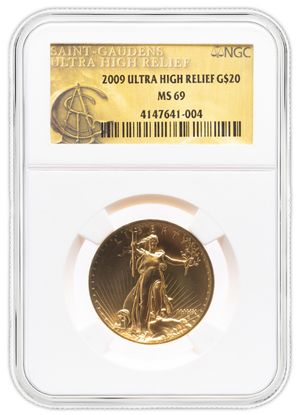
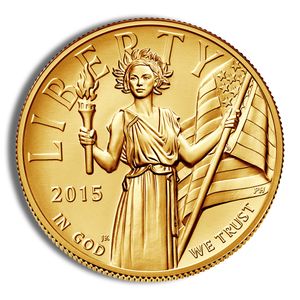
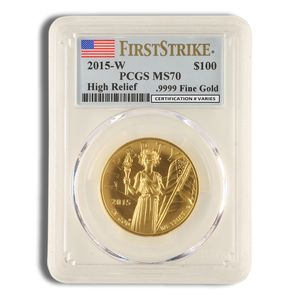
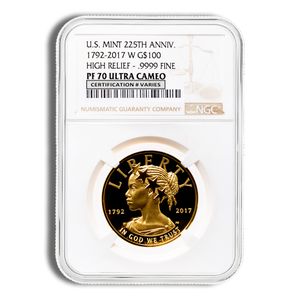
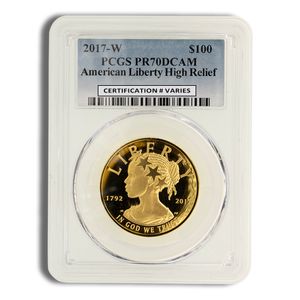
Within gold coins there are a few distinct groups. Modern bullion coins such as the Krugerrand, Philharmonic and Libertad are struck in large numbers and priced closely to their gold content. Proof and special finish coins, including the American Liberty High Relief series and the 2016 centennial gold coins, add sharper strikes, collectible designs and presentation packaging. Historic coins like pre-1933 U.S. gold, British Sovereigns and Mexican pesos were made for circulation and now trade on both metal content and condition.
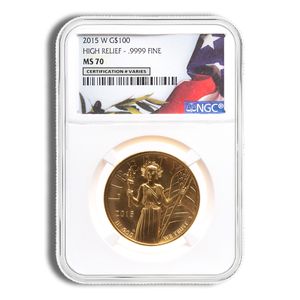
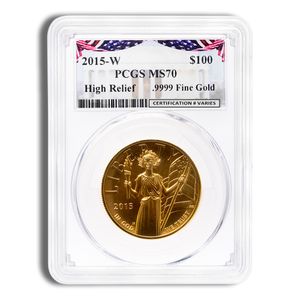
The other big distinction is raw versus certified. Raw coins are sold as struck or, for older pieces, as found, while certified coins have been authenticated, graded and sealed in a tamper-evident holder by NGC or PCGS. Buyers focused on cost per ounce tend toward raw BU bullion, and those who want a confirmed numeric grade lean toward slabbed coins. Compared with gold bars, coins usually cost a little more per ounce, but they're easier to divide, identify and sell in smaller amounts.
History and Background
Gold coins were ordinary money in the United States until 1933, when Executive Order 6102 required most gold coin to be turned in and ended domestic gold circulation. The coins that survived, from $1 gold dollars to $20 double eagles, are the pre-1933 U.S. gold offered here. Britain's modern Sovereign has an even longer run, struck since 1817 and still issued today.
The modern bullion coin began with South Africa's Krugerrand in 1967, designed to give the public a simple way to own an ounce of gold. Canada followed with the Gold Maple Leaf in 1979, and the U.S. Mint introduced the American Gold Eagle in 1986 after the Gold Bullion Coin Act of 1985. China's Panda, Britain's Britannia, Australia's Gold Nugget and Austria's Philharmonic filled out the field during the 1980s.
Later decades brought 24 karat coins and annual design programs. The American Gold Buffalo arrived in 2006 as the U.S. Mint's first .9999 fine gold coin, the Perth Mint's Lunar series launched in 1996 and is now in its third cycle, and the Royal Mint's Queen's Beasts ran from 2016 to 2021. That's why today's gold coin market blends bullion pricing with a wide variety of years and designs.
Purity, Weight, and Specifications
Gold coins fall into a few purity groups. The American Gold Eagle, Krugerrand and Sovereign are 22 karat gold at .9167 fine, alloyed with copper (and some silver in the Eagle) for durability. The American Gold Buffalo, Maple Leaf, Philharmonic, Kangaroo, Lunar series, Queen's Beasts and Britannias struck since 2013 are .9999 fine 24 karat gold, while Libertads and Pandas are .999 and pre-1933 U.S. gold and Mexico's Centenario are .900. Older issues can differ, since Britannias from 1987 to 2012 are 22 karat and the earliest Maple Leafs were .999 fine before Canada moved to .9999 in 1982.
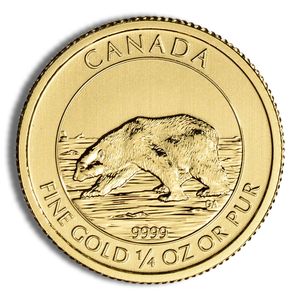
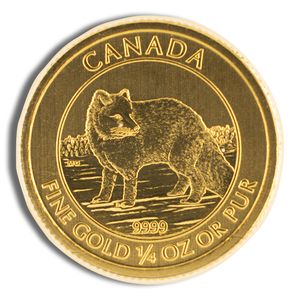
A 22 karat coin still contains its full stated weight of pure gold, since the alloy is added on top. That's why a 1 oz Gold Eagle or Krugerrand weighs slightly more than a troy ounce in total. Gold is measured in troy ounces of 31.1035 grams, and our fractional coins come in 1/2, 1/4, 1/10 and 1/20 oz sizes, along with a 1/25 oz Philharmonic and gram-denominated Pandas.
Historic coins follow their original legal standards rather than round ounce weights. A $20 double eagle holds 0.9675 oz of gold, a $10 eagle 0.4837 oz, a $5 half eagle 0.2419 oz and a $2.50 quarter eagle 0.1209 oz, while a British Sovereign carries 0.2354 oz and the Mexican 50 Peso 1.2057 oz. Instead of assay stamps, coins carry their face value, date and often a mint mark, such as the W used on proof and burnished coins from West Point.
Available Brands, Mints, and Product Variations
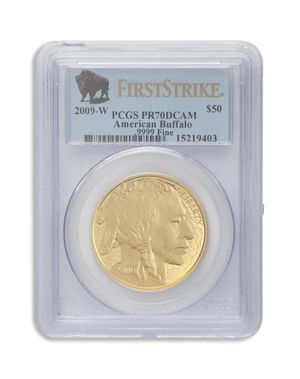
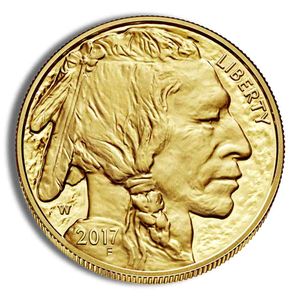
The U.S. Mint accounts for the largest part of our catalog. That includes BU and proof Gold Eagles across many years, proof and burnished Gold Buffalos from West Point, the American Liberty High Relief series, the 2016 Mercury Dime and Walking Liberty centennial gold coins, and modern $5 and $10 commemoratives. Sets such as the 1993 Philadelphia Gold and Silver Eagle set and the 2008-W proof Gold Buffalo four coin set are offered as well.
The Perth Mint is the second largest source, with all three Lunar series from the 1996 Lunar Rat onward plus Kangaroos and the earlier 2 oz Gold Nuggets. Casa de Moneda de México supplies Libertads in BU and proof along with Centenarios and smaller peso coins. The Royal Mint contributes Britannias, Queen's Beasts and Sovereigns spanning George III to Charles III, and the Royal Canadian Mint, South African Mint, China Mint and Austrian Mint round out the major programs.
Beyond those, you'll find historic world gold such as Belgian 20 francs, Iranian Pahlavis and pieces from the Monnaie de Paris, Swissmint and the Imperial Russian Mint, as well as modern wildlife coins like the Somalia Elephant and Canadian Moose. Many bullion coins are offered as random year listings, where we select the date, which is usually the most economical way to buy a given coin. Year-specific listings, sealed packaging, box and COA presentation and graded examples let you pick exactly what you want instead.
Pricing, Premiums, and Market Factors
Every gold coin price starts with the spot price of gold multiplied by the coin's pure gold content. On top of that sits the premium, which covers minting, distribution and demand for that specific coin. The premium is the part of the price that varies most from one coin to the next.
Large government bullion programs like the 1 oz Krugerrand, Maple Leaf and random year Gold Eagle usually carry the lowest premiums because they're produced in volume and traded constantly. Fractional coins cost more per ounce because the minting cost is spread over less gold. Proofs, high relief coins, boxed sets and high-grade NGC or PCGS slabs carry premiums tied to finish, presentation and scarcity, and pre-1933 coins are priced on gold content plus a premium for type and grade.
Premiums also move with the market. When demand surges, coin premiums can widen quickly, and they tend to narrow when supply catches up. Our transparent pricing shows the bid/ask spread on each product page, so you can compare coins on what it costs to buy and sell them, not just on the asking price.
Condition, Packaging, and What to Expect
BU bullion coins may come in mint tubes, sealed packaging or individual capsules depending on the product and quantity. Minor contact marks or small spots are normal on coins that are minted and packed in bulk, especially soft 24 karat gold. Random year listings mean we select the year from available inventory, so the date and, for some series, the design may differ from the photo.
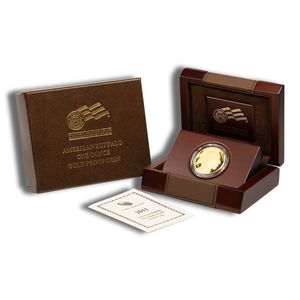
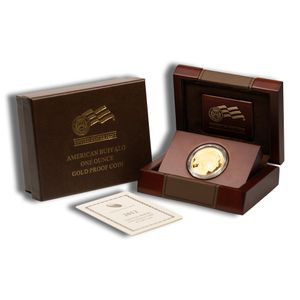
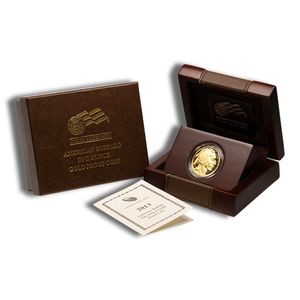
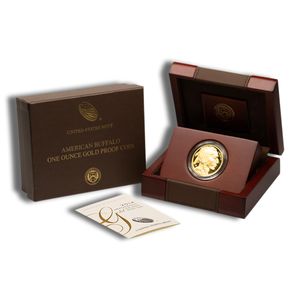
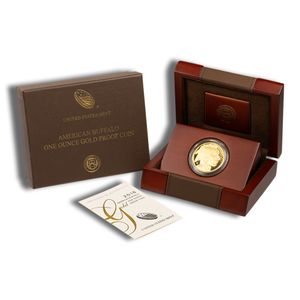
Proof and special finish coins such as proof Gold Buffalos and American Liberty High Relief issues include the original U.S. Mint box and certificate of authenticity when the listing says "with Box and COA." Listings marked impaired condition or cleaned or low grade are coins with visible wear, cleaning or surface problems. They're priced closer to their metal content and suit buyers focused mainly on gold weight.
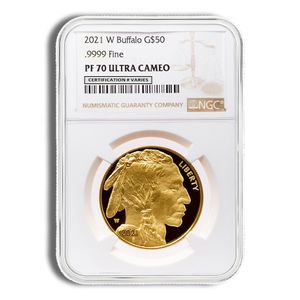
Certified coins arrive sealed in their NGC or PCGS holder with the grade and certification number on the label, and some listings note that the label style is random. Historic coins listed in grades like XF or AU will show honest circulation wear consistent with that grade. Every order is packed to protect coins, tubes and holders in transit.
Authenticity and Verification
We source gold coins from government mints, authorized distributors and established wholesale channels, and every coin is verified for authenticity, weight and purity before it reaches you. For bullion coins that means confirming weight, dimensions and design details against mint specifications. Classic and world coins get the same scrutiny, since older gold has a long history of counterfeiting.
Modern mints have added their own security features. Newer Maple Leafs carry radial lines and a micro-engraved maple leaf mark from the Royal Canadian Mint, and recent Britannias include latent image and other anti-counterfeiting details from the Royal Mint. Knowing what these features look like helps you recognize a genuine coin in hand.
Certified coins add independent verification. NGC and PCGS authenticate and grade each coin before sealing it in a holder with a unique certification number, which you can look up in the grading service's online database. As an authorized dealer for both services, we handle certified gold every day.
Liquidity and Resale Considerations
The gold coins that are easiest to sell are the ones every dealer recognizes and prices daily. American Gold Eagles, Gold Buffalos, Maple Leafs, Krugerrands, Philharmonics and Britannias trade in standard weights and purities, so a buyer can value them quickly without specialist knowledge.
Smaller world programs, historic coins and premium issues are actively traded too, but their resale price depends more on condition, demand for that particular type and the buyer's familiarity with it. Certified coins carry a grade that buyers accept at a glance, while a raw historic coin may need closer inspection before an offer is made.
Because spreads differ by product, it's worth checking the bid side before you buy. Our product pages show where we'd buy each coin back today, which gives you a practical sense of how easily it trades rather than a guess.
Storage and Security
Gold coins are compact, so even a sizeable holding fits in a fire-rated home safe that's bolted in place. For larger holdings, many owners use a bank safe deposit box or a private depository vault, keeping in mind that safe deposit box contents usually aren't insured by the bank.
Keep bullion coins in their original tubes or capsules, and handle proofs and fractionals by the edges, since fingerprints can leave lasting marks on mirrored or 24 karat surfaces. NGC and PCGS slabs store neatly in purpose-made slab boxes, and original mint boxes should stay with their COAs if you plan to sell a coin as a complete package later.
A cool, dry environment protects packaging and holders, and a few silica gel packs help inside a safe. Keep a written inventory with purchase records and photos for insurance and future sales.
Selling and Buyback Options
We buy back a wide range of gold coins through the same two-way marketplace you buy from. Our purchasing team quotes against live market pricing, and once you accept a quote, the coins are shipped to us and verified for weight, purity and condition before payment is issued.
Buyback prices depend on the coin type, how widely it trades, its condition and packaging, and current market conditions. A common 1 oz bullion coin is typically bid close to its gold value, while proofs, sets and graded coins are priced on their own demand, and impaired or cleaned coins are bid closer to melt.
Keeping coins in original packaging and never cleaning them helps them sell at the price their type and grade support. Looking at the bid shown on a product page before you buy lets you see the other side of the transaction from day one.
Why Buy Gold Coins?
Government backing is the clearest reason. A coin from the U.S. Mint, Royal Canadian Mint, Perth Mint or Royal Mint carries a face value and a gold content set by its issuing government, and that consistency is what makes coins like the Gold Eagle and Maple Leaf recognizable in almost any coin shop in the world.
Coins also offer flexibility. Fractional sizes from 1/20 oz to 1/2 oz let you buy gold in smaller amounts and sell part of a holding without parting with a whole ounce, while the 1 oz coin remains the standard most buyers start with.
Then there's design and history. Lunar animals, Queen's Beasts, centennial tributes to classic U.S. coin designs and pre-1933 double eagles give buyers who care about artistry or collecting a way to own gold that's more than a uniform ingot. Each still trades with its gold content at the heart of its price.
Why Buy from Bullion Standard?
Bullion Standard was founded in 2010 and is headquartered in San Diego, California. We hold an A+ rating with the Better Business Bureau, are members of the American Numismatic Association and the National Coin and Bullion Association, and are an authorized dealer for both PCGS and NGC.
Our pricing reflects real-time market conditions, and each product page shows both our ask and our bid so the full cost of ownership is clear. We believe you only get one chance to earn someone's trust in this business, which is why we source coins from reputable mints and distributors and verify every piece before it ships.
Checkout is secure and flexible, with Visa, Mastercard, American Express, Discover, PayPal, bank payments through Plaid, wire transfer, paper check and cryptocurrency through BitPay. Our product research tools let you compare gold coins by premium, historical premium, spread and liquidity, so you can choose between an Eagle, a Maple Leaf or a Krugerrand using data instead of marketing claims.
Get Near-Spot Pricing with Bullion Standard Pro
Bullion Standard Pro gives members live, executable wholesale bid and ask pricing across a broad range of precious metals products. Pro pricing carries no additional dealer markups or dealer spreads, so premiums move with actual wholesale supply and demand rather than a fixed retail schedule.
For buyers who add gold coins regularly or watch premiums closely, that structure makes the difference between two similar coins easy to see. Pro also values your holdings at live wholesale bid prices, showing what a portfolio would realistically bring today rather than an estimated retail figure.
Members also get market intelligence such as premium percentile rankings, spread analysis, buy/sell ratio indicators and wholesale market activity. Those tools help you judge whether a coin's premium is typical or stretched before you commit, using the same kind of data found in other financial markets.


 (833) 278-4653