Buy Physical Silver Bars, Rounds, & Coins Online
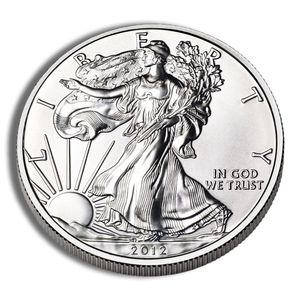
This page brings together every form of physical silver we carry, from sovereign bullion coins and privately minted rounds to refinery bars, 90% junk silver, and coins certified by NGC and PCGS. You'll find American Silver Eagles from the U.S. Mint, Mexican Libertads from Casa de Moneda de México, Perth Mint Lunar, Kookaburra, and Koala coins, Royal Mint Britannias and Queen's Beasts, and Royal Canadian Mint Maple Leafs. Bars from Geiger Edelmetalle, PAMP Suisse, Valcambi, Johnson Matthey, Engelhard, and other established refiners sit right alongside them.
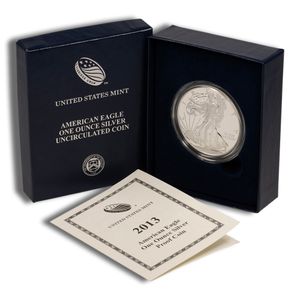
Sizes run from 1 gram bars and 1/10 oz rounds through 1 oz, 2 oz, 5 oz, and 10 oz pieces, up to kilo coins and 100 oz bars. Packaging varies just as widely. You'll see bars sealed in assay cards, coins in mint tubes and capsules, a sealed American Eagle monster box, and proof issues that ship with their original box and certificate of authenticity.
Every listing is priced live against the silver spot price, and each product page shows the bid/ask spread so you can see what we pay as well as what we charge. That two-way view is central to how we run our silver marketplace, because the price you pay today is only half of the transaction.
What Are Physical Silver Bars, Rounds, & Coins?
Physical silver is metal you can hold: refined silver formed into a coin, round, bar, or grain rather than a paper claim, a fund share, or a futures contract. The three main formats share the same raw material but differ in who makes them and what they represent. Coins are struck by government mints and carry a face value and legal tender status. Rounds are coin-shaped pieces from private mints with no face value, and bars are produced by refineries and private mints in standardized weights.
Each format fits a different buyer. Bars usually carry the lowest premium per ounce, which is why buyers focused on metal content often look first at 10 oz, kilo, and 100 oz sizes. Sovereign coins like the Silver Eagle and Maple Leaf cost a little more but bring government backing and instant recognition, while rounds land between the two, offering minted quality at premiums closer to bar pricing.
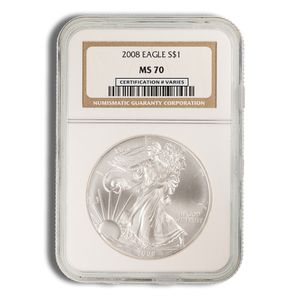
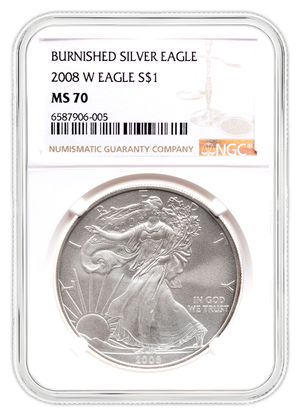
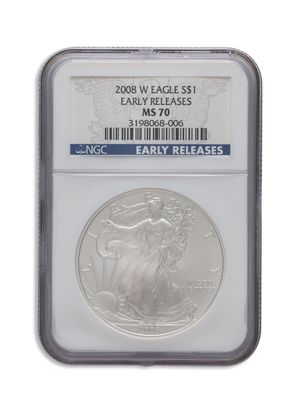
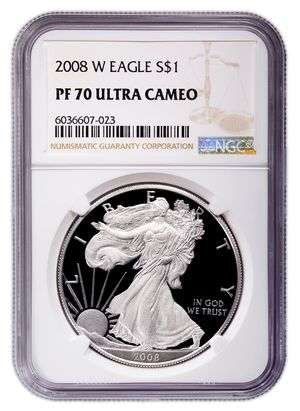
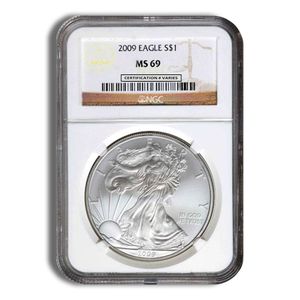
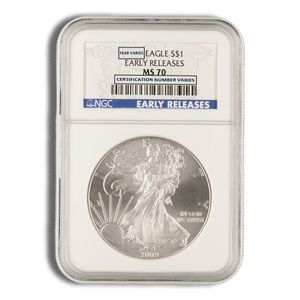
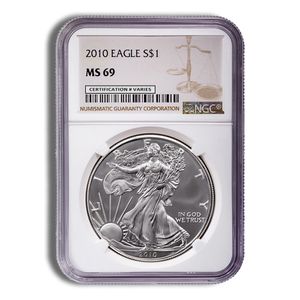
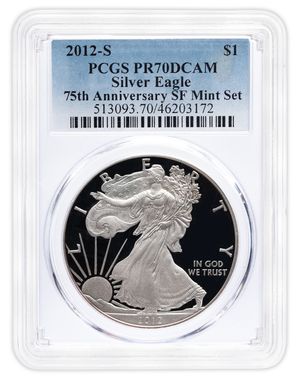
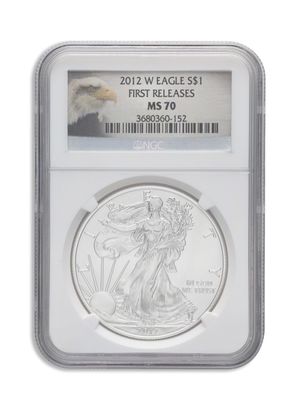
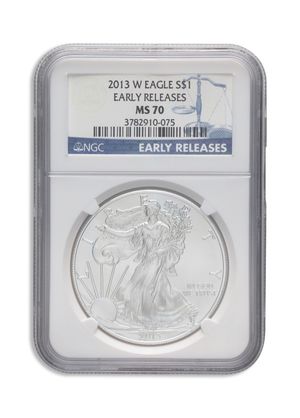
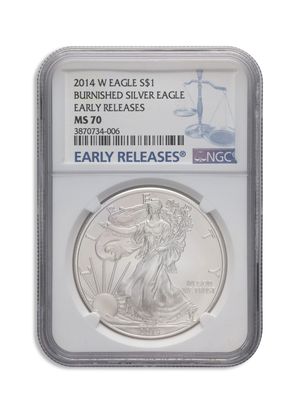
Our silver selection also covers two areas that price differently from newly minted bullion. Junk silver refers to U.S. dimes, quarters, half dollars, and dollars made with 90%, 40%, or 35% silver content and sold by face value rather than by the ounce. Certified coins are sealed and graded by NGC or PCGS, so their pricing reflects condition and collector demand on top of silver content. Morgan dollars, Peace dollars, modern commemoratives, and slabbed Eagles all belong to that numismatic group.
History and Background
Silver anchored everyday money in the United States from the start. The Coinage Act of 1792 defined the dollar in silver, and large silver dollars like the Morgan, struck from 1878 to 1904 and again in 1921, and the Peace dollar that followed it circulated as working currency. Dimes, quarters, and half dollars stayed 90% silver until a coin shortage and climbing silver use led Congress to remove silver from dimes and quarters in 1965 and cut the half dollar to 40%.
The modern bullion coin era took shape in the 1980s. Mexico began striking the silver Libertad in 1982, the U.S. Mint introduced the American Silver Eagle in 1986, and the Royal Canadian Mint followed with the Silver Maple Leaf in 1988. China's Panda, Australia's Kookaburra, and Britain's Britannia broadened the field, and later programs such as the Perth Mint's Lunar series, the U.S. Mint's 5 oz America the Beautiful coins, and the Royal Mint's Queen's Beasts brought new sizes and designs into mainstream bullion buying.
Demand shifted underneath all of this. Photography once consumed large amounts of silver, and as film faded, electronics, solar panels, and other industrial uses became a major share of total consumption. Silver today sits in an unusual spot, serving as both a monetary metal that people buy in coin and bar form and a working material that manufacturers use up in finished goods.
Purity, Weight, and Specifications
Silver is weighed in troy ounces of 31.1035 grams, about 10% heavier than the ounce used on a kitchen scale. Most modern bullion is .999 fine, including the American Silver Eagle, the Mexican Libertad, and the current Britannia, while the Royal Canadian Mint strikes the Silver Maple Leaf at .9999. Britannias dated before 2013 use the older .958 Britannia silver standard, and our catalog includes examples of both.
Historic coinage follows its own standards. Morgan and Peace dollars are .900 silver and contain about .7734 troy oz of pure silver each, and $1 in face value of 90% dimes, quarters, or half dollars holds roughly .715 troy oz once normal wear is factored in. Kennedy halves dated 1965 to 1970 and collector Eisenhower dollars are 40% silver, wartime nickels from 1942 to 1945 are 35% silver, and Mexican pieces like the 1957 5 pesos Constitution coin are .720 fine.
Bars are marked with their weight, purity, and the refiner's hallmark, and many carry a serial number that matches an assay card or certificate. A kilo bar or coin equals about 32.15 troy oz, and gram bars from 1 gram to 100 grams let you buy in small, precise increments. China's Panda moved from 1 oz to 30 grams in 2016, which is why you'll see both weights listed for that series.
Available Brands, Mints, and Product Variations
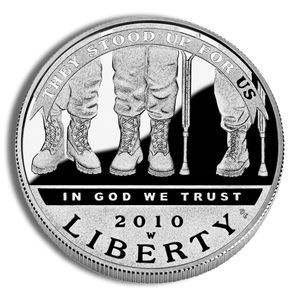
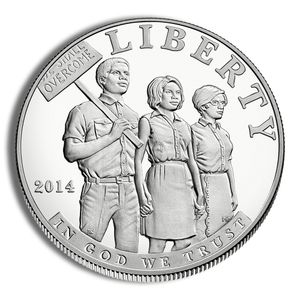
The U.S. Mint supplies the largest share of our silver catalog. That includes American Silver Eagles from 1986 forward in bullion, proof, and burnished versions, the redesigned Type 2 Eagle introduced in 2021, and 5 oz America the Beautiful coins such as Grand Canyon, El Yunque, and Saratoga. Modern commemorative dollars honoring the Los Angeles Olympics, the Civil War, Yellowstone, Jamestown, and the Baseball Hall of Fame appear here too, along with the revived Peace dollar.
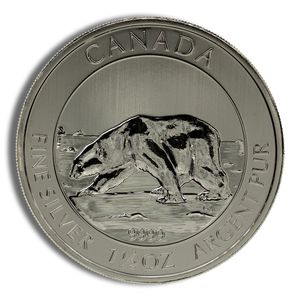
From abroad, the Perth Mint is represented by Lunar Series I, II, and III coins in sizes from 1/2 oz to 1 kilo, plus Kookaburra, Koala, and Kangaroo issues. The Royal Mint contributes Britannias, the 2 oz Queen's Beasts, and the Tudor Beasts, and the Royal Canadian Mint offers Maple Leafs, the 2 oz Twin Maple Leaf, wildlife coins like the Wood Bison, and the high relief Lucky Dragon. You'll also find China Mint Pandas, South African Mint Krugerrands, Austrian Mint Philharmonics, and KOMSCO's Chiwoo Cheonwang series from South Korea.
Bars and rounds come from a wide group of refiners and private mints, including Geiger Edelmetalle, PAMP Suisse, Valcambi, Johnson Matthey, Engelhard, Istanbul Gold Refinery, Asahi Refining, Sunshine Mint, Scottsdale Mint, Argentia, and Frontier Mint. Random brand bars and rounds keep costs down by letting us fill the order from whichever approved producer is in stock, while licensed designs such as Major League Baseball rounds lean toward gifting and collecting. For buyers who want the smallest units possible, we also carry .9999 silver grain in sealed bottles and Valcambi's divisible CombiBar format.
Pricing, Premiums, and Market Factors
Every silver product starts from the spot price, which reflects wholesale trading in large bars and futures contracts. What you pay at checkout is spot plus a premium, and that premium covers refining, minting, packaging, distribution, and dealer costs. Because silver's spot price per ounce is low relative to those fixed manufacturing costs, silver premiums tend to be a larger percentage of the total price than gold premiums.
Several factors move premiums from one listing to the next. Large bars spread fabrication cost over more ounces, so a 100 oz bar usually costs less per ounce than a 1 oz round, and a 1 gram bar costs considerably more. Sovereign coins add the cost of government minting, proof and burnished finishes add extra striking steps, and a box and certificate of authenticity add packaging cost. Scarcity plays a role in older issues such as Lunar Series I coins and GSA Carson City Morgan dollars, where collector demand outweighs metal content.
Supply conditions in the physical market also matter. When retail demand jumps, mint allocations and refinery output can lag, and premiums widen even if spot barely moves. We price every product live and display its bid/ask spread on the product page, so you can compare the full cost of ownership across formats instead of looking at the asking price alone.
Condition, Packaging, and What to Expect
New bullion coins typically arrive in mint tubes or protective capsules, and the 2021 Type 2 Silver Eagle monster box is a sealed U.S. Mint shipping box holding 500 coins in 25 tubes. Bars from Geiger, PAMP, IGR, and others may come sealed in assay cards, while larger bars generally ship loose with their hallmark and serial number stamped on the metal. Proof coins listed "with box and COA" include the original mint presentation case and certificate.
Silver reacts with sulfur in the air, so light toning, small spots, and handling marks can appear on brilliant uncirculated coins, especially older dates. White "milk spots" are a known trait of some Maple Leafs and Silver Eagles and don't affect silver content. Listings marked imperfect or impaired, along with cull Morgan dollars and cull junk silver, are priced with visible wear or damage in mind.
Random year listings mean we choose the date from available inventory, and random brand listings work the same way for the producer. Circulated junk silver shows the wear you'd expect from decades of use, while graded coins arrive in their NGC or PCGS holder exactly as certified. We pack each order to keep original mint packaging, tubes, and assay cards intact in transit.
Authenticity and Verification
We source silver from government mints, established refineries, and wholesale distributors with documented supply chains, and every product is checked for authenticity, weight, and purity before it ships. Checks focus on measurable properties such as weight, dimensions, and the physical behavior of silver, which counterfeit pieces struggle to match.
Many modern products carry their own protections. The Royal Canadian Mint's Silver Maple Leaf uses precision radial lines and a micro-engraved security mark, and the Royal Mint added a latent image and other anti-counterfeiting features to the Britannia in 2021. Bars in assay cards pair a serial number with the refiner's certification of weight and purity, and keeping that card sealed preserves the record.
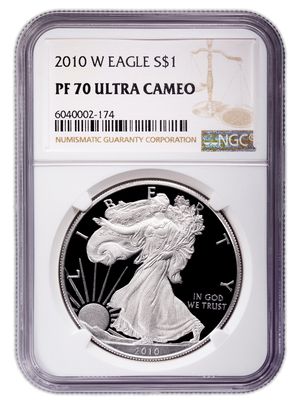
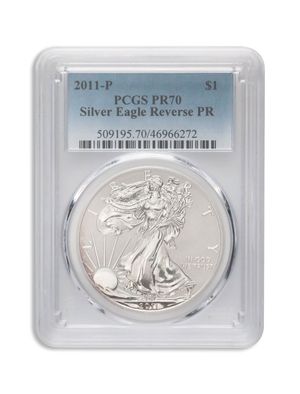
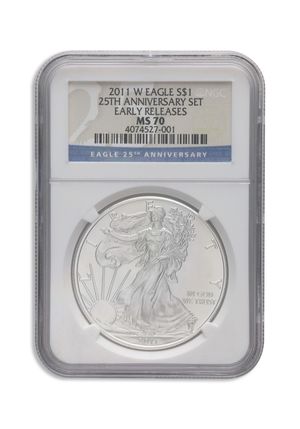
For graded coins, NGC and PCGS each assign a certification number that you can look up in their online databases to confirm the grade, date, and holder. Bullion Standard is an authorized dealer for both services, and we handle certified Morgan dollars, Peace dollars, Silver Eagles, and commemoratives in the same way we handle bullion: verified before shipment and described accurately on the listing.
Liquidity and Resale Considerations
The silver products that resell most easily are the ones the market already knows by sight. American Silver Eagles, Canadian Maple Leafs, Britannias, Libertads, and bars from recognized refiners trade every day among dealers and private buyers, so their bid prices track spot closely. Junk silver is also highly standardized, since buyers value it by face value and silver content rather than by individual date.
Specialty items follow a different path. A proof commemorative, a gilded Lunar coin, or a licensed design may attract strong interest from collectors but draws from a smaller pool of buyers, and its resale price depends more on demand for that specific piece. Graded coins are priced by grade and certification service, which makes the condition and the holder just as important as the silver inside.
Thinking about resale before you buy is one of the most useful habits a silver buyer can develop. Because our product pages display current bid and ask prices together, you can compare how tightly different products trade and factor that spread into your choice of format.
Storage and Security
Silver takes up far more space than gold for the same dollar amount, so storage planning matters early. A monster box of 500 Silver Eagles weighs well over 30 pounds, and a handful of 100 oz bars can fill a safe shelf quickly. A heavy home safe bolted to the floor works for moderate holdings, while bank safe deposit boxes and private depository vaults suit larger amounts or buyers who'd rather keep metal offsite.
Original packaging is your first line of protection. Keep coins in their tubes or capsules, leave assay cards sealed, and store graded slabs upright in boxes designed for them. Fractional pieces and gram bars are easy to misplace, so a dedicated container keeps them organized and accounted for.
Because silver tarnishes, environment matters as much as security. Store metal in a cool, dry place away from rubber bands, PVC flips, and household chemicals that contain sulfur, and add silica gel packs to a safe or storage box to control humidity. Handle uncirculated and proof coins by the edges, ideally with cotton or nitrile gloves.
Selling and Buyback Options
Selling silver back to a dealer is straightforward when the product is recognizable and in good condition. Our purchasing team quotes against live market pricing, and the process follows a clear sequence: you lock in a price, ship the metal to us, and we verify it on arrival before payment is issued. Because we operate a two-way market, the same products we sell are ones we actively buy.
Buyback pricing depends on several factors. Widely traded coins and bars from known refiners usually draw bids closest to spot, while damaged coins, items removed from their assay cards, or pieces with heavy toning may be bid lower. Graded coins are quoted by grade, certification service, and current numismatic demand rather than by silver content alone.
Market conditions also shape the offer. When dealers are flooded with sell orders, bid prices on common products can soften relative to spot, and when physical supply is tight, they can firm. Checking the bid shown on each product page gives you a realistic sense of what to expect before you request a quote.
Why Buy Physical Silver Bars, Rounds, & Coins?
Silver's lower price per ounce makes it accessible and easy to divide. A buyer can add a single 1 oz round, a tube of Maple Leafs, or a 10 oz bar without committing to the cost of a gold coin, and smaller units make it simple to sell part of a holding without breaking up a larger piece. The range of formats on this page, from gram bars to kilo coins, lets you match size and premium to your own priorities.
Silver is also an industrial metal, and that sets it apart from gold. It has the highest electrical and thermal conductivity of any metal, which is why it's used in electronics, electrical contacts and switches, automotive electrical systems, brazing alloys, and medical products that rely on its antimicrobial properties. Solar photovoltaic cells use silver paste to carry current, and that application has become one of the largest single sources of industrial use as solar installations have expanded.
Supply works differently for silver too. Much of the world's mined silver comes as a byproduct of lead, zinc, copper, and gold mining, so output depends partly on decisions made about other metals, and silver used in many manufactured goods is spread too thin to recover economically. None of this predicts where prices go, but it explains why silver's market draws attention from industry, collectors, and individual buyers at the same time.
Why Buy from Bullion Standard?
Bullion Standard was founded in 2010 in San Diego, California, and grew from a local operation into a national online marketplace by focusing on transparency and long-term customer trust. We hold an A+ rating with the Better Business Bureau, belong to the American Numismatic Association and the National Coin and Bullion Association, and are an authorized dealer for both PCGS and NGC. Our view is simple: in this industry, you only get one chance to earn someone's trust.
Pricing on every silver product reflects real-time market conditions, and the bid/ask spread is visible on each product page so the full transaction is clear before you commit. Our research tools let you compare products by premium, historical premium, spread, liquidity, and volatility, which helps you judge relative value using data rather than marketing claims.
Checkout is secure and flexible, with Visa, Mastercard, American Express, Discover, PayPal, bank-connected payments through Plaid, wire transfer, paper check, and cryptocurrency through BitPay. Every order is verified before it ships, and our customer service team supports you after delivery as well as before it, including when you decide to sell.
Get Near-Spot Pricing with Bullion Standard Pro
Bullion Standard Pro gives members access to live, executable wholesale bid and ask pricing across a broad range of silver products. Instead of indicative quotes, members see prices that reflect real-time supply and demand in the wholesale market and can transact at them directly, without additional dealer markups or dealer spreads added on top.
That structure suits silver especially well. Because premiums make up a larger share of silver's total price than they do for gold, trimming the spread has a noticeable effect on cost per ounce, particularly for repeat buyers and anyone who adds to their holdings regularly in tubes, monster boxes, or large bars. Premiums and spreads move naturally with market conditions, so members can watch how individual products trade over time.
Pro members also see their holdings valued at live wholesale bid prices, giving a realistic picture of what the metal would bring today rather than an estimated retail figure. Combined with premium history, spread analysis, buy/sell ratio indicators, and wholesale market activity, it's designed to give silver buyers the kind of visibility usually found in more developed financial markets.


 (833) 278-4653