 (833) 278-4653


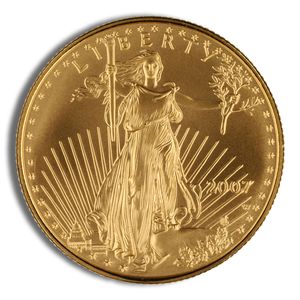
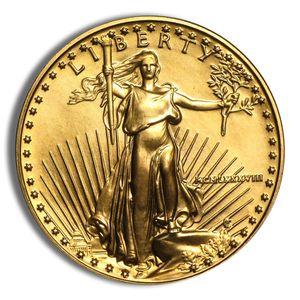
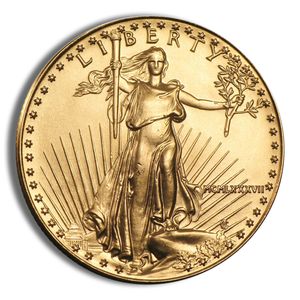
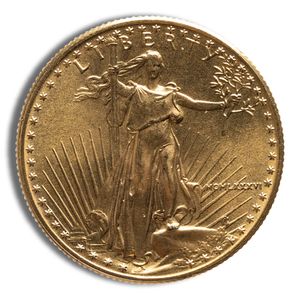
Buy 1/2 oz American Gold Eagles Online
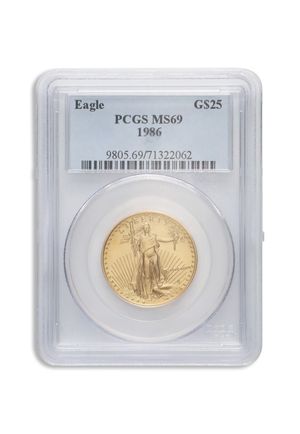
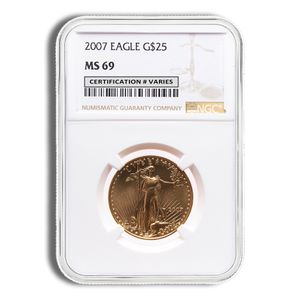
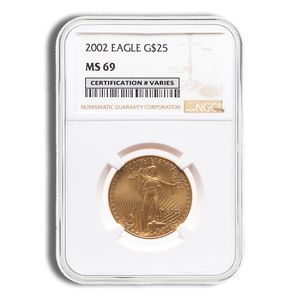
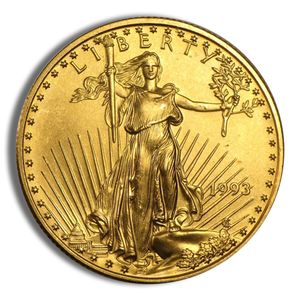
Our catalog of 1/2 oz American Gold Eagles covers the full range of what this format has to offer, from raw brilliant uncirculated coins struck at the West Point Mint to certified examples graded MS69 and MS70 by NGC and PCGS, along with Proof and Burnished collector editions accompanied by their original box and Certificate of Authenticity. Whether you're sourcing a specific year dating back to the program's launch in 1986 or prefer the flexibility of a random year bullion coin, the selection here reflects real depth across both bullion and collector variants.
Every coin in this lineup contains exactly 0.5 troy ounces of gold at a purity of 0.9167 fine, carrying a face value of $25 and a diameter of 27mm. Bullion Standard sources these coins from reputable distributors, wholesalers, and the secondary market, and each product is verified for authenticity, weight, and purity before shipping. Our pricing reflects live market conditions, and our two-way market structure means you can both buy and sell within the same transparent platform.
The grid above reflects over 100 individual listings spanning decades of production, multiple grades, finish types, and packaging configurations. If you're evaluating premiums across raw versus certified coins, comparing Proof editions to standard bullion strikes, or simply looking for a specific year, the breadth here is designed to serve a wide range of buyer needs without requiring you to look elsewhere.
What Are 1/2 oz American Gold Eagles?
The 1/2 oz American Gold Eagle is a fractional bullion coin issued by the United States Mint as part of the American Gold Eagle program. It contains half a troy ounce of gold alloyed with small amounts of silver and copper to reach a total coin weight of approximately 0.5455 troy ounces, which gives the coin added durability without reducing its gold content. The $25 face value is largely symbolic, as the coin's actual worth is tied directly to its gold content and current market pricing.
Compared to the full 1 oz American Gold Eagle, the half-ounce denomination appeals to buyers who want genuine government-backed gold at a lower per-coin acquisition cost while retaining the recognizability and broad market acceptance of the Eagle program. It occupies a practical middle ground between the smaller fractional denominations (1/10 oz and 1/4 oz) and the full ounce coin, making it a useful format for buyers who are managing position sizes, building a collection across denominations, or simply prefer a more flexible unit of gold ownership.
The program also includes Proof editions struck at West Point (or historically Philadelphia) with mirrored fields and frosted design relief, as well as Burnished coins introduced in 2006 with a distinctive matte finish. Certified examples graded by NGC or PCGS add a layer of independently verified condition assessment, which matters most to collectors or buyers with a longer-term focus on grade-specific premiums.
History and Background
The American Gold Eagle program was authorized by the Gold Bullion Coin Act of 1985 and launched with the 1986 dated coins, making 1986 the inaugural year for every denomination including the 1/2 oz. The program was specifically designed to give American buyers a government-issued gold bullion coin to compete with internationally recognized options that had been circulating in U.S. markets, including the South African Krugerrand and the Canadian Gold Maple Leaf. The original series of 1986 coins bears Roman numeral dating, a convention that continued through the early production years before transitioning to standard Arabic numerals.
From 1986 through 1991, the obverse featured Augustus Saint-Gaudens' iconic Lady Liberty design originally created for the $20 double eagle gold coin in 1907, adapted for the modern bullion program. Miley Busiek designed the original reverse depicting a family of eagles, which remained largely unchanged for decades. In 2021, a redesigned reverse was introduced featuring a close-up portrait of an eagle, modernizing the coin while preserving the obverse design legacy. The coins in this catalog range from the inaugural 1986 issues through the 2020 Proof editions, representing the bulk of the program's historical production run under the original reverse design.
Proof editions were initially struck at the Philadelphia Mint, as indicated by the "P" mint mark seen on coins from 1987 through 1993. Beginning in 1993 and moving forward, West Point assumed production of the Proof editions, with the "W" mint mark reflecting that transition. The shift to West Point for both bullion and collector strikes has been consistent throughout the modern era of the program, and West Point remains the primary facility associated with American Gold Eagle production today.
Purity, Weight, and Specifications
Every 1/2 oz American Gold Eagle contains exactly 0.5 troy ounces of fine gold at a purity of 0.9167, which corresponds to 22-karat gold. The remaining alloy composition is a blend of silver and copper, which gives the coin a slightly warmer color tone compared to 24-karat products and provides meaningful resistance to scratching and wear during handling. The total coin weight, including the alloy, is approximately 0.5455 troy ounces.
The coin measures 27mm in diameter. Thickness measurements across catalog listings vary slightly between 2.15mm and 2.24mm depending on the year of issue, which reflects minor production tolerances across decades of manufacturing. These dimensional variations are normal and do not affect the coin's gold content or authenticity. The face value is $25, which is the legal tender denomination assigned by the U.S. government under the authorizing legislation.
Coins packaged in original U.S. Mint tubes are typically grouped in quantities of 40 per tube, with some years showing variations in standard tube or box quantities. Proof editions are individually packaged in presentation cases with a Certificate of Authenticity. These packaging configurations are reflected in the product listings above and are worth noting when comparing acquisition formats, particularly for buyers interested in maintaining original mint presentation for resale or collection purposes.
Available Brands, Mints, and Product Variations
All coins in this catalog are products of the United States Mint, with West Point serving as the primary production facility across both bullion and collector strikes. The "W" mint mark appears on the majority of coins listed here, and for early Proof editions from 1987 through approximately 1993, the "P" mint mark from the Philadelphia Mint appears on the Proof coins from those years. This detail matters to date-specific collectors and buyers who track mint mark variations as part of their focus on the program's full production history.
The BU (brilliant uncirculated) listings represent standard bullion strike coins intended for buyers focused on gold content rather than collector grade. These are typically available in individual coins or as part of tube packaging. Alongside the raw BU coins, the catalog includes professionally graded examples certified by NGC and PCGS at grades of MS69 and MS70. The MS70 designation, representing a perfect Mint State grade, commands a meaningful premium above MS69 and is relatively rare across most production years. Buyers comparing MS69 NGC to MS69 PCGS examples of the same year should be aware that both represent coins with nearly full mint luster and only the most minor imperfections under magnification, but the two services use independent grading standards.
Proof editions with original box and Certificate of Authenticity appear across nearly every year in the catalog from 1987 onward, along with Burnished examples from 2006, 2007, and 2008 carrying the West Point "W" mint mark. The Burnished coins were produced using a specialized minting process that creates a distinctive non-mirror, non-bullion finish, and they were sold directly by the U.S. Mint in collector packaging before that program was discontinued. Random year BU coins are also available for buyers focused purely on gold content at the most accessible premium, where specific year is not a priority.
Pricing, Premiums, and Market Factors
The price of any 1/2 oz American Gold Eagle moves in direct relation to the spot price of gold, which fluctuates continuously based on global trading activity. The premium above spot reflects the additional costs built into producing, packaging, distributing, and retailing a government-issued coin with this level of recognition and quality. For raw BU examples, premiums tend to be more modest. Certified coins, particularly MS70-graded examples, carry substantially higher premiums driven by the scarcity of perfect grades and demand from collectors who track population reports from NGC and PCGS.
Proof editions with original packaging typically trade at premiums above standard bullion strikes due to the more labor-intensive production process, lower mintage figures in many years, and the collector appeal of the original mint presentation. Burnished coins from 2006 through 2008 occupy a similar collector niche with their own distinct mintage history. Among bullion strikes, older dated coins from the early program years, particularly 1986 through the early 1990s, can carry above-average premiums due to relative scarcity compared to higher-mintage years from later decades.
Bullion Standard displays pricing that reflects current wholesale market conditions, and the bid/ask spread visible on each product page gives buyers a clear picture of both the acquisition cost and the current buyback value. This transparency is central to how the platform is structured. Understanding the spread is as important as understanding the premium, because the spread represents the true cost of the round trip from purchase to potential resale at any given moment.
Condition, Packaging, and What to Expect
Raw BU coins ship in the condition expected of a brilliant uncirculated strike, meaning they will show full mint luster with no circulation wear. Minor contact marks, light bag marks, or handling marks are normal and do not indicate a defect. These are not graded coins and will not arrive in holders. For buyers who require a specific grade designation, the certified listings in the catalog are the appropriate choice.
Proof editions listed with box and Certificate of Authenticity are expected to arrive in or close to original U.S. Mint presentation condition, but buyers should understand that as secondary market items, some variation in box condition is possible. The coin itself, sealed in its original capsule, is typically the primary focus for most buyers of Proof editions. Burnished coins listed without box and COA will arrive in individual coin capsules only, as the original packaging is not included with those listings.
Random year coins are exactly that. No specific year is guaranteed, and the coin shipped may come from any year of production within the program. This format suits buyers who are indifferent to specific dates and are focused on acquiring gold content at a competitive premium. Certified coins ship in their original tamper-evident NGC or PCGS slabs, which protect the coin and permanently display the assigned grade, certification number, and coin details.
Authenticity and Verification
American Gold Eagles produced by the United States Mint are among the most widely recognized and easiest to authenticate gold bullion coins available in the global marketplace. The 22-karat alloy composition, specific coin dimensions, and design details are well-documented and easily cross-referenced. Buyers and dealers can verify the physical specifications, including diameter, thickness, and weight, against published U.S. Mint standards using basic precision instruments.
Certified coins in NGC or PCGS slabs carry an additional layer of verified authenticity. Both services use multi-step grading and authentication processes involving trained numismatists, and each slab includes a unique certification number that can be verified through each service's online registry. Bullion Standard is an authorized dealer for both NGC and PCGS, which supports our ability to source and represent certified coins accurately.
All products sold through Bullion Standard are verified for authenticity, weight, and purity as part of our standard sourcing process. We source from reputable U.S. Mint authorized distributors, established wholesalers, and the secondary market, and our team inspects products before they reach customers. Our A rating with the Better Business Bureau, along with membership in the American Numismatic Association and the National Coin and Bullion Association, reflects a consistent commitment to product integrity across our entire catalog.
Liquidity and Resale Considerations
The American Gold Eagle program is one of the most liquid gold bullion products in the United States market. Coin dealers, precious metals wholesalers, online platforms, and private buyers throughout the country are broadly familiar with the coin's specifications, gold content, and market value. This familiarity makes resale straightforward compared to less recognized formats or foreign-issued coins that may require additional buyer due diligence before a transaction can be completed.
Raw BU coins tend to have the tightest spreads and the most straightforward resale process, as buyers across the market transact on gold content and condition without requiring specialized knowledge of individual years or certifications. Certified MS69 and MS70 coins have a more defined collector market, where liquidity can fluctuate based on current collector demand, population report data, and prevailing premiums for certified Eagles at any given time. Proof and Burnished editions trade in a somewhat more specialized market where original packaging, year-specific mintage data, and overall condition play larger roles in determining what a buyer will pay.
Wider program recognition generally supports stronger liquidity across all variants. Buyers and dealers who encounter any American Gold Eagle, regardless of year or finish, typically have a clear framework for evaluating and pricing it. That baseline familiarity is one of the practical advantages of staying within a well-established government-issued coin program rather than seeking out more obscure formats.
Storage and Security
Individual 1/2 oz American Gold Eagles are compact enough to store comfortably in nearly any secure environment, from a home safe to a bank safe deposit box or a professional vault storage facility. Because they arrive in tamper-evident slabs (certified), mint capsules (Proof and Burnished), or direct from tube packaging (bullion strikes), the coin's surface is already protected in most configurations without requiring additional handling or repackaging.
For buyers accumulating multiple coins over time, maintaining original tube packaging when available is a practical choice for keeping coins organized and minimizing surface contact. Certified coins in their NGC or PCGS holders should be stored in a stable environment away from extreme heat, humidity, and direct light, as these factors can affect the slab itself without necessarily affecting the coin. A consistent, moderate temperature environment is generally sufficient for long-term coin preservation.
Buyers holding meaningful quantities of gold should evaluate whether home storage or professional vault storage better suits their situation. Professional vault services typically offer insured, climate-controlled storage with documented inventory, which can be an efficient solution for larger holdings. For smaller accumulations, a quality home safe rated for fire and theft resistance offers accessible storage without third-party custody. Either approach is valid depending on the scale of the holding and the buyer's preference for direct access versus institutionally managed security.
Selling and Buyback Options
Bullion Standard operates as a two-way marketplace, which means we actively purchase gold coins including American Gold Eagles from customers in addition to selling them. When you're ready to sell, the buyback process begins with reviewing the current bid price displayed on each product page, which reflects live wholesale market conditions rather than a static or manually updated estimate. This real-time pricing structure allows sellers to evaluate what the market is currently offering without the friction of a separate quote request.
Factors that influence buyback pricing for 1/2 oz American Gold Eagles include the coin's condition, whether original packaging is included, the specific year and mint mark, and whether the coin is raw or certified. Proof editions with intact original box and COA typically receive pricing that reflects their collector premium. Raw BU coins are typically evaluated on gold content and overall condition. Certified coins are priced with reference to current market data for that specific grade and certification service. Products in better condition, with intact packaging, from recognizable years, will generally attract stronger buyback pricing.
The streamlined buyback process at Bullion Standard is designed to reduce the friction typically associated with selling physical gold. Our purchasing team reviews incoming items efficiently, and payments are processed through the same secure infrastructure used for purchases. Sellers who are familiar with Bullion Standard's platform tend to appreciate the transparency of seeing bid pricing openly displayed before committing to a transaction, rather than navigating a negotiation without clear pricing benchmarks.
Why Buy 1/2 oz American Gold Eagles?
The half-ounce denomination occupies a practical position within the American Gold Eagle program that the full ounce and smaller fractionals don't quite replicate. For buyers who find the full 1 oz coin's price point more than they want to commit to in a single transaction, the 1/2 oz provides a meaningful unit of government-issued gold at a lower per-coin acquisition cost while retaining essentially the same market recognition and resale familiarity. It's a format that scales well whether someone is purchasing one coin or accumulating across multiple transactions over time.
The combination of legal tender status, U.S. Mint production, and decades of consistent global market recognition makes the 1/2 oz American Gold Eagle one of the more straightforward gold products to buy, hold, and eventually resell. Collectors focused on the full American Gold Eagle denomination set will naturally need the half-ounce as part of any complete collection, which sustains steady demand for specific dated examples including early program years from 1986 through the early 1990s.
The range of available formats, from raw bullion to certified MS70 examples and Proof coins with original packaging, means the half-ounce Eagle can serve buyers with different priorities. Buyers focused primarily on gold content at a competitive premium will gravitate toward BU examples. Those with an interest in condition-specific collecting or long-term numismatic considerations will find the certified listings relevant. And buyers drawn to the aesthetics and presentation of collector-grade coins will appreciate the Proof and Burnished options available across multiple decades of the program.
Why Buy from Bullion Standard?
Bullion Standard was founded in 2010 and has grown into a nationally recognized precious metals marketplace by prioritizing transparency over every other consideration. Our pricing reflects real-time market conditions, the bid/ask spread is displayed openly on each product page, and we don't use high-pressure sales tactics or artificially inflate premiums to create the appearance of a discount elsewhere. What you see is grounded in what the wholesale market is actually doing at any given moment.
We are an authorized dealer for both NGC and PCGS, a member of the American Numismatic Association and the National Coin and Bullion Association, and we hold an A rating with the Better Business Bureau. Every product we sell is verified for authenticity, weight, and purity before it ships. Our fulfillment process is reliable, our customer service team is accessible, and our checkout accepts a broad range of payment methods including Visa, Mastercard, American Express, Discover, PayPal, bank-connected payments through Plaid, wire transfer, paper check, and cryptocurrency through BitPay.
What distinguishes Bullion Standard most clearly is that we operate as a genuine two-way marketplace. Liquidity is built into the platform from the start, not treated as an afterthought when a customer eventually decides to sell. By displaying live buyback pricing alongside purchase pricing, we give customers a complete picture of what they're transacting at before they commit, which is the kind of transparency that builds long-term trust in an industry where it has historically been in short supply.
Get Near-Spot Pricing with Bullion Standard Pro
Bullion Standard Pro is designed for buyers who want to transact closer to the wholesale market. Members gain access to live, executable wholesale bid and ask pricing across a broad range of precious metals products including American Gold Eagles. Rather than displaying indicative prices, the platform is built around real-time executable pricing that reflects actual supply and demand conditions in the wholesale bullion market at the moment of the transaction.
Unlike the standard retail model, Bullion Standard Pro does not apply additional dealer markups or fixed retail spreads on top of member pricing. Members transact at wholesale market prices directly, which means premiums and bid/ask spreads fluctuate naturally based on underlying market conditions rather than being held at static retail levels. For buyers who are price-sensitive or who transact frequently, this structure can meaningfully reduce the cost of acquisition over time. The platform also provides live portfolio valuation using executable wholesale bid pricing, which offers a more realistic view of current liquidation value than retail-based portfolio estimates.
Beyond pricing, Bullion Standard Pro includes access to proprietary market intelligence tools including historical premium analysis, premium percentile rankings, spread analysis, liquidity metrics, and market sentiment indicators. For buyers evaluating 1/2 oz American Gold Eagles across multiple years, grades, and formats, these tools provide objective data that supports more informed comparisons rather than relying on marketing claims or static product descriptions. The goal is to reduce information asymmetry and give members the kind of analytical visibility that has traditionally been available only at the institutional level.