Buy 10 Kilo Silver Bars Online
Our catalog of 10 kilo silver bars brings together some of the most recognized names in the global refinery market, including products from Argor-Heraeus of Switzerland and Geiger Edelmetalle, alongside random brand options for buyers prioritizing metal content over brand specificity. Each bar in this selection carries a silver content of approximately 160.75 troy ounces, making them among the largest commercially traded bar formats available to individual buyers.
Formats range from cast bars with a raw, industrial finish to sealed Geiger bars that come in tamper-evident security packaging. Whether you're looking for a specific refinery's product or a more flexible random brand option, the selection here reflects real market availability rather than an idealized product lineup.
Bullion Standard operates as a transparent marketplace, and our pricing on large-format silver bars reflects live market conditions rather than fixed retail markups. The bid/ask spread for each product is visible on the product page, giving you a clear picture of both acquisition cost and current wholesale liquidation value before you commit to a purchase.
What Are 10 Kilo Silver Bars?
A 10 kilo silver bar contains exactly 10,000 grams of silver, which translates to approximately 321.5 troy ounces. Despite the name used in this section of our catalog, the bars listed here are 5 kilo bars, each containing roughly 160.75 troy ounces of .999 fine silver. This distinction matters because bar weight directly affects liquidity, storage logistics, and the premium structure relative to spot price.
Large-format silver bars like these occupy a different market segment than 1 oz rounds or 10 oz bars. They're typically favored by buyers who want to acquire meaningful silver weight efficiently, minimizing the number of individual pieces to track, store, and insure. The trade-off is reduced divisibility; selling a portion of your position requires either liquidating the entire bar or maintaining multiple smaller units alongside it.
Cast bars are the dominant format at this weight class. The casting process involves pouring molten refined silver into molds and allowing it to cool, which produces the characteristic rough-edged, crystalline surface texture associated with investment-grade bars from refineries like Argor-Heraeus. Minted bars, by contrast, are struck from pre-cut silver blanks and tend to carry higher premiums due to the additional production complexity.
History and Background
Large silver bars have been a fixture of the wholesale precious metals market for well over a century, initially traded almost exclusively between refineries, central banks, and large institutional buyers. The London Bullion Market Association established weight and purity standards that helped normalize large-format bar trading across international markets, laying the groundwork for the commercial bar formats now accessible to individual buyers.
Swiss refineries played a defining role in shaping the modern bar market. Argor-Heraeus, founded in 1951 and based in Mendrisio, Switzerland, became one of the most internationally respected names in precious metals refining through a combination of technical precision and rigorous assay standards. Their bars carry a global reputation for consistent purity and weight that translates directly into market recognition and resale efficiency.
The growth of the retail bullion market over the past two decades expanded access to large-format bars beyond institutional buyers. As online precious metals platforms emerged and storage solutions became more accessible, 5 kilo and 10 kilo silver bars became viable options for individual buyers seeking higher-volume silver exposure without the complexity of managing large quantities of smaller units.
Purity, Weight, and Specifications
Every bar in this selection is refined to .999 fineness, meaning the silver content is at minimum 99.9% pure. This is the standard purity level for commercial silver bars and meets the requirements for London Bullion Market Association (LBMA) good delivery status at the institutional level, though the specific bars listed here are sold in the retail market rather than through the interbank system.
Each bar carries approximately 160.75 troy ounces of silver. Troy ounces, the standard unit of measurement in the precious metals industry, differ from avoirdupois ounces used in everyday commerce. One troy ounce equals 31.1035 grams, so a 5 kilogram bar contains roughly 160.754 troy ounces of silver when refined to .999 purity.
Stamped information on a large-format silver bar typically includes the refiner's hallmark, the bar's weight in kilograms or grams, the fineness expressed as .999 or 999, and in many cases a unique serial number. Argor-Heraeus bars, for example, are individually serialized and stamped with the refinery's logo and assay information, allowing for straightforward verification and chain-of-custody documentation.
Available Brands, Mints, and Product Variations
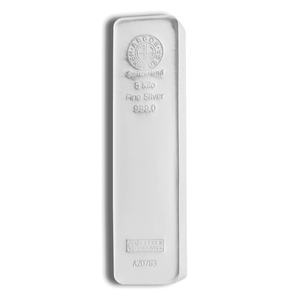
The current selection includes three distinct product options. The Argor-Heraeus 5 kilo silver bar is a cast bar produced in Switzerland and stamped with the refinery's hallmark, serial number, weight, and .999 fineness. Argor-Heraeus is one of only four refineries accredited by the LBMA to produce gold and silver bars, and their products command strong recognition across the global wholesale market.
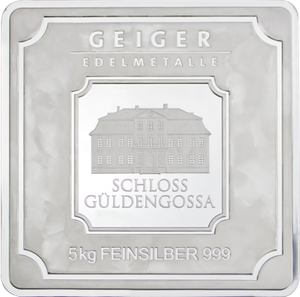
The Geiger Edelmetalle 5 kilo silver bar comes sealed in Geiger's proprietary tamper-evident security packaging, a feature that sets it apart from standard cast bars. Geiger, a German refinery with roots dating back to 1218 as a goldsmith and assay operation, produces bars with integrated security features including a holographic seal and unique serial number. The sealed condition is a meaningful differentiator for buyers who prioritize packaging integrity.
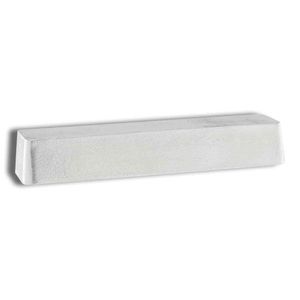
The random brand 5 kilo silver bar provides an alternative for buyers focused primarily on silver content rather than a specific refinery's product. These bars are sourced from various recognized refineries and meet the same .999 purity standard as the branded options. The specific refinery or brand received will vary based on market availability at the time of fulfillment, which is clearly disclosed in the product listing.
Pricing, Premiums, and Market Factors
Silver bars at this weight class typically carry lower premiums above spot than smaller-format products like 1 oz rounds or government-issued coins. The production cost per ounce is spread across a larger silver content, which compresses the per-ounce premium relative to smaller units. For buyers focused on acquiring silver content at the most efficient cost, large-format bars offer a meaningful pricing advantage.
That said, premiums are not uniform across all large-format bars. Refinery reputation, packaging format, and market demand all influence where a specific product lands relative to spot. An Argor-Heraeus bar with a serial number and assay marking commands a different premium than a random brand bar from an unspecified source, and a Geiger sealed bar carries its own premium profile tied to the security features and refinery recognition. These differences are reflected in our pricing and are visible on each product page.
Bullion Standard's pricing structure is tied to real-time spot prices and updated continuously to reflect current market conditions. The bid/ask spread displayed on each product page shows you both the current purchase price and the current wholesale buyback value, providing a complete picture of the true cost of ownership from the moment you're considering a purchase. This level of transparency is central to how we operate and something we believe every buyer deserves to see upfront.
Condition, Packaging, and What to Expect
Cast silver bars at this weight class are not produced to the same cosmetic standards as minted coins or proof products. Surface marks, minor scratches, and variations in texture are inherent to the casting process and do not indicate any defect or reduction in silver content. These characteristics are considered normal and acceptable within the industry and should be expected when purchasing cast bars from any refinery.
The Argor-Heraeus bars ship individually, typically without additional assay card packaging at this weight. The Geiger Edelmetalle bar ships in its sealed security packaging, which should remain intact upon receipt. Random brand bars may arrive in varying conditions of packaging depending on the source, and some surface wear consistent with handling in a wholesale environment is normal and does not affect the bar's purity or weight.
Larger bars are generally not shipped in tubes or mint boxes the way smaller coin products are. Expect secure, padded packaging designed to protect the bar during transit rather than retail-style presentation. Insurance and signature confirmation are standard components of our shipping process for products at this value level.
Authenticity and Verification
Every product sold through Bullion Standard is verified for authenticity, weight, and purity before it ships. Our sourcing network includes reputable refineries, authorized distributors, and established wholesale market counterparties, and products pass through our verification process before fulfillment regardless of source.
For serialized bars like those from Argor-Heraeus, the serial number stamped on the bar provides an additional layer of traceability. Buyers can record serial numbers as part of their own documentation and ownership records. Geiger's sealed packaging includes a holographic security seal that allows buyers to verify the bar has not been tampered with since it left the refinery.
Industry-standard methods for verifying large silver bars include dimensional measurements, weight confirmation using a calibrated scale, and where warranted, sigma metalytics or X-ray fluorescence (XRF) testing. For large-format bars from recognized refineries, the hallmark, serial number, and weight stamp provide the primary basis for authentication in the wholesale market. Bullion Standard maintains an A rating with the Better Business Bureau and is a member of the American Numismatic Association and the National Coin and Bullion Association, reflecting our commitment to operating within recognized industry standards.
Liquidity and Resale Considerations
Large silver bars from internationally recognized refineries like Argor-Heraeus and Geiger Edelmetalle trade in a well-established global wholesale market. Their hallmarks are recognized by dealers, refineries, and institutional buyers worldwide, which supports consistent resale access. Random brand bars are generally accepted in the wholesale market as well, though refinery recognition can influence the ease of resale and the tightness of the bid/ask spread at any given time.
Liquidity at this bar weight is more concentrated in the dealer and institutional channel than in peer-to-peer or collector markets. Most individual buyers looking to resell a 5 kilo silver bar will do so through a dealer buyback program, which is why the dealer's buyback pricing structure matters as much as the purchase premium when evaluating the true cost of ownership.
Packaging integrity can play a meaningful role in liquidity for the Geiger sealed bar specifically. A bar that arrives to a buyer or dealer in original, unbroken sealed packaging carries clear chain-of-custody documentation and is easier to transact without additional verification steps. Keeping large-format bars in their original packaging wherever possible supports smoother and faster resale.
Storage and Security
A single 5 kilo silver bar is physically compact relative to its weight, measuring roughly the size of a large brick, but it still requires thoughtful storage planning. Home safes rated for the appropriate weight capacity and anchored to a structural element of the home are a practical starting point for buyers holding one or two bars. For larger holdings, third-party vault storage offers significantly stronger physical security and typically includes insurance coverage as part of the fee structure.
Bank safe deposit boxes are another option, though they come with limitations around access hours and insurance coverage. Most bank deposit boxes are not covered by FDIC insurance, and the contents are only protected to the extent that the box holder maintains their own insurance policy. Buyers should clarify coverage specifics with their insurance provider before relying on a deposit box as a long-term storage solution.
Silver is susceptible to toning and surface discoloration when exposed to air over time, particularly in environments with elevated humidity or sulfur compounds. Storing bars in airtight containers or sealed storage bags in a climate-controlled environment reduces surface oxidation. For bars in factory-sealed packaging like the Geiger, keeping the seal intact serves both an authenticity and a storage function simultaneously.
Selling and Buyback Options
Bullion Standard operates as a two-way market, meaning we actively purchase silver bars from customers as well as sell them. Our buyback pricing is updated in real time based on current wholesale market conditions and is visible on each product page before you make a purchase. This transparency is intentional because we believe the resale side of a transaction deserves as much attention as the purchase itself.
Buyback pricing for large-format silver bars from recognized refineries like Argor-Heraeus and Geiger Edelmetalle is typically tighter relative to spot than for smaller or less liquid silver products. Refinery recognition, bar condition, packaging integrity, and current wholesale market demand all influence the specific buyback value at any given time. Random brand bars are also purchased through our buyback program, though the pricing terms may reflect the slightly reduced brand specificity compared to named refinery products.
The process for initiating a buyback through Bullion Standard is straightforward. Customers receive a quote based on the current bid pricing displayed on the platform, ship the product to our facility using insured and tracked shipping, and receive payment after verification of the bar's weight, purity, and condition. Our purchasing team works within the same transparent pricing framework that governs our retail operations.
Why Buy 10 Kilo Silver Bars?
Large-format silver bars offer one of the most efficient ways to acquire significant silver weight at a lower per-ounce premium than coins or smaller bars. For buyers focused on accumulating silver content rather than numismatic or collectible value, the economics of a 5 kilo bar are difficult to match with smaller-format alternatives. Each bar represents roughly 160 troy ounces of .999 fine silver in a single, easy-to-store unit.
Silver also has a well-documented role across several industrial sectors, including electronics manufacturing, solar panel production, medical devices, and automotive applications. That industrial demand profile gives silver a consumption-driven foundation that distinguishes it from gold, which is used primarily in financial and jewelry applications. For buyers who factor industrial demand into their thinking about precious metals, silver at this scale represents direct exposure to that market dynamic.
From a pure storage and management standpoint, consolidating silver holdings into large bars simplifies the logistics of ownership. Fewer individual pieces to track, fewer assay cards to manage, and a more straightforward storage footprint relative to an equivalent weight held in 1 oz coins or rounds. For buyers planning to hold meaningful silver weight over a longer horizon, that simplicity has real practical value.
Why Buy from Bullion Standard?
Bullion Standard was founded in San Diego in 2010 on the premise that physical precious metals buyers deserve the same level of pricing transparency and market information that investors in other asset classes take for granted. Over the past fifteen years, we've built a marketplace structured around that philosophy, from the way we display bid/ask spreads on product pages to the buyback pricing we make visible before you ever place an order.
Every product we sell is verified for authenticity, weight, and purity. We source from recognized refineries, authorized distributors, and established wholesale market counterparties, and our verification process applies consistently regardless of the product's origin. Our A rating with the Better Business Bureau and our memberships in the American Numismatic Association and the National Coin and Bullion Association reflect a track record built through consistent, transparent operations.
We support a broad range of payment methods, including Visa, Mastercard, American Express, Discover, PayPal, bank-connected payments through Plaid, wire transfer, paper check, and cryptocurrency through BitPay. Our fulfillment is handled with insured shipping and signature confirmation for high-value orders, and our customer service team is accessible throughout the buying and post-purchase process. The experience is designed to be straightforward rather than high-pressure, with every piece of information you need available before you commit to a purchase.
Get Near-Spot Pricing with Bullion Standard Pro
Bullion Standard Pro is designed for buyers who want to transact closer to the wholesale market level. Members gain access to live, executable wholesale bid and ask pricing across a wide range of precious metals products, including large-format silver bars. Rather than retail pricing with fixed dealer markups layered on top, Pro members transact directly at wholesale market prices that move in real time based on supply, demand, and market conditions.
For buyers acquiring silver in larger quantities, the difference between retail and wholesale pricing can be meaningful. Pro membership removes the additional dealer spread from the equation, allowing premiums and bid/ask spreads to fluctuate naturally based on actual market conditions. Over time, that pricing efficiency compounds across multiple transactions in a way that matters to buyers focused on acquiring silver at the tightest possible cost basis.
Beyond pricing, Pro members have access to proprietary market intelligence tools that provide historical premium data, spread analysis, liquidity metrics, and wholesale market activity indicators for individual products. These tools allow members to evaluate whether a given bar is trading at a historically wide or tight premium, how its bid/ask spread compares across time, and what wholesale market activity suggests about current supply and demand conditions. For buyers approaching large-format silver purchases with a data-driven mindset, these tools provide a meaningful informational advantage.

 (833) 278-4653