20 Gram Gold Bars | Buy Online | Bullion Standard
Buy 20 Gram Gold Bars Online
Our catalog of 20 gram gold bars brings together some of the most recognized refineries in the bullion market, including PAMP Suisse, Valcambi, Perth Mint, Geiger Edelmetalle, and IGR Metals, alongside random brand options for buyers focused on metal content over mint specificity. Every bar listed here contains 0.643 troy ounces of fine gold at .9999 purity and arrives in an assay card unless otherwise noted.
Whether you're selecting a specific refinery for its design, security features, or market recognition, or choosing a random brand bar to maximize metal content per dollar, the options here reflect a meaningful range of minted formats and packaging configurations. Bullion Standard prices all of these products against real-time spot gold, so what you see reflects current market conditions rather than inflated retail margins.
This is a weight class that attracts practical buyers. The 20 gram format sits between the more common 1 oz bar and smaller fractional options, offering a meaningful amount of gold in a compact, easily managed form. Transparent pricing, clear packaging details, and consistent sourcing from vetted refineries define how these products are presented throughout our marketplace.
What Are 20 Gram Gold Bars?
A 20 gram gold bar is a minted bullion bar containing exactly 20 grams of fine gold, equivalent to approximately 0.643 troy ounces. Unlike cast bars, which are poured into molds and typically carry a rougher, more industrial finish, the minted bars in this weight class are precision-struck from refined gold blanks, producing cleaner edges, sharper design detail, and a more consistent appearance across the surface.
The 20 gram weight occupies a distinct position in the bullion bar spectrum. It's heavier than the 1 gram, 5 gram, and 10 gram formats commonly used for fractional accumulation, but smaller and generally more accessible than the 1 troy ounce bar that dominates global bullion trading. That positioning makes it a practical choice for buyers who want more gold per transaction than a fractional bar provides without committing to a full troy ounce or beyond.
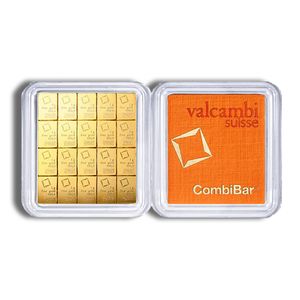
Most 20 gram bars are sold individually in sealed assay cards, which encapsulate the bar in a tamper-evident package bearing the refiner's certification, metal content, purity, and a serial number or other authentication detail. The Valcambi CombiBar included in our catalog adds another format variation: a grid-scored 20-bar sheet that can be separated into twenty individual 1 gram bars, combining the total weight of a 20 gram bar with the flexibility of fractional pieces.
History and Background
The modern minted gold bar market developed alongside the expansion of private refining capacity in Europe during the latter half of the twentieth century. Swiss refineries like PAMP Suisse and Valcambi, both based in the Ticino canton, played a central role in establishing international standards for gold bar production, including consistent sizing, hallmarking conventions, and assay packaging that gave retail buyers confidence in bar authenticity.
The 20 gram weight class emerged from broader demand for fractional bullion formats as gold prices climbed and investors sought denominations below the standard 1 troy ounce bar. Refineries in Germany, Turkey, and Australia expanded their product lines to meet this demand, and names like Geiger Edelmetalle and the Perth Mint became established participants in the international minted bar segment. IGR Metals, operating out of Istanbul, similarly developed a respected position in the European and Middle Eastern bullion markets during this period.
The assay card itself has become an industry standard in the minted bar segment, and its adoption across refineries reflects the market's broader shift toward authenticated, individually packaged bullion. The introduction of the Valcambi CombiBar in the early 2000s represented a further evolution in format design, addressing demand for divisible gold in a single sealed unit. These developments collectively shaped what the 20 gram gold bar market looks like today.
Purity, Weight, and Specifications
Every 20 gram gold bar in our catalog carries a stated purity of .9999 fine gold, which is the highest standard purity widely available in the retail bullion market. This four-nines fineness means the bar is 99.99% pure gold by mass, with negligible trace elements. The assay card or accompanying documentation from each refinery certifies this purity and typically includes a serial number, bar weight, and the refiner's stamp or hallmark.
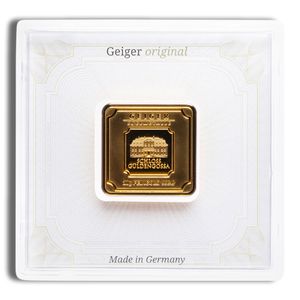
Physical dimensions vary by manufacturer. The PAMP Suisse and Valcambi bars share similar proportions at approximately 31 mm by 18 mm, while the Geiger bar takes a noticeably different square format at roughly 28.9 mm by 28.9 mm. The Perth Mint bar is slightly larger in both dimensions, and the IGR bar is close in size to the Swiss-produced offerings. The CombiBar from Valcambi is considerably larger at 42 mm by 37 mm due to its grid structure. None of these dimensional differences affect metal content or purity.
Thickness also varies. The IGR and PAMP bars measure approximately 1.88 mm thick, the Valcambi bar around 2.2 mm, and the Perth Mint bar closer to 2.9 mm. The CombiBar is notably thin at 0.85 mm across the sheet. Understanding these physical specs matters for storage planning, particularly when fitting bars into capsules, trays, or safe deposit configurations.
Available Brands, Mints, and Product Variations
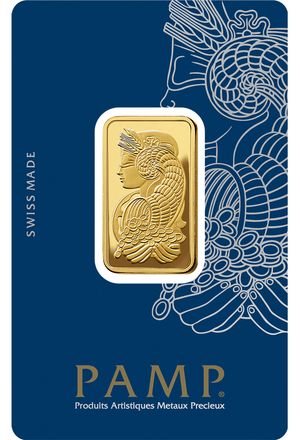
PAMP Suisse is among the most globally recognized private refineries, and their 20 gram Lady Fortuna bar carries the same iconic relief design found across their broader product line. The image of the Roman goddess Fortuna, blindfolded and holding a cornucopia, appears on the reverse, while the obverse displays the refinery's certification details. PAMP's assay cards include a unique serial number and are sealed against tampering, making them one of the most widely accepted minted bar formats in dealer-to-dealer trading.
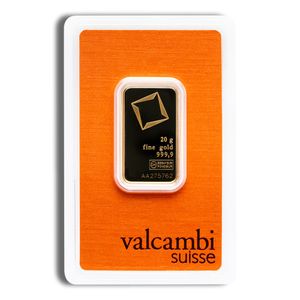
Valcambi Suisse produces two distinct offerings in this weight range. Their standard 20 gram minted bar is a clean, straightforward format with the Valcambi hallmark and assay certification. The 20 x 1 Gram CombiBar is structurally different, designed as a single scored sheet that can be broken into twenty separate 1 gram segments while remaining sealed in its assay packaging until separation is needed. The Perth Mint, Australia's government-owned refinery, offers a 20 gram bar produced to LBMA-approved standards and packaged in a branded assay card. Geiger Edelmetalle, based in Leipzig, Germany, brings a distinctly square format to the lineup with its own security envelope packaging.
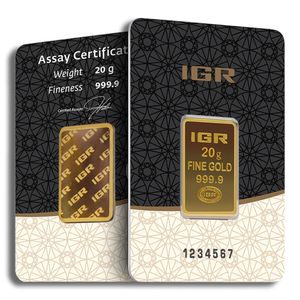
IGR Metals, operating under Istanbul Gold Refinery, rounds out the branded options with a bar well-regarded in European and Middle Eastern bullion markets. For buyers whose priority is metal content per dollar rather than a specific refinery, the random brand options provide either assay-carded or loose bars sourced from reputable refiners at premiums that typically run lower than name-brand alternatives. The specific brand shipped with a random option is not guaranteed and may vary based on current inventory.
Pricing, Premiums, and Market Factors
The price of a 20 gram gold bar is derived from the current spot price of gold, measured in troy ounces, multiplied against the bar's gold content of 0.643 oz, with a premium added above that base metal value. Premiums in this weight class tend to run higher on a per-ounce basis than those associated with 1 oz or larger bars, which is a consistent pattern across fractional and near-fractional bullion formats. Smaller bar sizes involve more production cost per ounce of gold and often more elaborate packaging, both of which contribute to the wider spread between spot and retail price.
Among the branded options, premiums are partly influenced by refinery reputation and the perceived liquidity of the product in secondary markets. PAMP Suisse and Valcambi bars typically carry higher premiums than IGR or random brand equivalents, reflecting both name recognition and anticipated resale demand. The CombiBar format tends to carry its own distinct premium structure due to the divisibility feature built into the design. Bars without assay cards are generally priced lower than their sealed counterparts, though the absence of original packaging can affect resale conditions.
Bullion Standard prices all products using real-time spot data, and the bid/ask spread for each bar is displayed on the product page. This spread reflects current wholesale market conditions and can vary by product based on factors like mint recognition, available liquidity, and supply dynamics at the wholesale level. Understanding the spread alongside the purchase premium gives a more complete picture of the true cost of entering and eventually exiting a position in any specific bar.
Condition, Packaging, and What to Expect
Minted gold bars sold in assay cards arrive sealed in tamper-evident packaging directly from the refinery or from authorized distributors who maintain the original seal. The assay card itself is a laminated or hard-plastic enclosure that holds the bar and displays its certified specifications. As long as the seal is intact, the bar is considered uncirculated and in new condition, though minor surface contact from the manufacturing process is normal and expected.
Bars sold without assay cards, like the random brand no-assay option in our catalog, have typically been removed from their original packaging at some point in their distribution history. These bars may show light handling marks or surface variations consistent with storage and transit. They remain .9999 fine gold at full stated weight, but their presentation differs from sealed assay products, and this should factor into both purchase expectations and eventual resale planning.
Random brand products are fulfilled based on current inventory availability. The bar you receive will be from a reputable refiner, but the specific brand, origin, or design is not specified or guaranteed. If a particular refinery name, country of origin, or design aesthetic matters to you, selecting a named-brand product from the grid is the appropriate choice.
Authenticity and Verification
Every 20 gram gold bar sourced through Bullion Standard is verified for authenticity, correct weight, and stated purity before it reaches a customer. Products are acquired from reputable refineries, authorized wholesalers, and established distributors within the bullion supply chain. Our team applies standard industry verification practices across all incoming inventory, which includes physical inspection, weight verification, and authentication review appropriate to each product type.
Assay-carded bars carry the most straightforward authentication trail. The sealed card from refineries like PAMP Suisse, Valcambi, Perth Mint, and Geiger includes a serial number that can be cross-referenced with the issuing refinery. Many of these refineries also incorporate security features directly into the card design, such as holographic elements, micro-printing, or UV-reactive inks, which are intended to detect tampering and deter counterfeiting at the packaging level.
For bars without assay packaging, buyers who want independent verification after purchase can use calibrated scales, ultrasonic thickness testing, or XRF analysis, all of which are commonly available through coin dealers, testing services, and some financial institutions. Bullion Standard maintains memberships with the American Numismatic Association and the National Coin and Bullion Association, and holds an A rating with the Better Business Bureau, all of which reflect our commitment to sourcing and selling only verified, authentic bullion products.
Liquidity and Resale Considerations
Gold bars from globally recognized refineries like PAMP Suisse, Valcambi, and Perth Mint are generally well-received by dealers and secondary market buyers worldwide. These names carry consistent recognition across North American, European, and Asian bullion markets, which simplifies the resale process and tends to support competitive buyback offers. Less familiar refinery names, including some random-brand products, may still be accepted by dealers but could require additional verification steps or result in offers closer to melt value.
The condition of the assay card at the time of resale matters in this weight class more than it does for larger bars or coins with established grading frameworks. A sealed, intact assay card from a recognized refinery makes the resale process more straightforward because the bar's specifications are pre-certified and visible without removing the product from its packaging. A bar sold outside of its original assay packaging may still be fully liquid, but the verification burden typically shifts to the buying dealer.
The CombiBar format occupies its own liquidity niche. Unseparated, it trades as a single 20 gram unit. Once individual 1 gram segments are broken off, each piece becomes a separate item with its own resale characteristics. Dealers familiar with the CombiBar format will recognize individual segments as authentic Valcambi products, but the resale process for broken CombiBar pieces can vary more than for a standard sealed bar. Keeping the unit intact generally preserves the broadest set of resale options.
Storage and Security
Twenty gram gold bars are compact enough to store in most standard safe configurations, safe deposit boxes, or dedicated bullion storage facilities. Their small footprint makes them easy to organize in bar trays or capsule holders designed for minted bars in this size range. Keeping bars in their original assay cards is strongly recommended, as the sealed packaging protects the bar's surface, preserves its authentication documentation, and maintains the presentation expected by secondary market buyers.
Home storage is a reasonable option for modest quantities when paired with a quality fire-resistant safe that is bolted to a structural element of the home. For larger holdings, professional vault storage through an insured depository provides a more secure environment without the personal liability associated with home safekeeping. Most reputable vault services allow segregated storage, meaning your specific bars are held separately from other clients' holdings and can be returned on request.
Environmental conditions matter for long-term storage quality. Gold itself does not tarnish or react with air, but laminated assay cards can discolor or delaminate under prolonged exposure to humidity or heat. Storing bars in a stable, climate-controlled environment helps preserve both the physical bar and its packaging integrity over time.
Selling and Buyback Options
Selling a 20 gram gold bar back into the market follows a relatively straightforward process when the product comes from a recognized refinery and remains in its original assay packaging. Bullion Standard operates a two-way market structure, meaning customers who purchased bars through our platform can sell back through the same ecosystem using our competitive buyback pricing. This approach allows buyers to consider liquidity before making a purchase rather than discovering exit options only when it's time to sell.
Buyback pricing is driven by current wholesale market conditions, the specific product being sold, its condition, and whether original packaging is intact. A sealed PAMP Suisse or Valcambi bar in its original assay card will generally attract a stronger bid than the same bar presented loose and unsealed. Random brand bars are typically bought back at pricing closer to spot, reflecting the verification steps involved and the absence of a specific mint premium in the secondary market.
Our purchasing team evaluates incoming sell requests based on product type, current market pricing, and inventory needs. The process is designed to be transparent and operationally efficient, with pricing communicated clearly before any transaction is finalized. Customers considering a sale can initiate the process through our platform, where current buyback rates for listed products are available alongside purchase prices.
Why Buy 20 Gram Gold Bars?
The 20 gram format appeals to buyers who want a meaningful gold position in a compact, affordable unit without the higher per-ounce premiums that typically accompany smaller fractional bars. Relative to a 1 gram or 5 gram bar, the 20 gram offers a better premium-to-metal-content ratio, and the assay card packaging keeps authentication straightforward regardless of where the bar eventually ends up in the market.
This weight class is also practical from a handling and divisibility standpoint. A buyer accumulating gold in measured increments can build a position bar by bar without dealing with the logistics of large format products. The CombiBar option adds a layer of flexibility for buyers who want the combined weight of a 20 gram bar with the option to eventually separate pieces into individual 1 gram units without purchasing multiple separate products.
Refinery selection at this weight also provides a level of personalization not typically available at larger bar sizes. Buyers can choose based on country of origin, design preference, packaging style, or recognized brand name, all within the same weight class. Whether the priority is a Swiss-refined bar from a globally established name or a lower-premium random brand option, the 20 gram category accommodates a genuine range of buyer objectives within a single, clearly defined weight standard.
Why Buy from Bullion Standard?
Bullion Standard was founded in 2010 in San Diego, California, and has built its reputation on pricing transparency, consistent sourcing, and a customer-first approach that treats buyers as informed participants rather than targets for upsell. Every product we sell is verified for authenticity, weight, and purity before it ships. Our sourcing network includes recognized refineries, authorized wholesalers, and established distributors across the global bullion supply chain.
Our marketplace is structured around transparency at every stage. Real-time spot pricing is reflected in product prices, bid/ask spreads are displayed on each listing, and buyback pricing is available alongside purchase pricing so buyers understand both sides of the transaction before committing. This two-way market model is central to how we operate, and it distinguishes our platform from traditional dealer models that focus narrowly on the selling side.
Customers can purchase using a broad range of payment methods, including major credit cards, PayPal, bank-connected ACH through Plaid, wire transfer, paper check, and cryptocurrency through BitPay. Every transaction is supported by secure fulfillment and responsive customer service. Bullion Standard holds an A rating with the Better Business Bureau and maintains active memberships with the American Numismatic Association and the National Coin and Bullion Association, reflecting a long-standing commitment to professional standards and customer trust.
Get Near-Spot Pricing with Bullion Standard Pro
Bullion Standard Pro is designed for buyers who want to transact closer to wholesale market pricing. Members gain access to live, executable wholesale bid and ask prices across a broad range of bullion products, including gold bars in this weight class. Rather than displaying indicative or estimated prices, the platform is built around executable market pricing that reflects real-time supply and demand within the wholesale precious metals market.
Unlike the standard retail dealer model, Bullion Standard Pro does not layer additional dealer markups or fixed dealer spreads on top of member pricing. Premiums and bid/ask spreads fluctuate naturally with underlying market conditions, giving members direct visibility into how products are priced and traded at the wholesale level. For buyers making repeated purchases or managing a meaningful gold position over time, this pricing structure can represent a material difference in total acquisition cost.
Pro members also gain access to proprietary market intelligence tools, including historical premium analysis, premium percentile rankings, spread analysis, liquidity metrics, and portfolio valuation based on live executable wholesale bid pricing. These tools are designed to help members evaluate individual products like 20 gram gold bars within a broader market context, using objective data rather than marketing claims. The goal is to bring the analytical depth typically associated with financial markets into the physical precious metals space, where pricing transparency has historically been limited.


 (833) 278-4653