Buy 250 Gram Silver Bars Online
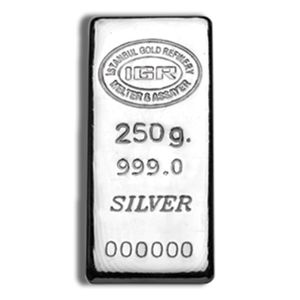
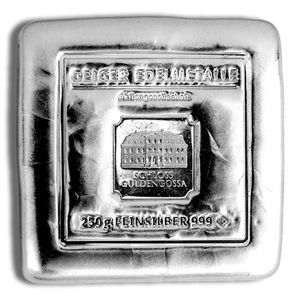
Our catalog of 250 gram silver bars brings together refined cast bars from two respected producers: the Geiger Edelmetalle bar from Germany and the Istanbul Gold Refinery (IGR) bar from Turkey. Each weighs 250 grams and carries a .999 fine silver purity, giving buyers a consistent specification across both options while offering meaningful differences in sourcing, packaging, and presentation.
The Geiger bar ships in sealed packaging, making it one of the more distinctive options in this weight class. The IGR bar represents a straightforward cast format from one of Turkey's most recognized refineries. Together, these two bars reflect the kind of product breadth that makes this weight category worth exploring for buyers looking to acquire physical silver in larger gram-denominated increments.
Bullion Standard sources directly from reputable refineries and verified distributors, and every product is authenticated before it reaches a customer. Our pricing reflects live market conditions, and our two-way market structure means you can evaluate both the acquisition cost and the expected resale value before committing to a purchase.
What Are 250 Gram Silver Bars?
A 250 gram silver bar sits between the more commonly traded 100 gram and 500 gram formats, occupying a practical middle ground for buyers who want more silver per unit than a 100 gram bar provides but prefer a smaller footprint than half-kilogram or kilogram bars. At approximately 8.04 troy ounces of fine silver, the 250 gram format delivers meaningful silver content in a compact, handleable form.
These bars are cast rather than minted, meaning they are produced by pouring molten silver into a mold and allowing it to solidify. Cast bars typically have a more industrial appearance compared to minted bars, with slight surface variations that are inherent to the production method rather than indicative of any quality issue. The format has long been favored by refineries and commercial buyers for its efficiency and straightforward production process.
Gram-denominated bars appeal to buyers who prefer metric weight standards over troy ounce conventions, and this format is particularly familiar in European and Middle Eastern markets. The 250 gram weight is recognized across the international wholesale silver market, which contributes to its consistent resale recognizability.
History and Background
Gram-denominated silver bars have deep roots in European and Asian bullion markets, where the metric system has historically governed commercial weight standards. Refineries in Germany, Switzerland, Austria, and Turkey were among the early producers of standardized gram bars for both industrial and commercial purposes, and their output helped establish the conventions that define the format today.
Geiger Edelmetalle, based in Güldengossa, Germany, has operated as a refinery since the early nineteenth century, making it one of the oldest continuously operating precious metals refineries in the world. Its institutional history in European silver production gives its bars a level of market familiarity that few refineries can match. Istanbul Gold Refinery, operating under the IGR brand, emerged as a prominent producer in the Turkish market and has since earned recognition across international bullion markets for consistent quality and standardized production.
The broader market for 250 gram silver bars has grown alongside demand for metric-weight silver products from institutional buyers, commercial users, and individuals who find gram-based sizing more intuitive than troy ounce conventions. As global silver demand has expanded, this weight class has maintained a steady presence in refinery catalogs and dealer inventories worldwide.
Purity, Weight, and Specifications
Both bars in this section carry a stated purity of .999 fine silver, which is the industry standard for investment-grade bullion bars. This level of purity means the bar is 99.9% pure silver by weight, with trace amounts of other metals present as a function of the refining process rather than intentional alloying.
At 250 grams, the Geiger bar contains 8.0386 troy ounces of fine silver, while the IGR bar contains approximately 8.029 troy ounces. The minor difference reflects slight variations in precise weight measurement between producers, both of which fall within standard commercial tolerances for this bar size. Each bar is stamped with its weight, purity, and refinery identification, which are the standard markings buyers should expect on any legitimate cast silver bar.
The Geiger bar measures 57.5mm by 57.5mm, giving buyers a physical reference point for storage planning. Cast bar dimensions can vary modestly between production runs, so these figures should be treated as nominal specifications rather than exact measurements for every individual bar.
Available Brands, Mints, and Product Variations
Geiger Edelmetalle is the producer behind one of the most distinctive silver bars available in this weight class. The sealed packaging on the Geiger 250 gram bar is a notable feature, providing a tamper-evident presentation that appeals to buyers who prioritize provenance documentation and intact original packaging. The sealed format also makes individual bar verification more straightforward at the point of resale.
The Istanbul Gold Refinery, widely recognized by the IGR designation, produces bars that are well established in international bullion trade. Turkish refineries have developed significant export volume over the past two decades, and IGR bars are recognized by dealers and institutions across European and Middle Eastern markets. The IGR 250 gram bar is a cast format without sealed secondary packaging, making it a more traditional refinery bar presentation.
Buyers choosing between these two options are effectively choosing between a German refinery bar with sealed packaging and a Turkish refinery bar with a standard cast presentation. Both carry .999 purity and the same nominal weight, but the differences in brand heritage, packaging format, and country of origin may influence individual preferences based on storage goals, resale preferences, or regional market familiarity.
Pricing, Premiums, and Market Factors
Silver bar pricing is determined by the spot price of silver plus a premium that covers production, distribution, and dealer costs. For gram-denominated bars, premiums are typically expressed on a per-gram or per-troy-ounce basis, and they fluctuate based on wholesale supply availability, dealer inventory levels, and broader market demand conditions.
The 250 gram format generally carries a moderate premium profile relative to larger formats like the 500 gram or kilogram bar. Buyers accepting larger quantities pay progressively lower per-ounce premiums, and the 250 gram size reflects a balance point between lower premiums and practical per-unit cost. The Geiger bar's sealed packaging can influence its premium modestly, as sealed products typically command a small additional cost relative to standard cast bars of the same weight.
Bullion Standard's pricing is updated in real time to reflect current market conditions, and our product pages display the bid/ask spread for each item so buyers can evaluate the complete transaction rather than focusing solely on the purchase price. Understanding the spread, not just the ask, provides a clearer picture of the true cost of ownership from the moment of purchase through a potential future resale.
Condition, Packaging, and What to Expect
Cast silver bars carry surface characteristics that are normal for the production method. Slight surface variations, flow lines, and minor cosmetic irregularities are inherent to the casting process and do not indicate damage or quality deficiency. Buyers new to cast bars should expect these visual traits as a standard feature of the format rather than a defect.
The Geiger bar ships in its original sealed packaging, which preserves the bar's presentation and provides a layer of tamper-evidence that buyers will receive intact. The IGR bar ships as a standard cast bar without secondary sealed packaging, which is typical for this style of refinery product. Both formats are handled and packaged for secure transit by Bullion Standard's fulfillment team.
Buyers should store cast bars in a clean, dry environment and avoid unnecessary handling of the bare metal surface, particularly for products that may be resold in the future. While cosmetic condition plays a smaller role in the valuation of cast bullion bars than it does for coins or minted bars, maintaining original packaging where applicable is generally advisable.
Authenticity and Verification
Every product sold through Bullion Standard is verified for authenticity, weight, and purity before it reaches a customer. Our sourcing network includes reputable refineries, authorized wholesalers, and verified distributors, which gives us a clear chain of custody for every bar we carry. The Geiger bar's sealed packaging provides an additional layer of provenance assurance that is visible to the buyer upon receipt.
Cast silver bars from recognized refineries carry stamped markings that include the producer's name, stated weight, and purity designation. These markings are a primary means of identification for anyone evaluating a bar's legitimacy. For bars with serial numbers or assay documentation, those details provide further traceability that supports resale confidence.
Industry-standard verification methods such as XRF analysis, ultrasonic testing, and precise scale measurement are used by dealers and institutions to confirm bar specifications. Geiger Edelmetalle and Istanbul Gold Refinery are both recognized producers within the international bullion market, and bars bearing their markings are subject to standard verification protocols by wholesale buyers and institutional counterparties.
Liquidity and Resale Considerations
Market recognition plays a meaningful role in how easily a silver bar can be resold. Bars from established refineries like Geiger Edelmetalle and Istanbul Gold Refinery are recognized by dealers and wholesale buyers across international markets, which supports straightforward resale without lengthy verification disputes or significant price discounting.
The 250 gram format is less universally liquid than the more standardized 1 oz, 10 oz, and 1 kilogram formats, which tend to attract the widest pool of buyers at any given time. However, the metric weight and .999 purity of these bars keep them broadly tradeable within dealer networks and wholesale bullion markets that operate across European and international channels.
Sealed packaging, as found on the Geiger bar, can support resale by preserving provenance and reducing the need for additional verification at the point of sale. Standard cast bars like the IGR format are evaluated on their physical markings and visible specifications. In either case, maintaining bars in their original condition and packaging is the simplest way to preserve resale accessibility.
Storage and Security
At roughly 250 grams per bar, this format is compact enough to store efficiently in a variety of secure environments. A high-quality home safe with sufficient fire and theft protection is a practical starting point for buyers holding a modest number of bars. For larger holdings, third-party vault storage through a professional bullion depository provides institutional-grade security with insured, segregated storage options.
Bank safe deposit boxes are another option, though they typically lack insurance coverage for precious metals and may limit access during bank hours. Buyers relying on this option should understand those limitations and supplement with appropriate personal insurance coverage if needed.
Cast silver bars should be stored away from humidity, sulfur-containing materials, and direct sunlight to prevent tarnishing and surface discoloration. While tarnish on silver doesn't affect metal content or purity, it can affect the visual appearance of bars and, in some cases, buyer perception during resale. Sealed packaging, when present, provides natural protection against environmental exposure.
Selling and Buyback Options
Bullion Standard operates a two-way market, meaning customers can sell silver bars back through the same platform they used to purchase them. Our purchasing team evaluates products based on current wholesale market pricing, product type, mint or refinery recognition, packaging condition, and overall market liquidity at the time of sale. This structure allows customers to enter and exit positions within a single, consistent marketplace rather than searching for a secondary buyer independently.
Buyback pricing for 250 gram silver bars is influenced by the same factors that shape purchase premiums, including spot price levels, refinery recognition, and whether original sealed packaging remains intact. The Geiger bar's sealed presentation may support a more straightforward verification process during buyback evaluation, while the IGR bar will be assessed on its physical markings and condition.
Customers considering a future sale should factor expected buyback pricing into their purchase decision rather than treating resale as an afterthought. Our product pages display bid pricing alongside ask pricing to give buyers a realistic picture of the spread they're working within from the outset. This transparency is central to how Bullion Standard approaches the buying and selling experience.
Why Buy 250 Gram Silver Bars?
The 250 gram format occupies a practical position in the silver bar market for buyers who want meaningful silver content per unit without committing to the larger footprint of a 500 gram or kilogram bar. The per-ounce premium on this size tends to be more efficient than smaller gram bars, while the individual bar cost remains accessible compared to larger formats that require a greater single-transaction outlay.
Silver's role in industrial manufacturing is worth understanding for any buyer of physical silver bars. Silver is used in electronics, photovoltaics, medical equipment, and electrical contacts, meaning industrial demand creates a persistent underlying consumption base that is separate from retail investment demand. This industrial dynamic influences the supply and pricing of silver in ways that differ from gold, and it's relevant context for anyone evaluating the silver market broadly.
For buyers who prefer metric weight standards or who are sourcing bars for international resale environments where gram-denominated products are more familiar, the 250 gram format from Geiger or IGR offers a practical and standardized option. The combination of recognized refinery branding, .999 purity, and cast format keeps these bars accessible across a range of dealer and wholesale resale channels.
Why Buy from Bullion Standard?
Bullion Standard has operated as a trusted precious metals dealer since 2010, building its reputation on pricing transparency, reliable fulfillment, and a customer-first approach that prioritizes long-term trust over short-term margin. Our A rating with the Better Business Bureau and memberships in the American Numismatic Association and the National Coin and Bullion Association reflect the standards we hold ourselves to across every transaction.
Every bar sold through our platform is verified for authenticity, weight, and purity before shipment. We source exclusively from reputable refineries, authorized wholesalers, and verified distributors, and our checkout process is backed by secure payment infrastructure that supports a wide range of payment methods including Visa, Mastercard, American Express, Discover, PayPal, bank-connected payments through Plaid, wire transfer, paper check, and cryptocurrency payments through BitPay.
Our marketplace is designed to give buyers better information at every stage, from live pricing and spread transparency on product pages to competitive buyback pricing when it comes time to sell. We operate as a two-way market, and that structure reflects a genuine commitment to building a platform where the full transaction lifecycle, not just the initial sale, is handled with clarity and fairness.
Get Near-Spot Pricing with Bullion Standard Pro
Bullion Standard Pro is designed for buyers who want direct access to live wholesale bid and ask pricing across a broad range of silver bars and other precious metals products. Rather than transacting at fixed retail price levels, Pro members access executable wholesale market pricing that reflects real-time supply and demand conditions without additional dealer markups layered on top.
For buyers purchasing 250 gram silver bars in any meaningful quantity, the difference between retail and wholesale pricing can be material over time. Pro members can also view their holdings valued at live wholesale bid prices rather than estimated retail figures, which provides a more realistic picture of current portfolio liquidity. Historical premium data and spread analytics help members evaluate whether current pricing represents an efficient entry point relative to where this product has traded over time.
The platform is built around the idea that physical precious metals buyers deserve access to the same quality of pricing transparency and market data that's standard in other financial markets. Bullion Standard Pro brings that standard to the silver bar market, making it a meaningful tool for buyers who approach their purchases with pricing discipline and a longer-term perspective.

 (833) 278-4653