Buy 5 Gram Silver Bars Online
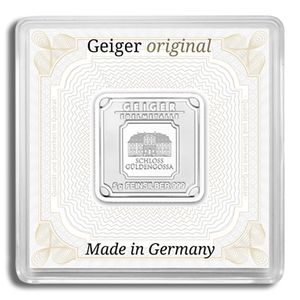
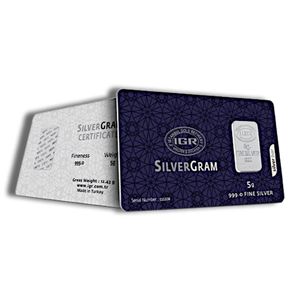
Our catalog of 5 gram silver bars brings together options from respected international refineries, giving buyers a practical entry point into physical silver at a small but tangible weight. You'll find minted bars from Geiger Edelmetalle in Germany and Istanbul Gold Refinery (IGR) in Turkey, both presented in assay cards, alongside a random brand option for buyers focused primarily on metal content over specific branding.
Each bar carries a purity of .999 fine silver and contains approximately 0.1606 troy ounces of silver. The variety here reflects how this segment of the market actually operates: internationally sourced, assay-certified product from established refiners alongside cost-efficient alternatives without packaging premiums.
Bullion Standard is a San Diego-based precious metals marketplace founded in 2010. Our pricing reflects real-time market conditions, and every product in our catalog is verified for authenticity, weight, and purity before it reaches the customer.
What Are 5 Gram Silver Bars?
A 5 gram silver bar is a minted or cast rectangular piece of .999 or .9999 fine silver weighing exactly five grams, which converts to roughly 0.1607 troy ounces. Unlike silver coins, which carry legal tender status and are issued by sovereign mints, silver bars are produced by private refineries and accredited manufacturers operating under industry-recognized quality standards.
The 5 gram size sits at the smaller end of the silver bar spectrum, making it accessible to buyers who want physical silver without committing to the cost of a larger bar. It's a practical format for incremental accumulation, gift-giving, and situations where a compact, verifiable piece of silver is preferable to fractional coinage.
Minted bars in this weight class are typically struck from a blank and feature sharper detail, cleaner edges, and more refined surface finishes compared to cast bars. Most 5 gram bars sold today come sealed in assay cards that display the bar's weight, purity, and manufacturer information, which adds both a verification layer and handling protection.
History and Background
The broader market for small-denomination silver bars developed alongside the growth of private refineries throughout the twentieth century, particularly in Europe and North America. As silver moved further from monetary circulation following the global demonetization of the metal in the mid-twentieth century, private refiners filled the gap by producing standardized bars in a range of weights accessible to individual buyers.
German refining has a particularly long institutional history, with companies like Geiger Edelmetalle building reputations over decades of operation in central Europe. Turkish refiners, including Istanbul Gold Refinery, emerged as significant players in the global market as Turkey's position as a precious metals trading hub grew, supported by both domestic demand and regional distribution networks.
The assay card format became increasingly common from the 1980s onward as the market for small minted bars expanded. It offered a practical combination of tamper-evidence, provenance documentation, and physical protection that aligned well with the needs of individual buyers purchasing bars in fractional weights.
Purity, Weight, and Specifications
Every 5 gram silver bar in our catalog is produced to a minimum purity of .999 fine silver, meaning the bar is at least 99.9% pure silver by weight. This is the standard purity threshold for investment-grade silver bars and is recognized by dealers and refineries across the global wholesale market.
At five grams, these bars contain approximately 0.1606 to 0.1608 troy ounces of silver depending on the specific product. The slight variation reflects rounding conventions used by different manufacturers rather than actual differences in metal content. Physical dimensions vary by refinery: the Geiger bar measures 18.7 mm by 18.7 mm, while the IGR bar has a longer, narrower profile at approximately 23.21 mm by 13.97 mm with a thickness of 0.81 mm.
Assay-packaged bars carry printed certification on the card itself, typically including the refinery name or logo, the stated weight in grams, the fineness, and often a serial or batch reference. These markings serve as the primary point of documentation for buyers and downstream purchasers alike.
Available Brands, Mints, and Product Variations
Geiger Edelmetalle, based in Güldengossa, Germany, is one of Europe's established private precious metals refineries. Their 5 gram minted bar comes sealed in an individual assay card and carries the refinery's branding alongside purity and weight certification. The bar's square format distinguishes it visually from many competitors in this weight range.
Istanbul Gold Refinery, operating under the IGR brand, produces a rectangular 5 gram minted bar that ships in an assay card with clear certification markings. IGR maintains LBMA-recognized quality standards and distributes product internationally, giving their bars solid recognition across dealer networks in Europe, the Middle East, and beyond.
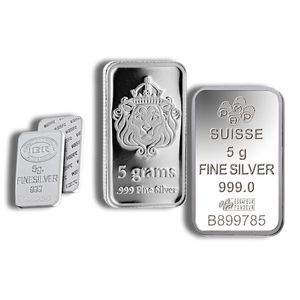
The random brand 5 gram silver bar offers a cost-efficient alternative for buyers whose primary concern is silver content rather than specific packaging or refinery branding. These bars are sourced from various manufacturers and may arrive without assay packaging. The purity and weight standard remains consistent at .999 fine and five grams, but the specific brand, design, and presentation will vary.
Pricing, Premiums, and Market Factors
Silver bar pricing is tied directly to the spot price of silver, which reflects real-time trading on global commodities markets. Above that spot price, every physical bar carries a premium that covers refining, fabrication, assay packaging, distribution, and dealer margin. For smaller bars like the 5 gram format, premiums on a per-ounce basis tend to run higher than those on larger bars because the fixed costs of production and packaging are spread across a smaller quantity of metal.
Assay-packaged bars from recognized refineries like Geiger and IGR typically command slightly higher premiums than random brand alternatives. That difference reflects the added cost of the assay card itself and the downstream value that verified branding provides during resale. Buyers willing to forgo specific branding can reduce their per-ounce acquisition cost with the random brand option.
Bullion Standard's pricing reflects live market conditions and is structured to provide clarity rather than ambiguity. Each product page displays both the purchase price and the current bid price, giving buyers a clear picture of the full cost of ownership rather than just the acquisition cost. Our two-way market model means customers can sell back into the same marketplace at competitive wholesale-referenced pricing.
Condition, Packaging, and What to Expect
Assay-packaged bars from Geiger and IGR arrive in their factory-sealed cards. The card itself provides a degree of physical protection against surface contact, and because the bar is not removed for inspection, mint-condition surfaces are preserved through the distribution chain. Buyers should expect the assay card to show minor handling marks from transit, which is normal and does not affect the bar's integrity.
Random brand bars are not guaranteed to arrive in assay packaging and may show light surface marks consistent with standard handling. Minor cosmetic variation, including small contact marks or surface toning, is typical for unpackaged bullion and does not reflect a defect or compromise in metal content. Weight and purity standards are maintained regardless of presentation.
All products ship from Bullion Standard in secure, discreet packaging designed to protect the contents through transit. Assay cards should be kept intact where possible, as intact original packaging generally supports easier downstream verification and resale.
Authenticity and Verification
Bars presented in assay cards carry built-in verification through the sealed packaging itself. A tamper-evident card that remains intact confirms the bar has not been removed, altered, or replaced since leaving the refinery. The printed information on the card, including weight, purity, and refinery branding, adds a secondary layer of documentation that both buyers and downstream purchasers can reference.
Geiger Edelmetalle and Istanbul Gold Refinery both produce to internationally recognized quality standards, and their products are sourced through established wholesale distribution networks. Bullion Standard verifies authenticity, weight, and purity for every product it handles before it reaches the customer. Our A rating with the Better Business Bureau and membership in both the American Numismatic Association and the National Coin and Bullion Association reflect our commitment to consistent sourcing and product integrity.
For random brand bars, which arrive without manufacturer-specific assay documentation, buyers can use standard verification methods such as weight measurement, dimensional checks, and electronic testing. These bars are sourced through reputable channels, and each is confirmed to meet the stated purity and weight specifications before leaving our facility.
Liquidity and Resale Considerations
Five gram silver bars occupy a relatively straightforward position in the resale market. Assay-packaged bars from recognized refineries like Geiger and IGR are easier to move through dealer networks because the sealed certification reduces the need for independent verification at the point of sale. Intact assay packaging is a meaningful factor in how quickly and cleanly a transaction can be completed.
Random brand bars are recognized primarily on the basis of their metal content rather than their specific origin. They trade freely in the secondary market but may require more scrutiny from buyers unfamiliar with the specific product, which can slow dealer-to-dealer transactions. Keeping these bars in original condition and maintaining any documentation that came with them supports smoother future sales.
Broadly, small silver bars are a recognized and traded product type across the dealer market. Their standardized weight and purity make them straightforward to evaluate, though per-unit resale logistics can be less efficient than larger bars at scale simply due to the volume of individual pieces involved.
Storage and Security
Five gram silver bars are compact enough that storage is rarely a logistical challenge, but protecting them from physical damage and environmental exposure is still worth considering. Silver is susceptible to toning and surface discoloration when exposed to air, humidity, and sulfur compounds over time, so airtight packaging or climate-controlled storage helps preserve appearance.
Assay-packaged bars should remain in their cards wherever possible. The sealed card provides a measure of environmental protection in addition to its verification function. Removing a bar from its assay card reduces both its protection and its documentation integrity. For random brand bars without assay packaging, individual flips, coin tubes, or sealed bags offer basic protection against contact marks and toning.
For larger quantities, a home safe rated for fire and burglary resistance provides a reasonable first layer of security. Bank safe deposit boxes and professional precious metals vault services are appropriate options when holdings grow beyond what's practical to store privately. Vault storage also typically removes the administrative burden of managing physical security at home.
Selling and Buyback Options
When it comes time to sell, the process for 5 gram silver bars follows the same general framework as other standard bullion products. Condition, packaging integrity, and refinery recognition all factor into the price a buyer is willing to pay. Assay-intact bars from Geiger and IGR generally move more smoothly than unpackaged product because the verification step is already built in.
Bullion Standard operates a two-way market, meaning customers can sell silver bars back through the same platform where they purchased them. Our purchasing team evaluates products based on current wholesale market pricing, product type, condition, and packaging, and our bid pricing is displayed directly on each product page so sellers can see where the market stands before initiating a transaction. There are no hidden steps or opaque pricing structures involved in the process.
Understanding the bid/ask spread at the time of purchase gives buyers a realistic picture of the round-trip cost of ownership. For small bars, that spread is a meaningful number to understand before committing to a purchase, and Bullion Standard makes that information available upfront rather than after the fact.
Why Buy 5 Gram Silver Bars?
The 5 gram silver bar format appeals to buyers who want verified physical silver in a small, manageable denomination. It's a practical size for incremental purchasing, particularly when adding silver to a broader physical holdings structure without committing to the cost of a larger piece in a single transaction.
Assay-packaged options from established refineries like Geiger and IGR add documentation and handling convenience that bare silver rounds or generic bullion typically don't provide. For buyers who value presentation and chain-of-custody clarity, those features are a meaningful part of what they're paying for.
The random brand option exists for buyers whose priority is metal content per dollar spent. By removing the premium associated with specific branding and assay packaging, this format allows buyers to acquire silver closer to the underlying spot price than most branded alternatives in the same weight class.
Why Buy from Bullion Standard?
Bullion Standard was built around the principle that physical precious metals deserve to be bought and sold through a marketplace that prioritizes transparency over pressure. Founded in San Diego in 2010, we've grown by focusing on honest pricing, reliable fulfillment, and building relationships rather than chasing single transactions.
Every product we sell is authenticated before it ships. Our sourcing runs through reputable mints, refineries, and established wholesale distributors, and our verification process covers weight, purity, and authenticity across the catalog. We maintain an A BBB rating and active membership in the ANA and NCBA, and we serve as an authorized dealer for both PCGS and NGC.
Our checkout process supports a wide range of payment methods, including Visa, Mastercard, American Express, Discover, PayPal, bank-connected payments through Plaid, wire transfer, paper check, and cryptocurrency through BitPay. Shipping is handled with discreet, insured packaging and reliable carrier options. And because we operate a two-way market, the relationship doesn't end at checkout. Our customers can return to the same platform to sell when the time comes.
Get Near-Spot Pricing with Bullion Standard Pro
Bullion Standard Pro is designed for buyers who want to transact closer to wholesale market prices. Members gain access to live, executable wholesale bid and ask pricing across a broad range of products, allowing them to purchase at prices that reflect actual wholesale market conditions rather than standard retail markups.
Unlike the traditional retail dealer model, Bullion Standard Pro does not layer additional dealer markups or fixed spreads on top of member pricing. Premiums and bid/ask spreads fluctuate naturally with market supply and demand, which means members are seeing pricing that reflects real market conditions. For buyers making repeat purchases in smaller weights like the 5 gram format, where per-ounce premiums can be meaningful, that pricing efficiency adds up over time.
Pro members also gain access to proprietary analytics tools, historical premium data, spread analysis, and live portfolio valuation based on executable wholesale bid pricing. These tools are designed to reduce the information gap that has traditionally made physical precious metals harder to evaluate objectively, giving members a more complete picture of what they own and what the current market will pay for it.

 (833) 278-4653