Buy Asahi Silver Bars Online
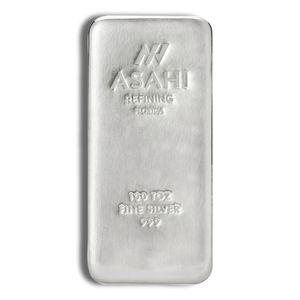
Our catalog includes two of the most practical silver bar formats available from Asahi Refining: the 10 oz silver bar and the 100 oz silver bar. Both are produced in the United States to a fineness of .999 and carry the kind of refinery recognition that makes resale straightforward across the wholesale and dealer markets. Whether you're acquiring a manageable position or adding a substantial cast bar to an existing holding, these two offerings represent opposite ends of the practical spectrum for silver bar buyers.
Asahi Refining is one of the most respected refineries operating in North America, and the bars available here reflect that reputation in terms of weight accuracy, surface consistency, and clear hallmarking. The 10 oz bar is a minted format with precise dimensions, while the 100 oz bar carries the cast finish that has become standard for larger silver product formats. Both ship from Bullion Standard with full product verification and competitive pricing tied directly to live spot market conditions.
Pricing on every Asahi silver bar listed here reflects real-time spot movement without layered complexity. Bullion Standard's transparent marketplace model means buyers can see exactly what they're paying relative to spot, with bid and ask pricing displayed directly on each product page.
What Are Asahi Silver Bars?
Asahi silver bars are .999 fine silver bars produced by Asahi Refining, a full-service precious metals refinery with operations in the United States. The bars follow the standard bullion bar format, meaning they are valued primarily by weight and purity rather than design or collectibility. That distinction separates them from silver rounds or government-issued coins, which often carry numismatic premiums tied to design series or limited mintages.
The two formats in this catalog serve different buyer needs. The 10 oz minted bar is compact, easy to handle, and suited for buyers who want manageable unit sizes with clean hallmarking and consistent dimensions. The 100 oz cast bar, by contrast, is a larger, heavier format that appeals to buyers looking to acquire silver in bulk with a lower per-ounce premium structure. Cast bars typically show the characteristic texture and surface variation that comes from the pouring process rather than the mechanical precision of a minted finish, and that's entirely expected and consistent with the format.
Both formats function identically from a market standpoint. They are recognized by dealers, refineries, and secondary market buyers as standard bullion products, and their liquidity is supported by Asahi's established refinery credentials in the North American market.
History and Background
Asahi Refining's presence in the North American precious metals market accelerated significantly in 2015 when the company acquired the precious metals refining operations previously held by Johnson Matthey. That acquisition included refinery infrastructure and institutional relationships that had been built over decades, and Asahi moved quickly to establish itself as a primary source of silver, gold, and platinum group metal bars for the commercial and retail bullion markets.
The broader silver bar market has its roots in industrial refining. As silver production grew through the 20th century, refineries began stamping standardized bars for commercial settlement and storage, establishing the formats that the modern retail market inherited. The 100 oz cast bar in particular became a benchmark format for large-volume silver buyers precisely because it reflected how silver was traded between institutional participants.
Over time, demand from individual buyers brought smaller formats like the 10 oz bar into wider circulation. Refineries that had historically focused on industrial and wholesale clients expanded their product lines to serve retail demand, and Asahi's post-2015 growth reflects that broader industry shift toward making refinery-direct silver accessible to a wider market.
Purity, Weight, and Specifications
Both bars listed here carry a silver purity of .999, which means 99.9% fine silver content. This is the standard purity level for silver bullion bars and satisfies the requirements for inclusion in most IRA-eligible precious metals accounts, though buyers should confirm eligibility with their custodian before making that determination. The .999 fineness is clearly stamped on each bar alongside the weight and the Asahi Refining hallmark.
The 10 oz bar measures 90 mm in length and 46 mm in width, with a consistent minted finish. The 100 oz bar is a cast format and doesn't carry standardized external dimensions in the same way, as the casting process introduces natural variation in shape. What remains consistent is the verified silver content, which is the defining characteristic of any cast bullion bar. Both bars are weighed and verified in troy ounces, the standard unit of measure for precious metals, where one troy ounce equals approximately 31.1 grams.
Serial numbers are more common on larger bars produced by major refineries, and while individual bar specifications can vary by production run, Asahi's hallmarking standards ensure that each bar carries clear identification of origin, purity, and weight. These markings are essential for resale and verification purposes.
Available Brands, Mints, and Product Variations
The bars in this section of our catalog come exclusively from Asahi Refining, which operates as one of the primary precious metals refineries in the United States. Asahi sources, refines, and fabricates silver products for both the industrial and investment markets, giving their bars strong institutional recognition. That recognition matters because bars from well-known refineries trade with lower friction in the secondary market compared to lesser-known sources.
The 10 oz bar carries a minted finish with clean edges and consistent relief, making it well-suited for buyers who want a bar that presents neatly alongside other minted products. The 100 oz bar uses the cast format that is standard for large silver bars across the industry. Both bear the Asahi Refining name, purity stamp, and weight designation. While both are American-origin products, their market recognition extends well beyond domestic buyers.
It's worth noting that within the broader silver bar market, Asahi competes with refineries such as PAMP Suisse, Valcambi, and Engelhard on the minted side, and with products from the Royal Canadian Mint and the Perth Mint at various weight levels. Asahi's American origin and institutional refinery background give their bars a distinct position, particularly in the North American wholesale market where domestic refinery products often see tighter spreads.
Pricing, Premiums, and Market Factors
Silver bar pricing is driven by two components: the spot price of silver and the premium charged above that spot price. The spot price reflects real-time global market conditions and changes continuously during trading hours. The premium reflects the cost of fabrication, distribution, and dealer margin. For silver bars, premiums tend to be lower than those for government-issued coins or limited-edition rounds, which is one of the primary reasons buyers choose bars when capital efficiency matters.
Between the 10 oz and 100 oz formats, the larger bar typically carries a lower per-ounce premium due to scale. Fabricating and handling a single 100 oz bar is significantly more efficient than processing ten individual 10 oz bars, and that efficiency is reflected in the pricing structure. Buyers who are primarily focused on maximizing silver content per dollar tend to gravitate toward the 100 oz format for exactly that reason.
Bullion Standard's pricing reflects live market conditions and is structured around transparency. The bid and ask spread is displayed directly on each product page, giving buyers a clear view of both the acquisition cost and the expected resale value before committing to a purchase. This approach aligns with our broader philosophy that understanding both sides of a transaction leads to more informed decisions.
Condition, Packaging, and What to Expect
The 10 oz Asahi silver bar typically ships in a protective sleeve or individual packaging consistent with minted bar standards. Minted bars are more sensitive to surface contact than cast bars due to their finished appearance, so they are generally handled and packaged with that in mind. Minor handling marks or packaging contact marks are within normal expectations for silver bars and do not affect the silver content or market value of the bar.
The 100 oz cast bar has a different presentation entirely. Cast bars are not polished or struck to a mirror finish, and the surface texture varies naturally from bar to bar as a result of the pouring and cooling process. Some bars may show flow lines, minor surface texture variation, or slight discoloration that is inherent to the casting process. These are not defects. They are characteristics of cast silver that are well understood and accepted in the market.
Both formats ship securely packaged from Bullion Standard's fulfillment operations. Larger bars like the 100 oz format are shipped with packaging appropriate for their weight and dimensions. Buyers should inspect their order upon receipt and contact our support team promptly if there is any concern about the shipment.
Authenticity and Verification
Every Asahi silver bar sold through Bullion Standard is verified for authenticity, weight, and purity before it ships. We source products directly from reputable refineries, wholesalers, and authorized distributors, and our sourcing process is designed to exclude product that cannot be traced to a known and legitimate origin. Asahi Refining's bars carry clear hallmarking that allows for straightforward visual identification and comparison against known standards.
Silver bars are less commonly targeted by counterfeiters than gold bars at equivalent face values, but verification remains a standard part of responsible precious metals handling. Reputable dealers and refineries use electronic testing, ultrasound verification, and XRF (X-ray fluorescence) analysis to confirm silver content in bulk purchases. For individual buyers, the Asahi hallmark, purity stamp, and refinery origin serve as the primary verification indicators alongside reputable sourcing.
Bullion Standard maintains an A rating with the Better Business Bureau and holds memberships in the American Numismatic Association and the National Coin and Bullion Association. These affiliations reflect our commitment to operating within recognized industry standards for product authenticity and dealer conduct.
Liquidity and Resale Considerations
Asahi Refining bars trade with solid recognition across the North American wholesale and retail dealer markets. The refinery's institutional background and its acquisition of former Johnson Matthey operations gave it immediate credibility with dealers and market participants who had existing familiarity with that product line. As a result, Asahi bars don't carry the resale friction sometimes associated with lesser-known or private-label refinery products.
The 100 oz cast bar is one of the most widely traded silver formats in the North American market. Its size and format are consistent with how silver moves through the wholesale channel, meaning dealers and refineries are accustomed to handling and pricing this product. The 10 oz bar has broader appeal among individual buyers and trades well through retail buyback programs and peer-to-peer channels where smaller, more manageable units are preferred.
Understanding liquidity before purchasing is something Bullion Standard actively encourages. Our two-way market structure means customers can sell silver bars back through the same platform where they purchased them, with buyback pricing tied to live wholesale market conditions. Seeing both the buy and sell prices before committing to a purchase gives buyers a realistic picture of the complete transaction cost.
Storage and Security
The 10 oz silver bar is compact enough for most home storage solutions, including small safes, lockboxes, or bank safe deposit boxes. Its minted format and individual packaging make it easy to stack and organize alongside other bar or coin products. Keeping bars in their original packaging or protective sleeves helps preserve their surface condition, which can be relevant in the resale process.
The 100 oz cast bar requires more deliberate storage planning due to its weight, which is approximately 6.86 pounds per bar. Home safes rated for this kind of weight are appropriate, but buyers accumulating multiple large bars may find professional vault storage more practical. Many third-party vault providers offer allocated or segregated storage options that keep individual bars identified and separated from pooled inventory, which is worth understanding before choosing a storage arrangement.
Regardless of storage method, physical silver should be kept in a stable environment with controlled humidity. Silver can tarnish over time when exposed to moisture and certain airborne compounds, though toning or tarnish on a cast bar is generally accepted in the market and doesn't affect its silver content. Anti-tarnish strips and airtight containers are low-cost protective measures for buyers storing silver at home over longer periods.
Selling and Buyback Options
Selling silver bars through a dealer buyback program is the most straightforward path for most holders. Dealer buyback pricing is tied to the current silver spot price plus or minus a spread that reflects the dealer's cost of reacquiring and reselling the product. Well-recognized refinery bars like those from Asahi tend to attract more competitive buyback pricing than generic or obscure products because they move through the wholesale market with less friction.
Condition and packaging can affect buyback offers to varying degrees depending on the format. The 100 oz cast bar is typically evaluated on weight and purity alone, with its surface characteristics considered inherent to the format. The 10 oz minted bar may see slightly more scrutiny regarding surface condition if it's being reintroduced into a retail channel, though significant premium impact from minor handling marks is generally limited for standard bullion bars.
Bullion Standard's buyback program operates through the same platform used for purchasing, with pricing informed by live wholesale market conditions. Our purchasing team evaluates products based on product type, refinery recognition, weight, condition, and current market pricing. Buyers can review our current buyback prices online before initiating a sale, which is consistent with our broader commitment to pricing transparency across both sides of the transaction.
Why Buy Asahi Silver Bars?
Silver bars from Asahi Refining appeal to buyers focused on premium efficiency. Compared to government-issued silver coins like the American Silver Eagle or Canadian Silver Maple Leaf, bars generally carry lower premiums because they don't include the design premiums, legal tender status, or collectibility factors that influence coin pricing. For buyers whose primary focus is acquiring physical silver at a cost close to spot, bars are a logical format to evaluate.
The two weight options available here also provide meaningful flexibility. The 10 oz bar is practical for buyers who want to accumulate silver incrementally or prefer smaller unit sizes for eventual resale or distribution across multiple parties. The 100 oz bar concentrates a significant silver position into a single product, reducing the number of individual items to track, store, and eventually transact.
Asahi's American origin and its history as a full-service refinery with industrial and commercial clients add a layer of institutional credibility that generic or private-mint bars don't always carry. For buyers who care about the provenance and market recognition of the silver they hold, that distinction is worth factoring into the decision.
Why Buy from Bullion Standard?
Bullion Standard was founded in San Diego, California in 2010, and over the past fifteen years has built its reputation around pricing transparency, product authenticity, and a marketplace model that puts the customer's ability to make informed decisions at the center of the experience. That philosophy shows up in how we structure pricing, how we display bid/ask spreads, and how we approach the buying and selling process as a continuous relationship rather than a one-time transaction.
Every product sold through our platform is verified for authenticity, weight, and purity. We source exclusively from reputable refineries, wholesalers, and authorized distributors, and our A BBB rating along with our memberships in the ANA and NCBA reflect the standards we hold ourselves to as a dealer. The checkout process supports a wide range of payment methods including major credit cards, PayPal, bank-connected payments through Plaid, wire transfer, paper check, and cryptocurrency through BitPay.
Our two-way market structure means buyers can both purchase and sell precious metals within the same ecosystem, with competitive buyback pricing available alongside retail pricing. We believe that understanding what you can sell a product for is just as important as knowing what you paid for it, and we've built our platform to make that information visible from the start.
Get Near-Spot Pricing with Bullion Standard Pro
Bullion Standard Pro is designed for buyers who want to transact closer to wholesale market pricing. Members gain access to live, executable wholesale bid and ask pricing across a broad range of precious metals products, including silver bars. Unlike the standard retail pricing model where dealer markups are embedded in the listed price, Pro members transact directly at wholesale market prices that fluctuate with real-time supply and demand rather than fixed retail structures.
For silver bars, where premiums tend to be thinner than other formats, the pricing efficiency available through Pro can be meaningful over repeated purchases. The platform also provides access to historical premium data, spread analysis, and liquidity metrics that allow members to evaluate whether current market pricing represents a favorable entry point relative to historical conditions. Portfolio valuation through Pro is based on live wholesale bid pricing rather than estimated retail values, giving members a more accurate picture of their current liquidation value.
The broader goal of Bullion Standard Pro is to reduce the information asymmetry that has historically made physical precious metals harder to evaluate than other financial products. By combining executable wholesale pricing with proprietary market intelligence tools, the platform gives active buyers and serious holders access to the kind of transparent, data-driven environment that more established financial markets take for granted.

 (833) 278-4653