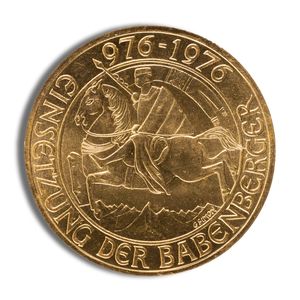
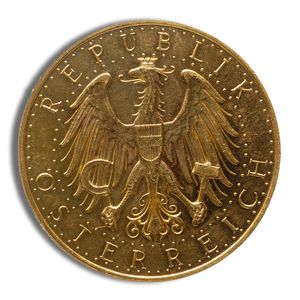
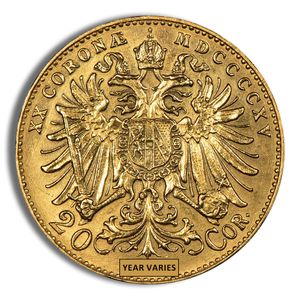
Buy Austrian Gold Coins Online
Our catalog of Austrian gold coins covers one of the most historically rich and widely recognized lineups in the global bullion market. From the iconic Gold Philharmonic in sizes ranging from 1/25 oz to 1 full troy ounce, to the storied Corona, Ducat, Schilling, and Florin series, the selection here spans centuries of Austrian minting tradition alongside the modern bullion programs that have made the Austrian Mint a name trusted by buyers worldwide.
Every product listed above is sourced from verified suppliers and authenticated before fulfillment. The range includes both BU (Brilliant Uncirculated) and circulated grades such as XF (Extremely Fine), with transparent grading so buyers know precisely what they're receiving. Random year offerings are available across most series, making it straightforward to acquire genuine Austrian gold at competitive premiums without paying for a specific date.
Bullion Standard is a San Diego-based precious metals marketplace founded in 2010 on a straightforward principle: buyers deserve accurate pricing, clear product information, and a dependable experience. That commitment runs through every Austrian gold coin listed here, from the packaging details and grade descriptions to the real-time pricing that reflects current wholesale market conditions.
What Are Austrian Gold Coins?
Austrian gold coins are gold bullion and semi-numismatic coins produced by the Austrian Mint (Münze Österreich) in Vienna. They span two broadly distinct categories: modern investment-grade bullion coins, primarily the Philharmonic series, and historical or restrike coins including the Corona, Ducat, Schilling, and Florin denominations. The former are minted to current standards for pure-gold content and finish, while the latter carry historical designs that connect buyers to centuries of European monetary tradition.
Buyers choose these coins for several reasons. The Gold Philharmonic is one of the best-selling gold bullion coins globally and carries legal tender status in Austria, denominated in euros. The historical coin types, including the 1915-dated Corona and Ducat restrikes, appeal to buyers who want genuine gold content in formats with deeper numismatic character. The range of available weights, from fractional 1/25 oz options up to the full one-ounce Philharmonic, accommodates buyers at different acquisition scales.
Unlike generic gold bars or rounds, Austrian gold coins carry the authority of a sovereign mint, making them straightforward to recognize and trade in dealer networks, both domestically and internationally. That recognizability is a practical consideration, not just an aesthetic one, especially for buyers who are thinking about eventual resale or conversion.
History and Background
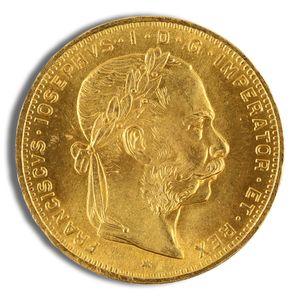
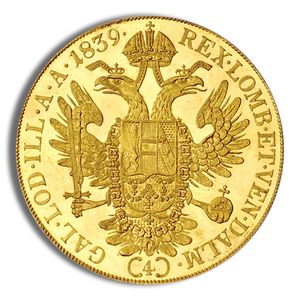
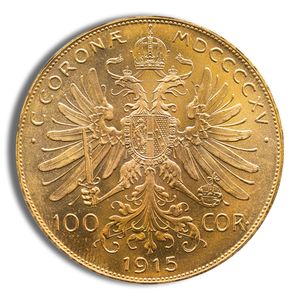
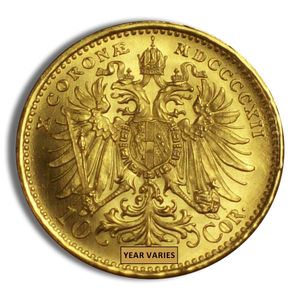
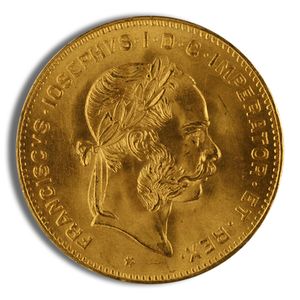
The Austrian Mint traces its origins to the early medieval period, with formal minting operations in Vienna established over 800 years ago. That long institutional history gives Austrian coinage an unusual depth relative to most modern bullion programs. The Corona and Ducat series emerged during the Austro-Hungarian Empire as legal monetary instruments, with the 100 Corona and 4 Ducat coins becoming widely recognized across Europe for their consistent gold content and quality. After the empire's dissolution, the Austrian Mint continued producing restrikes of these historical coins, dated 1915, specifically to meet ongoing bullion demand from buyers who valued the historical format.
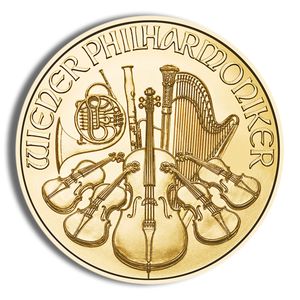
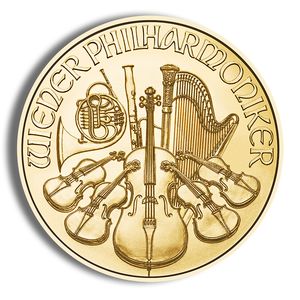
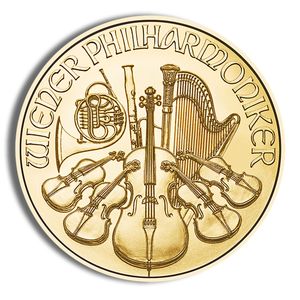
The modern Gold Philharmonic program launched in 1989, positioned as Austria's flagship investment bullion coin. Named after the Vienna Philharmonic Orchestra, the coin features an organ pipe design on the reverse and the Great Organ of the Musikverein on the obverse, making it one of the most visually distinctive gold coins in the global market. Its 0.9999 fine gold purity placed it among the purest government-issued gold coins available at launch, a standard that remains consistent today.
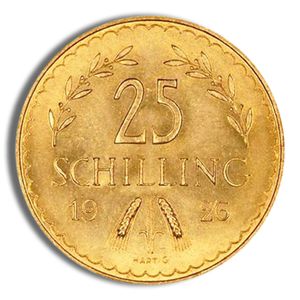
The Schilling and Florin series represent earlier twentieth-century Austrian monetary history, produced before Austria's adoption of the euro. Coins from these denominations, including the 25, 100, and 1000 Schilling issues and the 4 and 8 Florin pieces, are now collected and traded as circulated gold coins valued primarily for their metal content and historical character. The Austrian Mint's institutional consistency across all these programs has helped maintain product integrity and market recognition over time.
Purity, Weight, and Specifications
The Gold Philharmonic series is struck in 0.9999 fine gold, making it one of the highest-purity sovereign gold coins produced anywhere in the world. Available weights include 1 oz, 1/2 oz, 1/4 oz, 1/10 oz, and 1/25 oz, each with standardized diameter and thickness dimensions. The 1 oz coin measures 37mm in diameter at 2mm thick, while the smallest 1/25 oz measures 13mm in diameter at 0.8mm thick. These precise specifications are consistent across production years, which simplifies verification and storage planning.
The historical Corona and Ducat coins are struck in 0.900 fine gold, which was the standard purity for Austro-Hungarian monetary gold. The 10 Corona contains approximately 0.098 troy oz of gold, the 20 Corona approximately 0.196 oz, and the 100 Corona restrike approximately 0.9802 oz. Ducat coins are struck in 0.986 fine gold, with the 1 Ducat containing approximately 0.1106 oz and the 4 Ducat approximately 0.4438 oz. These slightly different purity levels are important to understand when comparing cost-per-ounce across the catalog.
The Schilling series coins carry 0.900 fine gold purity as well. The 100 Schilling contains roughly 0.6807 troy oz, the 1000 Schilling approximately 0.3906 oz, and the 25 Schilling around 0.1702 oz. The 4 Florin and 8 Florin coins are also 0.900 fine, at approximately 0.0933 oz and 0.1867 oz respectively. Understanding the actual gold content of each coin, rather than just its denomination, is essential for accurate pricing comparisons.
Available Brands, Mints, and Product Variations
Every coin in this section of our catalog is produced by the Austrian Mint, headquartered in Vienna. The Austrian Mint is a government-owned institution with a legal mandate to produce Austria's official circulation and collector coinage, as well as its bullion programs. Its quality controls, consistent specifications, and long operational history make it one of the most respected sovereign mints in the world. All coins listed here originate from the Austrian Mint, sourced through verified channels in the wholesale precious metals market.
Within the Philharmonic series alone, the product variations are meaningful. The 1 oz BU coin is available in both standard condition and impaired condition grades, which affects pricing and appearance but not gold content. Fractional Philharmonics range from 1/25 oz to 1/2 oz, each with its own tube or package quantity standard. The 1 oz coin, for example, is typically sold in inner packs of 10 and outer packs of 100, while 1/10 oz and 1/4 oz coins are packaged in tubes of 20. These packaging structures are standard in the wholesale market and influence both handling logistics and premium levels.
The historical and restrike series introduce further variation. The 1915-dated 100 Corona and the 1915-dated 1 Ducat and 4 Ducat restrikes are officially produced by the Austrian Mint and carry the same 1915 date regardless of actual production year, a well-established practice in the restrike market. Circulated coins such as the 20 Corona XF and 25 Schilling XF carry grades that reflect genuine wear from original circulation, which is factored into both pricing and buyer expectations. The 4 Florin and 8 Florin Florin-denomination coins represent the Austro-Hungarian monetary era and are valued primarily for their gold content in circulated grades.
Pricing, Premiums, and Market Factors
Austrian gold coin pricing is based on the live spot price of gold, with a premium added that reflects production costs, packaging, mint reputation, product size, and current supply and demand conditions. The Gold Philharmonic commands a premium that reflects both its status as a current sovereign issue and the consistent global demand it sustains. Fractional coins typically carry higher premiums per troy ounce than full-ounce coins, which is standard across the bullion market due to higher per-unit production and handling costs relative to gold content.
Historical and restrike coins like the Corona and Ducat series generally trade at narrower premiums than modern sovereign bullion coins because they lack legal tender status in their current form and appeal to a somewhat different buyer profile. Circulated coins in XF or XF grade tend to price closer to melt value than BU coins, though their actual gold content is identical. Condition affects aesthetic appeal and collector premium, but it doesn't change the underlying gold weight or purity.
Bullion Standard's pricing reflects real-time market conditions and is displayed transparently alongside bid and ask data on individual product pages. Rather than obscuring the relationship between spot price and final cost, the platform is designed so buyers can see the full picture, including the spread between acquisition cost and current resale value. That transparency is foundational to how the marketplace operates, and it applies to every Austrian gold coin listed here.
Condition, Packaging, and What to Expect
BU-graded Philharmonic coins are delivered in the condition expected from freshly struck mint production, free from wear or circulation marks. These coins may show minor contact marks or handling marks typical of bulk-packaged bullion; that's a normal characteristic of BU bullion product rather than a grading defect. Buyers seeking coins with no surface marks should look toward proof or specimen-grade products, which are a different category.
Impaired condition coins, such as the 1 oz Gold Philharmonic listed with an impaired grade, carry visible wear or marks beyond what's expected of BU product but retain full gold content. These coins are priced accordingly and are a practical option for buyers focused on metal content rather than cosmetic presentation. XF-graded coins, such as the 20 Corona and 25 Schilling, are genuine circulated pieces with light-to-moderate wear consistent with the XF standard, and they are not restrikes.
All random year products are shipped in the year available at the time of order fulfillment. Specific dates cannot be requested or guaranteed on random year listings. Coins may arrive in mint tubes, individual capsules, or as loose coins depending on the product and packaging format. Product pages specify inner and outer pack quantities where applicable, so buyers ordering in quantity can plan accordingly. Packaging presentation may vary between wholesale and retail fulfillment channels.
Authenticity and Verification
Austrian gold coins produced by the Austrian Mint carry consistent specifications that are well-documented in the bullion industry. The Philharmonic series, for example, has precisely defined diameter, thickness, weight, and purity standards that have remained stable since the program's 1989 launch. These standardized parameters make physical verification straightforward using calibrated scales and precision calipers, and they are widely understood by dealers and testing labs globally.
Every product sold through Bullion Standard is sourced from reputable mints, wholesalers, and distributors and is verified for authenticity, weight, and purity before reaching the customer. Bullion Standard maintains membership in the American Numismatic Association (ANA) and the National Coin and Bullion Association (NCBA), and operates as an authorized dealer for both PCGS and NGC. These affiliations reflect the operational standards and sourcing integrity that underpin every product in our catalog.
Anti-counterfeiting measures for Austrian gold coins rely on the difficulty of replicating precise alloy composition and physical dimensions at scale. The Austrian Mint's long institutional history and consistent quality controls further reduce counterfeiting risk compared to less-established programs. For buyers with specific concerns, third-party certification through PCGS or NGC is available and can provide additional documentation and grading records for individual coins.
Liquidity and Resale Considerations
The Gold Philharmonic is one of the most liquid gold bullion coins in the world, consistently ranking among the top-selling sovereign gold coin programs alongside the American Gold Eagle, Canadian Gold Maple Leaf, and South African Gold Krugerrand. That global recognition translates directly into resale accessibility. Dealers across North America, Europe, and Asia are generally familiar with the coin and equipped to price and purchase it without additional verification steps beyond standard bullion testing.
Historical coins like the Corona and Ducat restrikes are also broadly recognized in the dealer market, particularly among European-focused bullion buyers and those familiar with pre-euro monetary history. Circulated examples in XF grade may require slightly more context during resale compared to BU Philharmonics, but they remain recognized and tradeable gold product. The Schilling and Florin coins occupy a similar position, valued primarily for gold content with a narrower specialist market for collectors.
Fractional gold coins, including the 1/10 oz and 1/4 oz Philharmonics, carry their own resale dynamics. While their smaller size makes them appealing for acquisition in smaller increments, per-ounce premiums are typically higher on the way in and may remain elevated on the way out depending on market conditions at the time of resale. Understanding these dynamics before purchasing is part of making an informed decision, which is why Bullion Standard displays real-time bid and ask data on each product page.
Storage and Security
Austrian gold coins, particularly the Philharmonic series, are most commonly stored in their original mint tubes, which protect multiple coins simultaneously and make handling easier without direct contact with the coin surfaces. Individual coins can also be stored in hard capsules, which prevent contact marks and preserve cosmetic condition over time. For coins where appearance and potential numismatic value matter, capsule storage is the better choice.
Larger holdings of Austrian gold coins, including full tubes of 1 oz Philharmonics or boxes of 100 coins, are best stored in a quality home safe rated for fire and burglary resistance, or in a professional vault facility. Safety deposit boxes at financial institutions are another option for moderate-sized holdings, though access may be limited to banking hours and the contents are typically not insured by the institution. Regardless of storage method, keeping records of purchases, including product specifications and acquisition pricing, adds practical value for both insurance purposes and eventual resale.
Environmental factors such as humidity, temperature fluctuation, and airborne pollutants can affect coin surfaces over time, particularly for high-purity gold. Gold at 0.9999 fineness is more reactive to surface fingerprinting and environmental exposure than lower-purity alloys, so limiting direct handling and maintaining stable storage conditions is worthwhile. Silica gel packets inside sealed storage containers can help manage humidity in home storage environments.
Selling and Buyback Options
Selling Austrian gold coins back into the market generally begins with an evaluation of the coin's type, weight, purity, condition, and current gold spot price. Widely recognized coins like the 1 oz Gold Philharmonic typically command tighter bid/ask spreads and faster dealer bids than less common formats, because buyers in the secondary market have clear pricing benchmarks. Historical coins and circulated pieces may require slightly more evaluation time, particularly for dealers less focused on that segment.
Bullion Standard operates a two-way market structure, meaning customers can both purchase and sell precious metals within the same platform. Our purchasing team evaluates Austrian gold coins based on current market conditions, product specifications, and condition, providing competitive buyback pricing that reflects real-time wholesale bid levels. This model is designed so that liquidity is part of the conversation from the start, not only when it's time to sell.
Factors that influence buyback pricing include current gold spot price, the specific coin type and its market recognition, condition and original packaging, and prevailing wholesale market demand at the time of sale. Coins in original mint tubes or with documentation in good order typically move through the buyback process more efficiently. Understanding the buyback relationship before purchasing is a practical step toward managing the complete cost of ownership.
Why Buy Austrian Gold Coins?
Austrian gold coins offer a combination of sovereign backing, recognized purity standards, and genuine historical depth that's hard to match in the broader bullion market. The Philharmonic program in particular gives buyers access to a globally traded, government-issued gold coin at premiums that are competitive with other leading sovereign programs. Its 0.9999 fine gold content and consistent production standards make it a straightforward product to evaluate, price, and trade.
The historical series adds something different: access to genuine gold coins with direct connections to European monetary history. Whether that's the elegance of the Ducat restrike, the weight of the 100 Corona, or the more modest denominations of the Schilling and Florin series, these coins carry a character that pure bullion bars and generic rounds can't replicate. For buyers who want gold content alongside historical substance, Austrian gold coins cover a range that few other national programs can match.
Fractional Philharmonics extend the range further, giving buyers the option to acquire Austrian gold in smaller increments without sacrificing the mint's recognized quality standards. That flexibility makes the catalog useful across different budget levels and acquisition strategies, from accumulating fractional coins over time to purchasing full-ounce or multi-coin lots for larger positions.
Why Buy from Bullion Standard?
Bullion Standard has been serving precious metals buyers since 2010, building a national reputation based on pricing transparency, sourcing integrity, and a customer experience that's designed around informed decision-making rather than high-pressure sales. Every Austrian gold coin in our catalog is verified for authenticity, weight, and purity before shipment, and our pricing is based on real-time market data rather than static markups.
Our platform displays the bid/ask spread on each product page, giving buyers a clear view of the relationship between acquisition cost and current resale value. That transparency is unusual in the retail precious metals space, and it reflects the broader philosophy behind how Bullion Standard operates. We hold an A rating with the Better Business Bureau, maintain memberships in the ANA and NCBA, and are authorized dealers for PCGS and NGC, credentials that reflect operational standards our customers can rely on.
Payment flexibility is broad, covering Visa, Mastercard, American Express, Discover, PayPal, bank-connected payments via Plaid, wire transfer, paper check, and cryptocurrency through BitPay. Fulfillment is handled with care for security and presentation, and our customer service team is accessible throughout the purchasing and post-purchase process. The goal at every step is a marketplace that feels straightforward, honest, and built for the long term.
Get Near-Spot Pricing with Bullion Standard Pro
Bullion Standard Pro is designed for buyers who want direct access to live, executable wholesale pricing across the precious metals market. Rather than applying dealer markups on top of published prices, Pro members transact at wholesale bid and ask levels that reflect real-time supply and demand conditions. For Austrian gold coins, which trade in an active global market, this pricing structure can result in meaningfully tighter spreads compared to standard retail channels.
Pro members also gain access to live portfolio valuation based on current wholesale bid pricing, which provides a more accurate picture of liquidation value than estimated retail prices. Historical premium data, spread analysis, and proprietary market intelligence tools give members additional context for evaluating product-specific pricing trends over time. These tools are designed to reduce the information asymmetry that has historically made the physical precious metals market harder to navigate than it needs to be.
For buyers who plan to acquire Austrian gold coins on a recurring basis, or who are managing a larger position across multiple products, the pricing efficiency and market visibility available through Bullion Standard Pro represent a meaningful operational advantage. The platform is built on the premise that better information leads to better decisions, and that the physical precious metals market should offer buyers the same kind of analytical clarity found in more transparent financial markets.

 (833) 278-4653