Buy 90% Silver Dimes Online
Our catalog of 90% silver dimes covers some of the most recognized and widely traded junk silver coins in the American bullion market. You'll find Barber dimes, Mercury dimes, and Roosevelt dimes sourced from the United States Mint, available in $1 face value bags across a range of grades including circulated, VF, XF, AU, and BU. Each product contains 0.715 troy ounces of actual silver content per dollar of face value, making them straightforward to price and compare.
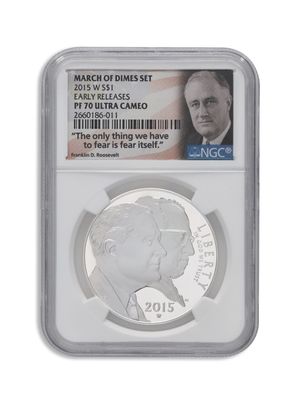
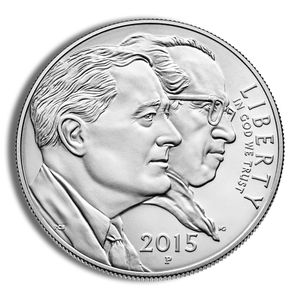
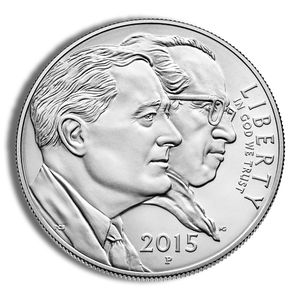
The selection also includes the 2015 March of Dimes Silver Commemorative dollar, available in BU from the Philadelphia Mint and in proof finish from the West Point Mint, including an NGC PF70-graded example for collectors seeking certified quality. Whether you're drawn to pre-1965 circulation-era coins or modern commemoratives, the breadth here reflects both the bullion and numismatic sides of the silver dime market.
Bullion Standard operates as a transparent marketplace with real-time pricing, verified sourcing, and a two-way buying and selling structure. Every product listed is authenticated before shipment, and pricing reflects live silver spot prices rather than fixed retail markups designed to obscure the true cost of ownership.
What Are 90% Silver Dimes?
The term "90% silver dimes" refers to United States dimes struck before 1965 that contain 90% silver and 10% copper by composition. These coins were produced for general circulation and were not intended as bullion products, but their silver content has made them a durable and widely recognized segment of the physical silver market. Each individual dime contains approximately 0.0723 troy ounces of silver, and a $1 face value lot of ten dimes contains 0.715 troy ounces.
Collectors and bullion buyers often refer to these coins as "junk silver," a term that describes their condition and origin rather than their quality. Junk silver carries no numismatic premium in most cases and trades primarily on its silver melt value. This makes 90% silver dimes one of the most accessible and directly silver-priced formats in the physical market.
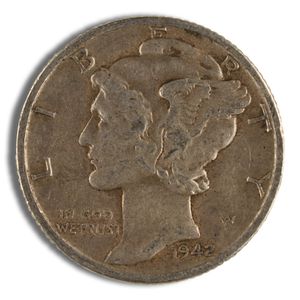
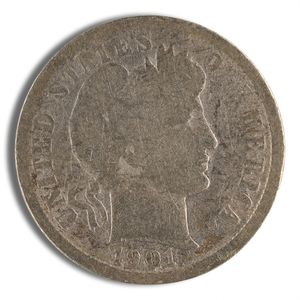
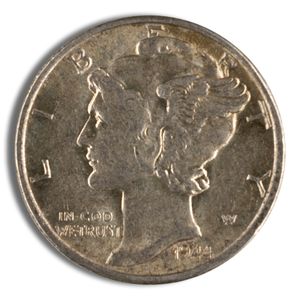
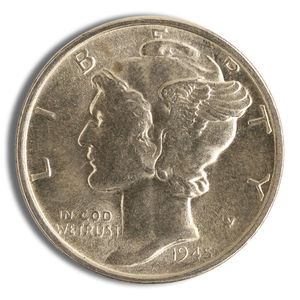
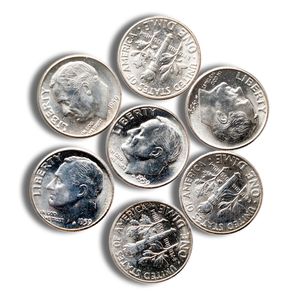
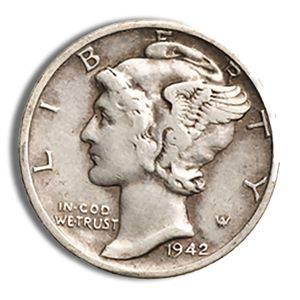
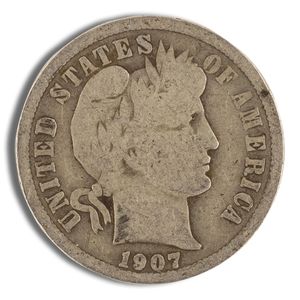
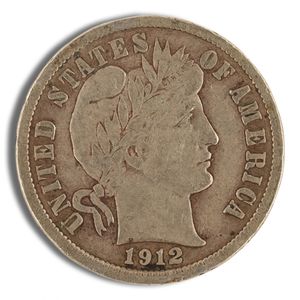
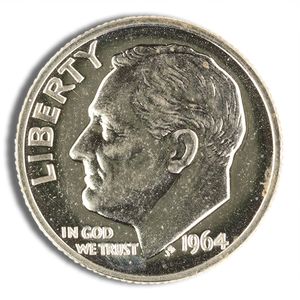
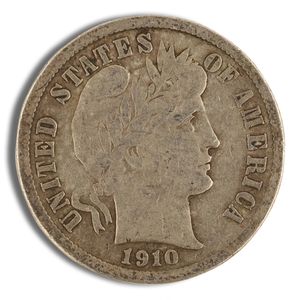
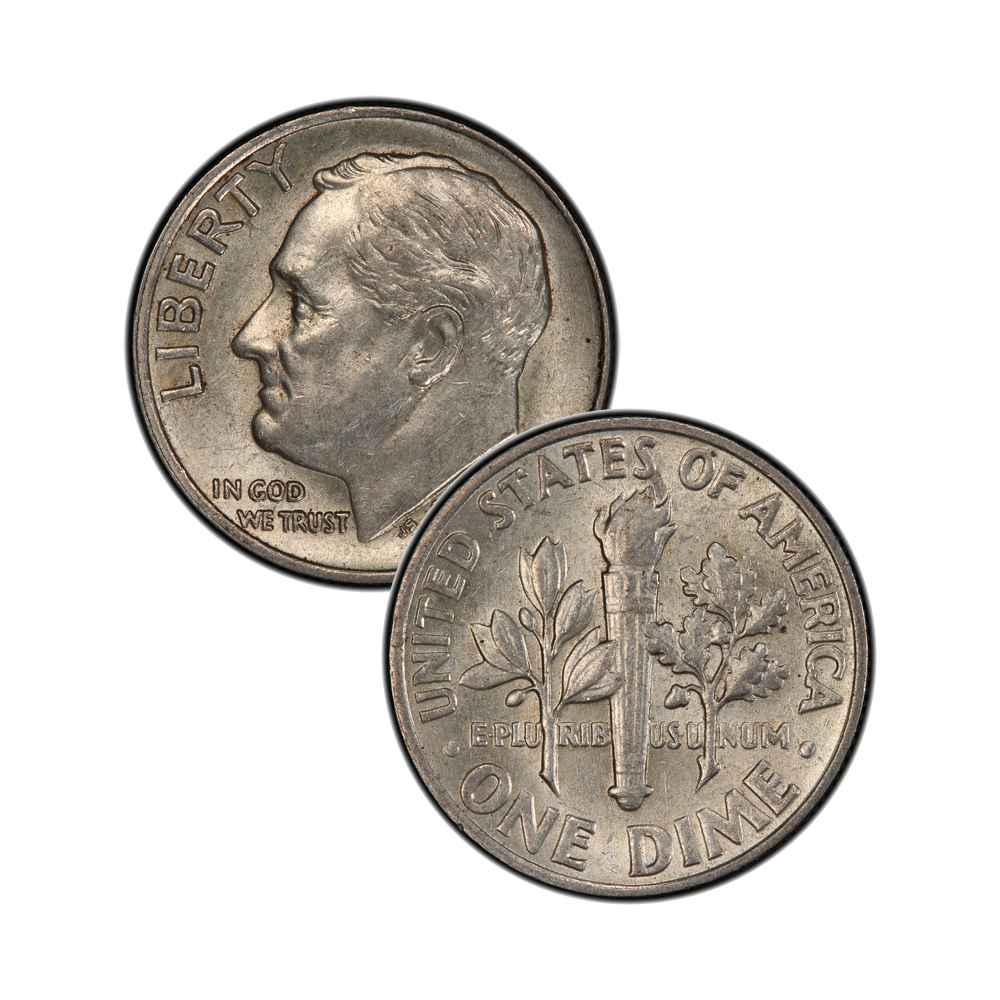
The category spans three distinct coin types: Barber dimes (1892 to 1916), Mercury dimes (1916 to 1945), and Roosevelt dimes (1946 to 1964). Each has its own collector following, design history, and grade spectrum, though all three share the same 90% silver purity and standard dimensions.
History and Background
American silver dimes have a production history stretching back to the earliest years of the United States Mint. The Barber dime, designed by Chief Engraver Charles E. Barber, circulated from 1892 through 1916 and was minted across Philadelphia, Denver, New Orleans, and San Francisco facilities. Its classical portrait of Liberty was a deliberate departure from the more ornate designs of earlier coinage.
The Mercury dime followed in 1916, designed by Adolph A. Weinman and featuring a portrait of Liberty wearing a winged cap, commonly mistaken for the Roman god Mercury. It remains one of the most admired American coin designs and continues to attract both bullion buyers seeking high-grade examples and numismatists interested in specific date and mint combinations. The Roosevelt dime replaced it in 1946, issued as a tribute to President Franklin D. Roosevelt and his association with the March of Dimes polio-relief program.
Silver was removed from dime production entirely after 1964 as rising silver prices made the metal content of circulating coins more valuable than their face value. This transition cemented the collectibility of pre-1965 dimes and established the junk silver market as a lasting segment of the physical silver industry. Today, 90% silver dimes remain among the most liquid and widely recognized forms of physical silver traded in the United States.
Purity, Weight, and Specifications
All three dime types covered here share a consistent specification: 90% silver, 10% copper, with a diameter of 17.9 millimeters and a thickness of 1.35 millimeters. The gross weight of each individual coin is 2.5 grams, of which 2.25 grams is pure silver. This yields a silver content of approximately 0.07234 troy ounces per coin and 0.715 troy ounces per $1 face value lot of ten coins.
The 2015 March of Dimes Silver Commemorative dollar is a distinct product with different specifications. Struck in 0.900 fine silver, it weighs 26.73 grams with a diameter of 38.1 millimeters, yielding 0.7734 troy ounces of silver content. The Philadelphia Mint produced the BU version and the West Point Mint produced the proof version, identified by their respective P and W mint marks.
When buying $1 face value lots, the 0.715 troy ounce figure is the standard used for pricing silver content. Some dealers use 0.7234 ounces for more precise calculations, particularly when accounting for actual gross weights. The difference is minor but worth understanding when comparing premiums across dealers or calculating melt value at a given spot price.
Available Brands, Mints, and Product Variations
Our catalog includes all three major types of 90% silver dimes from the United States Mint. Barber dimes are available in average circulated, Good to Fine, VF, and XF grades. Mercury dimes are offered in average circulated, XF, AU, and BU grades. Roosevelt dimes are available in circulated, BU, and proof conditions covering the 1946 to 1964 date range. All circulated lots are random year and random mint mark, with coins sourced from various Philadelphia, Denver, and San Francisco production runs.
Grade distinctions matter in this segment. Average circulated coins show significant wear across high-relief design elements and are priced closest to silver melt value. VF and XF coins retain clearer design detail with moderate to light wear. AU examples show minimal friction and often approach the visual quality of uncirculated coins, while BU coins show no wear and display original mint luster. The price difference between grades generally reflects the premium buyers assign to condition above melt value.
The 2015 March of Dimes Silver Commemorative adds a modern numismatic dimension to the catalog. The NGC-certified PF70 example from the West Point Mint represents the top grade assigned by the Numismatic Guaranty Company and is sealed in a tamper-evident holder with certification details. The raw proof and BU Philadelphia examples appeal to buyers seeking commemorative silver without the premium of third-party grading.
Pricing, Premiums, and Market Factors
The price of 90% silver dimes moves in direct relation to the silver spot price. Because these coins trade primarily on melt value, their premiums above spot tend to be among the lowest in the physical silver market, particularly for average circulated examples. This efficiency makes them attractive for buyers who want silver exposure without paying substantial manufacturing or design premiums.
Grade plays a measurable role in pricing. Higher-grade circulated coins like XF and AU carry slightly elevated premiums over average circulated material because they appeal to a broader audience that includes collectors and condition-conscious buyers. BU examples carry the highest premiums within the junk silver dime segment, reflecting scarcity and the appeal of uncirculated original-luster coins from decades of production.
The 2015 March of Dimes commemoratives carry higher premiums than pre-1965 junk silver, driven by their modern proof finish, limited mintage, and numismatic interest. Certified examples like the NGC PF70 carry additional premiums tied to the grading service fee, registry appeal, and the assurance of a standardized grade from a recognized third-party service. Bullion Standard displays pricing transparently with live spot price integration, allowing buyers to evaluate the exact premium they are paying at any given moment.
Condition, Packaging, and What to Expect
Pre-1965 silver dimes sold as circulated lots arrive without individual coin packaging. Coins are loose and may show the wear, toning, and surface character consistent with decades of actual circulation. Average circulated examples will display significant design wear and may have acquired toning or light surface marks over time. This is expected and does not affect silver content or melt value.
Higher-grade lots, including VF, XF, AU, and BU, are selected for cleaner surfaces and better-preserved detail, but buyers should understand that grading for junk silver lots reflects general condition ranges rather than coin-by-coin grading. Individual coins within a lot may vary slightly within the stated grade range. Random year products are supplied based on current inventory and availability, with no guarantee of specific dates or mint marks.
The 2015 March of Dimes commemoratives ship in United States Mint original packaging for the raw versions and in NGC holders for the certified PF70. Proof coins have been struck with polished dies on specially prepared planchets, giving them sharp relief and mirrored fields. These products are handled more carefully during packaging and shipping to preserve their presentation quality.
Authenticity and Verification
Pre-1965 United States dimes are among the most easily verified silver coins in the market. Their composition, weight, dimensions, and design are well-documented and consistent across decades of production. Experienced buyers and dealers can identify authentic examples by weight, ring, and visual examination, and the risk of sophisticated counterfeiting in this segment is considerably lower than with higher-value modern bullion coins.
The 2015 March of Dimes commemoratives carry additional authentication assurances. The raw BU and proof versions were produced directly by the United States Mint and are recognized by their design, dimensions, and official packaging. The NGC PF70 example is sealed in a tamper-evident holder with a unique certification number, allowing buyers to verify the coin's grade and authenticity through NGC's online registry.
Every product sold through Bullion Standard is verified for authenticity, weight, and purity before shipment. We source from reputable mints, wholesalers, and authorized distributors, and our team maintains strict intake and verification procedures. Bullion Standard holds an A rating with the Better Business Bureau and is an authorized dealer for both PCGS and NGC.
Liquidity and Resale Considerations
90% silver dimes are among the most liquid forms of physical silver in the American market. Their composition, origin, and silver content are universally understood by dealers, collectors, and bullion buyers across the country. This near-universal recognition means that reselling pre-1965 silver dimes is typically more straightforward than selling modern coins from less established mints or private issuers.
Circulated junk silver lots are easily priced based on silver spot and face value, which simplifies the resale process significantly. Higher-grade examples may require more evaluation at the point of resale, particularly if the buyer is seeking full credit for condition. BU and proof coins attract a broader pool of potential buyers than average circulated material, though premiums at resale will reflect current market demand and grade premiums at the time of sale.
The 2015 March of Dimes commemoratives are recognized within the United States Mint collector market and carry resale familiarity among commemorative silver buyers. Certified examples in NGC holders benefit from the standardization that third-party grading provides, reducing friction in dealer-to-dealer and collector-to-collector transactions.
Storage and Security
Loose circulated dimes can be stored efficiently in coin tubes, flip bags, or sealed plastic containers. Their small size means that a meaningful quantity of silver content can be held in a relatively compact space compared to larger silver bars or coins. This compactness makes them practical for home safe storage, though proper environmental controls such as low humidity and stable temperature are important for preserving surface quality over time.
Higher-grade BU and proof examples deserve more careful handling. Proof coins should remain in their original packaging or NGC holders when not being examined, as fingerprints and surface contact can diminish their visual quality and potentially affect value. Uncirculated examples in tubes should be stored upright in a stable environment away from moisture and temperature fluctuations.
For larger holdings, dedicated vault storage through a secure third-party facility provides a higher level of physical protection and may include insurance coverage appropriate to the value being stored. Home storage setups should prioritize fire resistance and theft deterrence, with access limited and discreet from outside observation.
Selling and Buyback Options
Selling 90% silver dimes is generally straightforward given their standardized silver content and broad market recognition. When presenting pre-1965 dimes for resale, the key factors that influence buyback pricing are condition, grade tier, and current silver spot pricing. Average circulated lots are priced efficiently against spot, while higher-grade examples may command modest premiums depending on market demand at the time of sale.
Bullion Standard operates a two-way market, meaning customers can both purchase and sell precious metals within the same platform. Our purchasing team evaluates products based on current silver prices, product type, condition, and market liquidity. For junk silver dimes, the resale process is efficient because pricing is formula-driven and does not depend on subjective assessment of individual coin aesthetics in most cases.
Certified products like the NGC PF70 example are assessed based on the certification and current market demand for the specific issue and grade. Raw commemorative coins are evaluated similarly, with condition and packaging completeness factoring into the buyback offer. Initiating a sale through Bullion Standard is designed to be operationally simple, with transparent pricing provided upfront before commitment.
Why Buy 90% Silver Dimes?
Pre-1965 silver dimes occupy a practical position in the physical silver market. Their silver content is standardized, their pricing is transparent, and their recognizability is nearly universal among precious metals buyers in the United States. For buyers who want physical silver with minimal premium above melt, circulated junk silver dimes are consistently among the most premium-efficient formats available.
The divisibility of dimes is also a practical consideration. With silver content of roughly 0.0723 troy ounces per coin, individual dimes allow for flexible handling of physical silver in small increments. This granularity is not easily replicated by one-ounce coins or larger bar formats, making dimes useful for buyers who prefer the flexibility of smaller fractional units within a larger silver holding.
For those with numismatic interests, the Barber, Mercury, and Roosevelt dimes each offer a deep collector ecosystem with specific date, mint mark, and condition combinations that attract specialist buyers. The 2015 March of Dimes commemoratives bring modern United States Mint craftsmanship and proof technology into the same catalog, appealing to buyers who appreciate the design and finish quality of contemporary commemorative silver alongside the historical character of circulated coinage.
Why Buy from Bullion Standard?
Bullion Standard was founded in 2010 in San Diego, California, and has grown into a nationally recognized precious metals marketplace by operating on a transparent, customer-first model. Our pricing reflects real-time silver spot conditions and is structured to give buyers a clear view of the premium they are paying rather than embedding markups within opaque pricing structures. This commitment to pricing transparency extends across every product in our catalog.
Our sourcing process prioritizes verified, reputable supply. Products are authenticated for weight and purity before reaching customers, and our team maintains relationships with established mints, authorized distributors, and wholesale market participants. Bullion Standard holds an A rating with the Better Business Bureau and is a member of the American Numismatic Association and the National Coin and Bullion Association. We are also an authorized dealer for both PCGS and NGC, which is directly relevant to our certified coin offerings.
The checkout experience supports a broad range of payment methods including Visa, Mastercard, American Express, Discover, PayPal, bank-connected payments through Plaid, wire transfer, paper check, and cryptocurrency through BitPay. Shipping is handled with security and reliability in mind, and our customer service team is accessible for support before, during, and after a purchase. Our goal is straightforward: make buying and selling physical silver a more transparent and informed experience than the industry has traditionally offered.
Get Near-Spot Pricing with Bullion Standard Pro
Bullion Standard Pro gives members access to live executable wholesale bid and ask pricing across a wide range of precious metals products, including silver dimes. Unlike standard retail pricing, Pro pricing reflects real-time wholesale market conditions and does not apply additional dealer markups on top of those market prices. This creates a more direct connection between what buyers pay and where the wholesale market is actually trading at any given moment.
For buyers who purchase silver regularly or in meaningful quantities, the pricing efficiency available through Pro can make a measurable difference in the total cost of ownership over time. Because premiums and bid/ask spreads fluctuate based on actual supply and demand within the wholesale silver market, Pro members can observe how individual products like junk silver dimes are priced relative to other silver formats and make more informed decisions about when and what to buy.
Pro members also gain access to portfolio valuation based on live executable wholesale bid pricing, providing a realistic view of current liquidation value rather than estimated retail prices. Proprietary analytics tools, historical premium data, spread analysis, and market intelligence round out the platform, giving serious buyers the kind of market visibility that has historically been available only to institutional participants. For those who want to engage with the physical silver market at a higher level of precision, Bullion Standard Pro is designed to support that approach.

 (833) 278-4653