Buy Burnished Gold Eagles Online
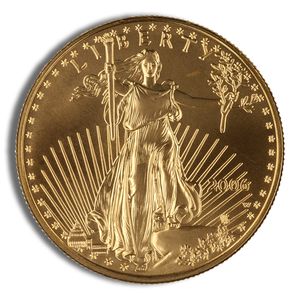
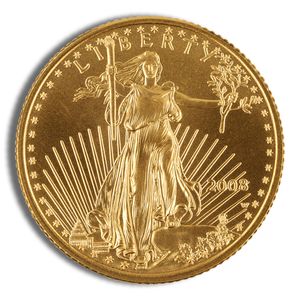
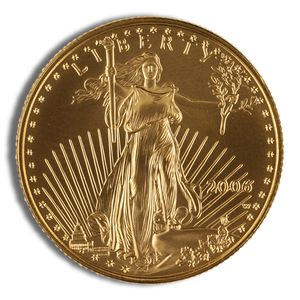
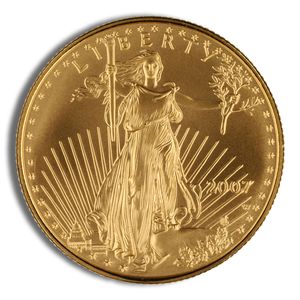
Our catalog of burnished gold eagles includes a curated selection of West Point-minted coins spanning the 2006, 2007, and 2008 program years, available in 1 oz, 1/2 oz, and 1/4 oz configurations. Each coin in this collection carries the "W" mint mark, struck at the United States Mint's West Point facility under the Burnished American Gold Eagle program. These are uncirculated coins produced with a special burnished finish, distinct from both standard bullion strikes and proof issues.
Products here are offered in capsule-only format, meaning they arrive protected in individual coin caps without the original government-issued box or Certificate of Authenticity. This is a common and widely accepted presentation for raw burnished coins traded in the secondary wholesale market. Pricing reflects that packaging status transparently, as Bullion Standard structures its listings to give buyers a complete picture of exactly what they're purchasing before any transaction is made.
Whether you're adding to an existing collection, filling date gaps in a burnished eagle set, or simply looking to acquire government-issued gold coins with a distinctive finish, this selection covers the core weights and years available from the program's brief production window.
What Are Burnished Gold Eagles?
Burnished gold eagles are a specific finish variant within the American Gold Eagle coin series, produced by the United States Mint starting in 2006. Unlike standard bullion strikes, which are produced on high-speed automated presses with standard planchets, burnished coins are made from hand-loaded, burnished blanks that undergo additional preparation before striking. The result is a coin with a matte-like, satin surface texture that sets it apart visually from both the mirrored fields of proof coins and the softer finish of general circulation bullion strikes.
These coins carry the "W" mint mark, which is not found on standard American Gold Eagle bullion coins produced for the general public. That mint mark alone makes burnished eagles distinguishable at a glance and of particular interest to collectors who track date-and-mint-mark combinations. They are classified as numismatic coins rather than pure bullion, though their gold content, purity, and weight are identical to their bullion counterparts.
Fractional sizes, including the 1/2 oz and 1/4 oz coins listed in this collection, allow buyers to acquire government-issued gold with a lower absolute dollar outlay per coin compared to the 1 oz format. The tradeoff is typically a higher per-ounce premium, which is standard across most government mint fractional programs regardless of finish type.
History and Background
The American Gold Eagle series launched in 1986 under the Gold Bullion Coin Act of 1985, which authorized the United States Mint to produce gold coins for public sale backed by domestically mined gold. For the first two decades, the program offered standard bullion strikes alongside annual proof issues for collectors. The burnished finish variant was introduced in 2006 as a middle-tier numismatic product intended to offer something beyond a standard bullion coin without the full mirror-finish production process associated with proof coinage.
The burnished program ran from 2006 through 2008, making it a short-lived series that produced a relatively limited number of coins across its three-year window. The 2008 year is particularly notable among collectors and dealers because the Mint suspended and then reintroduced production of certain sizes mid-year in response to shifting demand conditions, resulting in lower total mintage figures for some denominations. The 1/4 oz 2008-W burnished eagle, for example, was affected by these production constraints in ways that have made it more closely tracked in numismatic circles.
After 2008, the United States Mint discontinued the burnished American Gold Eagle program, meaning no new coins of this specific type have been produced since. That finite production window defines the complete set and gives the series its well-documented date range within the broader American Gold Eagle program's history.
Purity, Weight, and Specifications
All burnished gold eagles share the same metal specifications as standard American Gold Eagle bullion coins. Each coin is struck in 22-karat gold, with a purity of 0.9167 (91.67% gold), alloyed with silver and copper to improve durability. The coins carry their stated gold content regardless of the finish or denomination. A 1 oz burnished eagle contains exactly one troy ounce of gold, a 1/2 oz coin contains 0.5 troy ounces, and a 1/4 oz coin contains 0.25 troy ounces.
Coin dimensions vary by denomination. The 1 oz coin measures 32.7mm in diameter with a thickness of 2.87mm. The 1/2 oz coin measures 27mm in diameter at 2.15mm thickness for 2006 and 2007 issues, with the 2008 production measuring 2.24mm thick. The 1/4 oz coin measures 22mm in diameter and 1.83mm thick. Face values are $50, $25, and $10 respectively, assigned as legal tender denominations though the coins circulate primarily as numismatic and bullion instruments.
The troy ounce is the standard unit of measure for precious metals globally, distinct from the avoirdupois ounce used in everyday commerce. One troy ounce equals approximately 31.1 grams, which is heavier than a standard ounce at 28.35 grams. All weight and metal content figures listed for these coins reference troy weight, consistent with universal bullion industry standards.
Available Brands, Mints, and Product Variations
Every coin in this collection was produced exclusively by the United States Mint at its West Point, New York facility, indicated by the "W" mint mark stamped on each coin. West Point has been the primary production site for American Gold Eagle coins since the program's inception and is recognized globally as a reliable source of government-backed gold coinage. The facility's quality control processes are well-documented, and West Point-struck coins are widely recognized by dealers, collectors, and institutional buyers across the secondary market.
The collection spans three distinct program years: 2006, 2007, and 2008. Within those years, size availability varies. The 1 oz format appears in 2006 only within this collection. The 1/2 oz format appears across all three years, 2006, 2007, and 2008, making it the most represented size here. The 1/4 oz format appears in 2008 only. This variation reflects the actual production scope of the burnished program across its three-year run and means that collectors building a complete date-and-size set will find different combinations available depending on which denominations they're targeting.
All products are listed as cap-only, meaning the original United States Mint packaging, including the presentation box and Certificate of Authenticity, is not included. The coins are held in individual protective coin capsules, which provide physical protection during handling and shipping. This packaging format is standard for secondary market burnished coins and does not affect the coin's metal content, authenticity, or grade-eligibility with third-party certification services like PCGS or NGC.
Pricing, Premiums, and Market Factors
Burnished gold eagle pricing reflects two distinct components: the underlying gold spot price and the premium above spot. The spot price moves continuously based on global trading activity across the London Bullion Market, COMEX futures markets, and over-the-counter dealer networks. The premium layer represents the cost above that baseline and accounts for minting costs, distribution, packaging, coin type, and current market demand for the specific issue.
Because burnished eagles are numismatic coins with a finite production window rather than ongoing bullion coins, their premiums tend to be structured differently than standard bullion strikes. The short production run from 2006 to 2008, combined with fractional size availability and West Point mint marks, creates a more specific secondary market for these coins compared to standard bullion eagles. Premiums on fractional sizes are generally higher on a per-ounce basis than those on the 1 oz format, a function of the additional handling, minting complexity, and packaging involved in smaller denominations.
Bullion Standard displays real-time pricing on each product page, including the bid and ask spread, so buyers can evaluate the complete cost structure before transacting. This transparency is central to how the marketplace is built. Rather than obscuring the acquisition cost or buy-back relationship, the platform surfaces both sides of the transaction so buyers understand not just what they're paying, but what the resale picture looks like based on current market conditions.
Condition, Packaging, and What to Expect
Products listed here are secondary market coins offered in capsule-only format without original government packaging. Buyers should expect coins to be in raw, uncirculated condition consistent with careful handling and storage, but without formal third-party certification unless otherwise noted in the individual listing. The absence of the original box and COA is disclosed clearly in each product title and does not indicate that the coin's authenticity or metal content is in question.
The burnished finish on these coins can show minor contact marks or handling imperfections more visibly than standard bullion coins, due to the satin surface texture's sensitivity to friction. This is a characteristic of the finish type rather than a sign of wear or damage. Coins that have been stored in capsules since purchase will typically show minimal surface variation, but some degree of handling evidence is normal for secondary market coins that are not in sealed original Mint packaging.
Buyers interested in the highest-grade examples of a specific date and size may want to consider purchasing certified versions graded by PCGS or NGC, though those are priced separately from the raw cap-only coins listed in this collection. For buyers focused primarily on gold content and program year rather than numeric grade, the cap-only format represents a straightforward and cost-efficient way to acquire West Point-struck burnished gold eagles at current market conditions.
Authenticity and Verification
All products sourced and sold through Bullion Standard are verified for authenticity, weight, and purity before being made available for purchase. As an authorized PCGS and NGC dealer and a member of both the American Numismatic Association and the National Coin and Bullion Association, Bullion Standard operates under established industry standards for product verification and authenticity assurance. Every coin in this collection originates from the United States Mint and is authenticated through our sourcing and verification process before listing.
American Gold Eagles from the United States Mint include several built-in authenticity features that experienced dealers and collectors use for verification. The coin's weight, diameter, thickness, and surface characteristics are well-documented and consistent across production years. These specifications are publicly available through the U.S. Mint and provide a reliable baseline for physical verification. Counterfeit detection for American Gold Eagles is further supported by the density characteristics of gold itself, which can be tested through non-destructive methods including specific gravity testing and precision weight measurement.
For buyers who require additional certainty, PCGS and NGC certification encapsulates coins in tamper-evident holders with assigned population data and numeric grades. Because Bullion Standard is an authorized dealer for both services, customers interested in submitting raw coins for third-party certification can discuss that process with our team. Certified examples typically carry higher premiums and appeal most to collectors building high-grade sets rather than buyers focused on metal content alone.
Liquidity and Resale Considerations
American Gold Eagles are among the most widely recognized government-issued gold coins in the world and carry strong secondary market recognition across dealer networks, auction houses, and private buyers. The burnished variant occupies a more specific niche within that broader market because of its limited production years and numismatic classification, which means the resale pool is somewhat narrower than it is for standard bullion eagles traded purely on metal content.
The 1 oz format generally benefits from the deepest secondary market liquidity of any gold coin size because of its clean per-ounce pricing and widespread dealer familiarity. Fractional sizes, including the 1/2 oz and 1/4 oz coins listed here, are recognized and traded but tend to attract a more specific buyer profile, including collectors filling date sets and buyers with smaller purchase budgets. The cap-only condition of these coins means they transact primarily as raw numismatic coins rather than certified pieces, which keeps them within the broader wholesale and dealer market rather than the certified coin auction segment.
Understanding the resale picture before acquiring any coin is a principle Bullion Standard actively builds into its platform. The bid/ask spread displayed on each product page reflects current conditions on both the buying and selling side, giving buyers a practical read on the spread they're working within at the time of purchase rather than discovering it only when they decide to sell.
Storage and Security
Burnished gold eagles, particularly in fractional sizes, are compact enough to store efficiently in a variety of secure formats. For home storage, a quality fireproof and waterproof safe with sufficient weight or anchoring to prevent removal is the foundational recommendation. Smaller fractional coins like the 1/4 oz and 1/2 oz denominations are easily stored in coin pages, individual capsules, or hard cases designed for numismatic items, all of which reduce the risk of surface contact and the satin-finish damage that can result from loose storage.
Bank safe deposit boxes offer a low-cost off-site option for coins that don't require frequent access. They provide environmental stability and physical security, though they are not insured by the FDIC and require the account holder to arrange their own insurance coverage. For larger holdings, professional vault storage through a third-party depository provides insured, audited, and segregated options that are accessible through various custodial arrangements.
The burnished finish on these coins warrants careful handling at all times. Cotton gloves or handling by the coin's edge are standard practices when the coin is removed from its capsule. Keeping coins in their protective capsules whenever possible minimizes the risk of surface contact marks that can reduce the visual appeal and, in graded contexts, the numeric grade of burnished or proof-finish coins.
Selling and Buyback Options
Selling burnished gold eagles back into the market involves the same considerations that apply to any secondary market numismatic coin: product type, mint recognition, year, size, condition, packaging, and current gold market pricing all factor into the buyback price a dealer or buyer will offer. Burnished eagles with original packaging and COA intact typically attract stronger buyback pricing than cap-only examples, which is why the cap-only status of coins in this collection is disclosed upfront. That said, cap-only burnished eagles are recognized and traded within the secondary market without significant friction at the wholesale level.
Bullion Standard operates as a two-way market, meaning customers can both purchase and sell precious metals through the same platform. The buyback process is designed to be straightforward: customers request a quote based on current market pricing, ship coins using insured and tracked shipping, and receive payment through their preferred method once coins are received and verified. The pricing offered reflects live wholesale market conditions rather than fixed retail buyback schedules that can lag real-time spot movement.
For burnished eagles specifically, the buyback pricing reflects the coin's gold content, current spot price, market demand for the specific year and size, and condition. Buyers who maintain original capsules, avoid surface contact, and store coins in stable conditions are best positioned to receive competitive buyback quotes when they decide to sell. Engaging our purchasing team directly allows sellers to get current pricing without committing to a transaction, supporting informed decision-making on the sell side in the same way our platform supports it on the buy side.
Why Buy Burnished Gold Eagles?
The burnished American Gold Eagle program ran for only three years, producing a finite set of date, size, and mint mark combinations that cannot be expanded by future production. That defined scope appeals to collectors who prefer series with a clear endpoint because it makes the task of assembling a complete set finite and achievable. Buyers who prefer government-issued coins with documented minting programs and established collector recognition will find this series a natural fit alongside other West Point numismatic issues.
For buyers primarily focused on gold content rather than numismatic considerations, the 1 oz format offers a full troy ounce of 22-karat gold in a coin format backed by the United States government. The West Point mint mark and burnished finish carry additional identification value in a marketplace where government-issued coins command strong recognition across diverse buyer pools. The fractional sizes offer entry points at lower total price points per coin while maintaining full government mint provenance.
The short production window also means there are no new coins of this type entering supply. Unlike ongoing bullion programs that continuously expand total mintage figures through annual production, the burnished eagle series from 2006 to 2008 represents a closed chapter within the American Gold Eagle program's history. That fixed supply dynamic, combined with broad international recognition of the American Gold Eagle name, gives these coins a stable and well-defined secondary market position.
Why Buy from Bullion Standard?
Bullion Standard has been operating as a precious metals dealer since 2010, growing from a San Diego-based local operation into a nationally recognized online marketplace built around pricing transparency and customer trust. Our approach to the business is straightforward: buyers deserve to understand exactly what they're paying, what they're getting, and what the resale picture looks like before they commit to a transaction. That philosophy shapes how we price products, how we structure listings, and how we interact with customers throughout the buying and selling process.
Every product sold through Bullion Standard is verified for authenticity, weight, and purity before it's made available. Our A rating with the Better Business Bureau, memberships in the ANA and NCBA, and authorized dealer status with PCGS and NGC reflect a consistent commitment to operating at the standard the industry requires and customers deserve. We source from reputable mints, wholesalers, and distributors, and our verification process is built into the fulfillment pipeline rather than treated as a separate step.
The checkout experience is designed around security and convenience, with payment options including major credit cards, PayPal, bank-connected payments through Plaid, wire transfer, paper check, and cryptocurrency through BitPay. Fulfillment is handled with care, using insured and tracked shipping to ensure coins arrive in the same condition they left our facility. Our customer service team is available to support buyers through every stage of the process, from pre-purchase questions about specific coins to post-purchase support on storage, verification, and resale options.
Get Near-Spot Pricing with Bullion Standard Pro
Bullion Standard Pro is designed for buyers who want direct access to live wholesale bid and ask pricing across the precious metals market. Rather than paying standard retail premiums with built-in dealer markups, Pro members transact at executable wholesale market prices that reflect real-time supply and demand. This structure allows premiums and spreads to move naturally with market conditions rather than sitting fixed at retail price levels that may not reflect the current state of the underlying wholesale market.
For buyers acquiring burnished gold eagles or other numismatic gold coins with regularity, the pricing efficiency available through Pro can make a meaningful difference over time. The platform also provides access to proprietary analytics tools, including historical premium analysis, spread comparisons, liquidity metrics, and market sentiment indicators that help buyers evaluate individual products with the same depth of information traditionally available only to institutional participants in the wholesale market.
Portfolio valuation within Pro uses live executable wholesale bid pricing rather than estimated retail values, giving members a realistic picture of current liquidation value rather than a number that looks better on paper than it performs in practice. The goal of the platform is to bring the analytical rigor and pricing transparency of organized financial markets to physical precious metals, helping buyers at every level make decisions based on objective data rather than marketing claims or incomplete information.

 (833) 278-4653