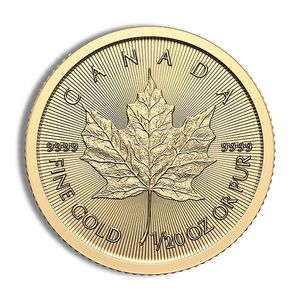
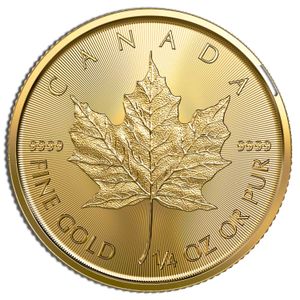
Buy Canadian Gold Coins Online
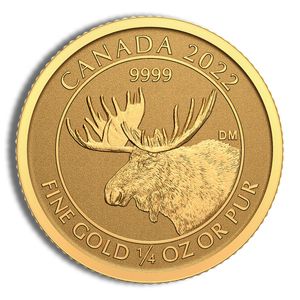
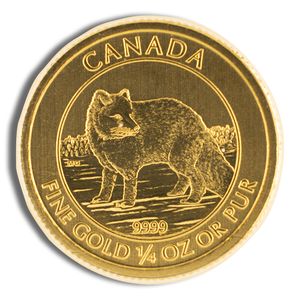
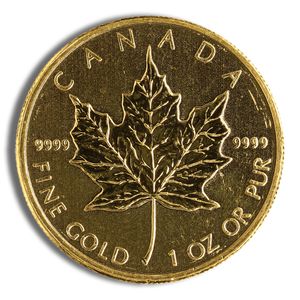
Our catalog of canadian gold coins spans one of the most complete selections available from a U.S.-based precious metals dealer, featuring products minted exclusively by the Royal Canadian Mint across a wide range of weights, years, and designs. Whether you're looking for a classic 1 oz gold maple leaf in brilliant uncirculated condition, a fractional 1/10 oz or 1/4 oz coin for more flexible purchasing, or a dated wildlife series piece like the 2014 Arctic Fox or 2022 Moose, the options here reflect genuine depth rather than a curated shortlist.
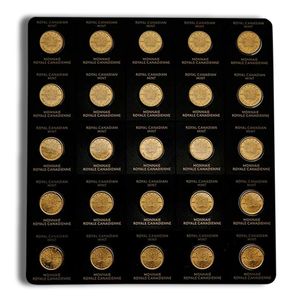
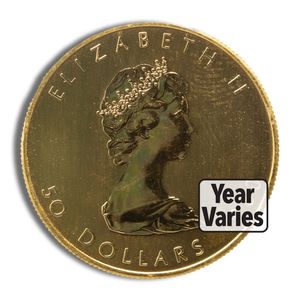
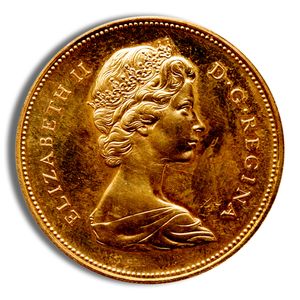
Products range from current-year 2025 and 2026 maple leafs in sealed packaging to random-year issues suited for buyers focused primarily on gold content. Specialty formats are also represented, including the 25 x 1 gram MapleGram assay card, the 2017 Grizzly Bear 1/3 oz coin, and the historic 1967 Canadian $20 Confederation coin. Condition grades span brilliant uncirculated, cull or imperfect condition, and reverse proof finishes, giving buyers genuine flexibility depending on their priorities.
Bullion Standard sources all products from verified distributors and reputable supply channels, and every item is confirmed for authenticity, purity, and weight before it reaches a customer. Our pricing reflects live market conditions, and product pages display both buy and sell pricing so buyers can evaluate the complete transaction before committing. That kind of clarity is built into how we operate, not added as an afterthought.
What Are Canadian Gold Coins?
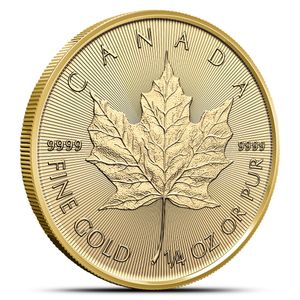
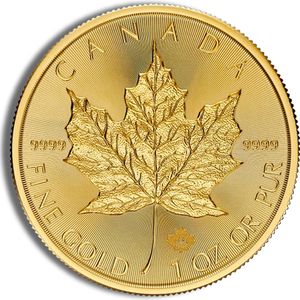
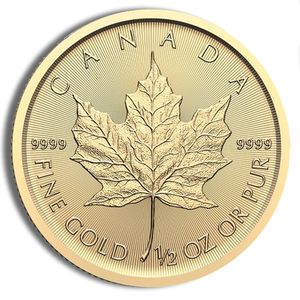
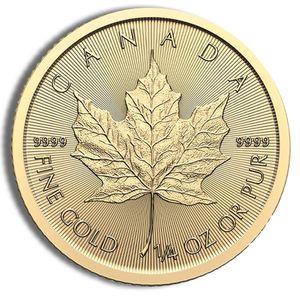
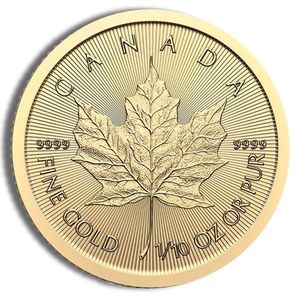
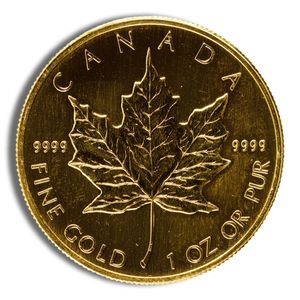
Canadian gold coins are government-issued bullion coins produced by the Royal Canadian Mint, one of the most respected sovereign minting institutions in the world. These coins carry legal tender status under Canadian law, are struck to consistent weight and purity standards, and are recognized in precious metals markets worldwide. The maple leaf series, which launched in 1979, remains the flagship product and is among the most traded gold bullion coins globally.
What distinguishes canadian gold coins from rounds or privately minted products is the combination of sovereign backing, standardized specifications, and broad market recognition. They trade comfortably across dealer networks, auction platforms, and international markets without the additional scrutiny that non-sovereign products sometimes face. Fractional sizes from 1/20 oz to 1 oz make them accessible across different budget levels, which contributes to their consistent demand.
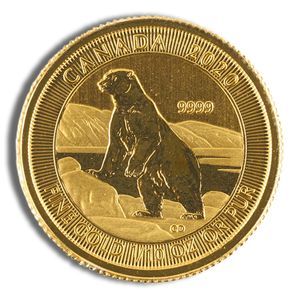
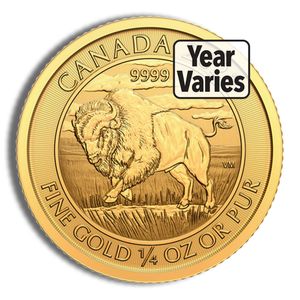
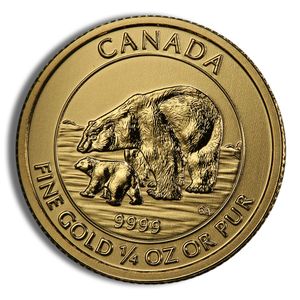
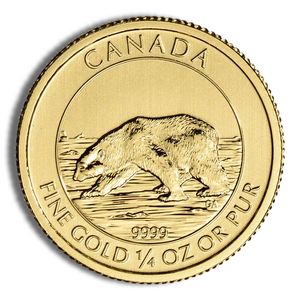
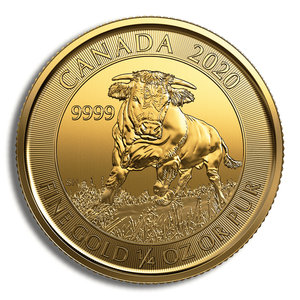
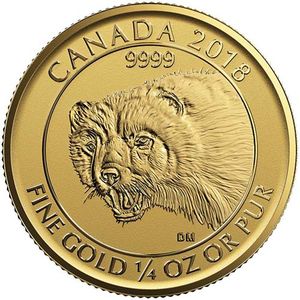
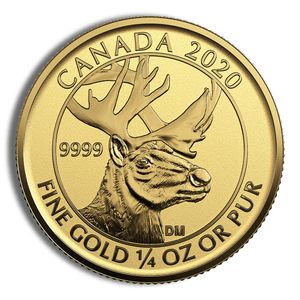
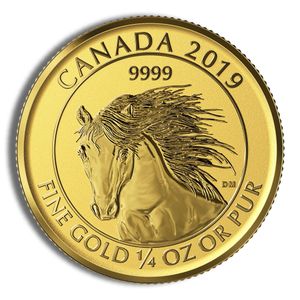
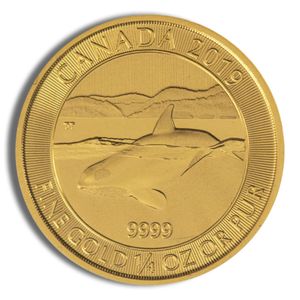
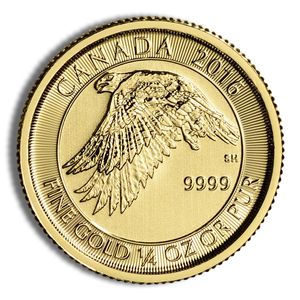
Beyond the maple leaf, the Royal Canadian Mint has produced a long-running series of wildlife and commemorative coins, including polar bear, arctic fox, bison, grizzly, orca, wolverine, snowy owl, and bighorn sheep designs. These struck coins carry the same .9999 fine gold purity standard as the maple leaf series, though they often carry modest additional premiums relative to standard bullion issues due to lower mintages and design-specific demand.
History and Background
The Royal Canadian Mint was established in 1908 as a branch of the British Royal Mint, originally focused on striking coins for domestic circulation. Its transformation into a leading global bullion mint began in earnest in the late 1970s, when Canada introduced the gold maple leaf coin in 1979 as a direct response to the South African Krugerrand's growing international popularity. At a time when importing Krugerrands into some markets faced political restrictions, the maple leaf offered a politically neutral alternative backed by a stable sovereign government.
The original maple leaf launched at .999 fine gold purity, which was already higher than the Krugerrand's .9167 standard. In 1982, the Royal Canadian Mint raised that standard to .9999 fineness, a benchmark that became synonymous with the series and that the mint has maintained ever since. In limited special editions, including some assay card issues, purity has reached .99999 five-nines gold. That commitment to exceptional metallurgical standards became a defining characteristic of the mint's reputation.
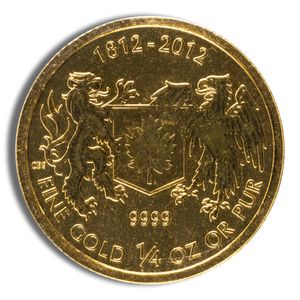
The Royal Canadian Mint expanded its bullion program substantially through the 1980s and 1990s, introducing fractional denominations in 1982 and adding design-specific wildlife series in later decades. Commemorative programs tied to Canadian history, such as the 1967 Confederation centennial $20 coin and the 2012 War of 1812 quarter ounce, have deepened the catalog's historical range. The mint now operates facilities in Ottawa and Winnipeg and continues to produce both bullion and numismatic products for global distribution.
Purity, Weight, and Specifications
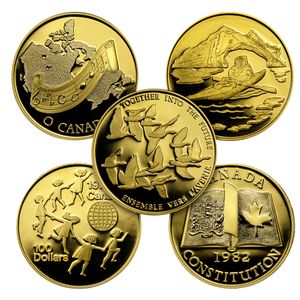
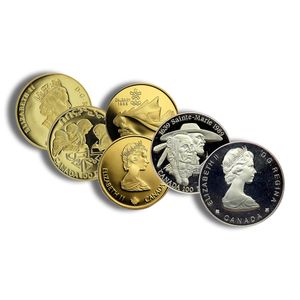
The vast majority of canadian gold coins listed here are struck to .9999 fine gold, representing 99.99% pure gold content. This is among the highest purity standards in the sovereign bullion coin market and is the benchmark across the maple leaf series, the RCM wildlife coins, and most modern fractional issues. A small number of products in this catalog carry different purity levels: the 1967 Confederation coin is .900 fine gold, the 1977 to 1986 $100 coin series is .9167 fine (22 karat), and the 1987 to 2005 $100 coin series is .585 fine (14 karat). These older coins are significant historical pieces but carry meaningfully different gold content than modern issues.
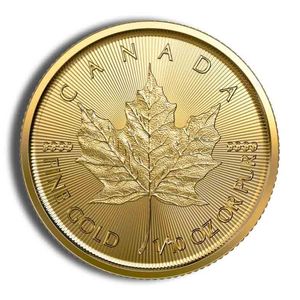
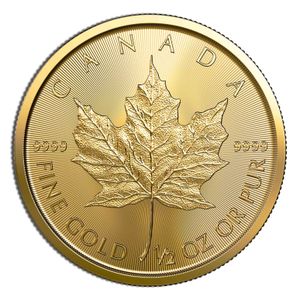
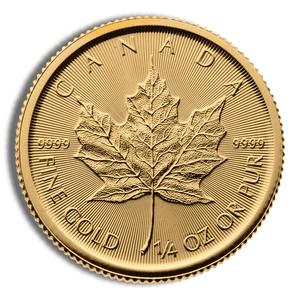
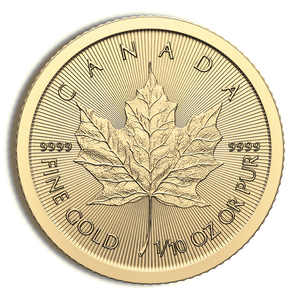
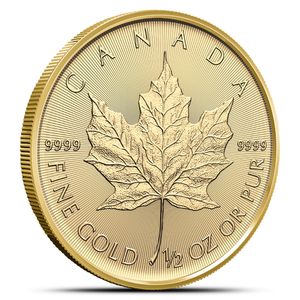
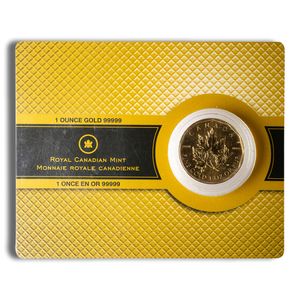
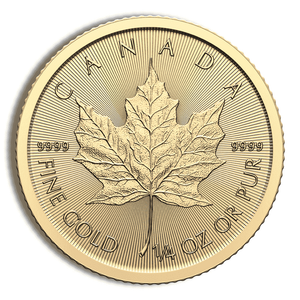
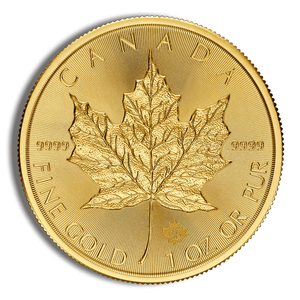
Weight options across the catalog span from 1/20 oz through 1 full troy ounce, with the 1/10 oz, 1/4 oz, and 1/2 oz sizes representing the most commonly traded fractional denominations. The 1 oz maple leaf measures 30mm in diameter and 2.87mm in thickness, while the 1/10 oz measures 16mm in diameter and approximately 1.22mm thick. The 25 x 1 gram MapleGram card is a distinct format, packaging 25 individual one-gram gold coins into a single perforated assay card totaling approximately 0.8038 troy oz of gold.
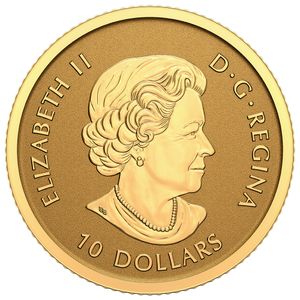
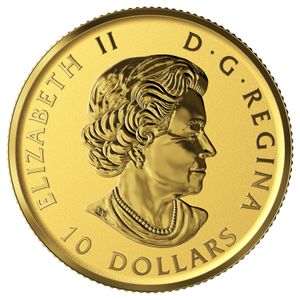
Legal tender denominations are stamped on each coin and vary by weight: $50 CAD for the 1 oz, $20 CAD for the 1/2 oz, $10 CAD for the 1/4 oz, and $5 CAD for the 1/10 oz. These face values are purely nominal and bear no relationship to the coin's actual gold content value, but their presence confirms sovereign issuance and legal tender status, which remains relevant to dealers and buyers across the secondary market.
Available Brands, Mints, and Product Variations
Every product in this catalog is issued by the Royal Canadian Mint, which is wholly owned by the Canadian federal government. That singular sourcing reflects the mint's position as the exclusive producer of legal tender Canadian gold coins. Product variation within the catalog is driven primarily by year, design series, weight, condition grade, and packaging format rather than by competing manufacturers.
The maple leaf series anchors the catalog and is available in multiple configurations: current-year sealed packaging editions for 2024, 2025, and 2026; random-year brilliant uncirculated issues for buyers indifferent to a specific date; and imperfect or cull-grade examples for buyers prioritizing gold content over cosmetic presentation. The 25 x 1 gram MapleGram in assay card format is a distinct product, offering divisibility in a professionally sealed package. Specialty assay-packaged 1 oz .99999 five-nines gold issues appear in the catalog as well, representing the mint's highest purity standard.
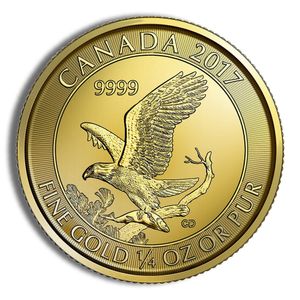
Wildlife and commemorative series add significant variety. The Royal Canadian Mint's wildlife coins have featured designs including the polar bear and cub (2015), arctic fox (2014), snow falcon (2016), bald eagle (2017), snowy owl (2018), orca whale (2019), wild horse (2019), woodland caribou (2020), buffalo (2021), great horned owl (2021), moose (2022), and lynx (2023). Some of these carry reverse proof finishes and specific mintage limits. Historical pieces such as the 1967 $20 Confederation coin and the 1977 to 1986 $100 commemorative series round out the catalog with options that carry both collector and bullion market interest.
Pricing, Premiums, and Market Factors
All canadian gold coins are priced relative to the spot price of gold, which is the real-time benchmark for gold traded in international markets and quoted in troy ounces. The premium above spot reflects the additional costs associated with minting, refining, distribution, dealer margins, and product-specific demand. Premiums vary across the catalog based on several factors: coin size, design series, condition grade, packaging, year of issue, and overall market demand at the time of purchase.
Fractional coins generally carry higher premiums per troy ounce than full 1 oz coins because the fixed costs of minting and distribution are spread across a smaller amount of gold. A 1/10 oz maple leaf, for example, will typically trade at a higher percentage above spot than its 1 oz counterpart. Reverse proof and specialty finishes, such as those found on several wildlife series coins, also tend to carry elevated premiums compared to standard brilliant uncirculated issues. Cull or imperfect-grade coins, where available, typically trade closer to spot given their reduced cosmetic appeal.
Bullion Standard displays both buy and ask pricing on each product page, giving buyers a clear view of the bid/ask spread before any transaction. This transparency is central to how the platform operates. Rather than presenting a single retail price in isolation, the goal is to show the complete picture of what a product costs to acquire and what it would be worth at current buyback pricing. That information matters before a purchase is made, not only when it's time to sell.
Condition, Packaging, and What to Expect
Brilliant uncirculated coins in this catalog are struck for bullion purposes rather than collector presentation. While they arrive without signs of circulation, minor contact marks, light handling marks, or slight surface variations are normal and expected for coins handled during packaging and shipping. These are not considered defects for bullion-grade products and do not affect gold content or market acceptability.
Sealed packaging editions, particularly current-year maple leafs, are delivered in the Royal Canadian Mint's original sealed tubes or presentation packaging. These sealed formats preserve the coins' original condition and are preferred by buyers who intend to hold over time. Random-year products are sourced from existing inventory and do not carry specific date guarantees. Buyers selecting random-year options may receive any year the mint has produced, and specific years are not available on request for these SKUs.
Imperfect or cull-grade coins, listed explicitly as such in the catalog, exhibit visible cosmetic issues that may include scratches, toning, bag marks, or light wear. They are genuine Royal Canadian Mint issues with full gold content, but their presentation does not meet BU standards. The 25 x 1 gram MapleGram ships in a sealed assay card containing 25 individually secured gram coins. These assay cards should be kept intact to preserve the product's format and original packaging integrity.
Authenticity and Verification
Every canadian gold coin in the Bullion Standard catalog is sourced from verified distributors and supply channels with established provenance in the wholesale precious metals market. Before reaching a customer, each product is confirmed for authenticity, weight, and stated purity. Products issued by the Royal Canadian Mint include specific anti-counterfeiting features that have evolved over time, making verification more reliable across modern issues.
Since 2013, the Royal Canadian Mint has incorporated a micro-engraved radial line security feature on maple leaf coins, visible under magnification as a laser-etched maple leaf image within the design. More recent issues have added additional layers including enhanced edge lettering and surface treatments. Assay-packaged products, such as the MapleGram card and select specialty issues, include a certificate of authenticity embedded within the sealed packaging, which provides an additional layer of provenance documentation.
Bullion Standard maintains memberships with the American Numismatic Association and the National Coin and Bullion Association, and holds an A rating with the Better Business Bureau. The platform is also an authorized dealer for both PCGS and NGC, the two most recognized coin grading services in North America. These affiliations reflect a sourcing and verification standard that buyers can rely on across every product in the catalog.
Liquidity and Resale Considerations
Canadian gold coins, particularly the maple leaf series, rank among the most liquid sovereign gold coins available in the global bullion market. Their .9999 fine gold standard, consistent specifications, government backing, and multi-decade market presence make them immediately recognizable to dealers, refineries, and private buyers in virtually every major market. This broad recognition translates to a more straightforward resale process compared to lesser-known private mint products.
Wildlife and commemorative series coins share the same purity standard as the maple leaf and are widely recognized within North American dealer networks, though they may carry slightly wider spreads in some resale environments due to lower mintages and design-specific demand. Cull-grade coins trade primarily on gold content and are typically bought back at or near the bid price for raw gold content rather than at a premium. Imperfect-grade products generally move into the refinery or wholesale melt market rather than the numismatic secondary market.
Older historical issues, including the 1967 Confederation coin and the 1977 to 1986 $100 commemorative series, may have a more specialized resale audience due to their non-standard purity levels and collector-adjacent positioning. Buyers of these products should understand that their liquidity profile differs from that of standard modern bullion coins. Packaging and condition play a meaningful role in resale outcomes for current-year sealed products, where intact original packaging is generally preferred by buyers in the secondary market.
Storage and Security
Coins stored individually or in small quantities are typically best protected in individual flips, coin capsules, or rigid holders that prevent direct surface contact. Tube storage, common for mint-sealed maple leaf products, is efficient for larger quantities and keeps coins organized without individual handling. Assay-packaged formats like the MapleGram card should remain sealed, as opening the packaging reduces the product's presentation integrity and may affect resale value.
For home storage, a quality fireproof safe bolted to a structural element of the home provides meaningful protection against both theft and environmental damage. Climate control matters more than many buyers realize: gold is highly resistant to oxidation, but other materials in coin packaging, including cardboard, plastic, and paper inserts, can degrade over time in high-humidity or high-temperature environments. Keeping storage conditions stable and dry helps preserve both the physical product and its packaging.
Third-party vault storage or secure depository services offer an alternative for buyers holding larger quantities who prefer not to maintain physical custody at home. These services typically provide segregated or allocated storage with insurance coverage, and many dealers and financial institutions offer access to domestic vault networks. Bank safe deposit boxes are a lower-cost option for modest quantities but do not typically carry insurance coverage for precious metals contents and may have access limitations outside standard banking hours.
Selling and Buyback Options
Bullion Standard operates a two-way market, meaning customers can both purchase and sell canadian gold coins within the same platform. Rather than routing customers to a separate process or a third-party platform when they decide to sell, the buyback program is integrated into how the marketplace functions. Buyback pricing is visible on product pages alongside ask pricing, so buyers can assess the bid/ask spread at the time of purchase rather than waiting until they're ready to liquidate.
Factors that influence buyback pricing include product type, mint, condition, packaging, weight, and current market conditions. A sealed current-year 1 oz gold maple leaf in original packaging will typically command a tighter spread and a more favorable buyback price than a cull-grade coin or a historical commemorative with a non-standard purity level. Products with broad market recognition, consistent specifications, and intact packaging are generally the easiest to process efficiently through a buyback program.
Customers looking to sell can contact Bullion Standard's purchasing team directly to initiate the process. The team evaluates products based on current market pricing, product condition, and applicable handling procedures. Transparent pricing remains the standard on both sides of the transaction, and the same commitment to clear communication that applies to purchases applies equally when a customer is ready to sell.
Why Buy Canadian Gold Coins?
The maple leaf's combination of .9999 fine purity, sovereign backing, and global market recognition makes it one of the most practical gold coin formats for buyers who value both standardization and flexibility. Its consistent specifications make it easy to verify, straightforward to store, and efficient to trade. For buyers who want a dependable gold coin without the complexity of navigating multiple mint programs, the maple leaf is a logical starting point.
Fractional options add purchasing flexibility that a 1 oz coin alone cannot provide. Being able to acquire 1/10 oz, 1/4 oz, or 1/2 oz increments allows buyers to calibrate purchases to a specific dollar amount rather than always committing to a full ounce. This flexibility is particularly relevant when gold prices are elevated, as it lowers the entry point for a given purchase without moving to a different product entirely. Divisibility also makes partial liquidation more manageable over time.
The wildlife and commemorative series appeals to buyers who want something beyond a standard bullion coin without moving into the more specialized numismatic market. These coins carry the same .9999 purity standard as the maple leaf, trade through the same dealer networks, and offer design variety that some buyers find meaningful. The historical commemorative pieces, including the 1967 Confederation and the $100 series, occupy a different niche, more relevant to collectors with a specific interest in Canadian monetary history than to buyers focused purely on gold content.
Why Buy from Bullion Standard?
Bullion Standard was founded in 2010 and has built its reputation around a straightforward principle: buyers deserve to understand what they're paying, what they own, and what it would be worth if they decided to sell. That transparency applies equally to product pricing, sourcing practices, and the buyback process. Our pricing is driven by real-time market conditions and is displayed clearly on each product page alongside the current bid so buyers can evaluate both sides of the transaction before making a decision.
Every product is sourced from reputable distributors and verified before it reaches a customer. Our A rating with the Better Business Bureau, memberships with the American Numismatic Association and the National Coin and Bullion Association, and authorized dealer status for PCGS and NGC reflect the standards we hold ourselves to across sourcing, verification, and customer service. These aren't decorative credentials; they represent accountability to the industry and to buyers.
Secure checkout, multiple payment options including Visa, Mastercard, American Express, PayPal, bank-connected payments through Plaid, wire transfer, check, and cryptocurrency through BitPay, and reliable order fulfillment are all part of the standard experience. Whether a buyer is purchasing a single fractional coin or a larger quantity of full ounce maple leafs, the process is designed to be clear, efficient, and supported by responsive customer service throughout.
Get Near-Spot Pricing with Bullion Standard Pro
Bullion Standard Pro is designed for buyers who want direct access to wholesale market pricing rather than standard retail pricing structures. Members transact at live, executable wholesale bid and ask prices, meaning premiums and spreads reflect actual market conditions rather than fixed dealer markups applied on top of spot. For buyers who purchase regularly or in larger quantities, the difference in pricing efficiency is meaningful over time.
The platform also provides members with real-time portfolio valuation based on live wholesale bid pricing, which reflects current liquidation values rather than estimated retail prices. This gives a more accurate picture of what a holding is actually worth at any given moment. Additional tools available through Pro include historical premium analysis, premium percentile rankings, spread analysis, liquidity metrics, and other proprietary analytics that help members evaluate products using objective data rather than marketing claims.
For buyers focused on canadian gold coins specifically, Pro membership provides visibility into how premiums on products like the 1 oz maple leaf or fractional wildlife series coins have moved over time relative to spot, how their spreads compare across the catalog, and where current pricing sits relative to historical norms. That kind of context is difficult to access through standard retail channels, and it's precisely the type of market intelligence Bullion Standard Pro is built to deliver.

 (833) 278-4653