 (833) 278-4653



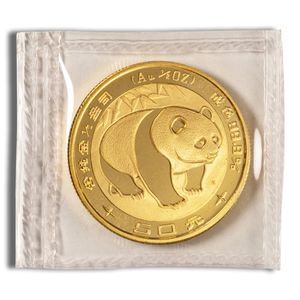

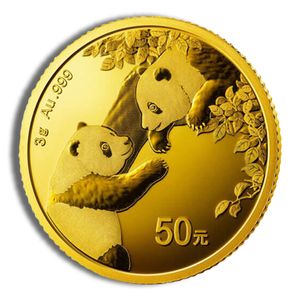
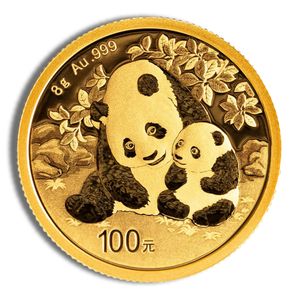
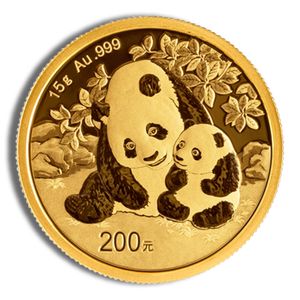
Buy Chinese Gold Coins Online
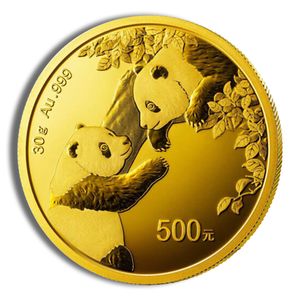
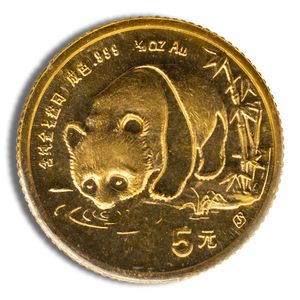
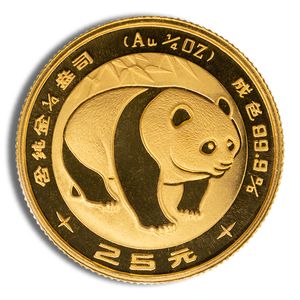
Our catalog of chinese gold coins centers on one of the most widely traded government-issued bullion programs in the world: the China Gold Panda. Available in a full range of sizes spanning 1 gram to 1 oz, as well as metric weights including 3 g, 8 g, 15 g, and 30 g, this series covers an unusually broad spectrum of entry points. Every coin listed here is produced by the Central Mint of China, struck to a fineness of 0.999, and graded Brilliant Uncirculated.
Products are offered in both sealed and unsealed packaging formats, giving buyers flexibility based on their intended holding period, storage preferences, or budget sensitivity. Sealed options arrive in original mint packaging from the China Mint, while unsealed coins are individually verified and available at a slightly different price point. Whether you're acquiring a single 1 g coin or a full set of metric denominations, Bullion Standard's transparent pricing structure ensures you understand exactly what you're paying and why.
Pricing on each product page reflects real-time spot conditions, with bid and ask spreads displayed openly so buyers can evaluate the complete picture before committing. That kind of pricing clarity is built into how Bullion Standard operates across every product in our marketplace.
What Are Chinese Gold Coins?
Chinese gold coins, as represented in our catalog, refers specifically to the Gold Panda bullion coin series issued under the authority of the People's Republic of China. These are legal tender coins denominated in Chinese Yuan and produced under the official mandate of the China Mint, which operates under the authority of the People's Bank of China. That government backing distinguishes them from privately minted rounds or generic bullion and contributes to their broad recognition in both domestic and international bullion markets.
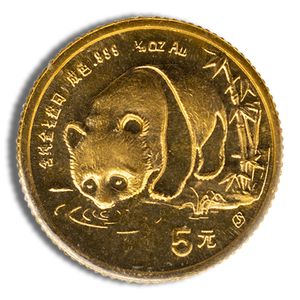
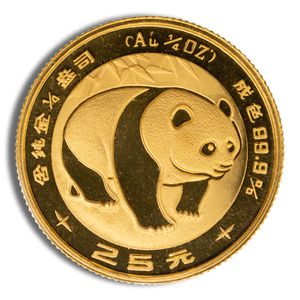
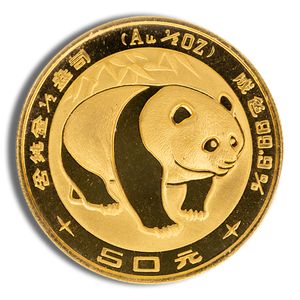
What sets the Panda series apart from many other government-issued programs is the dual weight system in use across different production eras. Earlier Panda coins were struck in fractional troy ounce denominations, including the 1/20 oz, 1/10 oz, 1/4 oz, 1/2 oz, and 1 oz weights that remain available in our catalog. Beginning in 2016, China transitioned to a metric weight standard, introducing the 1 g, 3 g, 8 g, 15 g, and 30 g denominations. This transition means collectors and buyers often hold coins from both systems, and understanding which denomination standard applies to a given coin is relevant when comparing sizes, values, and interchangeability.
Both weight systems are represented in our current offerings, which allows buyers to assemble holdings across metric and troy formats with consistent quality standards and mint-backed purity certification.
History and Background
The China Gold Panda program was launched in 1982, making it one of the earlier government-sponsored bullion coin programs to emerge in the modern era. The timing placed it alongside similar sovereign programs gaining international traction during the early 1980s, a period when retail demand for government-issued bullion coins was expanding significantly across North America, Europe, and Asia. China entered this market with a coin that quickly distinguished itself through high production quality and an annually changing reverse design.
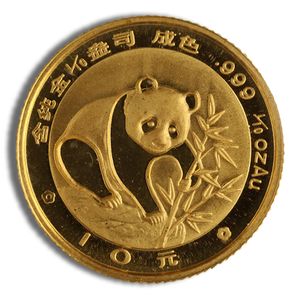
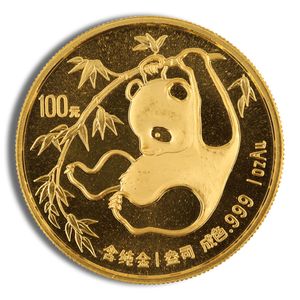
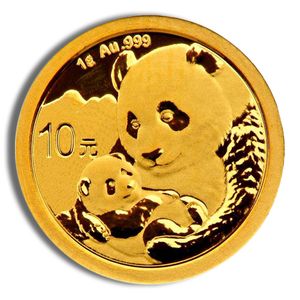
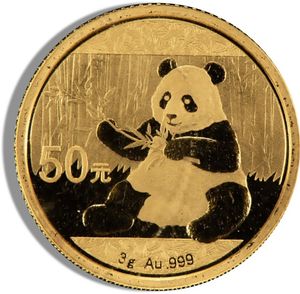
The decision to change the panda reverse design each year was a deliberate departure from programs that maintained consistent imagery across their entire run. This annual variation created a secondary market among collectors who sought complete year sets, adding a numismatic layer of interest on top of the underlying bullion value. The obverse has remained relatively consistent, featuring the Temple of Heaven in Beijing, while the reverse panda imagery evolves from year to year. That combination of consistent national symbolism and annually rotating collector appeal has sustained the program's popularity for more than four decades.
The 2016 metric conversion was a significant structural change that reflected China's broader standardization preferences and altered how the coins are categorized and traded internationally. The 30 g coin, for example, is close in gold content to the traditional 1 oz denomination but is not interchangeable for trading or comparison purposes without attention to the precise metal content difference. Understanding this historical transition helps buyers navigate the catalog more accurately.
Purity, Weight, and Specifications
Every coin in our catalog carries a fineness of 0.999, which is the standard purity level for the modern China Gold Panda program. This places it within the same purity tier as the Canadian Gold Maple Leaf and the Austrian Gold Philharmonic, both of which also carry 0.999 fineness. The 0.999 standard indicates that 99.9% of the coin's total mass is pure gold, with the remaining 0.1% consisting of trace alloy elements introduced during the striking process to improve durability.
Coin dimensions vary across the weight range. The 1 g coin measures 10 mm in diameter with a thickness of 0.83 mm, while the 1 oz coin is substantially larger at 32.05 mm in diameter and 2.7 mm thick. The 30 g coin carries nearly identical physical dimensions to the 1 oz version due to the close proximity in gold content, though buyers should note the distinction in metal content: the 30 g coin contains approximately 0.9645 troy oz of gold compared to the full 1 oz of the larger denomination. Each listing in our catalog includes precise specifications including diameter, thickness, and troy ounce gold content so buyers can compare with confidence.
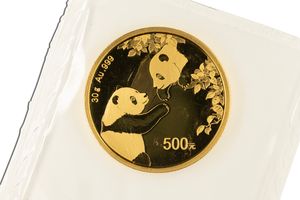
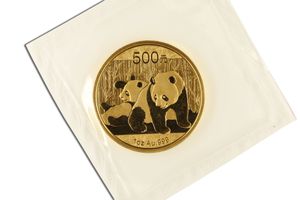
All coins in this series are struck as legal tender, carrying Yuan denomination values assigned by the issuing authority. These face values have no practical relationship to market pricing and exist primarily as a formal indicator of government-backed legal tender status. The denominations listed, such as 10 Yuan for the 1 g coin or 500 Yuan for the 30 g coin, are informational but not transactionally meaningful at current gold prices.
Available Brands, Mints, and Product Variations
All products in this section of our catalog are produced by the Central Mint of China, the primary institution responsible for striking the official Gold Panda series. The China Mint system operates several striking facilities, and coins may carry various mint marks depending on the year and production location. Coins listed as "Various" mint marks reflect this multi-facility production reality common across random year selections.
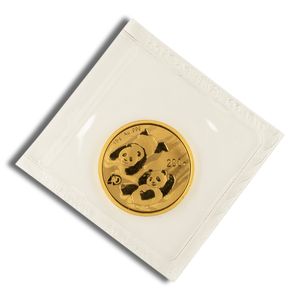
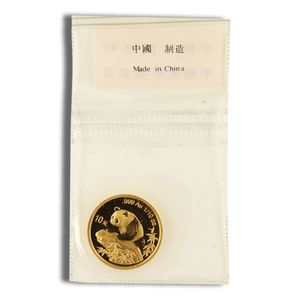
Our catalog presents the full weight range for the Gold Panda program in both sealed and unsealed configurations. Sealed coins arrive in original mint packaging, intact and unopened, providing an additional layer of protection and presentation. Unsealed coins carry the same metal specifications and grade but are sold outside of factory packaging. Both configurations are offered at BU grade, confirming no signs of post-strike wear or handling damage. The availability of both options allows buyers to choose between packaging-preserved presentation and potentially more price-efficient acquisition.
Because these are random year listings, the specific year of mintage is not guaranteed. Random year products are an efficient way to acquire bullion at premiums that aren't inflated by year-specific collector demand. Buyers seeking a particular year of issue should note that availability may vary, and our team can assist in clarifying what's currently in stock. Inner pack quantities of 10 coins per sealed unit are noted across most sizes, which is relevant context for buyers acquiring larger volumes.
Pricing, Premiums, and Market Factors
Gold coin premiums are calculated as the amount paid above the current spot price of gold, and for Panda coins, these premiums tend to reflect a combination of factors: production costs from the China Mint, international shipping and import logistics, ongoing collector demand driven by the annual design change program, and the general market recognition the series commands. Smaller coins carry higher premiums on a per-ounce basis due to the fixed costs of minting being spread across less gold, which is why the 1 g and 3 g options typically trade at steeper percentages above spot than the 30 g or 1 oz options.
The packaging format also has a measurable effect on pricing. Sealed packaging preserves the coin in its original mint state and is often preferred by buyers planning to hold long-term or resell through channels where original packaging adds value. Unsealed coins offer the same metal content and grade but may carry a modestly different premium due to the absence of factory packaging. Both formats are priced transparently on our platform, with real-time bid and ask spreads displayed so buyers can evaluate the complete cost structure before purchasing.
Market liquidity for the Panda series is generally strong across international bullion markets, though it can be more concentrated in Asian markets compared to programs like the American Gold Eagle or Canadian Maple Leaf. This geographic weighting in demand can influence premium behavior during periods of high activity in Chinese domestic markets. Bullion Standard's pricing reflects real-time market conditions, and the bid/ask spread displayed on each product page gives buyers direct visibility into the relationship between acquisition cost and expected resale value.
Condition, Packaging, and What to Expect
All Gold Panda coins in our catalog are graded Brilliant Uncirculated, which means they are struck for bullion distribution rather than collector presentation and will show the high-relief strike quality consistent with mint-fresh production. BU coins are not circulated, but they may exhibit minor contact marks, light hairlines, or surface variations that occur during the minting and handling process at the mint level. These are entirely normal and do not affect the gold content or purity.
Sealed products will arrive in their original China Mint packaging, typically consisting of plastic tubes or sealed capsules containing 10 coins per inner pack. Buyers should expect packaging to reflect the country of manufacture and may observe Chinese-language labeling across official packaging materials. Unsealed coins are removed from original packaging and are sold individually, making them well-suited for buyers acquiring single coins or specific quantities that don't align with sealed pack sizes.
Random year designations mean the specific year of mintage is assigned from available inventory and cannot be selected. Buyers who have preferences about year should contact our team prior to purchase. The annual design variation inherent to the Panda program means that coins from different years will feature different panda reverse imagery, though this does not affect the bullion value of a random year selection.
Authenticity and Verification
Every product sold through Bullion Standard is verified for authenticity, weight, and purity before it reaches a customer. This applies equally to sealed and unsealed products. Coins sourced from the Central Mint of China carry the mint's official strike characteristics, including consistent relief depth, edge detailing, and weight tolerances that conform to the program's published specifications. These physical characteristics serve as the baseline for verification during our receiving and processing procedures.
Unsealed Panda coins are individually inspected to confirm they meet the weight and diameter specifications published for each denomination. The China Mint's production standards are well-documented in the international bullion community, making it straightforward to compare genuine coins against established reference parameters. Counterfeiting in the gold coin market does exist, particularly among well-known programs, and buying from a reputable, ANA-member dealer with documented sourcing practices is one of the most effective ways to manage that risk.
Bullion Standard maintains an A rating with the Better Business Bureau and holds membership in both the American Numismatic Association and the National Coin and Bullion Association. We are also an authorized dealer for PCGS and NGC, which further reflects our commitment to authenticity standards across the broader coin and bullion market. Buyers who wish to pursue independent third-party certification for specific coins can explore PCGS or NGC grading services through our platform.
Liquidity and Resale Considerations
The China Gold Panda program has established a meaningful international presence, though its liquidity profile differs somewhat from programs like the American Gold Eagle or the South African Krugerrand. Demand for Panda coins is particularly strong among buyers in Asia and within Chinese-American communities in North America, and the program's collector dimension adds a secondary market layer that doesn't exist for purely bullion-oriented coins. This collector interest can work in favor of sellers during periods when specific years are in demand, but it can also mean that liquidity is more variable than for globally uniform programs.
The sealed packaging format generally supports resale value more consistently than unsealed coins, particularly when original mint packaging is intact and unaltered. Buyers who plan to sell should understand that dealers and secondary market buyers often apply different pricing to sealed versus unsealed products, and maintaining packaging throughout the holding period is a straightforward way to preserve resale optionality.
Standard coin sizes, particularly the 30 g and 1 oz denominations, tend to attract the broadest dealer interest due to their gold content proximity to the 1 oz standard that dominates the global bullion trade. Fractional and gram-weight denominations have an active market but may command higher spreads during resale given the additional numismatic complexity of sizing across multiple denomination systems.
Storage and Security
Gold Panda coins, like all gold bullion, require storage conditions that protect against both physical damage and unauthorized access. For buyers holding sealed tubes of 10 coins, the original packaging provides reasonable protection against surface contact damage and should be preserved intact where possible. Individual coins, whether in capsules or unsealed, should be handled minimally and stored in coin capsules, flips, or dedicated holders to prevent contact marks from accumulating over time.
Home safes represent a practical first line of storage for buyers with modest holdings, provided the safe is appropriately rated for burglary resistance and is securely anchored. For larger accumulations, segregated storage at a private vault facility or an insured depositories program offers a higher level of physical security and often includes insurance coverage that home storage cannot easily replicate. Bank safety deposit boxes are another option but typically do not come with insurance provisions for contents and may have limited access hours.
The compact size of gram-weight Panda coins, particularly the 1 g, 3 g, and 1/20 oz denominations, requires attention during storage and handling. Their small physical footprint makes them easier to misplace and more susceptible to surface damage than larger coins. Keeping small coins in their original sealed tubes or in labeled capsule trays minimizes the risk of inventory confusion during future audits or resale preparation.
Selling and Buyback Options
Selling gold Panda coins back into the market typically involves presenting them to a dealer with established experience in the program, and pricing will reflect current spot gold values adjusted for the prevailing bid premium for the specific denomination and packaging format. Sealed coins generally receive stronger bids than unsealed coins due to packaging integrity, and the closer a coin is to its original mint state, the more straightforward the verification process tends to be for the buying dealer.
Bullion Standard operates as a two-way market, meaning customers can sell their holdings back through the same platform they used to purchase. Our purchasing team evaluates coins against real-time market pricing, and bids reflect live wholesale market conditions rather than arbitrary fixed schedules. This structure allows sellers to receive pricing that reflects current market activity, which is particularly relevant in a gold market where spot prices can shift meaningfully within a single trading session.
Factors that influence buyback pricing include current gold spot levels, the specific denomination, the packaging condition, whether the coin is sealed or unsealed, and prevailing market demand for the Panda program at the time of sale. Buyers who maintain their coins in original packaging and handle them minimally are generally better positioned when it comes time to liquidate. Understanding these factors before purchasing is something Bullion Standard actively encourages, because a well-informed acquisition decision makes the eventual resale process considerably more predictable.
Why Buy Chinese Gold Coins?
The appeal of the Gold Panda program spans multiple buyer profiles. For those drawn to government-issued bullion with consistent production standards, the program's backing by the People's Republic of China and production through the Central Mint of China provides a level of institutional credibility that's comparable to other sovereign minting programs. The coin's legal tender status, even if nominal in practice, reflects the full weight of state-issued monetary authority.
The annual design rotation is a genuine differentiator. No other major sovereign gold bullion program changes its reverse design every single year, and this creates a natural collecting incentive that keeps the program fresh for buyers who find purely uniform bullion somewhat unremarkable. Even buyers who aren't collectors in any formal sense often appreciate the variety that comes with assembling holdings across multiple years of issue.
The dual weight system, encompassing both metric gram weights and fractional troy ounce denominations, gives buyers unusual flexibility in how they structure their gold holdings. Entry-level buyers can begin with 1 g or 3 g coins at a lower absolute cost while still owning certified, mint-produced gold from a recognized sovereign program. More experienced buyers can scale into larger denominations while maintaining consistency of brand and purity standard across their portfolio.
Why Buy from Bullion Standard?
Bullion Standard has been operating as a precious metals dealer since 2010, building a track record grounded in pricing transparency, reliable sourcing, and straightforward customer relationships. Our business is headquartered in San Diego, California, and we've grown nationally by prioritizing the kind of marketplace experience that informed buyers actually want: clear pricing, honest product descriptions, and an accessible team when questions arise.
Every product we sell is verified for authenticity, weight, and purity before it ships. Our sourcing chain draws from reputable mints, wholesalers, and distributors with established standing in the industry, and our membership in the ANA and NCBA reflects the professional standards we hold ourselves to. An A rating with the Better Business Bureau is something we've maintained consistently, and it reflects our commitment to resolving issues fairly and operating with integrity at every stage of the transaction.
Our payment options are broad by design. Customers can complete purchases using Visa, Mastercard, American Express, Discover, PayPal, bank-connected payments through Plaid, wire transfer, paper check, or cryptocurrency through BitPay. Our fulfillment process is designed for reliability, and our customer service team is accessible before, during, and after the purchase. The bid/ask spread displayed on every product page is a direct expression of our transparency philosophy, giving buyers the information they need to evaluate not just the purchase price, but the full cost of ownership.
Get Near-Spot Pricing with Bullion Standard Pro
Bullion Standard Pro is designed for buyers who want access to wholesale-level pricing and market intelligence without the friction typically associated with institutional bullion channels. Members gain access to live executable wholesale bid and ask pricing across a broad product range, including the Gold Panda coins listed in our catalog. Unlike traditional retail pricing structures where dealer markups are embedded and opaque, Pro pricing reflects real-time supply and demand conditions at the wholesale level without additional dealer spreads applied on top.
For buyers acquiring gold coins with any regularity, the cumulative effect of tighter spreads can be meaningful over time. The difference between retail and near-wholesale pricing is particularly relevant for smaller denomination coins like the 1 g and 3 g Panda, where per-ounce premiums are already elevated relative to larger sizes. Having live pricing visibility allows members to time purchases with more precision and evaluate cost efficiency across denominations with objective data rather than estimates.
Beyond pricing, Pro members gain access to proprietary analytics including historical premium data, spread analysis, liquidity metrics, and market sentiment indicators. Portfolio valuation is conducted using live wholesale bid pricing rather than spot-based estimates, giving members a more accurate picture of what their holdings are actually worth at current market conditions. For buyers who take their precious metals activity seriously, the combination of near-spot execution pricing and analytical transparency represents a meaningfully different approach than what traditional retail platforms provide.