Buy Engelhard Silver Bars Online
Our catalog of Engelhard silver bars brings together three of the most widely recognized bar weights in the secondary silver market: the 1 oz, 10 oz, and 100 oz formats. Each bar is produced to a fineness of .999 silver and carries the Engelhard name, which remains one of the most consistently recognized refinery marks in physical bullion. Whether you're looking for an entry-level single-ounce piece or the substantial 100 oz cast bar, these products occupy a distinct and well-established position in the American silver market.
Bullion Standard sources these bars through reputable wholesalers and distributors, and each product is verified for authenticity, weight, and purity before it reaches our customers. Our marketplace is structured around transparent pricing and a two-way market model, meaning you can evaluate both the purchase cost and the expected resale value before making any decision. That kind of pricing clarity is central to how we operate.
Because Engelhard ceased refinery operations decades ago, the bars available today circulate primarily through the secondary market. These are genuine vintage American refinery products with strong name recognition among silver buyers, dealers, and collectors alike. Understanding that context matters when evaluating the premiums and packaging conditions associated with these bars.
What Are Engelhard Silver Bars?
Engelhard silver bars are .999 fine silver bars produced by the Engelhard Corporation, a New Jersey-based precious metals refinery that operated throughout much of the twentieth century. The bars were minted in a range of standard weights and formats and were widely distributed across the American bullion market. Today they continue to trade actively on the secondary market due to their refinery pedigree and broad dealer recognition.
Unlike modern government-issued bullion coins, these are privately produced refinery bars rather than legal tender instruments. They carry no face value and derive their worth entirely from their silver content and associated premium. The bars span multiple production formats across the weight range: the 1 oz and 10 oz versions were typically minted or pressed, while the 100 oz bar was produced through casting, hand pouring, or extrusion, resulting in a heavier industrial format with a more utilitarian appearance.
Buyers typically choose Engelhard bars for their combination of refinery credibility, .999 purity, and relatively efficient premiums compared to government-issued coins. They appeal to buyers who prioritize silver content per dollar while still wanting bars with broad secondary market recognition and verifiable provenance.
History and Background
The Engelhard Corporation traces its origins to the late nineteenth century, when Charles Engelhard Sr. established precious metals refining and fabricating operations in Newark, New Jersey. Over the following decades, the company expanded significantly, becoming one of the largest precious metals refiners in the United States and developing an international footprint across industrial metals processing, catalytic chemistry, and bullion production. By the mid-twentieth century, Engelhard was a dominant name in American refining circles.
During the silver market boom of the late 1970s and early 1980s, Engelhard bars became widely distributed through the bullion dealer network. The 100 oz cast bar in particular became a standard industrial-format product that moved through commercial silver markets alongside bars from other major American refiners like Johnson Matthey and Handy and Harman. The Engelhard name became closely associated with American refinery silver during this period, and the bars from that era remain the most commonly encountered examples in the secondary market today.
BASF acquired the Engelhard Corporation in 2006, and silver bar production under the Engelhard name ceased as the company's focus shifted away from consumer-facing bullion products. That discontinuation effectively transformed all existing Engelhard silver bars into secondary market collectibles, as no new supply enters circulation. This finite supply dynamic is relevant context for buyers evaluating these products, though it does not imply any particular price trajectory.
Purity, Weight, and Specifications
All three bars in our catalog carry a stated purity of .999 fine silver, which corresponds to a minimum silver content of 99.9 percent. This is the standard purity designation for investment-grade silver bars and meets the requirements of major bullion markets and dealer networks. The troy ounce is the standard unit of measurement for precious metals, and each bar's silver content is measured and stamped in troy ounces rather than avoirdupois ounces.
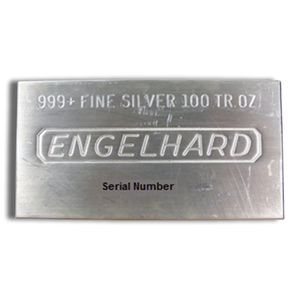
The 1 oz bar is the smallest and most portable format, well-suited for buyers looking to acquire silver in smaller increments. The 10 oz bar offers a mid-range option that balances handling convenience with a higher silver content per piece. The 100 oz cast bar is a substantially larger format, measuring approximately 146 mm in length and 64 mm in width, and is better suited to vault storage than everyday handling. Its cast, hand-poured, or extruded production method means each bar may exhibit minor surface irregularities that are characteristic of the format.
Authentic Engelhard bars will typically display the Engelhard name, the stated weight, and the .999 fine silver designation stamped or impressed into the bar surface. Serial numbers and assay documentation are less common on these vintage bars than on modern minted products, which is consistent with refinery production practices of the era. Buyers should familiarize themselves with authentic die markings and font styles specific to Engelhard production runs, as the brand's reputation has made it a target for counterfeiting.
Available Brands, Mints, and Product Variations
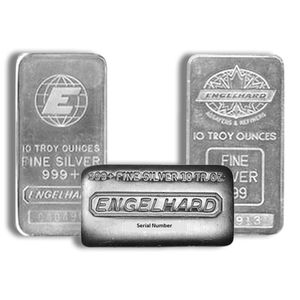
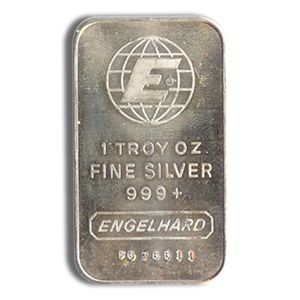
The Engelhard name stands on its own in our catalog, and all three products listed are sourced and sold under that refinery mark. The 1 oz and 10 oz bars are offered as random design, which means the specific bar design, production era, or visual variation cannot be guaranteed. Engelhard produced multiple design iterations across its operational history, and secondary market sourcing naturally introduces variation in the specific stamp style, bar shape, or surface finish a buyer may receive.
The 100 oz bar is described as hand poured, cast, or extruded, reflecting the range of production methods Engelhard employed for its larger format bars over the decades. Cast bars in particular are known for their rougher, more industrial appearance compared to minted bars, and buyers should expect surface texture, minor flow marks, or slight dimensional variation as normal characteristics of the format rather than quality defects.
Within the broader secondary silver bar market, Engelhard products are frequently compared to bars from Johnson Matthey, another prominent American refiner whose bars trade under similar conditions. Both brands carry strong dealer recognition and move efficiently within the wholesale and retail silver markets. For buyers who want a specific design or production era, specialized coin dealers and numismatic networks are often better sources, as standard bullion channels typically handle these bars on a random-design basis.
Pricing, Premiums, and Market Factors
Silver bar pricing is directly tied to the spot price of silver, which fluctuates continuously based on global trading activity across futures markets, wholesale dealer networks, and exchange-traded instruments. The premium above spot reflects the cost of sourcing, handling, verification, and the secondary market demand specific to a given product. For Engelhard bars, premiums are also influenced by the bar's discontinued status and the name recognition it carries in the dealer community.
Larger bars like the 100 oz format typically carry lower premiums per troy ounce than smaller bars, which reflects the economies of handling fewer individual pieces. The 1 oz bar commands a higher premium per ounce relative to its silver content, which is a consistent pattern across virtually every silver bar format regardless of brand. Buyers prioritizing cost efficiency on a per-ounce basis will generally find larger formats more economical, though storage and liquidity considerations also play a role in that decision.
Bullion Standard's pricing reflects real-time market conditions and is updated continuously throughout the trading day. Our product pages display both the ask price and the bid price, giving buyers a clear picture of the full transaction cost rather than just the purchase price in isolation. Understanding the spread between buying and selling prices is one of the more meaningful ways to evaluate the true cost of ownership for any bullion product, and we make that information visible upfront.
Condition, Packaging, and What to Expect
Engelhard silver bars circulate primarily through the secondary market, which means buyers should expect varying degrees of handling wear, surface contact marks, or minor scratches consistent with bars that have changed hands over the years. This is entirely normal for secondary market bullion bars and does not affect the bar's silver content or its acceptability to dealers. Bars are generally described as being in circulated or secondary market condition unless otherwise specified.
These bars do not typically come in original assay cards, tamper-evident packaging, or mint-sealed plastic. Unlike modern bars produced by refiners such as Valcambi, PAMP, or the Perth Mint, which often include assay certification and sealed packaging as a standard part of the product, vintage Engelhard bars are most commonly sold loose or in protective flips used for storage and handling during transit.
Because the 1 oz and 10 oz bars are sold as random design, buyers should not expect a specific bar style, stamp variation, or production era. The bar received may differ cosmetically from product images shown on the website, which is standard practice for random-design secondary market bullion. What is guaranteed is the weight and purity: .999 fine silver in the specified troy ounce denomination.
Authenticity and Verification
Engelhard's name recognition in the silver market has unfortunately made its bars a target for counterfeiters. As a result, verifying authenticity is a meaningful part of working with these products. Legitimate Engelhard bars exhibit consistent die characteristics, specific font styles, and stamping depth patterns that differ from counterfeit versions. Experienced bullion dealers and numismatists familiar with the brand can typically identify genuine bars through visual inspection alone, though more rigorous testing provides greater assurance.
Common verification methods for silver bars include specific gravity testing, which compares a bar's density against the known density of silver, and XRF (X-ray fluorescence) analysis, which provides a non-destructive surface composition reading. Ultrasonic thickness testing is also used to detect tungsten-core bars, which represent a more sophisticated counterfeiting approach. Bullion Standard verifies each product for authenticity, weight, and purity before fulfillment, and our sourcing network prioritizes established wholesalers and distributors with documented product histories.
Buyers who plan to resell Engelhard bars should be aware that condition, provenance, and apparent authenticity all influence how smoothly a transaction proceeds. Bars sourced through established dealer channels and stored properly tend to move more efficiently back into the market than bars with unclear origins or unusual characteristics. Keeping records of your purchase documentation is a straightforward step that supports any future resale process.
Liquidity and Resale Considerations
Engelhard is one of the more liquid refinery brands in the American secondary silver market. The name is broadly recognized by coin dealers, precious metals brokers, pawn shops, and wholesale buyers across the country, which makes these bars relatively straightforward to sell through standard dealer channels. That recognition is a practical asset when evaluating resale ease compared to bars from lesser-known or international refiners.
The 100 oz cast bar occupies a specific niche within the commercial silver market. Bars of this size are commonly transacted between dealers and institutional buyers rather than at the retail level, and their pricing tends to track closely with the wholesale silver market. Smaller bars like the 1 oz and 10 oz formats are more accessible to a wider range of buyers and resale venues, including direct-to-dealer sales, peer-to-peer platforms, and online bullion marketplaces.
Liquidity is best evaluated before a purchase is made rather than at the point of sale. Understanding the current bid price, the expected resale environment, and the bid/ask spread for a specific product gives buyers a more realistic picture of what ownership actually costs over time. Bullion Standard's platform displays live bid pricing alongside ask pricing precisely because we believe both sides of the transaction matter equally.
Storage and Security
Proper storage protects the physical condition of silver bars and reduces the risk of theft, loss, or environmental damage. Silver is susceptible to toning and surface oxidation when exposed to humidity, sulfur compounds, or fluctuating temperatures over extended periods. While toning does not affect the metal's purity or weight, it can affect the bar's appearance and, in some cases, dealer acceptance at the counter.
For smaller quantities of 1 oz and 10 oz bars, a home safe with humidity control provides a practical baseline level of security. Bars stored individually in protective flips or capsules are less prone to contact marks from shifting during transport or storage. The 100 oz cast bar, given its size and value, warrants more robust storage consideration, including insured vault storage through a professional depository or a bank safe deposit box for buyers who prefer an off-site option.
Insurance is worth considering for any meaningful quantity of physical silver. Standard homeowner's or renter's insurance policies often impose low coverage limits on precious metals, and a scheduled rider or a dedicated collectibles policy typically provides more appropriate protection. Professional vault facilities generally include insurance as part of their service structure, which simplifies that aspect of storage planning.
Selling and Buyback Options
Selling Engelhard silver bars follows the same general process as selling most secondary market bullion. Buyers typically submit a quote request or initiate a sell order through a dealer's buyback program, provide the product details, and receive a bid price based on current spot prices, the applicable product premium, and the dealer's buyback terms. Final pricing may depend on a visual inspection or verification step once the bars are received.
Product condition, packaging, and the ability to confirm authenticity all influence where a buyback offer lands. Bars in clearly identifiable condition with documented sourcing typically receive firmer bids than bars with heavy wear or uncertain provenance. The 1 oz and 10 oz formats are generally easier to move at retail-adjacent prices, while the 100 oz bar is more typically absorbed through wholesale or commercial buyer channels.
Bullion Standard operates a two-way market structure, meaning our customers can both purchase and sell precious metals within the same platform. Our purchasing team evaluates buyback requests based on current market conditions and product-specific bid pricing, which is displayed on our product pages in real time. This approach is designed to make the resale process more straightforward and transparent rather than requiring customers to negotiate through an opaque or high-pressure buyback process.
Why Buy Engelhard Silver Bars?
Engelhard bars offer a combination of refinery credibility and secondary market familiarity that few other vintage silver products can match. The brand is broadly known across the dealer community, which means these bars are generally straightforward to buy, sell, or have independently evaluated. For buyers who want silver bars with a demonstrated track record of market acceptance in the United States, Engelhard remains one of the cleaner options available through secondary channels.
The range of available weights also provides flexibility depending on your storage goals and transaction preferences. The 1 oz bar is easy to transport and simple to sell in small quantities. The 10 oz format offers a reasonable balance between individual bar value and storage efficiency. The 100 oz cast bar is the most cost-efficient format on a per-ounce basis and is well-suited to buyers accumulating larger quantities of physical silver in a compact footprint.
There's also a historical dimension to these bars that appeals to a segment of silver buyers. Engelhard ceased production under its own name nearly two decades ago, which means every bar in circulation today represents a finite secondary supply. Whether that factor influences a buyer's decision depends on their priorities, but it adds a layer of product identity that differentiates Engelhard from generic modern refinery bars currently in production.
Why Buy from Bullion Standard?
Bullion Standard has been operating as a trusted precious metals marketplace since 2010, and our focus has always been on building long-term customer relationships through honest pricing and transparent operations. We maintain an A rating with the Better Business Bureau and hold memberships with the American Numismatic Association and the National Coin and Bullion Association. Every product we sell is verified for authenticity, weight, and purity before it ships.
Our pricing model is built around real-time market data rather than static markups. We display both bid and ask prices on each product page so buyers can evaluate the complete transaction cost from the start. That includes understanding what you're likely to receive when you sell, not just what you're paying today. This approach reflects our belief that informed buyers make better decisions and build more productive long-term relationships with their dealers.
Checkout is supported by a wide range of payment options, including Visa, Mastercard, American Express, Discover, PayPal, bank-connected payments through Plaid, wire transfer, paper check, and cryptocurrency payments through BitPay. Our fulfillment process is designed for reliability and security, and our customer service team is accessible throughout the buying and selling process. We operate as a marketplace first, not a high-pressure sales environment, and that distinction matters in how we approach every part of the customer experience.
Get Near-Spot Pricing with Bullion Standard Pro
Bullion Standard Pro is designed for buyers who want direct access to wholesale market pricing rather than standard retail pricing structures. Members transact at live, executable wholesale bid and ask prices, which means premiums and spreads reflect actual market conditions rather than fixed dealer markups. For buyers acquiring Engelhard bars in volume, or those who are particularly focused on pricing efficiency, the difference between retail and wholesale execution can be meaningful over time.
The platform also provides access to proprietary market intelligence tools, including historical premium analysis, bid/ask spread tracking, liquidity metrics, and real-time portfolio valuation based on live wholesale bid pricing. These tools are designed to give members a more complete picture of how individual products are priced and traded at the wholesale level, rather than relying on spot price alone as the primary reference point.
Portfolio valuation within Bullion Standard Pro reflects current wholesale liquidation values rather than estimated retail prices, which provides a more realistic measure of what your holdings are actually worth in current market conditions. For buyers who treat their silver bar positions as a meaningful financial holding, that level of pricing transparency and analytical depth represents a substantive advantage over standard bullion retail platforms.

 (833) 278-4653