Buy Gold Ducats Online
Our catalog includes gold ducats from two of the most historically significant minting programs still in active or restrike production: the Austrian Mint and the Royal Dutch Mint. These coins carry real weight and purity, with each piece containing 0.1106 troy ounces of gold in the 1 ducat format and 0.4438 troy ounces in the 4 ducat size. Both denominations are struck to a fineness of 0.986, reflecting a standard that dates back centuries and remains consistent across modern restrike issues.
The specific coins available here include the 1915 Austria Gold 1 Ducat Restrike in Brilliant Uncirculated condition, the 1915 Austria Gold 4 Ducat Restrike graded Extremely Fine, and the Netherlands Gold 1 Ducat in Brilliant Uncirculated condition from the Royal Dutch Mint. Each is offered as a random year product, which is standard practice for restrike and ongoing production coins of this type. Bullion Standard prices these coins transparently based on real-time spot pricing, and every product is verified for authenticity before shipment.
For buyers who appreciate gold coins with a deep numismatic lineage but still want straightforward bullion pricing, the ducat represents one of the more distinctive options available in the modern market. Bullion Standard makes it easy to compare specifications, review current premiums, and understand the bid/ask spread before committing to a purchase.
What Are Gold Ducats?
The gold ducat is a coin format with roots in medieval European trade, distinguished today by its high purity of 0.986 fine gold and small diameter relative to its weight. The 1 ducat weighs approximately 3.49 grams and measures around 20 to 21 millimeters in diameter, while the 4 ducat piece is considerably larger at 39.5 millimeters, containing roughly 13.96 grams of gold. These are not rounds or bars; they are genuine coins with official denominational designations and, in many cases, legal tender status or government backing tied to their country of issue.
What separates the ducat from mainstream bullion coins like the American Gold Eagle or Canadian Gold Maple Leaf is its niche profile. Ducats trade in a smaller segment of the market where numismatic familiarity, European heritage, and historical continuity matter as much as metal content. Buyers who acquire ducats are often drawn to the combination of high gold purity, compact size, and the legacy associated with specific national minting traditions.
The format also appeals to those looking for fractional gold exposure, since a 1 ducat piece offers roughly one-ninth of a troy ounce. This makes ducats a practical option for buyers who want smaller denominations without resorting to generic fractional rounds or modern fractional coins that lack the same historical lineage.
History and Background
The ducat emerged as a dominant European trade coin during the late medieval period, with Venice minting the first gold ducat in 1284. The coin rapidly became a trusted medium of exchange across trade routes stretching from the Mediterranean to northern Europe, and its consistent gold content made it a reliable commercial standard for centuries. Austrian and Dutch mints eventually adopted the format, each developing their own national variants that became deeply embedded in regional commerce and eventually in the broader European monetary system.
Austria's connection to the ducat is particularly well documented. The Habsburg Empire maintained ducat production for several centuries, and the 1915-dated Austrian ducat restrikes have become among the most widely recognized gold coins in the European bullion market. The Austrian Mint, one of the oldest operating mints in the world with a history stretching back to 1194, has produced these restrikes continuously to meet collector and bullion demand. The fixed date of 1915 is used across all restrike issues regardless of actual production year, a practice that is transparent and standard within the numismatic trade.
The Netherlands ducat has followed a parallel path. The Royal Dutch Mint has issued gold ducats since 1586, and the Dutch 1 ducat continues to carry the same basic design and purity standard that defined earlier issues. These coins were historically used in international trade and remain a recognized bullion product in European markets today. The fact that both the Austrian and Dutch programs are still in active production speaks to the durability of the ducat format within the modern gold coin market.
Purity, Weight, and Specifications
All gold ducats in our catalog are struck to a fineness of 0.986, which corresponds to approximately 98.6% pure gold. This purity level is slightly lower than modern investment coins like the Canadian Gold Maple Leaf (0.9999) or American Gold Eagle (0.9167), but it is the traditional standard for ducats and has been maintained consistently across both Austrian and Dutch issues. The remaining alloy content is typically silver and copper, which contributes to the coin's durability and distinctive appearance.
The 1 ducat coin contains 0.1106 troy ounces of gold and measures 20 to 21 millimeters in diameter with a thickness of approximately 0.8 millimeters. The 4 ducat coin contains 0.4438 troy ounces, has a diameter of 39.5 millimeters, and a thickness of 0.7 millimeters. These specifications have remained largely consistent across both Austrian and Dutch production, which simplifies verification and comparison across different issues and years.
When evaluating weight, it's important to note that the stated metal content in troy ounces reflects the actual gold content rather than the total coin weight. The gross weight of a 1 ducat, for example, is approximately 3.49 grams, while the gold content accounts for 0.986 of that figure. This distinction matters when calculating acquisition cost relative to spot price and when assessing resale value.
Available Brands, Mints, and Product Variations
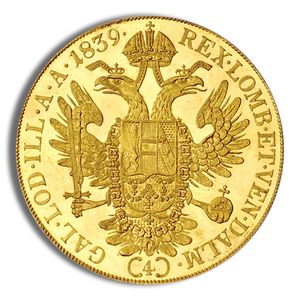
The Austrian Mint produces the 1915-dated gold ducat restrikes in both the 1 ducat and 4 ducat formats. The 1 ducat restrike is graded Brilliant Uncirculated, while the 4 ducat version in our current catalog carries an Extremely Fine designation, indicating it has seen some circulation or handling. Both coins bear the original 1915 date, which the Austrian Mint uses consistently across all restrike production regardless of actual mint year. The Austrian Mint also stamps "Various" as the mint mark for these restrikes, which is standard for this program.
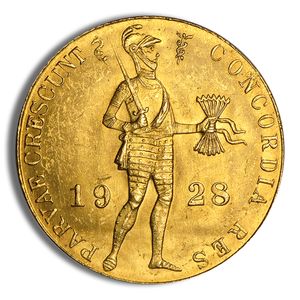
The Royal Dutch Mint's Netherlands Gold 1 Ducat rounds out the catalog and is offered in Brilliant Uncirculated condition as a random year product. This coin is struck to the same 0.986 fineness and 0.1106 troy ounce specification as its Austrian counterpart but features distinct Dutch design elements and a slightly larger diameter of 21 millimeters. The Royal Dutch Mint, headquartered in Utrecht, has one of the longest continuous minting histories in Europe and maintains a strong reputation for quality and consistency across its bullion programs.
It's worth noting that both the Austrian and Dutch 1 ducat coins are nearly identical in terms of gold content and purity, which makes them directly comparable from a bullion standpoint. The primary differences come down to country of origin, design tradition, and minor physical dimensions. Buyers with a preference for a specific national program or design should pay close attention to the product listing before purchasing, particularly since both coins are sold as random year products.
Pricing, Premiums, and Market Factors
Gold ducat pricing is derived from the live spot price of gold, with a premium applied on top to account for minting costs, distribution, and market demand. Because ducats occupy a somewhat specialized niche within the broader gold coin market, their premiums can be moderately higher than those of high-volume coins like the American Gold Eagle or South African Krugerrand. The smaller production volume and more collector-oriented demand profile of ducats tend to support a slightly elevated premium relative to comparable fractional bullion formats.
The 4 ducat piece, by virtue of its larger gold content and lower per-ounce premium structure, may offer slightly better value per gram compared to the 1 ducat. However, the 1 ducat format carries broader liquidity within the collector and bullion markets due to its lower absolute price and higher transaction frequency. Buyers should weigh these dynamics carefully when deciding between formats. Premiums can also shift based on supply availability from the Austrian Mint, seasonal demand, and broader European gold coin market conditions.
At Bullion Standard, prices update in real time to reflect current wholesale market conditions. Each product page displays the bid/ask spread, giving buyers a transparent view of not just what they'll pay but also the current buyback pricing before any purchase is made. This two-way visibility is a core part of how Bullion Standard approaches pricing honesty, and it's particularly useful for niche products like ducats where the spread may differ meaningfully from more liquid mainstream coins.
Condition, Packaging, and What to Expect
Gold ducats in our catalog are offered in two primary grades: Brilliant Uncirculated and Extremely Fine. BU coins arrive with no signs of circulation, retaining their original mint luster and sharp strike. XF-graded coins, like the 1915 Austria 4 Ducat Restrike in this catalog, will show light wear or handling marks consistent with their grade designation. Buyers seeking coins for strict numismatic purposes should pay close attention to the stated grade before purchasing.
Ducats are typically sold individually without assay packaging or protective slabs unless otherwise noted. It's common for coins in this category to arrive in protective coin flips, capsules, or loose depending on the specific product and sourcing. Bullion Standard will note packaging details on individual product listings where applicable. Buyers should expect standard transit packaging appropriate for the coin format and value.
Because all coins in our current catalog are sold as random year products, the actual production or restrike year on the coin may differ from any specific year expectation. For Austrian restrikes, the date on the coin will always read 1915, regardless of when the coin was actually struck. For the Netherlands gold ducat, the production year will vary based on available inventory. These practices are industry standard and fully disclosed on each listing.
Authenticity and Verification
Every gold ducat sold through Bullion Standard is sourced from established mints, authorized distributors, and reputable wholesale dealers and verified for authenticity, weight, and metal content before being made available for sale. The Austrian Mint and the Royal Dutch Mint are both internationally recognized sovereign institutions with centuries of minting history, and their products are among the most straightforward to authenticate within the European coin market.
Authentication of gold ducats generally relies on weight verification, diameter measurement, and visual inspection of strike quality and design detail. Because these coins are well-documented and consistent in their specifications, deviations in weight or dimension are typically easy to identify. For buyers who want an additional layer of assurance, third-party grading services such as PCGS and NGC offer slabbing and certification for ducats, and Bullion Standard is an authorized dealer for both services.
Anti-counterfeiting confidence for these coins is supported by the precision required to replicate the high-relief design elements and tight metallurgical tolerances of official ducat production. While no physical gold coin is immune to counterfeiting attempts, the specific characteristics of Austrian and Dutch ducats make fraudulent replication both difficult and commercially unviable at the bullion market level. Buyers who receive products through Bullion Standard can reference our verification process and customer support team for any concerns following delivery.
Liquidity and Resale Considerations
Within the European bullion market, gold ducats enjoy a solid level of recognition, particularly among dealers and collectors familiar with Austrian and Dutch coinage traditions. The 1915 Austrian ducat restrike is one of the better-known European gold coins and is traded regularly across dealer networks, coin shows, and wholesale channels. The Netherlands ducat, while slightly less ubiquitous outside of continental Europe, is well regarded within its core market and remains easily tradeable through established bullion dealers.
Outside of Europe, the liquidity profile of ducats narrows compared to coins like the Gold American Eagle or Gold Maple Leaf. Buyers should be aware that resale in North American markets may require reaching dealers who specifically handle European coins or numismatic bullion. That said, the gold content of a ducat is universally recognizable, and any competent bullion dealer can evaluate and price these coins based on their metal content regardless of familiarity with the specific program.
The grade and condition of a ducat can also affect resale options and pricing. BU coins in original condition will typically attract both bullion buyers and collector-focused dealers, while XF-graded coins may appeal more exclusively to buyers prioritizing metal content over numismatic presentation. Understanding this distinction before purchase helps set realistic expectations for the resale environment.
Storage and Security
Gold ducats, particularly the 1 ducat format at 20 to 21 millimeters in diameter, are among the smaller gold coins in the bullion market. Their compact size makes them straightforward to store efficiently, but also means they can be easy to misplace without organized storage. Individual coin capsules, small coin tubes, or dedicated coin albums designed for European coins are all practical options depending on the quantity held.
For significant holdings, a residential safe rated for both fire and theft resistance provides a reliable baseline. Bank safe deposit boxes offer additional security for long-term storage, though they typically lack insurance coverage and may limit access during banking hours. Professional vault storage through a Bullion Standard-recommended depository or third-party provider is worth considering for buyers holding larger quantities, as these facilities offer insurance, segregated storage, and documented chain of custody.
Environmental protection is also worth factoring in. Although gold is chemically inert and does not tarnish or corrode under normal conditions, physical handling can leave oils and surface marks that affect the coin's appearance over time. Keeping ducats in their capsules or flips and minimizing direct handling by the face of the coin helps preserve the coin's visual presentation, which can matter at resale particularly for BU-graded pieces.
Selling and Buyback Options
Bullion Standard operates a two-way market, which means customers can sell gold ducats back through the same platform used to purchase them. Buyback pricing is determined by current wholesale bid pricing for the specific product, which reflects the coin's gold content, its market grade, mint of origin, and prevailing demand conditions within the dealer and wholesale network. Because ducats occupy a more specialized market segment, the buyback spread may be slightly wider than what buyers encounter with higher-volume mainstream coins.
When initiating a sale, customers can review current buyback pricing on the product page before making any commitment. Bullion Standard's purchasing team evaluates incoming products based on condition, authenticity, and packaging, and the final buyback offer will reflect these factors. Coins that arrive in original condition with no damage typically receive the most favorable buyback terms, while coins showing significant wear or surface damage may be reassessed accordingly.
For buyers who are price-sensitive on the sell side, Bullion Standard Pro members benefit from access to live executable wholesale bid pricing, which can provide tighter spreads and more favorable terms than standard retail buyback programs. Understanding the relationship between the acquisition premium and the expected buyback price before purchasing is one of the most practical steps any buyer can take, and Bullion Standard's platform is structured to make that information available upfront rather than at the point of sale.
Why Buy Gold Ducats?
Gold ducats appeal to a specific type of buyer: someone who wants legitimate bullion gold with a distinct historical identity and is comfortable operating in a more specialized corner of the market. The 0.986 fine gold standard and the long production history of both the Austrian and Dutch programs give these coins genuine credibility as bullion products, while their design heritage and sovereign backing add a dimension that generic gold rounds simply cannot replicate.
The compact size of the 1 ducat format makes it a practical choice for buyers who want fractional gold exposure without the relatively high per-ounce premiums often associated with small modern fractional coins. For those interested in the 4 ducat format, the coin's larger gold content allows for a meaningful bullion purchase at a price point that remains accessible compared to full-ounce alternatives while still reflecting the ducat's distinct numismatic character.
European gold coins in general, and ducats in particular, also carry strong name recognition among international buyers and dealers, which can be an advantage for anyone planning to hold these coins long term or across multiple market environments. For buyers who appreciate a product that sits at the intersection of bullion utility and numismatic substance, the gold ducat is one of the more coherent choices available in this price range.
Why Buy from Bullion Standard?
Bullion Standard was founded in San Diego in 2010 with a straightforward philosophy: transparent pricing, verified products, and a customer experience built on trust rather than high-pressure sales tactics. Every gold ducat in our catalog has been authenticated and verified before listing, and our pricing updates in real time to reflect current wholesale market conditions rather than fixed retail markups that obscure the true cost of ownership.
We maintain an A rating with the Better Business Bureau and hold active memberships with the American Numismatic Association and the National Coin and Bullion Association. These affiliations reflect the standards we hold ourselves to across sourcing, fulfillment, and customer support. As an authorized dealer for both PCGS and NGC, we're also equipped to assist buyers who want third-party grading or certification for the coins they purchase through us.
Checkout is supported by a wide range of payment options, including Visa, Mastercard, American Express, Discover, PayPal, bank-connected payments through Plaid, wire transfer, paper check, and cryptocurrency through BitPay. Fulfillment is handled through a reliable shipping infrastructure with appropriate insurance and tracking. And because we operate a two-way market, the relationship doesn't end at checkout. Our buyback program means you can return to the same platform to sell when the time comes, with the same commitment to pricing transparency that guided your original purchase.
Get Near-Spot Pricing with Bullion Standard Pro
Bullion Standard Pro is designed for buyers who want to transact closer to the wholesale level without navigating institutional channels. Members gain access to live, executable wholesale bid and ask pricing across a broad range of products, including European gold coins like ducats. Unlike standard retail pricing, Pro pricing reflects real-time supply and demand within the wholesale market without additional dealer markups layered on top.
For gold ducats, where premiums and spreads can be somewhat wider than mainstream bullion products, the efficiency gains available through Pro membership can be meaningful. Members can view historical premium data, spread analytics, and liquidity metrics that provide context for whether current ducat pricing is trading near the high or low end of its historical premium range. This kind of information is typically available only to institutional buyers or experienced dealer networks, and Bullion Standard Pro makes it accessible to individual investors.
Portfolio valuation through Pro is also grounded in live wholesale bid pricing rather than indicative retail estimates, giving members a more accurate picture of their holdings' current liquidation value. For anyone building a position in niche gold coins like ducats over time, this level of pricing transparency and market intelligence creates a materially more informed buying and selling experience than what's typically available through conventional retail channels.

 (833) 278-4653