 (833) 278-4653



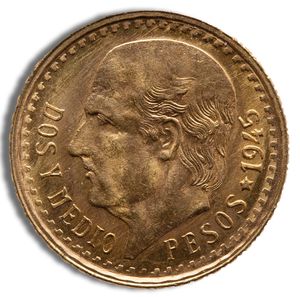
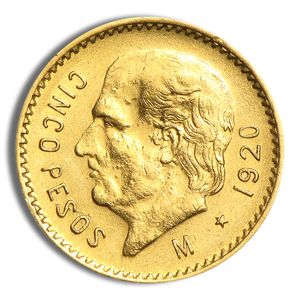
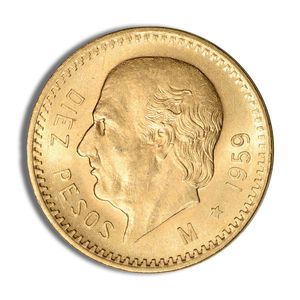

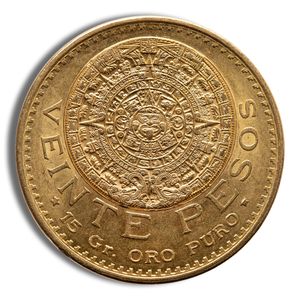
Buy Mexican Gold Pesos Online
Our catalog of mexican gold pesos spans one of the most historically significant gold coin programs ever produced by the Casa de Moneda de México, the official mint of Mexico. From the 10 peso and 20 peso denominations struck in the early twentieth century to the iconic 50 peso centenario that has defined the series for over a century, these coins are available in a range of dates, conditions, and grade classifications to suit a wide variety of buyers.
You'll find individual-year coins like the 1921, 1922, 1923, and later restrikes through the 1940s, along with random year options across the 2, 2.5, 5, 10, 20, and 50 peso denominations. Condition options range from Brilliant Uncirculated to About Uncirculated, Very Fine, Extremely Fine, and Cull. Bullion Standard presents pricing transparently, with real-time spot-linked premiums and a two-way market structure that reflects both the buy and sell sides of each transaction.
Whether you're acquiring a single 50 peso centenario or building a position across multiple denominations, the catalog is organized to help you quickly identify the right coin by year, denomination, and grade. Each product page displays current bid and ask pricing so you can evaluate the full cost of ownership before committing to a purchase.
What Are Mexican Gold Pesos?
Mexican gold pesos are a series of gold coins struck at the Casa de Moneda de México across multiple denominations, all sharing a purity of 90% gold (0.900 fine). The series includes denominations of 2, 2.5, 5, 10, 20, and 50 pesos, each carrying a distinct gold content measured in troy ounces. The 50 peso centenario, the largest and most widely traded of the series, contains 1.2057 troy ounces of gold and remains the primary focal point for bullion buyers familiar with Mexican coinage.
Unlike government-issued modern bullion coins with face values tied to legal tender status, mexican gold pesos carry nominal face values that bear no relationship to their bullion market price. Their value is driven almost entirely by their gold content and the applicable premium above spot, which fluctuates based on condition, date, supply availability, and market demand. This positions them squarely as bullion coins rather than numismatic collectibles, though certain scarce dates attract additional collector interest.
The smaller denominations, particularly the 2, 2.5, and 5 peso coins, appeal to buyers seeking fractional gold exposure at lower absolute price points. The 10 and 20 peso pieces occupy the mid-range, while the 50 peso centenario functions as the benchmark unit of the series. Most buyers transact in these coins because they offer recognizable gold content from a well-established sovereign mint at premiums that tend to be competitive relative to many modern government-issued coins.
History and Background
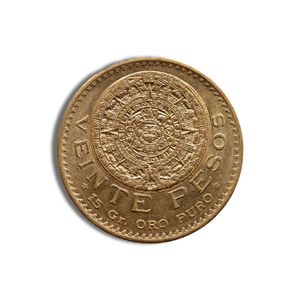
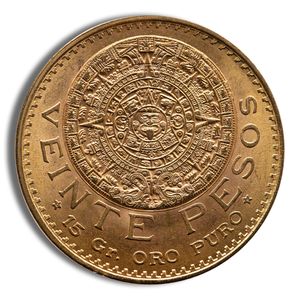
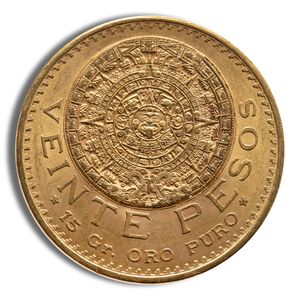
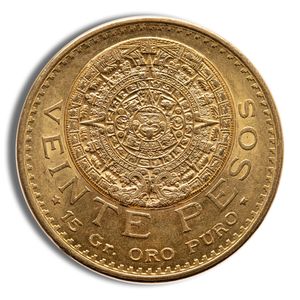
The modern mexican gold peso series traces its origins to the early twentieth century, when Mexico's monetary system was restructured following years of political and economic instability. The 10 peso coin was introduced in the early 1900s, with dated examples from 1907 and 1908 representing some of the earliest coins in this catalog. The 20 peso denomination followed, with production beginning around 1917 during a turbulent period in Mexican history. These coins were struck at the Casa de Moneda de México in Mexico City, one of the oldest operating mints in the Western Hemisphere, established in 1535 under Spanish colonial rule.
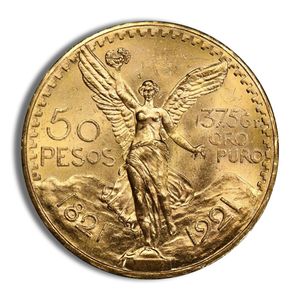
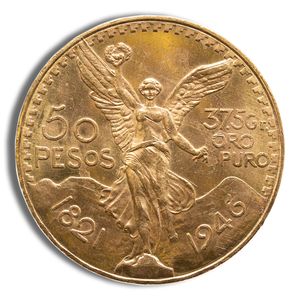
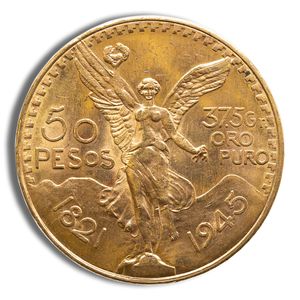
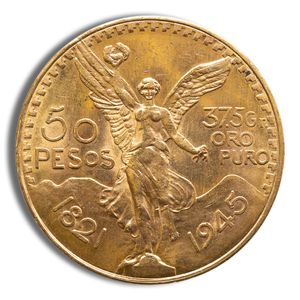
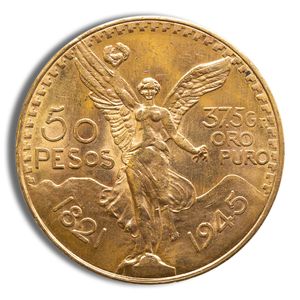
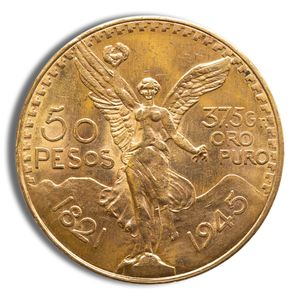
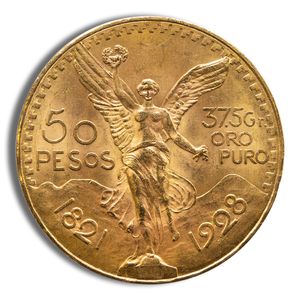
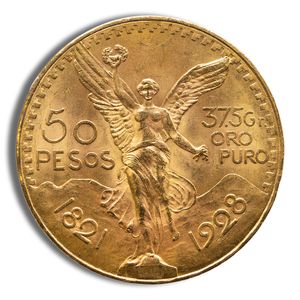
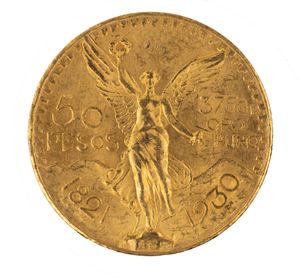
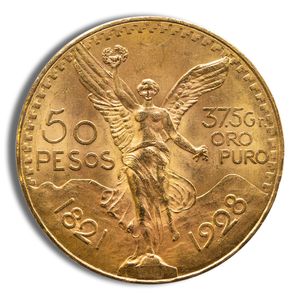
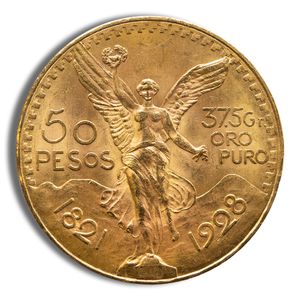
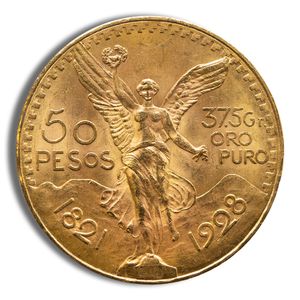
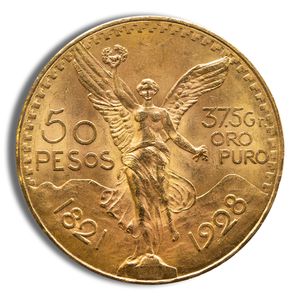
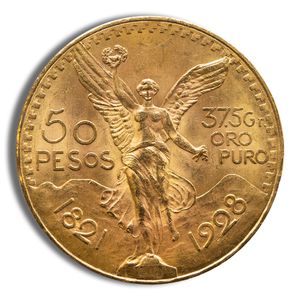
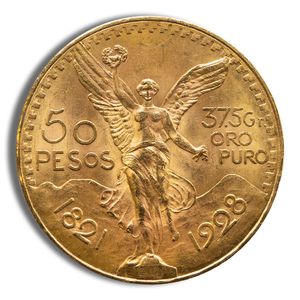
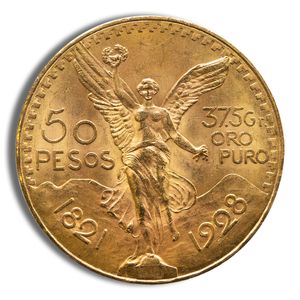
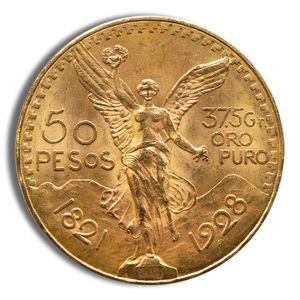
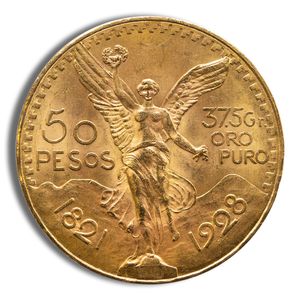
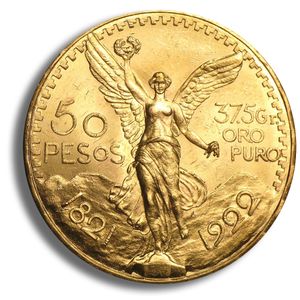
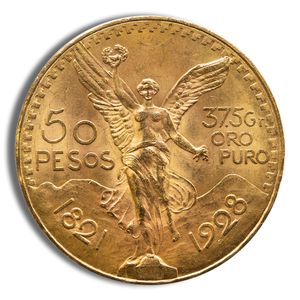
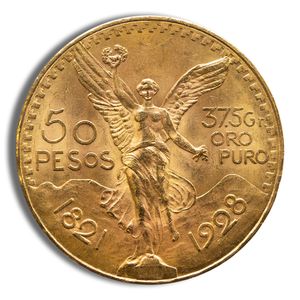
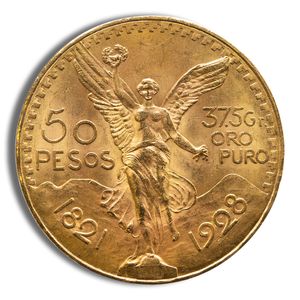
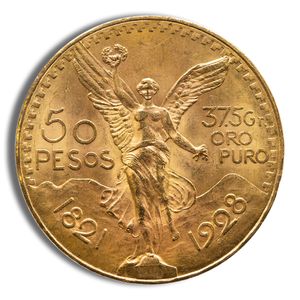
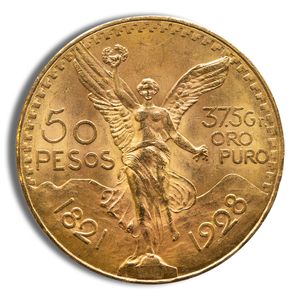
The 50 peso centenario holds a distinct place within the series. It was first struck in 1921 to commemorate the centennial of Mexican independence, featuring the iconic Winged Victory figure known as the Angel of Independence on the obverse and the Mexican coat of arms on the reverse. Production of the original-dated centenario continued through 1931, after which the Mexican Mint resumed striking restrike versions bearing dates from 1943 onward using the same dies and specifications. These restrikes were produced specifically to meet global bullion demand and are the most commonly encountered 50 peso centenarios in the market today.
The broader series remained in production or available through restrikes for several decades, cementing the centenario and its companion denominations as a fixture of the international gold coin market. Their wide distribution through global trade during the mid-twentieth century contributed to their broad recognition among dealers and collectors worldwide, a recognition that continues to support their liquidity today.
Purity, Weight, and Specifications
Every coin in this series is struck to a purity of 0.900 fine gold, which is 90% gold alloyed with 10% copper. This alloy composition was standard for sovereign gold coinage during the period when most of these denominations were introduced, and it gives the coins a slightly warmer color compared to the 0.9999 fine or 0.9167 fine gold used in modern bullion programs. The copper content also contributes to the coin's durability, making it more resistant to wear than higher-purity alternatives.
The gold content by denomination breaks down as follows: the 2 peso contains 0.0482 troy oz of gold, the 2.5 peso contains 0.0603 troy oz, the 5 peso contains 0.1206 troy oz, the 10 peso contains 0.2411 troy oz, the 20 peso contains 0.4823 troy oz, and the 50 peso centenario contains 1.2057 troy oz. Diameters range from 13mm on the 2 peso up to 37mm on the 50 peso. The 50 peso carries a typical thickness between 2.65mm and 2.8mm depending on the vintage, while the smaller denominations are notably thin relative to their diameter.
Coins are struck with the mint mark "Mo" indicating the Mexico City mint location, though random year products may carry various mint marks depending on the production period. No assay card or certificate accompanies these coins as they were produced as circulating or bullion coinage rather than assay-packaged products. The weight, purity, and denomination are inscribed directly on the coin, providing inherent authentication markers that align with established specifications.
Available Brands, Mints, and Product Variations
All coins in this catalog originate from the Casa de Moneda de México, known in English as the Mexican Mint. Operating continuously since the colonial era, the Mexico City mint has produced some of the most widely recognized gold coinage in Latin American history. The mint's long track record and the standardized specifications of the peso series contribute directly to the coins' recognizability among international bullion dealers.
The catalog is organized across several product structures. Specific-year coins are available in select denominations, particularly the 10 peso from 1907, 1908, and 1957, the 20 peso spanning 1917 through 1921, and the 50 peso centenario with individual dates from 1921 through 1946. Each year is typically offered in multiple grades, so a buyer seeking a 1923 50 peso can choose between an AU or BU example depending on their preference and budget. Random year coins across multiple denominations provide a lower-premium alternative when the specific date is not a priority.
Grade variations include Brilliant Uncirculated (BU), About Uncirculated (AU), Extremely Fine (XF), Very Fine (VF), and Cull. BU coins display no wear and retain their original mint luster. AU coins show light friction on the high points but remain visually sharp. XF coins exhibit moderate wear with most detail intact, while VF coins show more pronounced circulation. Cull or cleaned coins carry the lowest premiums but may show significant surface alteration and are priced accordingly. The 1957 10 peso Constitution Centennial is also represented as a distinct commemorative issue within the 10 peso denomination.
Pricing, Premiums, and Market Factors
Like all gold bullion products, mexican gold pesos are priced as a function of the current spot price of gold plus a premium that reflects supply, demand, condition, and market dynamics. The 50 peso centenario typically trades at a narrower premium relative to its gold content than smaller fractional denominations, largely because it is the most liquid and widely traded coin in the series. Fractional pieces like the 2 peso and 2.5 peso carry proportionally higher premiums due to their smaller production volumes and higher per-unit handling costs.
Grade has a direct effect on pricing. BU examples command the highest premiums within each denomination and date, while AU and XF coins trade at a modest discount. Cull and cleaned coins are priced primarily for their gold content with minimal premium above melt, making them a straightforward option for buyers focused solely on gold content rather than coin condition. Date scarcity also plays a role: original-dated centenarios from earlier years like 1921 or 1930 may attract modest numismatic premiums beyond their bullion value, particularly in higher grades.
Bullion Standard displays live bid and ask pricing on each product page so buyers can see exactly what they'll pay and what a buyback would look like at the time of purchase. This transparency helps buyers evaluate the spread before committing to a transaction. The platform's two-way market structure means that resale pricing is factored into the product experience from the start, rather than being treated as a separate consideration after the fact.
Condition, Packaging, and What to Expect
Mexican gold pesos are not assay-packaged or delivered in sealed mint capsules. These coins were produced as circulating legal tender or general bullion coinage, so they arrive either in individual coin capsules for higher-grade examples or loose for circulated and random year coins, depending on the specific product. BU coins are typically handled with care to preserve their surfaces, while AU and XF coins may show edge contact marks or handling wear consistent with their grade classification.
Random year products are shipped in the year available at the time of fulfillment. You won't receive advance notice of which specific date will be included, and Bullion Standard cannot accommodate date preferences on random year orders. The grade specified in the product listing applies to all shipments in that category, so a random year XF coin will meet the XF grade standard regardless of the date received. This structure keeps premiums lower by allowing efficient inventory allocation.
The 50 peso centenario, as a larger and heavier coin, ships securely packaged to prevent contact damage during transit. Cleaned coins, designated with a Cull grade, may show visible surface alteration, polishing, or cleaning marks that affect their numismatic appeal but not their gold content. Buyers acquiring cull coins specifically for bullion purposes should expect cosmetic imperfections and set expectations accordingly.
Authenticity and Verification
Authenticating mexican gold pesos relies on a combination of physical specification verification and visual examination. The coins carry inscribed weight, purity, and denomination markings that align precisely with the mint's published specifications. Any deviation in diameter, thickness, weight, or edge detail is an immediate red flag. The 37mm diameter and standardized weight of the 50 peso centenario make it straightforward to verify using a precision scale and calipers.
Bullion Standard sources all coins from reputable wholesalers, mints, and established distribution channels within the industry. Every coin is verified for authenticity, weight, and purity before it enters inventory or ships to a customer. As an authorized dealer for both PCGS and NGC, Bullion Standard is fully equipped to identify coins that have been professionally graded and encapsulated, which provides an additional layer of authentication for buyers who require third-party certification.
Buyers who want the highest level of authentication assurance can submit specific coins for grading by PCGS or NGC. A professionally graded and slabbed centenario carries a verified pedigree that is recognized by virtually every dealer in the secondary market. For coins that are not slabbed, familiarity with the coin's design details, edge reeding, and mint-specific characteristics remains the most reliable verification approach.
Liquidity and Resale Considerations
The 50 peso centenario is one of the more liquid gold coins in the global market. Its combination of recognizable design, substantial gold content, consistent specifications, and long minting history means it is accepted by dealers worldwide with minimal friction. The smaller denominations are also broadly recognized, though liquidity narrows somewhat for the 2 and 2.5 peso pieces due to their limited market depth compared to the centenario.
Condition affects resale in practical ways. BU and AU coins typically sell more easily across a wider range of buyers, including those with some numismatic interest in addition to bullion value. Cull and cleaned coins are generally resold purely on gold content, and their buyer pool is limited to dealers and buyers focused exclusively on melt value. Keeping coins in their original condition and avoiding cleaning or polishing preserves optionality when it comes time to sell.
Widely traded coins from recognized sovereign mints tend to attract competitive bids from multiple market participants, which supports tighter spreads and faster execution when selling. The centenario specifically has a deep enough dealer network that it does not require a specialized buyer to move at a fair price, which distinguishes it from more obscure or limited-issue products that may require more time to liquidate.
Storage and Security
Gold coins in this size range, particularly the 50 peso centenario at 37mm in diameter, are well-suited for individual coin capsules or coin tubes that can be stored within a home safe, bank safe deposit box, or third-party vault facility. Capsules prevent contact damage and surface oxidation, which is relevant even for bullion-grade coins where surface appearance affects resale pricing. The copper alloy in 90% gold coins can develop toning over time if exposed to air and humidity, so sealed storage is preferable for long-term holding.
A quality home safe rated for fire and theft resistance is the most common storage choice for moderate quantities. Buyers accumulating larger quantities of centenarios or multiple denominations may find that third-party allocated vault storage offers better insurance coverage and physical security at competitive annual costs. Some vault providers offer allocated storage, meaning your specific coins are held separately and returned to you upon withdrawal rather than being pooled with other holdings.
Fractional coins like the 2, 2.5, and 5 peso pieces require careful organization due to their small physical size. Coin flips, labeled envelopes, or small coin tubes can help maintain organization and prevent individual coins from being lost or mixed. Regardless of storage method, keeping coins away from direct light, humidity, and chemical exposure preserves both their physical condition and their long-term marketability.
Selling and Buyback Options
Bullion Standard operates a two-way market, which means customers can sell coins back through the same platform used to purchase them. This structure is intentional. Liquidity should be considered before a purchase is made, and the platform is designed to reflect that philosophy by displaying buyback pricing alongside purchase prices on each product page. When you're ready to sell, the process begins with a quote request based on current market conditions and the specific coins you're offering.
Buyback pricing is influenced by several factors: the denomination, the date, the grade, the coin's condition and packaging, and the current state of the wholesale market. BU centenarios in common restrike dates typically receive the most competitive bids because they are easy to resell into dealer and wholesale networks quickly. AU and XF coins are also readily purchased, while cull coins are evaluated primarily on gold content at current melt values. Coins that arrive cleaned, altered, or misrepresented may receive adjusted offers that reflect their actual condition.
The purchasing team at Bullion Standard reviews incoming sell requests and confirms pricing before finalizing a transaction. Payment is processed through the buyer's preferred method after the coins are received, inspected, and verified. This structured approach ensures that both parties have a clear and agreed-upon price before any coins change hands, keeping the process straightforward and transparent.
Why Buy Mexican Gold Pesos?
The appeal of mexican gold pesos for bullion buyers is rooted in their combination of accessible denomination structure, global recognizability, and the distinctive 90% gold alloy that sets them apart from modern fine gold coins. The multi-denomination series allows buyers to accumulate gold in increments ranging from roughly 0.05 troy oz up to 1.2057 troy oz, making it one of the more flexible sovereign gold coin programs available from a single mint series.
The centenario in particular has a level of market penetration that few non-modern gold coins can match. It's traded regularly in the United States, Europe, Latin America, and beyond, which supports broad dealer acceptance and competitive resale pricing. For buyers who want a gold coin with deep historical roots and global familiarity without paying the sharp premiums common on modern government mint issues, the centenario represents a practical choice.
Specific-year coins, particularly the original 1921 through 1931 dated examples, carry a dual appeal: they satisfy bullion buyers focused on gold content while also attracting numismatists interested in the historical context of the coin's production period. The 1957 Constitution Centennial 10 peso adds another dimension as a commemorative issue within the broader series. This layered appeal across buyer types contributes to the series' durability as a traded product in the secondary market.
Why Buy from Bullion Standard?
Bullion Standard was founded in 2010 in San Diego, California, and has built its reputation over more than a decade on a straightforward principle: transparency before everything else. That means pricing is tied directly to real-time market conditions, product specifications are clearly disclosed, and both the buying and selling sides of every transaction are presented with equal clarity. The experience is designed to feel more like a transparent marketplace than a traditional dealer environment.
Every coin in the catalog, including all mexican gold pesos, is sourced from reputable wholesalers and distribution channels and verified for authenticity, weight, and purity before it reaches a customer. Bullion Standard holds an A rating with the Better Business Bureau and maintains active memberships in the American Numismatic Association (ANA) and the National Coin and Bullion Association (NCBA). The platform also serves as an authorized dealer for both PCGS and NGC, which matters when buying or selling professionally graded coins.
Payment options are broad, including Visa, Mastercard, American Express, Discover, PayPal, bank-connected payments through Plaid, wire transfer, paper check, and cryptocurrency through BitPay. Fulfillment is handled reliably, with secure packaging and responsive customer support available throughout the process. The goal at every step is to create a purchasing experience defined by clarity, not pressure.
Get Near-Spot Pricing with Bullion Standard Pro
Bullion Standard Pro is designed for buyers who want direct access to live, executable wholesale bid and ask pricing rather than standard retail-level premiums. Members transact at wholesale market prices that fluctuate based on real supply and demand conditions, without additional dealer markups layered on top. For buyers acquiring multiple coins or larger positions in the centenario or other denominations, this pricing structure can represent a meaningful difference in total acquisition cost.
Beyond pricing efficiency, Pro members gain access to real-time portfolio valuation using live wholesale bid pricing, historical premium analysis, spread tracking, and other proprietary market intelligence tools. These resources help members evaluate individual products beyond their current spot price, comparing premiums, spread tightness, and liquidity characteristics across the catalog. For a series like the mexican gold peso, where premiums vary across denominations, dates, and grades, having access to this data allows for more informed purchasing decisions.
The platform is built around the conviction that better information leads to better outcomes. By bringing the kind of analytical transparency common in traditional financial markets to the physical precious metals space, Bullion Standard Pro gives members a more complete picture of the market they're participating in, from the moment they evaluate a product to the moment they decide to sell it.