Platinum Coins | Bullion Standard
Buy Platinum Coins Online
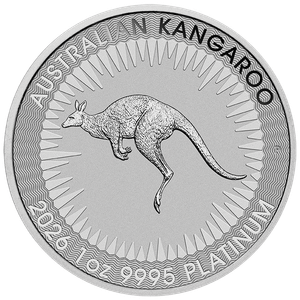
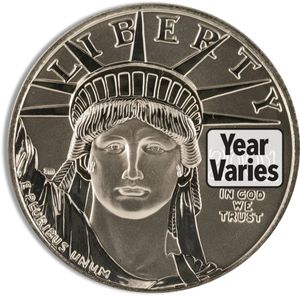
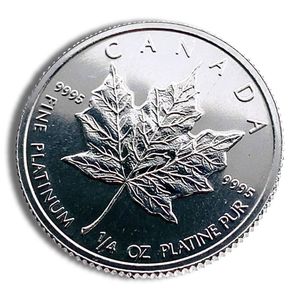
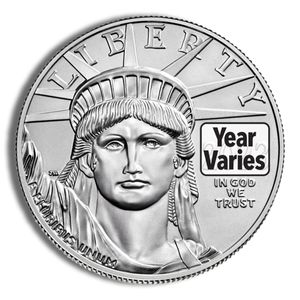
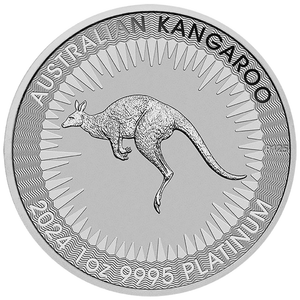
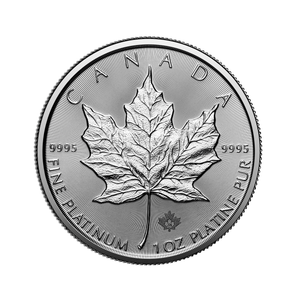
Our platinum coins catalog brings together some of the most recognized government-issued platinum bullion programs in the world, spanning multiple weights, mints, and packaging formats. Whether you're looking for a classic 1 oz Platinum American Eagle from the United States Mint, a 1 oz Platinum Kangaroo from Perth Mint, or a fractional 1/10 oz Platinum Maple Leaf from the Royal Canadian Mint, the selection is built to reflect the full range of products actively traded in the wholesale bullion market.
Beyond standard bullion strikes, the catalog also includes burnished and proof finishes, NGC- and PCGS-certified examples, random year products, and dated issues from programs like the Australian Platinum Koala, Austrian Philharmonic, Great Britain Britannia, and China Panda series. Packaging ranges from individual capsules and tubes to products with original mint boxes and Certificates of Authenticity, giving buyers options across a range of conditions and price points.
Bullion Standard's approach to pricing and sourcing puts transparency at the center of the experience. Every product in this catalog is priced in real time against current spot conditions, with bid/ask spreads displayed on each product page so buyers can evaluate not just what they're paying but what liquidity looks like when they're ready to sell.
What Are Platinum Coins?
Platinum coins are government-authorized bullion coins struck in platinum to standardized weights and purity, issued by sovereign or authorized mints and legal-tender denominated in their country of origin. Unlike platinum rounds or bars, government-issued platinum coins carry a face value established by the issuing authority, which contributes to their broad international recognition and makes them straightforward to authenticate and trade.
Fractional platinum coins are available in sizes including 1/20 oz, 1/10 oz, 1/4 oz, and 1/2 oz, offering buyers access to platinum bullion at lower per-unit cost with proportionally higher premiums per ounce compared to the 1 oz standard. The 1 oz size remains the most liquid and widely traded format, with the deepest wholesale market activity and the tightest bid/ask spreads across most major programs.
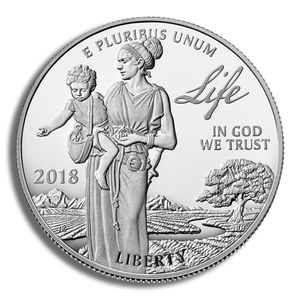
Some platinum coins are also available in collectible or numismatic finishes, including proof strikes characterized by mirror-like fields and frosted devices, as well as burnished finishes produced by the U.S. Mint for special collector issues. These products typically carry higher premiums than standard bullion strikes and appeal to buyers interested in the combination of platinum content and numismatic presentation.
History and Background
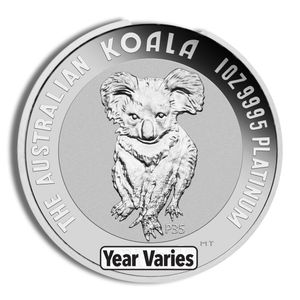
Platinum's emergence as a modern investment metal is relatively recent compared to gold and silver. While platinum was discovered in South America in the eighteenth century and recognized for its exceptional physical properties shortly thereafter, it did not enter the sovereign bullion coin market in any meaningful way until the late twentieth century. The Platinum Koala, introduced by the Perth Mint in 1988, is widely considered one of the earliest modern government-issued platinum bullion coin programs. The Royal Canadian Mint launched the Platinum Maple Leaf program in 1988 as well, helping establish platinum as a legitimate asset class within the numismatic and bullion communities.
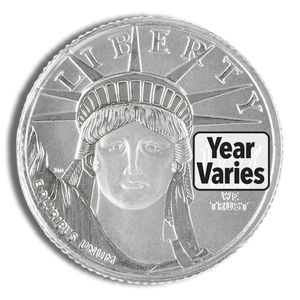
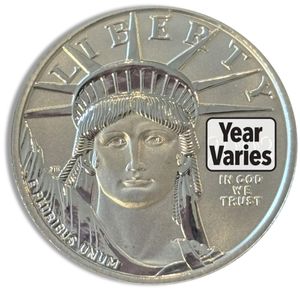
The United States Mint followed in 1997 with the introduction of the Platinum American Eagle, which became the first platinum coin authorized by the U.S. Congress. The Eagle program offered the full range from 1/10 oz to 1 oz in both bullion and proof formats, with the proof series gaining particular recognition for its annually changing reverse designs. The Austrian Mint introduced the Platinum Philharmonic in 2016, drawing on the established prestige of its Gold Philharmonic program to expand its precious metals offerings to include platinum.
Platinum's dual identity as both an industrial metal and a monetary metal has shaped its market history in ways distinct from gold or silver. Demand from the automotive industry, particularly for catalytic converters, has historically exerted significant influence over platinum pricing, making it sensitive to economic cycles and manufacturing trends in ways that don't apply as directly to other bullion metals. This industrial dimension adds a layer of market complexity that experienced buyers typically factor into their evaluation of platinum products.
Purity, Weight, and Specifications
The overwhelming majority of platinum coins in this catalog carry a purity of 0.9995, which is the standard fineness adopted across virtually all major government-issued platinum bullion programs. This applies to the American Eagle, Canadian Maple Leaf, Australian Koala, Australian Kangaroo, Austrian Philharmonic, British Britannia, and Chinese Panda, among others. A small number of specialty issues may vary slightly, but 0.9995 fine platinum is the recognized benchmark for sovereign bullion coins.
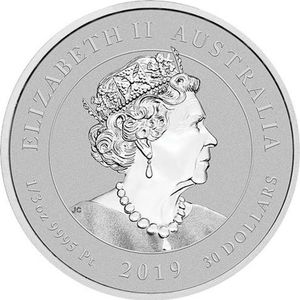
Weights follow troy ounce conventions, with the most common sizes being 1 oz, 1/2 oz, 1/4 oz, and 1/10 oz. Some programs also include 1/20 oz fractionals and specialty weights such as 1/3 oz, most commonly seen in limited Australian wildlife and marine series from the Perth Mint. Coin dimensions vary by program. The 1 oz American Eagle measures 32.7 mm in diameter with a thickness of approximately 2.39 mm, while the 1 oz Austrian Philharmonic reaches 37 mm in diameter with a notably thinner profile at 1 mm. Physical dimensions matter for storage planning and capsule selection, particularly when storing multiple programs together.
Proof and burnished versions of the American Eagle, in particular, carry West Point Mint marks designated as "W" and are distinguished from the standard bullion strike by finish quality and original U.S. Mint packaging. When evaluating a platinum coin, the combination of purity, declared weight, mint of origin, and condition grade together determine both its authenticity credentials and its relative position within the broader market.
Available Brands, Mints, and Product Variations
The United States Mint's Platinum American Eagle program represents the largest share of graded and collectible platinum products in this catalog. Available in standard bullion BU format for random years across all four sizes, the American Eagle also appears as 2006-W, 2007-W, and 2008-W burnished issues certified by NGC and PCGS in grades including MS70 and SP70. The proof Eagle is represented through multiple packaging configurations including Box and COA presentations and cap-only versions without original government packaging, which creates meaningful price differentiation across the same underlying coin.
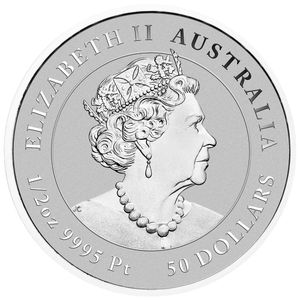
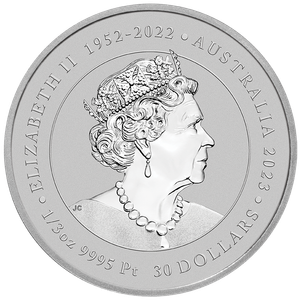
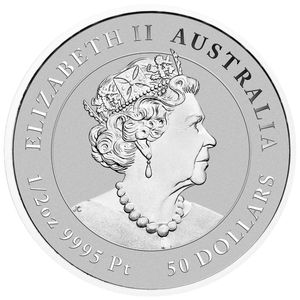
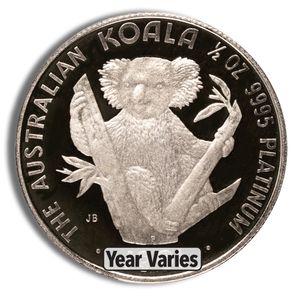
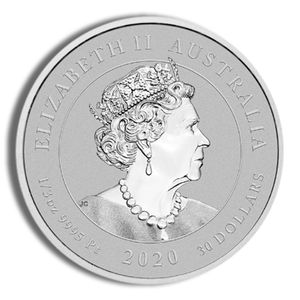
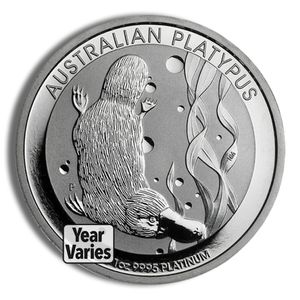
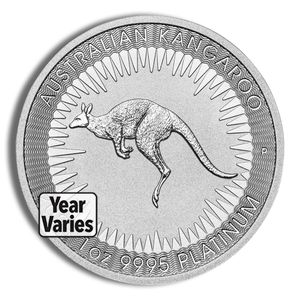
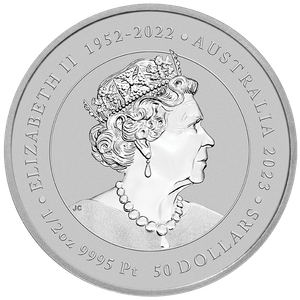
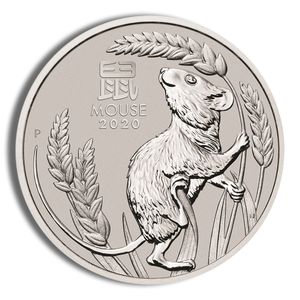
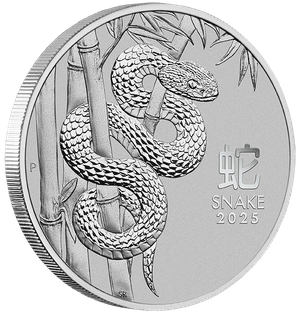
Perth Mint platinum programs are well represented, covering the Koala series in 1/10, 1/4, 1/2, and 1 oz sizes, the Kangaroo in random year and dated 2024, 2025, and 2026 formats, the Platypus, and the Lunar Series III including the Mouse (2020) and Rabbit (2023) and Snake (2025). Perth Mint also issued specialty marine and wildlife programs, some available in 1/3 oz weights, including the Striped Marlin, Leopard Seal, Sea Lion, Barn Owl, Osprey Eagle, and Bottlenose Dolphin. These limited-edition programs trade at higher premiums and attract buyers interested in design variety alongside platinum content.
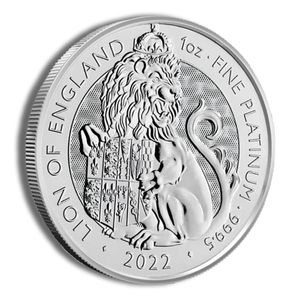
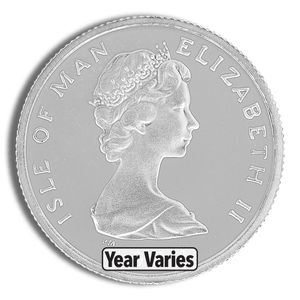
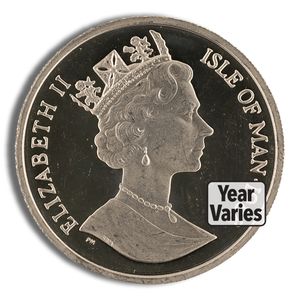
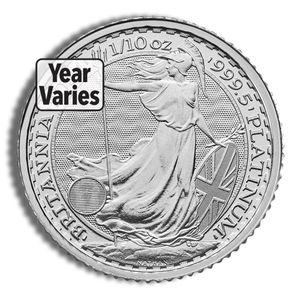
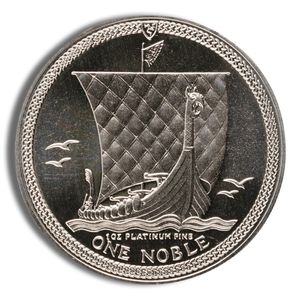
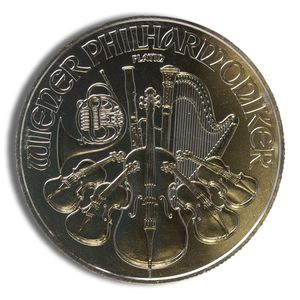
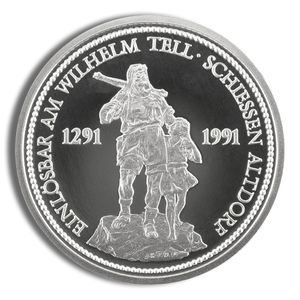
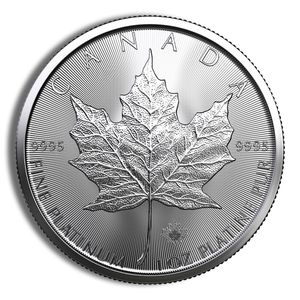
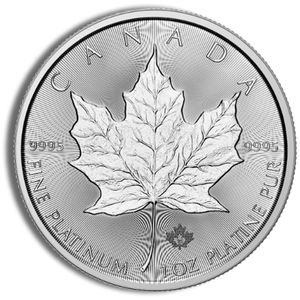
The Royal Canadian Mint's Platinum Maple Leaf is available in 1/20, 1/10, 1/4, 1/2, and 1 oz sizes, making it one of the most complete fractional platinum programs in the catalog. The Austrian Mint's Platinum Philharmonic, struck to 37 mm in diameter and available in 1 oz format, reflects the same classical musical instrument design as its gold counterpart. The Royal Mint of Great Britain contributes the Platinum Britannia in both 1/10 oz and 1 oz sizes, as well as the Queen's Beasts and Tudor Beasts collector programs. The Pobjoy Mint's Isle of Man Noble, China Mint's Platinum Panda, and Swissmint's Shooting Thaler round out a diverse global range of sovereign and authorized platinum coin programs.
Pricing, Premiums, and Market Factors
Platinum coin prices are built on the current platinum spot price, expressed in U.S. dollars per troy ounce, plus a premium that reflects mint production costs, wholesale distribution, program recognition, and current market demand. Unlike gold or silver, platinum's spot price is influenced more heavily by industrial supply and demand dynamics, particularly those tied to automotive manufacturing and catalytic converter production. Buyers tracking platinum pricing should understand that spot movement can reflect industrial factors that have no direct connection to monetary demand.
Premiums vary meaningfully across the programs shown here. Widely traded liquid programs like the American Eagle, Canadian Maple Leaf, and Australian Kangaroo typically carry more competitive premiums at the 1 oz level due to higher production volumes, deeper wholesale market liquidity, and stronger global recognition. Fractional sizes carry proportionally higher premiums per ounce regardless of program, reflecting the higher production cost per unit of platinum content. Limited-edition wildlife and marine coins from Perth Mint, specialty numismatic programs, and proof finishes with original packaging command premiums well above the standard bullion rate.
Bullion Standard prices platinum coins in real time against live market conditions, with the bid/ask spread visible on each product page. This structure allows buyers to evaluate the full cost of ownership, not just the purchase premium. For buyers who prioritize pricing efficiency, the spread shown reflects the difference between the current acquisition price and the current executable buyback value, giving a clear picture of the real cost of owning a given product at the current moment in the market.
Condition, Packaging, and What to Expect
Standard bullion platinum coins are typically shipped in protective plastic capsules or original mint tubes, depending on the program. Perth Mint coins often arrive in individual capsules or mint tubes of 10 or 20, while the American Eagle in bullion format ships in tubes of 20 with outer monster boxes holding 100 coins. The Canadian Maple Leaf comes in 10-coin tubes with outer boxes of 500, reflecting the Royal Canadian Mint's standard distribution packaging.
Random year products, which appear frequently in this catalog across the American Eagle, Maple Leaf, Koala, Kangaroo, and other programs, are shipped from available inventory without a specific year guarantee. The year received will vary based on what is currently in stock and will be a genuine sovereign mint issue of the designated program. Buyers purchasing random year products for platinum content rather than a specific design year will find these offerings among the most straightforward options available.
Proof and burnished products with Box and COA designations arrive with original government or mint packaging intact, including the outer box, inner presentation case, and Certificate of Authenticity. Cap-only versions of the same products contain the coin in its capsule but without the original box or documentation. Graded examples from NGC or PCGS are delivered in the respective grading service's sealed slab, which provides tamper-evident protection and a permanent grade record. Minor contact marks or bag marks are consistent with normal handling for standard bullion-grade coins and should not be interpreted as damage.
Authenticity and Verification
Genuine platinum coins from recognized sovereign mints carry a number of inherent authentication features that distinguish them from counterfeit or base-metal imitations. Government-issued platinum coins are struck under strict quality controls with precise weight tolerances, standardized dimensions, and specific design elements that can be verified against published mint specifications. The American Eagle, for example, has well-documented physical parameters, including a diameter of 32.7 mm and thickness of 2.39 mm at 1 oz, making dimensional verification a straightforward first check.
Bullion Standard sources all products through vetted mint-authorized channels, reputable wholesalers, and established distributors. Every product is verified for authenticity, weight, and purity before it enters inventory or ships to a customer. For graded coins certified by NGC or PCGS, the sealed holder itself provides a layer of verification independent of the dealer, as both services maintain online lookup tools that allow buyers to confirm certification numbers against their databases.
For buyers who want additional verification upon receipt, basic testing methods include precise digital scale measurement against published specifications and, for higher-value pieces, professional ultrasonic or X-ray fluorescence testing available through reputable numismatic or assay services. Platinum's unique density makes it difficult to replicate convincingly using base metals, and products from established sovereign programs with known physical parameters are among the more reliably verifiable bullion formats in the market.
Liquidity and Resale Considerations
Platinum coins from major sovereign programs are recognized by bullion dealers, coin dealers, and precious metals exchanges internationally, which supports their resale across a broad range of markets. The Platinum American Eagle, Canadian Maple Leaf, and Australian Kangaroo and Koala series are among the most recognized platinum coin programs globally, with established dealer networks and consistent wholesale market activity that contributes to more predictable bid pricing. Less common programs, including some of the limited-edition Perth Mint wildlife series or specialty regional issues, may carry higher premiums at purchase but can present narrower resale demand and wider spreads when selling.
Program recognition, mint reputation, standardized purity, and condition all contribute to the ease with which a platinum coin can be resold. Products in original mint packaging or certified by a recognized grading service have clearly defined condition records, which streamlines the resale process and can support pricing. Impaired or damaged coins, or those with missing original packaging for products where packaging is expected, may sell at a discount to standard market rates, which is worth considering when making initial purchase decisions.
Evaluating liquidity before purchasing rather than only at the point of sale leads to more informed decisions. Products with high production volumes, global distribution, and active wholesale market participation tend to offer the most straightforward resale experience. Bullion Standard's two-way market structure provides customers with access to competitive buyback pricing within the same platform, making it easier to evaluate what both sides of the transaction look like before committing to a purchase.
Storage and Security
Platinum coins are dense, small, and relatively resistant to oxidation compared to silver, which simplifies storage requirements in some respects. Unlike silver, platinum does not tarnish under normal storage conditions, meaning humidity-control products are less of a priority. That said, coins should still be stored in protective capsules or holders to prevent surface contact and abrasion, particularly for proof, burnished, or higher-grade certified examples where surface integrity affects value.
For modest quantities of coins, a high-quality home safe with appropriate fire and theft ratings provides reasonable protection and immediate accessibility. For larger holdings or situations where home security is a concern, allocated or segregated storage through a professional vault service adds a more robust layer of protection, insurance coverage, and operational security. Bank safe deposit boxes are another option for smaller collections, though they offer limited insurance and may have accessibility constraints that don't suit all buyers.
Tubes and original mint packaging protect coins from contact damage during storage and transport. Graded slabs provide the most durable protection for individual pieces, making them practical for long-term storage without the need for additional holders. When storing multiple coins together, avoid loose stacking and keep different programs separated to prevent edge contact between capsules, which can cause cosmetic marks over time.
Selling and Buyback Options
When the time comes to sell platinum coins, the process typically involves presenting the product to a dealer, providing product details including program, year, weight, and condition, and receiving a bid based on current spot pricing and applicable premiums. Products in original packaging, particularly proof issues with full Box and COA, tend to attract the strongest bids from buyers who value presentation completeness. Graded coins from NGC or PCGS provide verifiable, standardized condition records that can streamline dealer evaluation and support more consistent buyback pricing.
Factors that influence what a dealer will pay include the current platinum spot price, program recognition, coin condition, packaging completeness, and the dealer's current inventory position for that specific product. Widely traded products like the American Eagle and Maple Leaf typically receive bids that more closely reflect live spot conditions, while specialty or limited-edition programs may require a wider margin to account for the smaller pool of end buyers and longer potential holding time for the purchasing dealer.
Bullion Standard operates a two-way market that allows customers to sell platinum coins back directly through the same platform where they purchased them. Our purchasing team evaluates products against live market pricing, and customers have access to current bid pricing through the platform before initiating a sale. This structure is designed to provide clarity around what the selling process looks like at any given point in the market, supporting more informed decisions about timing, product selection, and overall cost of ownership.
Why Buy Platinum Coins?
Platinum coins combine the recognizability and legal-tender status of government-issued sovereign bullion with the unique physical properties of one of the rarest naturally occurring metals. Because platinum's above-ground supply is substantially smaller than that of gold or silver, the market for platinum bullion operates under different supply and demand dynamics, including meaningful exposure to industrial manufacturing activity in sectors like automotive, medical devices, and industrial catalysis. For buyers interested in a metal with a distinct fundamental supply profile, platinum offers a different market exposure compared to the other primary bullion metals.
Fractional platinum coins provide a way to hold physical platinum at smaller unit sizes, which can be useful for buyers who prefer to build positions incrementally or want flexibility in how they manage or sell holdings over time. The range of available programs, from the straightforward annual-design Kangaroo to the artistically detailed Lunar and Queen's Beasts series, also gives buyers options that span purely bullion-oriented purchases to more collector-focused acquisitions.
Among the reasons buyers choose platinum coins over platinum bars or rounds is the sovereign backing inherent in government-issued programs, which supports international recognition and simplifies authentication. For buyers who may eventually want to sell across different markets or to different buyer types, the standardization and global familiarity of programs like the American Eagle, Maple Leaf, or Philharmonic provide a practical advantage that generic or private-mint platinum products don't fully replicate.
Why Buy from Bullion Standard?
Bullion Standard was founded in San Diego in 2010 and has built its reputation over more than a decade on a straightforward operating philosophy: transparency, pricing integrity, and genuine customer trust. Unlike the high-pressure sales environments that have historically characterized parts of the precious metals industry, our marketplace is designed to put information and clarity at the center of every transaction. Buyers can see real-time pricing, live bid/ask spreads, and product-specific market data without having to navigate opaque pricing structures or negotiate with sales teams.
Every platinum coin sold through Bullion Standard is sourced from authorized mint channels, reputable wholesalers, and vetted distributors. Products are verified for authenticity, weight, and declared purity before entering inventory. We maintain an A rating with the Better Business Bureau, hold membership in the American Numismatic Association and the National Coin and Bullion Association, and are an authorized dealer for both PCGS and NGC. These credentials reflect a consistent commitment to professional standards rather than self-generated marketing claims.
Payment flexibility is broad, with support for Visa, Mastercard, American Express, Discover, PayPal, bank-connected ACH through Plaid, wire transfer, paper check, and cryptocurrency through BitPay. Fulfillment is handled with the same operational rigor as the sourcing process, with secure packaging and reliable shipping timelines. Customer support is responsive and accessible across the full buying and selling experience. The goal is a marketplace that functions the way a transparent financial marketplace should, with clear pricing, reliable execution, and a two-way structure that respects both sides of the transaction equally.
Get Near-Spot Pricing with Bullion Standard Pro
Bullion Standard Pro is designed for buyers who want to transact closer to the wholesale market layer rather than at standard retail price points. Members gain access to live, executable wholesale bid and ask pricing across a broad range of platinum coins and other precious metals products. Unlike indicative or reference pricing, the platform is built around pricing that reflects real-time supply and demand within the wholesale market, giving members direct visibility into how products are priced and traded at the institutional level.
A key structural distinction of Bullion Standard Pro is that additional dealer markups or fixed retail spreads are not layered onto member pricing. Instead, premiums and bid/ask spreads fluctuate in line with underlying wholesale market conditions, creating a more efficient and transparent pricing environment. For buyers who are sensitive to acquisition costs or who plan to transact with any regularity, this structure can meaningfully reduce the spread between what they pay to acquire platinum coins and what they receive when they sell them back.
Pro members also gain access to a suite of proprietary market intelligence tools, including historical premium analysis, spread tightness metrics, liquidity indicators, portfolio valuation using live wholesale bid pricing, and buy/sell ratio data aggregated across the broader wholesale market. These tools are designed to help buyers evaluate individual platinum coin programs using objective, data-driven information rather than marketing narratives, supporting more informed decisions about which products to buy, when to buy them, and what the realistic cost of ownership looks like over time.

 (833) 278-4653