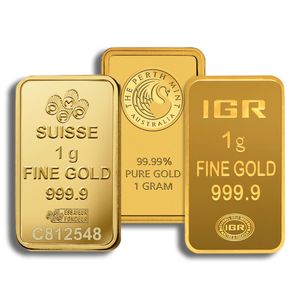
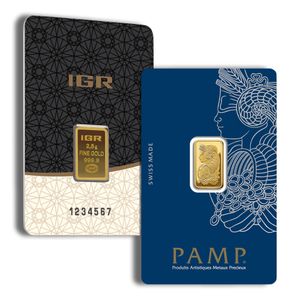
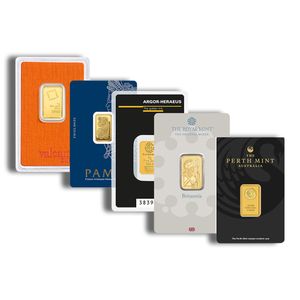
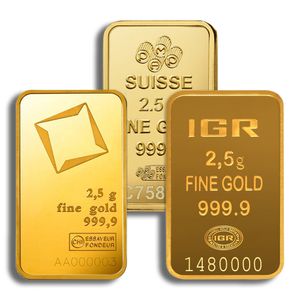
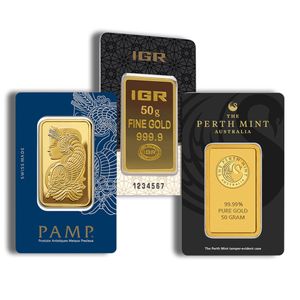
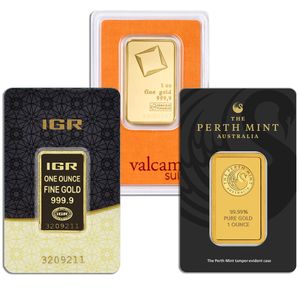
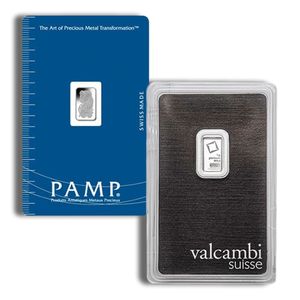
The 1 gram gold bar in assay card is one of the most accessible entry points in the physical gold market. At 0.03215 troy ounces and .9999 fine gold, each bar meets the standard purity threshold recognized by refineries, dealers, and secondary markets worldwide. Because these are sourced from various reputable refineries rather than a single brand, the specific manufacturer will vary, though all bars we carry meet consistent fineness requirements.
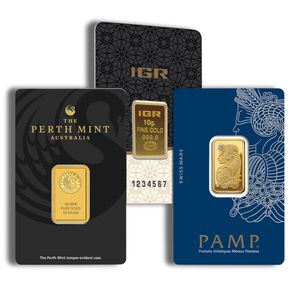
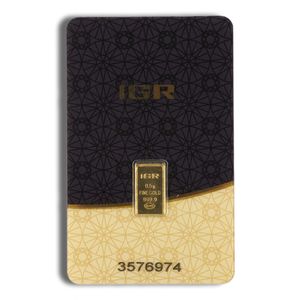
Each bar ships sealed within a tamper-evident assay card, which serves both a protective and authenticating function. The assay card format is a widely accepted standard in the small-format gold bar segment and is a practical choice for buyers looking to acquire fractional gold without giving up transparency about what they are holding.
The 1 gram gold bar format emerged alongside growing consumer demand for fractional precious metals in the latter half of the twentieth century. As institutional and retail interest in physical gold expanded, refineries responded by producing smaller denominations that could appeal to a broader range of buyers without requ
…The 1 gram gold bar in assay card is one of the most accessible entry points in the physical gold market. At 0.03215 troy ounces and .9999 fine gold, each bar meets the standard purity threshold recognized by refineries, dealers, and secondary markets worldwide. Because these are sourced from various reputable refineries rather than a single brand, the specific manufacturer will vary, though all bars we carry meet consistent fineness requirements.
Each bar ships sealed within a tamper-evident assay card, which serves both a protective and authenticating function. The assay card format is a widely accepted standard in the small-format gold bar segment and is a practical choice for buyers looking to acquire fractional gold without giving up transparency about what they are holding.
The 1 gram gold bar format emerged alongside growing consumer demand for fractional precious metals in the latter half of the twentieth century. As institutional and retail interest in physical gold expanded, refineries responded by producing smaller denominations that could appeal to a broader range of buyers without requiring the capital commitment of a full troy ounce.
The assay card packaging became a standard complement to this format. Originally developed to provide a tamper-evident enclosure with printed specifications, the assay card gave buyers confidence that the bar's stated weight and purity had been independently verified at the point of production. Today, bars in this format are produced by dozens of refineries across Europe, North America, and Asia, all operating under established standards for gold fineness and weight tolerance.
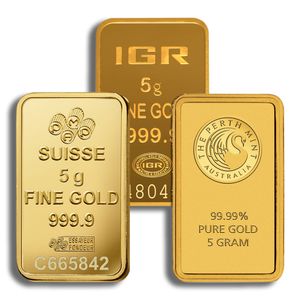
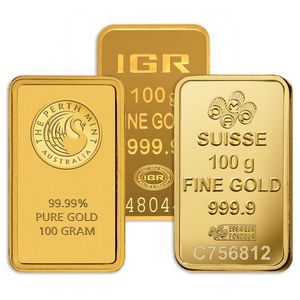
Because these bars come from various manufacturers, the specific design elements will differ from one piece to the next. Most 1 gram bars in this format share a common structure: a flat, rectangular profile with the refinery's name or logo, the stated weight in grams, and the gold purity clearly stamped or engraved on the face. Some bars include serial numbers or assay certifications printed directly on the accompanying card.
The finish on small gold bars of this type is typically matte or lightly polished, prioritizing legibility of the stamped specifications over decorative appeal. The assay card itself generally displays the bar's key specifications alongside the refinery's branding, providing a compact and readable format that confirms the bar's identity without requiring separate documentation.
At one gram, this bar occupies a practical position in the fractional gold market. It allows buyers to acquire gold in small, divisible units that are straightforward to store, gift, or accumulate over time without the price commitment of larger formats. The compact size also makes these bars a common choice for buyers building out a position gradually rather than all at once.
The assay card packaging adds a layer of practicality by keeping each bar protected and self-contained. Handling a loose 1 gram bar carries a higher risk of surface contact and loss than a bar sealed within a card, so the assay format makes physical management easier at this size.
Every bar we carry is sourced from refineries with established track records for precision and consistency. The .9999 fineness standard is one of the highest available in the gold market and is verified at the refinery level before bars are sealed into their assay cards. The tamper-evident nature of the assay card provides an additional layer of confidence, as any breach of the seal is immediately apparent.
We verify each product for authenticity, weight, and purity before it reaches a customer. While the random-brand nature of this product means the specific refinery will vary, all bars we stock meet the fineness and weight specifications listed. Our sourcing network draws from refineries that operate under internationally recognized production and quality standards.
These bars are sold in new condition, sealed within their original assay cards at the time of production. The assay card packaging functions as both protective housing and a certificate of the bar's stated specifications. Individual purchases ship with the bar enclosed in its assay card, which is itself protected within appropriate outer packaging to prevent damage in transit.
Because these are raw bullion bars sourced across the secondary market in some cases, minor surface handling or toning may be visible on the bar itself, though this does not affect the gold content, purity, or value of the piece. The assay card remains the definitive reference for the bar's specifications regardless of minor cosmetic variation on the bar's surface.
Pricing for 1 gram gold bars is based on the current spot price of gold, adjusted for the premium associated with the format. Small-format bars like this one carry higher per-ounce premiums than larger bars because the production cost per gram does not scale down proportionally with bar size. Packaging, handling, and assay card production all contribute to the cost structure at this weight.
Demand for fractional gold bars tends to remain consistent because of their accessibility and practical utility. Our pricing reflects real-time market conditions and is structured to give buyers a clear picture of what they are paying relative to spot. We display the bid and ask spread on each product page so buyers can assess the full cost of ownership rather than focusing solely on the purchase price.
The 1 gram gold bar is widely recognized across the global precious metals market. The standardized weight, .9999 fineness, and assay card format make these bars straightforward to identify and price in secondary market transactions. Dealers, online platforms, and individual buyers are generally familiar with this format, which supports consistent resale activity.
We operate within a two-way market model, meaning customers can both purchase and sell bars of this type directly through our platform. Our buyback pricing is competitive and reflects current wholesale market conditions, so customers do not need to seek out separate venues when they decide to sell. Evaluating liquidity before making a purchase is part of how we encourage a more complete and informed approach to owning physical gold.
The 1 gram format offers a combination of recognizability, divisibility, and low barrier to entry that larger bar formats simply cannot match on an absolute dollar basis. For buyers who want to accumulate physical gold in smaller increments, this size provides a practical unit that is easy to store and straightforward to resell. The assay card packaging removes much of the uncertainty about authenticity that can accompany loose fractional bars.
Random-brand bars in this format allow buyers to access .9999 fine gold at competitive prices without paying the premium associated with a specific branded refinery. When purity and weight are the primary considerations, the flexibility of a multi-refinery product makes practical sense for buyers focused on metal content rather than collector appeal.
We have been operating as a trusted precious metals dealer since 2010, and our approach has remained consistent throughout: transparent pricing, honest sourcing, and a buying experience that respects the intelligence of our customers. We hold an A rating with the Better Business Bureau and maintain active memberships in both the American Numismatic Association and the National Coin and Bullion Association. These credentials reflect a long-term commitment to professional standards, not just a sales position.
Every product we sell is verified for authenticity, weight, and purity before it reaches you. Our two-way market model means we are engaged in both sides of the transaction, which creates an incentive for us to price fairly on both ends. We prioritize long-term customer relationships over one-time sales, and our platform is designed to give buyers the information they need to make decisions with clarity and confidence rather than pressure.
Bullion Standard Pro gives members access to live, executable wholesale bid and ask pricing across a wide range of products, including fractional gold bars in this format. Because small-format gold carries higher premiums by nature, having real-time visibility into wholesale pricing and spread data helps members better understand what they are paying relative to actual market conditions. Pro also includes proprietary research tools that allow users to compare products by premium, bid/ask spread tightness, and liquidity, making it easier to identify relative value across the catalog.
Portfolio valuation through Pro uses live wholesale bid pricing rather than estimated retail values, giving members a more accurate picture of what their holdings are worth at current market liquidation levels. For buyers who accumulate fractional gold over time, this kind of ongoing pricing transparency is a meaningful advantage over relying solely on spot price estimates.
We support a broad range of payment methods to make purchasing straightforward and secure. Customers can pay using Visa, Mastercard, American Express, or Discover, as well as PayPal and bank-connected payments through Plaid for those who prefer direct account-linked transactions. Wire transfer and paper check remain available for larger purchases, and cryptocurrency payments are accepted through BitPay for buyers who prefer digital currency.
Every transaction is handled with security and reliability as the baseline expectation. Whether you are making a first purchase or adding to an existing position, the payment process is designed to be efficient, transparent, and free of unnecessary friction.
Volume Discount Pricing Orders paid by debit card, credit card, and PayPal are an item's full list price and receive no discount. Orders paid by cryptocurrency receive a 3% discount from an item's full list price. Orders paid by eCheck (ACH), paper check, and bank wire receive a 4% discount from an item's full list price.
| Quantity | (e)Check/Wire | Crypto | CC/PayPal |
|---|---|---|---|
| 1 - 9 | $149.37 | $152.48 | $155.59 |
| 10 - 24 | $147.61 | $150.68 | $153.76 |
| 25 - 49 | $145.84 | $148.88 | $151.92 |
| 50 - 99 | $144.08 | $147.09 | $150.09 |
| 100+ | $142.32 | $145.29 | $148.25 |
1+
|
$139.66 | $142.57 | $145.48 |
Product ID: BST-000148210A
| Precious Metal Type | Gold |
|---|---|
| Format | Bar (Minted) |

| Brand/Mint | Various |
| Purity | 0.9999 |
| Weight | 1 g |
| Thickness (mm) | 0.4 mm |
| Bar Length (mm) | 14.5 mm |
| Bar Width (mm) | 8.6 mm |
| Bar Height (mm) | 0.4 mm |
The 1 gram gold bar in assay card is one of the most accessible entry points in the physical gold market. At 0.03215 troy ounces and .9999 fine gold, each bar meets the standard purity threshold recognized by refineries, dealers, and secondary markets worldwide. Because these are sourced from various reputable refineries rather than a single brand, the specific manufacturer will vary, though all bars we carry meet consistent fineness requirements.
Each bar ships sealed within a tamper-evident assay card, which serves both a protective and authenticating function. The assay card format is a widely accepted standard in the small-format gold bar segment and is a practical choice for buyers looking to acquire fractional gold without giving up transparency about what they are holding.
The 1 gram gold bar format emerged alongside growing consumer demand for fractional precious metals in the latter half of the twentieth century. As institutional and retail interest in physical gold expanded, refineries responded by producing smaller denominations that could appeal to a broader range of buyers without requ
…The 1 gram gold bar in assay card is one of the most accessible entry points in the physical gold market. At 0.03215 troy ounces and .9999 fine gold, each bar meets the standard purity threshold recognized by refineries, dealers, and secondary markets worldwide. Because these are sourced from various reputable refineries rather than a single brand, the specific manufacturer will vary, though all bars we carry meet consistent fineness requirements.
Each bar ships sealed within a tamper-evident assay card, which serves both a protective and authenticating function. The assay card format is a widely accepted standard in the small-format gold bar segment and is a practical choice for buyers looking to acquire fractional gold without giving up transparency about what they are holding.
The 1 gram gold bar format emerged alongside growing consumer demand for fractional precious metals in the latter half of the twentieth century. As institutional and retail interest in physical gold expanded, refineries responded by producing smaller denominations that could appeal to a broader range of buyers without requiring the capital commitment of a full troy ounce.
The assay card packaging became a standard complement to this format. Originally developed to provide a tamper-evident enclosure with printed specifications, the assay card gave buyers confidence that the bar's stated weight and purity had been independently verified at the point of production. Today, bars in this format are produced by dozens of refineries across Europe, North America, and Asia, all operating under established standards for gold fineness and weight tolerance.
Because these bars come from various manufacturers, the specific design elements will differ from one piece to the next. Most 1 gram bars in this format share a common structure: a flat, rectangular profile with the refinery's name or logo, the stated weight in grams, and the gold purity clearly stamped or engraved on the face. Some bars include serial numbers or assay certifications printed directly on the accompanying card.
The finish on small gold bars of this type is typically matte or lightly polished, prioritizing legibility of the stamped specifications over decorative appeal. The assay card itself generally displays the bar's key specifications alongside the refinery's branding, providing a compact and readable format that confirms the bar's identity without requiring separate documentation.
At one gram, this bar occupies a practical position in the fractional gold market. It allows buyers to acquire gold in small, divisible units that are straightforward to store, gift, or accumulate over time without the price commitment of larger formats. The compact size also makes these bars a common choice for buyers building out a position gradually rather than all at once.
The assay card packaging adds a layer of practicality by keeping each bar protected and self-contained. Handling a loose 1 gram bar carries a higher risk of surface contact and loss than a bar sealed within a card, so the assay format makes physical management easier at this size.
Every bar we carry is sourced from refineries with established track records for precision and consistency. The .9999 fineness standard is one of the highest available in the gold market and is verified at the refinery level before bars are sealed into their assay cards. The tamper-evident nature of the assay card provides an additional layer of confidence, as any breach of the seal is immediately apparent.
We verify each product for authenticity, weight, and purity before it reaches a customer. While the random-brand nature of this product means the specific refinery will vary, all bars we stock meet the fineness and weight specifications listed. Our sourcing network draws from refineries that operate under internationally recognized production and quality standards.
These bars are sold in new condition, sealed within their original assay cards at the time of production. The assay card packaging functions as both protective housing and a certificate of the bar's stated specifications. Individual purchases ship with the bar enclosed in its assay card, which is itself protected within appropriate outer packaging to prevent damage in transit.
Because these are raw bullion bars sourced across the secondary market in some cases, minor surface handling or toning may be visible on the bar itself, though this does not affect the gold content, purity, or value of the piece. The assay card remains the definitive reference for the bar's specifications regardless of minor cosmetic variation on the bar's surface.
Pricing for 1 gram gold bars is based on the current spot price of gold, adjusted for the premium associated with the format. Small-format bars like this one carry higher per-ounce premiums than larger bars because the production cost per gram does not scale down proportionally with bar size. Packaging, handling, and assay card production all contribute to the cost structure at this weight.
Demand for fractional gold bars tends to remain consistent because of their accessibility and practical utility. Our pricing reflects real-time market conditions and is structured to give buyers a clear picture of what they are paying relative to spot. We display the bid and ask spread on each product page so buyers can assess the full cost of ownership rather than focusing solely on the purchase price.
The 1 gram gold bar is widely recognized across the global precious metals market. The standardized weight, .9999 fineness, and assay card format make these bars straightforward to identify and price in secondary market transactions. Dealers, online platforms, and individual buyers are generally familiar with this format, which supports consistent resale activity.
We operate within a two-way market model, meaning customers can both purchase and sell bars of this type directly through our platform. Our buyback pricing is competitive and reflects current wholesale market conditions, so customers do not need to seek out separate venues when they decide to sell. Evaluating liquidity before making a purchase is part of how we encourage a more complete and informed approach to owning physical gold.
The 1 gram format offers a combination of recognizability, divisibility, and low barrier to entry that larger bar formats simply cannot match on an absolute dollar basis. For buyers who want to accumulate physical gold in smaller increments, this size provides a practical unit that is easy to store and straightforward to resell. The assay card packaging removes much of the uncertainty about authenticity that can accompany loose fractional bars.
Random-brand bars in this format allow buyers to access .9999 fine gold at competitive prices without paying the premium associated with a specific branded refinery. When purity and weight are the primary considerations, the flexibility of a multi-refinery product makes practical sense for buyers focused on metal content rather than collector appeal.
We have been operating as a trusted precious metals dealer since 2010, and our approach has remained consistent throughout: transparent pricing, honest sourcing, and a buying experience that respects the intelligence of our customers. We hold an A rating with the Better Business Bureau and maintain active memberships in both the American Numismatic Association and the National Coin and Bullion Association. These credentials reflect a long-term commitment to professional standards, not just a sales position.
Every product we sell is verified for authenticity, weight, and purity before it reaches you. Our two-way market model means we are engaged in both sides of the transaction, which creates an incentive for us to price fairly on both ends. We prioritize long-term customer relationships over one-time sales, and our platform is designed to give buyers the information they need to make decisions with clarity and confidence rather than pressure.
Bullion Standard Pro gives members access to live, executable wholesale bid and ask pricing across a wide range of products, including fractional gold bars in this format. Because small-format gold carries higher premiums by nature, having real-time visibility into wholesale pricing and spread data helps members better understand what they are paying relative to actual market conditions. Pro also includes proprietary research tools that allow users to compare products by premium, bid/ask spread tightness, and liquidity, making it easier to identify relative value across the catalog.
Portfolio valuation through Pro uses live wholesale bid pricing rather than estimated retail values, giving members a more accurate picture of what their holdings are worth at current market liquidation levels. For buyers who accumulate fractional gold over time, this kind of ongoing pricing transparency is a meaningful advantage over relying solely on spot price estimates.
We support a broad range of payment methods to make purchasing straightforward and secure. Customers can pay using Visa, Mastercard, American Express, or Discover, as well as PayPal and bank-connected payments through Plaid for those who prefer direct account-linked transactions. Wire transfer and paper check remain available for larger purchases, and cryptocurrency payments are accepted through BitPay for buyers who prefer digital currency.
Every transaction is handled with security and reliability as the baseline expectation. Whether you are making a first purchase or adding to an existing position, the payment process is designed to be efficient, transparent, and free of unnecessary friction.