Buy Military Commemorative Coins Online
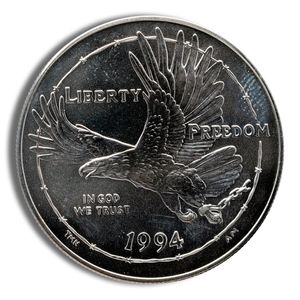
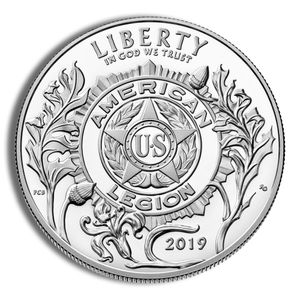
Military commemorative coins honor the people, conflicts and institutions of America's armed forces and those of its closest allies, and our catalog brings more than forty of them together. Most are U.S. Mint silver dollars, running from the 1991 Korean War and USO issues through the 1994 Prisoner of War, Vietnam Veterans Memorial and Women in Military Service dollars to the 2018 World War I Centennial and 2019 American Legion coins.
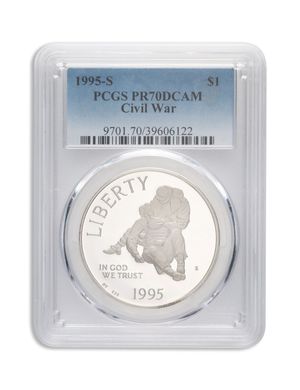
Nearly every U.S. program appears in both uncirculated and proof form, with mint marks from Philadelphia, Denver, San Francisco and West Point. You'll also find a 2020-W proof American Silver Eagle with the V75 privy, a 1995-S Civil War dollar graded PCGS PF70, a 2013-P Five Star Generals dollar graded NGC PF70, and silver and gold coins from the Perth Mint and the Royal Canadian Mint.
Every product page shows live pricing next to the current bid, so you can see what a coin costs today and what it would bring if you sold it back. That visibility is especially useful with commemoratives, where premiums vary from one program to the next far more than they do with bullion.
What Are Military Commemorative Coins?
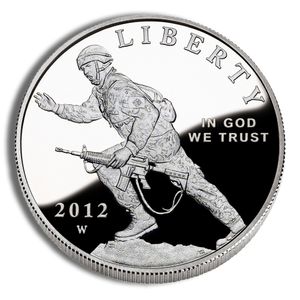
A military commemorative is a coin struck to mark an anniversary, a conflict, a branch of service or a veterans' cause. In the United States, each program begins with an act of Congress that names the subject, caps the mintage and adds a surcharge to every coin sold. That surcharge goes to a related memorial, museum or foundation, so buyers of the original 2012 Infantry Soldier or 2011 Army dollars helped fund institutions connected to those subjects.
The difference from bullion is purpose more than metal. An American Silver Eagle is struck in large numbers year after year to trade close to its silver value, while a commemorative dollar is sold by the Mint for a limited window and then never struck again. Its one-dollar denomination is real but symbolic, and its price depends on collector demand as much as on silver content.
Collectors approach military coins in several ways. Some build around one conflict such as World War II, others collect by branch, mint or finish, and many buy a single coin tied to a family member's service. Because most designs come in both proof and uncirculated versions, the same tribute is usually available at more than one price point.
History and Background
The U.S. Mint struck commemoratives on and off from 1892 to 1954, then none at all until the modern program began in 1982. Military subjects became a steady theme within a decade. The 1991 Korean War dollar arrived 38 years after the 1953 armistice and supported the Korean War Veterans Memorial in Washington, the same year's USO dollar marked that organization's 50th anniversary, and in 1993 the Mint released World War II coins dual-dated 1991-1995 for the war's 50th anniversary.
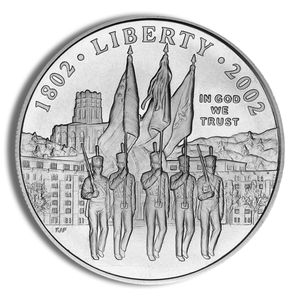
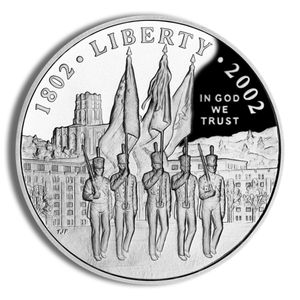
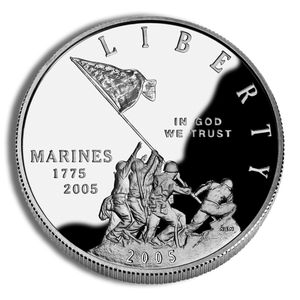
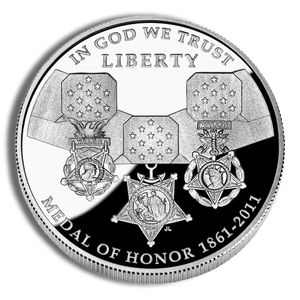
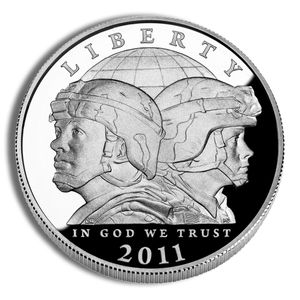
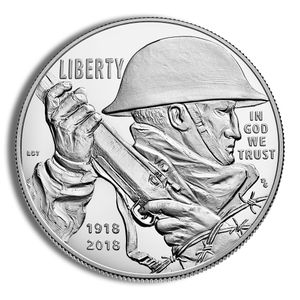
Later programs shifted toward the institutions and people behind the uniform. The 2002 dollar celebrated the bicentennial of the U.S. Military Academy at West Point, the 2005 coin honored 230 years of the Marine Corps, and 2011 brought both a U.S. Army program and the 150th anniversary of the Medal of Honor. The Infantry Soldier, Five Star Generals, World War I Centennial and American Legion programs followed, while the 2020 V75 Silver Eagle took a different route by adding a privy mark to an existing bullion design to note 75 years since the end of World War II.
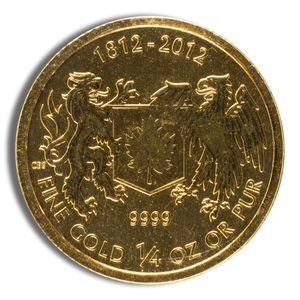
Allied mints have marked their own military history in parallel. The Royal Canadian Mint struck coins for the bicentennial of the War of 1812 and for the First Special Service Force, the combined American and Canadian commando unit of World War II known as the Devil's Brigade. The Perth Mint has honored Australia's World War II service and the 1942 Battle of the Coral Sea, where American and Australian naval forces checked a Japanese advance in the South Pacific.
Purity, Weight, and Specifications
U.S. commemorative silver dollars from 1991 through 2018 share one standard: 26.73 grams of .900 fine silver alloyed with copper, for 0.7734 troy ounces of pure silver. That applies to every American dollar here from the Korean War coin to the World War I Centennial, regardless of which mint struck it. The 0.7734 oz figure in our listings is the silver content, not the coin's total weight.
The 2019 American Legion dollar reflects a change in that standard, because the Mint moved its silver commemorative dollars to .999 fine silver that year while keeping the same overall weight. The 2020-W V75 coin follows the American Silver Eagle specification of one troy ounce of .999 fine silver. Unlike bullion coins, U.S. commemorative dollars don't state their weight or fineness in the design, so the specification comes from the authorizing law rather than the coin's inscriptions.
The world mint coins run finer. The Royal Canadian Mint issues are .9999 fine in both metals, including the 1/4 oz gold War of 1812 and Devil's Brigade coins and the 3/4 oz and 1/2 oz silver pieces, while the Perth Mint's silver coins are .999 fine and its 1/10 oz Battle of the Coral Sea gold coin is .9999 fine gold.
Available Brands, Mints, and Product Variations
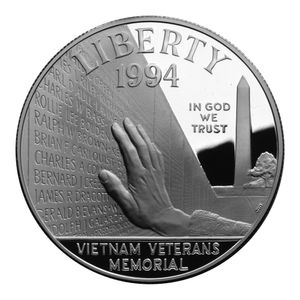
On U.S. issues, the mint mark usually tells you the finish. For the 1994 Prisoner of War, Vietnam Veterans Memorial and Women in Military Service dollars, West Point struck the uncirculated coins and Philadelphia the proofs. The 1991 Korean War and USO uncirculated coins carry the Denver D, with proofs from Philadelphia and San Francisco respectively, and the 2011 Army and Medal of Honor dollars pair San Francisco uncirculated coins with Philadelphia proofs. The 1995 Civil War Battlefield dollar is a P for uncirculated and an S for proof.
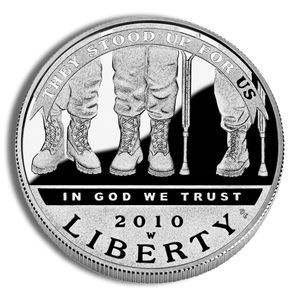
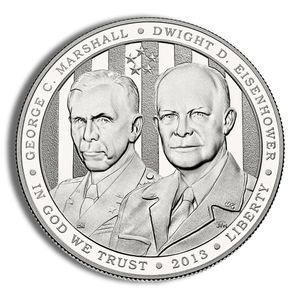
Other programs kept both finishes at one facility. The 2002 West Point, 2010 Disabled Veterans and 2012 Infantry Soldier dollars are all W-mint coins, while the 2005 Marine Corps, 2018 World War I Centennial and 2019 American Legion coins are all Philadelphia strikes. The 2013 Five Star Generals dollar, which pairs portraits of George C. Marshall and Dwight D. Eisenhower, comes as a West Point uncirculated coin and a Philadelphia proof, including the NGC PF70 example.
From abroad, the Royal Canadian Mint is represented by the 2012 War of 1812 coins in 1/4 oz gold and 3/4 oz silver, the 2014 1/4 oz gold and 2013 3/4 oz silver Devil's Brigade issues, and a random year 1/2 oz silver Devil's Brigade coin. The Perth Mint offers a 2015 1/2 oz silver Battle of the Coral Sea coin, a random year 1/10 oz gold Coral Sea coin and a random year 1/2 oz World War II silver coin. On random year listings, we select the date from inventory.
Pricing, Premiums, and Market Factors
Military commemoratives aren't priced like bullion and don't trade near spot. Silver or gold content sets a floor, but the larger share of the price is a collector premium, and that premium can differ sharply between two dollars containing exactly the same 0.7734 oz of silver.
Mintage is the first driver. In most modern U.S. programs the uncirculated version sold far fewer coins than the proof, which is why a West Point uncirculated 1994 Prisoner of War dollar can carry a different premium than its Philadelphia proof twin. Condition and grade come next, and certification amplifies them: the PCGS PF70 Civil War dollar and NGC PF70 Five Star Generals dollar are priced on their perfect grades rather than their metal. Finish matters too, since proof coins with mirrored fields and frosted devices appeal to different buyers than satin uncirculated strikes.
Original government packaging is another factor, because coins with the Mint box and certificate of authenticity are generally easier to sell than loose examples. Collector interest in the subject plays the final role, with programs tied to widely remembered events or branches tending to see steadier demand. Our product pages show both ask and bid, so you can judge the spread on a specific coin rather than relying on a general rule.
Condition, Packaging, and What to Expect
Coins listed as uncirculated have never been in circulation and show the soft, satin luster typical of commemorative uncirculated strikes. Proof coins have mirror-like fields and frosted designs, and despite the "BU" in some of our listing titles, a proof coin is a proof. Small spots, light toning or minor handling marks can appear on raw coins that have spent decades in storage, so expect natural variation from one example to the next.
The 2020-W V75 Silver Eagle ships with its box and certificate of authenticity, and the two graded coins arrive in sealed PCGS and NGC holders. For other U.S. dollars, check the listing for packaging details, since a coin may come in its Mint capsule with or without the original presentation box. World mint coins typically ship in capsules or flips, and random year listings may show a different date than the photo.
Authenticity and Verification
Commemorative silver dollars are a less common target for counterfeiters than bullion, but verification still matters, particularly for certified and higher premium pieces. Every coin we sell is checked against its listing before it ships, and we source from established wholesalers and distributors rather than unknown sellers.
For the graded coins, the PCGS and NGC certification numbers can be entered on each service's website to confirm the coin, grade and holder, and both holders use security features that make counterfeit slabs easier to spot. For raw coins, the original Mint certificate of authenticity supports the coin's identity, and weight, design detail and mint mark offer straightforward checks. We're an authorized dealer for both PCGS and NGC and a member of the American Numismatic Association.
Liquidity and Resale Considerations
Resale for military commemoratives depends on the specific coin more than the metal. Widely distributed U.S. dollars, such as the proof versions of the 1994 veterans' coins, trade often enough that dealers price them readily, while scarcer uncirculated versions and the world mint pieces can take longer to match with the right buyer.
Recognizability helps. Coins in original U.S. Mint packaging, with certificates in hand, and coins in PCGS or NGC holders are the simplest to value because a buyer doesn't need to evaluate them in person. Checking the current bid alongside the ask before you buy gives a grounded sense of how a particular coin trades today.
Storage and Security
Most military commemoratives are best kept in the packaging they arrived in. Mint capsules protect proof surfaces from fingerprints and abrasion, and the presentation box keeps capsule and certificate together. Avoid opening capsules to handle proof coins, since skin oils can leave marks that become permanent spots.
Store coins in a cool, dry place away from humidity, direct sunlight and household chemicals, which can accelerate toning on .900 silver. A fire-rated home safe suits a modest collection, while a bank safe deposit box or professional depository makes sense for larger holdings. Keep a written inventory with dates, mint marks and certification numbers, which simplifies insurance and makes it easy to see gaps in a set.
Selling and Buyback Options
You can sell military commemoratives back to us through the same marketplace you buy from. The bid shown on each product page is a working reference, and our purchasing team confirms pricing, verifies the coins on arrival and issues payment.
Buyback pricing reflects the coin's program, mint and finish, its condition, whether the original box and certificate are present, and current demand. Certified coins are priced on grade, while raw coins with intact Mint packaging are generally simpler to value than loose ones. For the gold and silver world mint pieces, metal prices also play a larger role in the bid.
Why Buy Military Commemorative Coins?
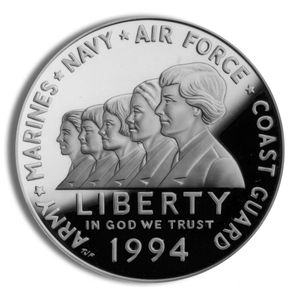
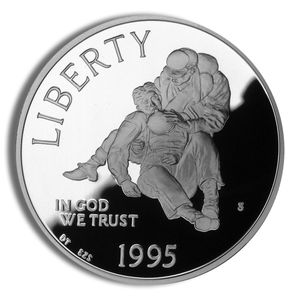
For many buyers, the reason is personal. A 2012 Infantry Soldier dollar for a former rifleman, a Women in Military Service coin for a veteran mother, or a Medal of Honor dollar, whose reverse shows a soldier carrying a wounded comrade, can mean more than any bullion coin. These are government-issued tributes, and the surcharges paid on the original sales helped build or support memorials and museums.
Collectibility is the other draw. Military programs span more than three decades of U.S. Mint output, which makes them a natural theme for a set built by conflict, branch or mint mark, and the Canadian and Australian issues add an allied perspective. Each coin also carries real silver or gold content, so the tribute is backed by precious metal.
Why Buy from Bullion Standard?
Bullion Standard has operated from San Diego, California, since 2010, growing from a local shop into a national online marketplace on the idea that you only get one chance to earn a customer's trust. For commemoratives, that means accurate listings, clear photos and honest descriptions of finish, packaging and grade.
We hold an A+ rating with the Better Business Bureau, belong to the American Numismatic Association and the National Coin and Bullion Association, and verify each coin before it ships. You can pay by Visa, Mastercard, American Express, Discover, PayPal, Plaid bank payment, wire transfer, paper check or cryptocurrency through BitPay. Because we buy as well as sell, the bid on every product page reflects a real two-way market, and our research tools let you compare premiums and spreads across products.
Get Near-Spot Pricing with Bullion Standard Pro
Bullion Standard Pro gives members access to live, executable wholesale bid and ask pricing across a broad range of precious metals products, without an added dealer markup or dealer spread. Prices move with real wholesale supply and demand, which shows how each product actually trades rather than how it's marked up at retail.
Commemoratives will still carry collector premiums at wholesale, but Pro makes those premiums visible. Members can see their holdings valued at live wholesale bid, review historical premium and spread data, and use liquidity metrics to judge how actively a coin trades. For anyone adding military issues regularly or watching costs closely, that transparency is the most useful pricing tool available.


 (833) 278-4653