Overview of 90% Silver Washington Quarters (1932–1964) – $1 Face Value
The 90% silver Washington quarter is one of the most recognized pre-1965 U.S. silver coins in the bullion market. Struck by the United States Mint from 1932 through 1964, each quarter contains .715 troy ounces of silver per dollar of face value, making the $1 face value lot a convenient and widely understood unit for buying pre-1965 junk silver. The coins are composed of 90% silver and 10% copper, a standard alloy used across U.S. coinage during that era.
We carry these in BU and Proof grades, giving buyers the option to choose based on condition preference and intended use. Whether the primary interest is the silver content, the numismatic appeal of a well-preserved example, or both, this format serves a broad range of buyers from active stackers to collectors focused on pre-1965 U.S. coinage.
History and Background
The Washington quarter series was introduced in 1932 to commemorate the 200th anniversary of George Washington's birth. The coin was originally intended as a one-year commemorative issue, but its reception led to it being adopted as a regular-issue coin. It remained a fixture of U.S. circulation coinage for decades and is still issued today, though the silver composition was eliminated after 1964.
The shift from 90% silver to a copper-nickel clad composition occurred in 1965, driven largely by rising silver prices and growing demand for the metal. This transition drew a sharp line in the series, separating coins minted through 1964 from their clad successors and giving pre-1965 Washington quarters a permanent place in the bullion market as a recognized source of silver content.
The United States Mint struck Washington quarters across multiple facilities during the 1932 to 1964 period, including Philadelphia, Denver, and San Francisco. San Francisco issues from this period are particularly associated with Proof strikes, which were produced for collectors rather than general circulation. The longevity of the series and the scale of production across these facilities contributed to its widespread availability in today's secondary market.
Design and Aesthetics
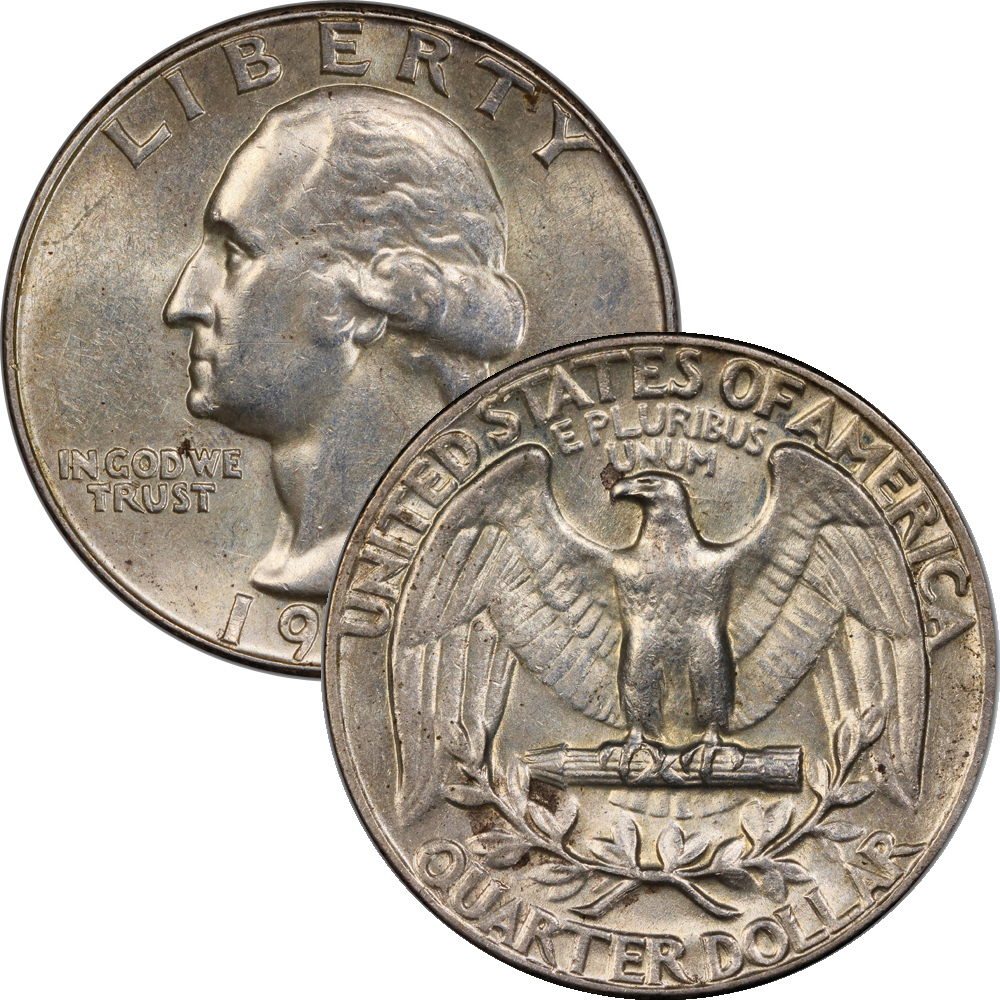
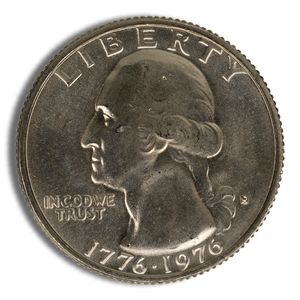
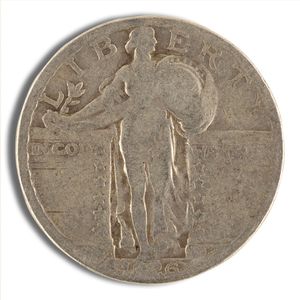
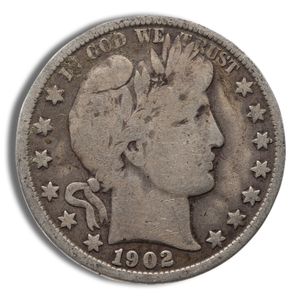
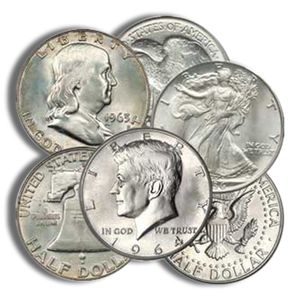
The obverse of the Washington quarter features a left-facing portrait of George Washington, based on a bust by sculptor John Flanagan that drew from a 1785 life mask by Jean-Antoine Houdon. The inscription "LIBERTY" appears above the portrait, with "IN GOD WE TRUST" to the left and the date below. The portrait is rendered with fine detail that, in higher-grade examples, remains crisp and well-defined.
The reverse displays a heraldic eagle with outstretched wings, perched on a bundle of arrows with olive branches beneath. "UNITED STATES OF AMERICA" arcs across the top, with "E PLURIBUS UNUM" above the eagle and "QUARTER DOLLAR" along the bottom. The composition is balanced and formally structured, consistent with U.S. coinage traditions of the period.
Proof examples from the San Francisco Mint exhibit the deep, mirror-like fields and frosted device details characteristic of collector-grade strikes. BU examples show full luster with sharp strike definition across both the portrait and the reverse eagle. The difference in surface quality between a Proof and a BU example is immediately apparent when coins are examined side by side.
Fractional Size and Accessibility
At .715 troy ounces of silver per dollar of face value, the $1 face value lot represents a fractional entry point relative to a full troy ounce. This format is well-suited for buyers who prefer to accumulate silver in smaller, stackable increments without committing to a full-ounce product. The individual quarter denomination also makes these coins practical for those who want flexibility in how they portion or transact their holdings over time.
Pre-1965 Washington quarters are one of the most liquid fractional silver formats in the U.S. market. Their familiarity to both buyers and sellers, along with the consistency of the silver content, means they are broadly accepted and easy to transact at the retail and wholesale level without the need for explanation or third-party verification in most contexts.
Authenticity and Product Integrity
Washington quarters from this period were struck by the United States Mint under strict production controls, and the 90% silver composition is consistent across all coins issued through 1964. The known and standardized silver content means authentication focuses primarily on identifying genuine U.S. Mint strikes rather than verifying an unstamped refinery claim. Weight, diameter, and reeded edge characteristics all serve as reliable indicators when coins are examined.
We are authorized dealers for both PCGS and NGC, which positions us well to assist buyers who are interested in having specific examples certified or who are sourcing already-graded pieces. For raw coins offered in bulk face value lots, our sourcing from established wholesalers and distributors means the material entering our inventory has gone through standard market channels where authenticity is a basic expectation rather than an afterthought.
Condition and Packaging
The BU designation indicates coins that show no wear and retain original mint luster. Proof coins exhibit the mirror-field, frosted-device finish associated with collector strikes and were never intended for circulation. Both grades in this product represent the upper end of the condition spectrum for pre-1965 Washington quarters, and buyers should expect examples that display well under close examination.
Individual coins ship in protective plastic flips to prevent contact damage during transit. Larger quantities are typically packaged in coin tubes holding 40 quarters per tube, which corresponds to $10 face value per tube. Bulk orders may ship in sealed boxes containing multiple tubes. Specific packaging configurations at checkout will reflect the quantity ordered, and we package each order to minimize the risk of surface contact or abrasion during shipping.
Pricing and Market Factors
Pricing for pre-1965 Washington quarters is directly tied to the spot price of silver. The standard calculation applies the silver content per dollar of face value, which is .715 troy ounces, to the current silver spot price, then adds a premium that reflects factors including condition, market demand, and the relative availability of BU and Proof examples. BU and Proof coins carry a higher premium than circulated junk silver because of the superior strike quality and collector demand they attract.
Premiums for this product can be more variable than those for new-issue bullion coins because supply comes from the secondary market. Demand from both bullion buyers and numismatists creates a dual market for Washington quarters in top grades, and that dynamic influences pricing, particularly for lower-mintage date and mint combinations within the series. Our pricing reflects current market conditions and is updated in real time to stay aligned with the underlying silver market.
Selling and Liquidity
Pre-1965 Washington quarters are among the most liquid junk silver products in the United States. Dealers, collectors, and bullion buyers across the country are familiar with the format, the silver content calculation, and the going market rates. That familiarity reduces friction when it comes time to sell, and it makes the quarter one of the more straightforward silver products to transact on both the retail and wholesale level.
We operate a two-way market that allows customers to both purchase and sell precious metals within the same platform. Buyers considering this product can view our current buyback pricing before making a purchase, which supports a more complete picture of the total cost of ownership. Understanding what a product trades for on the sell side is just as important as knowing the purchase premium, and we build that information into our platform rather than leaving it as an afterthought.
Why Buy 90% Silver Washington Quarters?
The Washington quarter in BU or Proof condition occupies a specific position in the market that circulated junk silver cannot fill. The coins carry the same silver content as worn examples while offering strike quality and surface preservation that appeals to collectors and condition-conscious buyers alike. For buyers who want pre-1965 silver with more visual appeal and potentially stronger numismatic interest, this is the appropriate tier to consider.
The $1 face value lot is a practical and well-understood unit in the pre-1965 silver market. It allows buyers to accumulate silver in a format that is broadly recognized, easy to price, and simple to portion out. The government-issued status of the coins, combined with the uniform silver content across the series, adds a layer of familiarity and credibility that is difficult to replicate with privately produced alternatives at a similar price point.
Why Buy from Bullion Standard?
We price products based on real-time market conditions and make the bid/ask spread visible on each product page so buyers understand the full picture before completing a transaction. That level of transparency is central to how we operate, and it reflects our belief that customers make better decisions when they have access to objective pricing information rather than opaque markups.
Our A rating with the Better Business Bureau, membership in the American Numismatic Association and the National Coin and Bullion Association, and authorized dealer status with both PCGS and NGC reflect the standards we hold ourselves to across every category we carry. Pre-1965 silver is a market where condition claims and grade accuracy matter, and our industry relationships support the kind of authentication framework that buyers of BU and Proof coins should expect from a dealer.
Beyond individual transactions, our platform is built to support a long-term relationship with every customer. Responsive support, reliable fulfillment, and a buying and selling experience designed around clarity and trust are the baseline we work from, not an occasional feature. Whether you are buying your first junk silver lot or adding to a larger existing position, our goal is to make each transaction straightforward and well-supported from purchase to delivery.
Get Near-Spot Pricing with Bullion Standard Pro
Bullion Standard Pro gives members access to live, executable wholesale bid and ask pricing across our catalog, including pre-1965 silver products like Washington quarters. Rather than relying on estimated or indicative prices, Pro members see pricing that reflects real-time supply and demand at the wholesale level, without additional dealer markups layered on top. For a product category where premiums can shift based on silver market movement and secondary market availability, that visibility is meaningful.
Pro also includes real-time portfolio valuation using current wholesale bid pricing, which provides a more accurate picture of liquidation value than retail-based estimates. Members can use our product research and comparison tools to evaluate how Washington quarters in BU or Proof condition are priced relative to other pre-1965 silver formats, giving them an objective basis for making allocation decisions rather than relying on assumptions about relative value.
Flexible and Secure Payment Options
We accept a broad range of payment methods to make the purchase process as accessible and secure as possible. Major credit cards including Visa, Mastercard, American Express, and Discover are all accepted, along with PayPal, bank-connected payments through Plaid, wire transfer, paper check, and cryptocurrency payments through BitPay. Each payment method is processed with the same attention to transaction security regardless of order size.
Having multiple payment options available means buyers can choose the method that best fits their preferences, whether that is the immediacy of a card transaction, the cost efficiency of a wire transfer, or the flexibility of crypto payments. Every checkout experience is designed to be straightforward, transparent, and secure from start to finish.

 (833) 278-4653


.png)