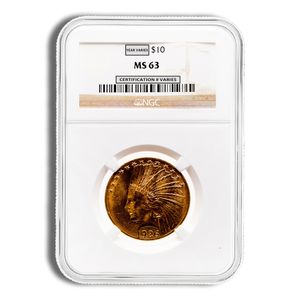
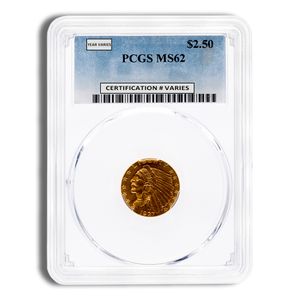
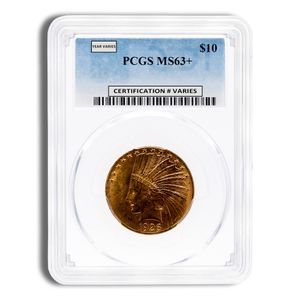
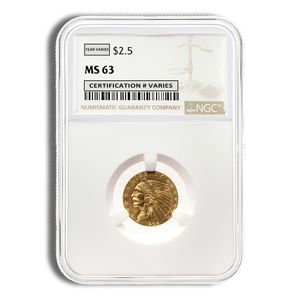
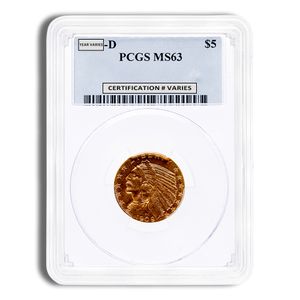
The $1 Gold Indian Type 3 is a United States federal coinage issue struck in .900 fine gold, containing approximately 0.0483 troy ounces of pure gold. Produced by the United States Mint across various facilities, this coin represents the third and final iteration of the one-dollar gold coin series, which saw significant design revisions throughout the mid-nineteenth century. The example we offer carries an NGC MS64 grade, indicating a near-gem uncirculated specimen with strong luster and only minor contact marks expected at that grade level. The year of issue varies, reflecting the range of dates struck during the Type 3 production run.
At MS64, this coin occupies a meaningful position within the graded market for nineteenth-century U.S. gold. It offers the combination of historical significance, certified authenticity, and collectible appeal that makes it relevant to both numismatists and physical gold holders.
History and Background
The one-dollar gold coin was first authorized by Congress under the Coinage Act of 1849, which also introduced the double eagle. The denomination was introduced partly in response to the influx of California gold…
Overview of $1 Gold Indian Type 3
The $1 Gold Indian Type 3 is a United States federal coinage issue struck in .900 fine gold, containing approximately 0.0483 troy ounces of pure gold. Produced by the United States Mint across various facilities, this coin represents the third and final iteration of the one-dollar gold coin series, which saw significant design revisions throughout the mid-nineteenth century. The example we offer carries an NGC MS64 grade, indicating a near-gem uncirculated specimen with strong luster and only minor contact marks expected at that grade level. The year of issue varies, reflecting the range of dates struck during the Type 3 production run.
At MS64, this coin occupies a meaningful position within the graded market for nineteenth-century U.S. gold. It offers the combination of historical significance, certified authenticity, and collectible appeal that makes it relevant to both numismatists and physical gold holders.
History and Background
The one-dollar gold coin was first authorized by Congress under the Coinage Act of 1849, which also introduced the double eagle. The denomination was introduced partly in response to the influx of California gold following the 1848 discovery at Sutter's Mill, and it quickly became the smallest denomination in the U.S. gold coinage system. The series went through three distinct design types between 1849 and its discontinuation in 1889.
The Type 3 design was introduced in 1856 and remained in production through the close of the series. It was the work of Mint engraver James B. Longacre, who had also designed the earlier types. The Type 3 addressed practical criticisms of its predecessor, particularly the difficulty of striking up fine detail on such a small planchet, by enlarging the portrait and adjusting the overall design proportions. Various United States Mint facilities struck the Type 3 across its production run, including Philadelphia, San Francisco, Dahlonega, New Orleans, and Charlotte, though availability by mint varies considerably by date.
Design and Aesthetics
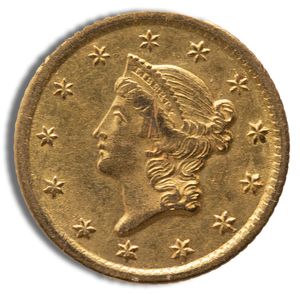
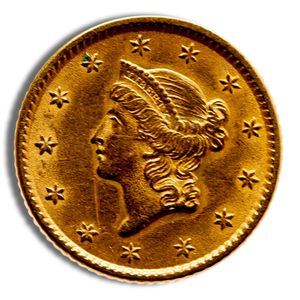
The obverse of the Type 3 gold dollar features a larger, more refined portrait of Lady Liberty wearing a feathered headdress, a design sometimes referred to as the Indian Princess head. The portrait is more detailed and better centered than the Type 2 it replaced, with the date positioned below the bust and thirteen stars encircling the field. The overall composition is more balanced and strikes more cleanly, which contributed to the Type 3's longevity as the definitive design for this denomination.
The reverse carries a simple but elegant agricultural wreath encircling the denomination "1 DOLLAR," with "UNITED STATES OF AMERICA" completing the legend around the periphery. Given the coin's very small diameter of approximately 15 millimeters, the design economy is notable. At MS64, the surfaces typically display original or near-original mint luster with minimal distracting marks, and the fields and devices remain sharp and well-defined.
Fractional Size and Accessibility
At 0.0483 troy ounces, the $1 Gold Indian Type 3 is among the smallest gold coins issued by a sovereign government mint. Its compact size makes it genuinely accessible from a per-unit price standpoint, as buyers can acquire a certified piece of nineteenth-century U.S. gold without committing to a full one-ounce expenditure. This is particularly relevant for buyers looking to build a collection incrementally or add historical U.S. gold to a broader holdings strategy without a large single outlay.
The small physical footprint also makes the Type 3 easy to store and transport within standard coin holders and albums. Buyers should be aware that the diminutive size can make handling more delicate, which is part of why certified, slabbed examples like this NGC MS64 are so practical from a preservation standpoint.
Authenticity and Product Integrity
Each coin offered in this listing is certified and encapsulated by the Numismatic Guaranty Company, one of the two most respected third-party grading services in the numismatic industry. NGC's authentication process includes examination for counterfeiting, alterations, and cleaning, as well as an independent grade assessment conducted by a panel of experienced numismatists. The NGC slab itself serves as tamper-evident packaging, preserving the coin's condition from the point of certification forward.
We are an authorized dealer for both NGC and PCGS, which means we work directly within the established grading service ecosystem and handle certified coins with the standards those relationships require. The NGC certification number on each slab can be verified through NGC's online registry, providing an additional layer of transparency that raw coins simply cannot offer. For a nineteenth-century U.S. gold coin, third-party certification is not just a convenience but a meaningful safeguard against the misattribution and alteration issues that exist in this segment of the market.
Condition and Packaging
MS64 represents a near-gem uncirculated grade within the Sheldon numerical scale. At this level, the coin has never entered circulation and retains strong mint luster across both the obverse and reverse. The grade allows for a small number of contact marks or minor blemishes that prevent the coin from reaching the gem MS65 threshold, but these imperfections are minor and do not compromise the overall visual appeal of the piece. For most buyers, MS64 represents an excellent balance between quality and cost relative to higher-grade examples.
Because this is a certified coin, it ships in its original NGC holder, a sonically sealed plastic slab that protects the coin from handling and environmental exposure. Individual coins ship in this sealed slab format. As this is a graded collectible coin rather than a raw bullion product, no additional flip or tube packaging applies in the same way it would for generic bullion. The slab itself is the definitive packaging, and no alteration to that packaging should be made after purchase.
Pricing and Market Factors
Pricing for the $1 Gold Indian Type 3 in NGC MS64 reflects both the underlying gold content and the numismatic premium associated with the coin's grade, historical significance, and collector demand. Because the gold content is modest at 0.0483 troy ounces, the spot value of the metal represents only a portion of the coin's total market price. The dominant pricing driver at this grade level is numismatic demand, which is shaped by the relative scarcity of MS64 examples across different date and mint mark combinations, the strength of the collector market for nineteenth-century U.S. gold, and the premium that certified, problem-free examples command over raw coins.
Our pricing reflects real-time market conditions and is structured to provide clarity without unnecessary complexity. For a coin like this, where numismatic factors outweigh raw metal value, we recommend that buyers research recent auction results and NGC population data for the specific date they receive to better understand where their example sits within the broader market.
Selling and Liquidity
The $1 Gold Indian Type 3 has an established collector base, and NGC-certified examples trade regularly through dealer networks, auction platforms, and direct markets. MS64 is a commonly sought grade for this series because it represents a meaningful quality threshold without the steep premium jump associated with gem and above. Buyers looking to resell certified examples have multiple recognized channels available, including major auction houses that specialize in U.S. coins and dealer buyback programs.
We operate a two-way market that supports both the purchase and sale of precious metals and certified coins. Understanding the resale side of a transaction before committing to a purchase is part of how we approach the buying experience, and we encourage buyers to evaluate liquidity alongside acquisition cost when considering any certified numismatic product.
Why Buy $1 Gold Indian Type 3?
The $1 Gold Indian Type 3 in NGC MS64 appeals to a specific kind of buyer: someone who values the combination of genuine historical significance, certified authenticity, and physical gold content in a single coin. This is a genuine nineteenth-century United States Mint issue, not a modern reproduction or commemorative, and MS64 examples retain strong enough eye appeal to be displayed and appreciated as numismatic objects in their own right. The NGC certification removes the authentication risk that makes raw examples of this series less practical for most buyers.
For collectors building a type set of U.S. gold coinage, the Type 3 is an essential piece. For buyers attracted to small-format historical gold, it offers a distinct character that modern fractional bullion coins do not replicate. The combination of low mintage relative to modern issues, certified quality, and the broader context of nineteenth-century American monetary history makes this a purposeful addition to a well-considered collection.
Why Buy from Bullion Standard?
We have been operating in the physical precious metals market since 2010, and our approach has remained consistent: transparent pricing, verified products, and a buying experience built around informed decision-making rather than sales pressure. Our A rating with the Better Business Bureau, combined with active membership in both the American Numismatic Association and the National Coin and Bullion Association, reflects the standards we hold ourselves to across every transaction.
As an authorized dealer for both NGC and PCGS, we are positioned to handle certified coins with the care and accountability those credentials require. Every certified coin we offer is handled and listed with accuracy, and buyers can verify NGC certification details independently using the label information on each slab. We back every transaction with responsive customer service and reliable fulfillment, and our two-way market model means we are a resource for buyers and sellers alike throughout the ownership lifecycle of any coin or bullion product.
Get Near-Spot Pricing with Bullion Standard Pro
Bullion Standard Pro gives members access to live, executable wholesale bid and ask pricing across our catalog, along with real-time portfolio valuation based on current wholesale bid prices rather than estimated retail values. For a product like the NGC MS64 $1 Gold Indian Type 3, where numismatic premium and market demand play a significant role in pricing, having access to objective spread and liquidity data provides meaningful context that spot price alone cannot offer. Pro members can evaluate how this coin's premium behaves over time relative to other certified U.S. gold issues.
Beyond pricing access, the platform includes proprietary research and comparison tools that allow members to assess products using metrics such as bid/ask spread tightness, historical premium trends, and market sentiment indicators. Rather than relying on static listings or marketing claims, Pro members can evaluate certified numismatic products through the same kind of data-driven lens that sophisticated market participants use across other asset classes.
Flexible and Secure Payment Options
We support a wide range of payment methods to make the buying process straightforward and secure. Accepted options include Visa, Mastercard, American Express, and Discover, along with PayPal, bank-connected payments through Plaid, wire transfer, paper check, and cryptocurrency payments processed through BitPay. Each method is supported within a secure transaction environment designed to protect buyer information at every stage of the purchase. Whether you prefer a traditional credit card or a digital payment method, we have structured our checkout experience to accommodate a broad range of preferences without compromising on security or convenience.
The $1 Gold Indian Type 3 is a United States federal coinage issue struck in .900 fine gold, containing approximately 0.0483 troy ounces of pure gold. Produced by the United States Mint across various facilities, this coin represents the third and final iteration of the one-dollar gold coin series, which saw significant design revisions throughout the mid-nineteenth century. The example we offer carries an NGC MS64 grade, indicating a near-gem uncirculated specimen with strong luster and only minor contact marks expected at that grade level. The year of issue varies, reflecting the range of dates struck during the Type 3 production run.
At MS64, this coin occupies a meaningful position within the graded market for nineteenth-century U.S. gold. It offers the combination of historical significance, certified authenticity, and collectible appeal that makes it relevant to both numismatists and physical gold holders.
History and Background
The one-dollar gold coin was first authorized by Congress under the Coinage Act of 1849, which also introduced the double eagle. The denomination was introduced partly in response to the influx of California gold…
Overview of $1 Gold Indian Type 3
The $1 Gold Indian Type 3 is a United States federal coinage issue struck in .900 fine gold, containing approximately 0.0483 troy ounces of pure gold. Produced by the United States Mint across various facilities, this coin represents the third and final iteration of the one-dollar gold coin series, which saw significant design revisions throughout the mid-nineteenth century. The example we offer carries an NGC MS64 grade, indicating a near-gem uncirculated specimen with strong luster and only minor contact marks expected at that grade level. The year of issue varies, reflecting the range of dates struck during the Type 3 production run.
At MS64, this coin occupies a meaningful position within the graded market for nineteenth-century U.S. gold. It offers the combination of historical significance, certified authenticity, and collectible appeal that makes it relevant to both numismatists and physical gold holders.
History and Background
The one-dollar gold coin was first authorized by Congress under the Coinage Act of 1849, which also introduced the double eagle. The denomination was introduced partly in response to the influx of California gold following the 1848 discovery at Sutter's Mill, and it quickly became the smallest denomination in the U.S. gold coinage system. The series went through three distinct design types between 1849 and its discontinuation in 1889.
The Type 3 design was introduced in 1856 and remained in production through the close of the series. It was the work of Mint engraver James B. Longacre, who had also designed the earlier types. The Type 3 addressed practical criticisms of its predecessor, particularly the difficulty of striking up fine detail on such a small planchet, by enlarging the portrait and adjusting the overall design proportions. Various United States Mint facilities struck the Type 3 across its production run, including Philadelphia, San Francisco, Dahlonega, New Orleans, and Charlotte, though availability by mint varies considerably by date.
Design and Aesthetics
The obverse of the Type 3 gold dollar features a larger, more refined portrait of Lady Liberty wearing a feathered headdress, a design sometimes referred to as the Indian Princess head. The portrait is more detailed and better centered than the Type 2 it replaced, with the date positioned below the bust and thirteen stars encircling the field. The overall composition is more balanced and strikes more cleanly, which contributed to the Type 3's longevity as the definitive design for this denomination.
The reverse carries a simple but elegant agricultural wreath encircling the denomination "1 DOLLAR," with "UNITED STATES OF AMERICA" completing the legend around the periphery. Given the coin's very small diameter of approximately 15 millimeters, the design economy is notable. At MS64, the surfaces typically display original or near-original mint luster with minimal distracting marks, and the fields and devices remain sharp and well-defined.
Fractional Size and Accessibility
At 0.0483 troy ounces, the $1 Gold Indian Type 3 is among the smallest gold coins issued by a sovereign government mint. Its compact size makes it genuinely accessible from a per-unit price standpoint, as buyers can acquire a certified piece of nineteenth-century U.S. gold without committing to a full one-ounce expenditure. This is particularly relevant for buyers looking to build a collection incrementally or add historical U.S. gold to a broader holdings strategy without a large single outlay.
The small physical footprint also makes the Type 3 easy to store and transport within standard coin holders and albums. Buyers should be aware that the diminutive size can make handling more delicate, which is part of why certified, slabbed examples like this NGC MS64 are so practical from a preservation standpoint.
Authenticity and Product Integrity
Each coin offered in this listing is certified and encapsulated by the Numismatic Guaranty Company, one of the two most respected third-party grading services in the numismatic industry. NGC's authentication process includes examination for counterfeiting, alterations, and cleaning, as well as an independent grade assessment conducted by a panel of experienced numismatists. The NGC slab itself serves as tamper-evident packaging, preserving the coin's condition from the point of certification forward.
We are an authorized dealer for both NGC and PCGS, which means we work directly within the established grading service ecosystem and handle certified coins with the standards those relationships require. The NGC certification number on each slab can be verified through NGC's online registry, providing an additional layer of transparency that raw coins simply cannot offer. For a nineteenth-century U.S. gold coin, third-party certification is not just a convenience but a meaningful safeguard against the misattribution and alteration issues that exist in this segment of the market.
Condition and Packaging
MS64 represents a near-gem uncirculated grade within the Sheldon numerical scale. At this level, the coin has never entered circulation and retains strong mint luster across both the obverse and reverse. The grade allows for a small number of contact marks or minor blemishes that prevent the coin from reaching the gem MS65 threshold, but these imperfections are minor and do not compromise the overall visual appeal of the piece. For most buyers, MS64 represents an excellent balance between quality and cost relative to higher-grade examples.
Because this is a certified coin, it ships in its original NGC holder, a sonically sealed plastic slab that protects the coin from handling and environmental exposure. Individual coins ship in this sealed slab format. As this is a graded collectible coin rather than a raw bullion product, no additional flip or tube packaging applies in the same way it would for generic bullion. The slab itself is the definitive packaging, and no alteration to that packaging should be made after purchase.
Pricing and Market Factors
Pricing for the $1 Gold Indian Type 3 in NGC MS64 reflects both the underlying gold content and the numismatic premium associated with the coin's grade, historical significance, and collector demand. Because the gold content is modest at 0.0483 troy ounces, the spot value of the metal represents only a portion of the coin's total market price. The dominant pricing driver at this grade level is numismatic demand, which is shaped by the relative scarcity of MS64 examples across different date and mint mark combinations, the strength of the collector market for nineteenth-century U.S. gold, and the premium that certified, problem-free examples command over raw coins.
Our pricing reflects real-time market conditions and is structured to provide clarity without unnecessary complexity. For a coin like this, where numismatic factors outweigh raw metal value, we recommend that buyers research recent auction results and NGC population data for the specific date they receive to better understand where their example sits within the broader market.
Selling and Liquidity
The $1 Gold Indian Type 3 has an established collector base, and NGC-certified examples trade regularly through dealer networks, auction platforms, and direct markets. MS64 is a commonly sought grade for this series because it represents a meaningful quality threshold without the steep premium jump associated with gem and above. Buyers looking to resell certified examples have multiple recognized channels available, including major auction houses that specialize in U.S. coins and dealer buyback programs.
We operate a two-way market that supports both the purchase and sale of precious metals and certified coins. Understanding the resale side of a transaction before committing to a purchase is part of how we approach the buying experience, and we encourage buyers to evaluate liquidity alongside acquisition cost when considering any certified numismatic product.
Why Buy $1 Gold Indian Type 3?
The $1 Gold Indian Type 3 in NGC MS64 appeals to a specific kind of buyer: someone who values the combination of genuine historical significance, certified authenticity, and physical gold content in a single coin. This is a genuine nineteenth-century United States Mint issue, not a modern reproduction or commemorative, and MS64 examples retain strong enough eye appeal to be displayed and appreciated as numismatic objects in their own right. The NGC certification removes the authentication risk that makes raw examples of this series less practical for most buyers.
For collectors building a type set of U.S. gold coinage, the Type 3 is an essential piece. For buyers attracted to small-format historical gold, it offers a distinct character that modern fractional bullion coins do not replicate. The combination of low mintage relative to modern issues, certified quality, and the broader context of nineteenth-century American monetary history makes this a purposeful addition to a well-considered collection.
Why Buy from Bullion Standard?
We have been operating in the physical precious metals market since 2010, and our approach has remained consistent: transparent pricing, verified products, and a buying experience built around informed decision-making rather than sales pressure. Our A rating with the Better Business Bureau, combined with active membership in both the American Numismatic Association and the National Coin and Bullion Association, reflects the standards we hold ourselves to across every transaction.
As an authorized dealer for both NGC and PCGS, we are positioned to handle certified coins with the care and accountability those credentials require. Every certified coin we offer is handled and listed with accuracy, and buyers can verify NGC certification details independently using the label information on each slab. We back every transaction with responsive customer service and reliable fulfillment, and our two-way market model means we are a resource for buyers and sellers alike throughout the ownership lifecycle of any coin or bullion product.
Get Near-Spot Pricing with Bullion Standard Pro
Bullion Standard Pro gives members access to live, executable wholesale bid and ask pricing across our catalog, along with real-time portfolio valuation based on current wholesale bid prices rather than estimated retail values. For a product like the NGC MS64 $1 Gold Indian Type 3, where numismatic premium and market demand play a significant role in pricing, having access to objective spread and liquidity data provides meaningful context that spot price alone cannot offer. Pro members can evaluate how this coin's premium behaves over time relative to other certified U.S. gold issues.
Beyond pricing access, the platform includes proprietary research and comparison tools that allow members to assess products using metrics such as bid/ask spread tightness, historical premium trends, and market sentiment indicators. Rather than relying on static listings or marketing claims, Pro members can evaluate certified numismatic products through the same kind of data-driven lens that sophisticated market participants use across other asset classes.
Flexible and Secure Payment Options
We support a wide range of payment methods to make the buying process straightforward and secure. Accepted options include Visa, Mastercard, American Express, and Discover, along with PayPal, bank-connected payments through Plaid, wire transfer, paper check, and cryptocurrency payments processed through BitPay. Each method is supported within a secure transaction environment designed to protect buyer information at every stage of the purchase. Whether you prefer a traditional credit card or a digital payment method, we have structured our checkout experience to accommodate a broad range of preferences without compromising on security or convenience.
This website uses cookies for analytics and to deliver personalized content. By continuing to
use our site, you acknowledge that you have read and agree to our Privacy Policy and Cookie
Policy.
Current Quantities Available
Unfortunately, we only have 0
of
this item in
stock.
Please call us at (833) 278-4653
or email us at support@bullionstandard.com
if you wish to purchase a larger quantity than what is available on our website.
We can often locate additional quantities.

 (833) 278-4653


.png)