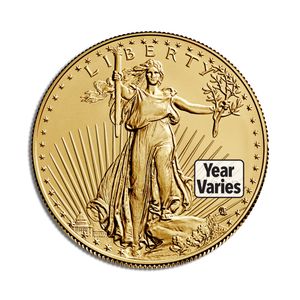
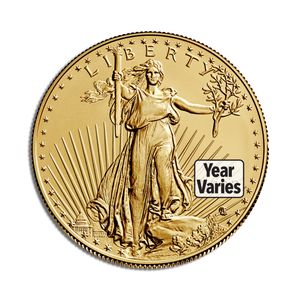
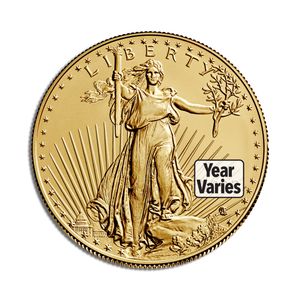
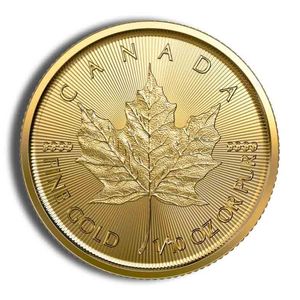
Overview of $1 Gold Liberty Type 1
The Type 1 Gold Dollar is among the smallest coins ever produced by the United States Mint, weighing just 0.0483 troy ounces with a gold purity of .900 fine. Struck in the mid-nineteenth century, these one-dollar gold pieces represent the first standardized attempt to introduce a gold coin at the dollar denomination into American commerce. The example we offer here is certified MS61 by PCGS, placing it firmly in mint state territory with full luster despite light contact marks expected at that grade level.
Because these coins were struck at various United States Mint facilities across the production run, the specific issuing mint may vary. What remains consistent is the PCGS certification, which provides a standardized grade and authenticates each piece within a tamper-evident holder. We carry these as year-of-our-choice examples, meaning the specific date will vary based on availability from our current inventory.
History and Background
The Gold Dollar was authorized by the Act of March 3, 1849, a direct legislative response to the influx of gold following the California Gold Rush. The Type 1 design, produced from 1849 through 1854, represented the first iteration of the denomination and was struck at the Philadelphia, Charlotte, Dahlonega, New Orleans, and San Francisco Mints depending on the year. Despite its legal tender status, the coin's diminutive size made it unpopular in daily commerce, and it was frequently lost or misplaced due to its small diameter.
The Type 1 series was relatively short-lived. By 1854, the United States Mint had responded to widespread complaints about the coin's size by enlarging the diameter and modifying the design, transitioning to the Type 2 Indian Princess design. This makes the Type 1 the rarest in terms of its production window, encompassing roughly five years of output. Today, these coins are collected both as numismatic artifacts and as early American gold issues with a recognized place in nineteenth-century monetary history.
Design and Aesthetics
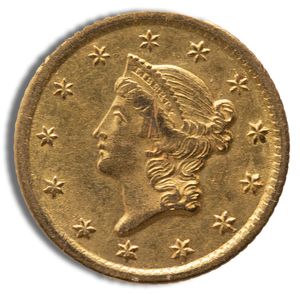
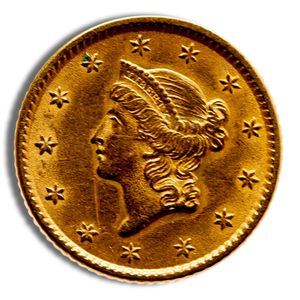
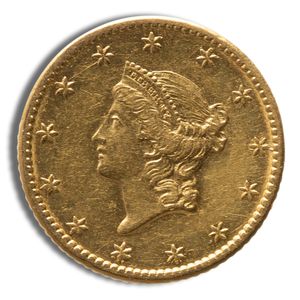
The obverse of the Type 1 Gold Dollar features a portrait of Liberty facing left, wearing a coronet inscribed with the word "LIBERTY." Thirteen stars encircle the portrait, representing the original colonies, and the date appears at the base of the design. The composition is simple and classical, consistent with the artistic conventions of mid-nineteenth-century American coinage.
The reverse displays an agricultural wreath encircling the denomination "1 DOLLAR," with "UNITED STATES OF AMERICA" arranged around the outer border. The wreath incorporates corn, wheat, cotton, and tobacco, reflecting the economic character of the era. Given the coin's small diameter of just thirteen millimeters, the design elements are tightly packed, which makes a well-struck, high-grade example particularly impressive to examine under magnification.
Fractional Size and Accessibility
At under a tenth of a troy ounce, the Type 1 Gold Dollar occupies a unique position as one of the smallest gold coins in American numismatic history. Its compact size makes it accessible at a lower nominal cost than one-ounce or even quarter-ounce gold products, which is particularly relevant for collectors building a type set or those seeking early American gold without committing to larger formats.
The small physical footprint also makes storage straightforward. A collection of several Gold Dollars occupies minimal space compared to larger gold coins, and the PCGS slab provides both protection and standardized dimensions that simplify organization. For buyers adding historical gold to an existing collection, the format is practical and easy to manage.
Authenticity and Product Integrity
Each coin in this listing has been independently graded and encapsulated by PCGS, one of the two most widely respected third-party grading services in the numismatic industry. The PCGS holder includes a certification number that can be verified directly through the PCGS registry, confirming both the grade and the authenticity of each individual piece. This level of independent authentication is particularly important for nineteenth-century gold coinage, where the potential for altered dates, mint marks, or cleaned surfaces can significantly affect collector value.
We are an authorized dealer for PCGS, which means we work directly within the certification ecosystem rather than relying on secondary market representations alone. Every certified coin we carry has been reviewed against the standards of the grading service whose label it bears. For early American gold coins like the Type 1 Gold Dollar, that independent verification is not optional, it is the standard.
Condition and Packaging
An MS61 designation from PCGS indicates that the coin retains its original mint luster across most of the surface, but shows noticeable contact marks or minor blemishes that prevent a higher grade designation. At this grade level, the coin has not been cleaned or altered, and it presents as genuinely uncirculated with visible cartwheel luster under proper lighting. The marks that define the MS61 grade are a natural consequence of the striking and handling processes that occurred before or during original packaging, not post-mint wear from circulation.
Because this coin is certified, it ships in its original PCGS tamper-evident plastic slab. The holder itself protects the coin without requiring additional packaging or handling. No flip, tube, or outer box configuration applies here since PCGS-certified coins ship in their sealed holders, which serve as both the display and protective medium. Buyers should expect to receive the coin exactly as graded, housed in the labeled slab with the certification number intact.
Pricing and Market Factors
Pricing for this coin reflects both the current spot price of gold and the numismatic premium associated with a certified MS61 example of the Type 1 Gold Dollar. Unlike modern bullion coins where premiums are largely driven by production costs and demand, nineteenth-century certified gold carries a premium tied to grade scarcity, historical significance, and collector demand. The MS61 grade sits at the lower end of the mint state range, which generally makes it more accessible than higher-graded examples while still commanding a meaningful premium over raw or circulated counterparts.
Because the specific year varies, pricing can shift based on which date is available. Certain years and mint marks within the Type 1 series are considerably scarcer than others, and that scarcity is reflected in the numismatic market. Our pricing reflects current wholesale market conditions and the certified grade, giving buyers a transparent basis for evaluating what they are paying relative to comparable certified examples.
Selling and Liquidity
PCGS-certified nineteenth-century gold coins trade actively across major numismatic auction platforms, dealer networks, and the broader secondary market. The certification provides a standardized basis for resale since buyers and dealers can evaluate the coin without needing to conduct their own grading assessment. MS61 examples of the Type 1 Gold Dollar are recognized by collectors and dealers familiar with early American gold type coinage, which supports consistent resale activity.
We operate a two-way market that allows customers to both purchase and sell precious metals through our platform using competitive buyback pricing. For collectors and buyers who want to understand the liquidity profile of a coin before committing to a purchase, we encourage reviewing our live bid pricing, which reflects current wholesale market conditions rather than estimated retail figures.
Why Buy the $1 Gold Liberty Type 1 PCGS MS61?
A PCGS MS61 Type 1 Gold Dollar offers a combination of historical depth and certified authenticity that purely modern bullion cannot replicate. This is a coin struck during a defining period in American monetary history, from 1849 through 1854, when gold from California was reshaping the national economy and the Mint was experimenting with new denominations. Owning an uncirculated example from that era, verified by a leading third-party grading service, is a meaningful distinction for collectors focused on nineteenth-century American coinage.
The MS61 grade strikes a practical balance. It provides access to a genuine uncirculated Type 1 Gold Dollar at a lower cost than higher-graded examples, while the PCGS certification ensures that the coin has not been cleaned, altered, or misrepresented. For type set collectors or those building a gold dollar date run, the certified MS61 is often the most cost-efficient entry point into uncirculated examples of this series.
Why Buy from Bullion Standard?
We have been operating as a precious metals dealer since 2010, and our approach to numismatic gold reflects the same standards we apply across everything we carry. As an authorized PCGS dealer, we work within the grading ecosystem directly, which gives us a clear and consistent basis for evaluating and representing certified coins. Our A rating with the Better Business Bureau and memberships in the American Numismatic Association and the National Coin and Bullion Association reflect a long-standing commitment to professionalism and customer trust.
Our pricing is transparent and tied to current market conditions rather than padded with unnecessary markups or hidden fees. We display bid and ask pricing on our product pages so buyers can evaluate the complete transaction, not just the purchase price. Our customer service team is knowledgeable about both bullion and numismatic products, and our fulfillment process is designed to deliver certified coins exactly as graded, safely and promptly. Whether you are adding to an existing collection or purchasing your first certified nineteenth-century gold coin, we aim to make that process clear and straightforward from start to finish.
Get Near-Spot Pricing with Bullion Standard Pro
Bullion Standard Pro gives members access to live, executable wholesale bid and ask pricing across our product catalog, including certified numismatic gold. For a coin like the PCGS MS61 Type 1 Gold Dollar, where premiums above spot are driven by grade scarcity and collector demand rather than just metal content, having visibility into real-time wholesale pricing provides meaningful context for evaluating what you are paying relative to the broader market. Pro members can also view their holdings using live executable wholesale bid prices rather than estimated retail values, which reflects a more accurate picture of current liquidation value.
Beyond pricing, Pro includes access to proprietary product research tools that allow members to compare premiums, bid/ask spreads, and liquidity metrics across the catalog. These tools help buyers evaluate whether a given grade or product type is trading tightly or at a wider spread relative to historical norms, supporting more informed decisions rather than relying on marketing language or static price lists.
Flexible and Secure Payment Options
We support a broad range of payment methods to make purchasing straightforward and secure. Buyers can pay using major credit cards including Visa, Mastercard, American Express, and Discover, as well as PayPal, bank-connected payments through Plaid, wire transfer, paper check, and cryptocurrency via BitPay. Each method is processed through a secure platform designed to protect buyer information and transaction integrity.
Whether you prefer the convenience of a credit card or the cost efficiency of a wire transfer, we provide options that fit different purchasing preferences without requiring buyers to navigate an unnecessarily complicated checkout process. Security and simplicity are both priorities throughout the transaction.

 (833) 278-4653


.png)