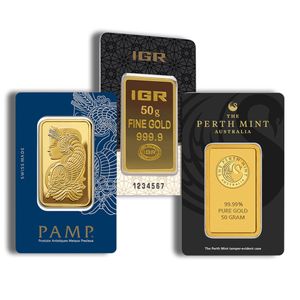
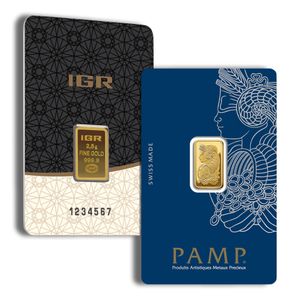
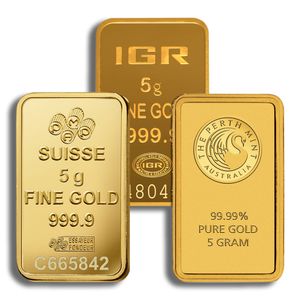
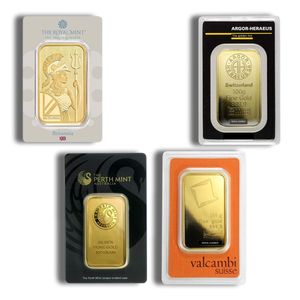
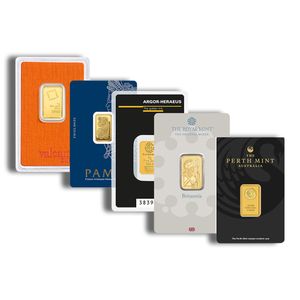
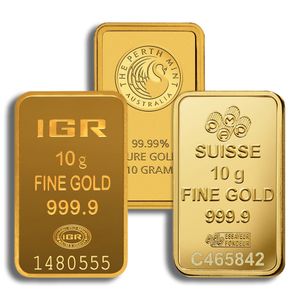
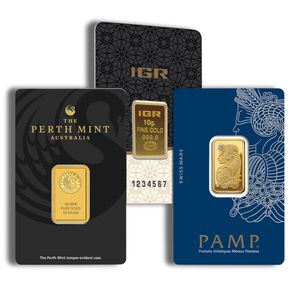
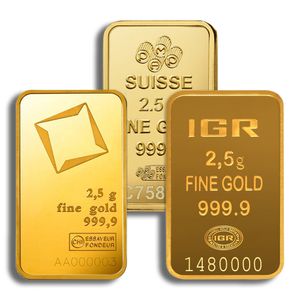
A 50 gram gold bar occupies a practical middle ground in the gold bar market, offering more metal per unit than the smaller 1 gram or 5 gram bars while remaining more accessible in price than full troy ounce formats. Each bar contains 50 grams of gold, equivalent to approximately 1.6075 troy ounces, and is struck to .9999 fine purity. These bars are produced by a range of reputable private refineries and are sold without an assay card, which is reflected in the pricing.
Because the brand varies, buyers receive a bar from one of several recognized refineries we source from, but without the serialized assay documentation that typically accompanies individually packaged formats. The bar itself carries the stamped specifications you would expect: weight, purity, and the producing refinery's mark. For buyers focused primarily on metal content rather than specific branding, this format delivers the fundamentals at a competitive premium.
History and Background
The 50 gram gold bar format emerged alongside the broader standardization of the global bullion bar market, which accelerated significantly in the latter half of the twentieth century as private re…
Overview of 50 Gram Gold Bar
A 50 gram gold bar occupies a practical middle ground in the gold bar market, offering more metal per unit than the smaller 1 gram or 5 gram bars while remaining more accessible in price than full troy ounce formats. Each bar contains 50 grams of gold, equivalent to approximately 1.6075 troy ounces, and is struck to .9999 fine purity. These bars are produced by a range of reputable private refineries and are sold without an assay card, which is reflected in the pricing.
Because the brand varies, buyers receive a bar from one of several recognized refineries we source from, but without the serialized assay documentation that typically accompanies individually packaged formats. The bar itself carries the stamped specifications you would expect: weight, purity, and the producing refinery's mark. For buyers focused primarily on metal content rather than specific branding, this format delivers the fundamentals at a competitive premium.
History and Background
The 50 gram gold bar format emerged alongside the broader standardization of the global bullion bar market, which accelerated significantly in the latter half of the twentieth century as private refineries developed consistent sizing conventions to facilitate trade, storage, and pricing. While sovereign mints have long produced cast and minted bars in standard troy ounce weights, the metric gram-based format gained particular traction in continental Europe and parts of Asia, where gram denominations aligned more naturally with local commercial and retail norms.
Private refineries such as Valcambi, PAMP Suisse, Heraeus, and Argor-Heraeus were instrumental in establishing gram-based bar formats as credible and widely accepted alternatives to troy ounce formats. Over time, the 50 gram bar became one of the more recognizable metric increments in the retail gold market, sitting between the more entry-level gram bars and the full ounce formats that dominate wholesale and institutional trade. The absence of an assay card in this listing reflects a secondary market configuration where the metal content remains the primary focus.
Design and Aesthetics
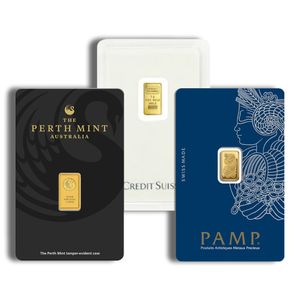
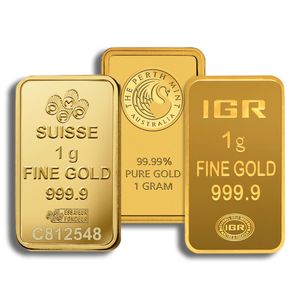
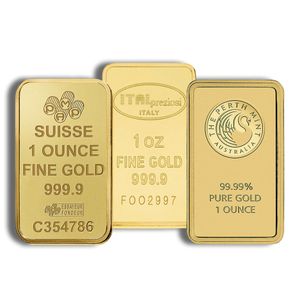
The visual presentation of a 50 gram gold bar varies by refinery, but most share a consistent design language rooted in clarity and professional minimalism. The obverse typically features the refinery's name or logo prominently, accompanied by the weight designation, fineness marking of .9999, and in many cases the chemical symbol for gold. Surface finishes range from a brushed or satin texture on minted bars to a more granular appearance on cast examples.
The reverse, where present as a distinct face, is usually clean and unadorned, allowing the stamped specifications on the obverse to serve as the primary identifying information. Because this listing covers bars from multiple potential producers, the specific design elements will differ depending on which refinery's product is fulfilled. That said, any bar in this category will bear clear, legible stampings with the relevant weight and purity details as standard refinery practice.
Authenticity and Product Integrity
Gold bars sold to .9999 fineness are held to some of the highest purity standards in the bullion market, and reputable refineries maintain rigorous quality controls throughout production to meet those specifications. Each bar in this format leaves the refinery with stamped weight and purity markings that represent the producer's certification of metal content. While these bars are sold without individual assay cards, the producing refineries themselves are established names with documented manufacturing standards.
We verify products for authenticity, weight, and purity before they reach our customers. Our sourcing draws from reputable mints, refineries, and established distributors, and we hold membership in both the American Numismatic Association and the National Coin and Bullion Association. As authorized dealers for PCGS and NGC, we maintain strict authentication standards across our catalog, which carries through to all bullion products we handle regardless of format.
Condition and Packaging
These bars are sold in bullion condition, meaning they are evaluated on metal content and weight rather than surface perfection. Because items in this listing may be sourced from the secondary market, minor contact marks, light surface scuffing, or handling signs can be present. None of these cosmetic characteristics affect the bar's gold content, purity, or recognized resale value.
Individual bars ship in a protective plastic flip. Quantities that correspond to standard packaging increments will ship in a tube or sealed box as appropriate for the specific bar format. If you are purchasing a single bar or a smaller quantity, the plastic flip provides adequate protection during transit and storage. Contact us if you have specific packaging questions before placing an order.
Pricing and Market Factors
The price of a 50 gram gold bar is anchored directly to the live spot price of gold, with a premium applied above that base price. That premium accounts for the costs associated with refining, fabricating, and distributing the physical metal, and it varies depending on the specific producer, available supply, and current market demand for this format.
Because these bars are sold without an assay card and with a variable brand, the premium is generally lower than what you would pay for individually serialized and assay-certified versions of the same weight. Our pricing reflects real-time market conditions and is structured around transparency rather than opaque markups. The bid/ask spread displayed on our product page gives you a complete view of the acquisition cost and the current wholesale buyback price simultaneously, which provides a more honest picture of the total cost of ownership than the spot premium alone.
Selling and Liquidity
The 50 gram gold bar format is broadly recognized within the wholesale bullion market, and its standardized weight and .9999 purity make it straightforward to price and trade. Dealers, refineries, and secondary market buyers are familiar with this format, and the metal content is easily verifiable using standard testing methods. The absence of an assay card does not materially affect resale in most professional contexts, since the bar itself carries the relevant specifications.
We operate a two-way market that allows customers to both purchase and sell precious metals within the same platform. Liquidity is a factor worth evaluating before a purchase is made, not only at the point of sale, and we make the current wholesale buyback pricing visible on each product page to support that kind of informed decision-making. Buyers at every stage of their holdings can transact without being forced to seek outside quotes or navigate separate dealer relationships.
Why Buy a 50 Gram Gold Bar?
The 50 gram format appeals to buyers who want meaningful gold exposure in a single bar without committing to the higher absolute cost of a full troy ounce piece. At roughly 1.6 troy ounces, it represents a substantial holding in a compact, professionally produced format that stores efficiently and prices predictably against spot. For buyers managing a physical gold position across multiple pieces, the metric gram denomination also offers straightforward portability between markets where gram-based pricing is standard.
The variable brand and no-assay-card configuration makes this a practical option for buyers whose priority is metal content at a competitive premium rather than specific refinery branding or collectibility. It is a direct, no-frills approach to acquiring a recognized form of .9999 fine gold in a widely accepted weight.
Why Buy from Bullion Standard?
We have built our platform around a straightforward principle: customers deserve transparent pricing, honest sourcing, and genuine support at every stage of ownership. Our pricing is tied directly to real-time market conditions, and we display both the buy and sell sides of each transaction so you have a complete view before committing to a purchase. That transparency extends from the product page through fulfillment and into the selling process.
Our credentials reflect a long-term commitment to operating with integrity in this industry. We hold an A rating with the Better Business Bureau, maintain active memberships in the American Numismatic Association and the National Coin and Bullion Association, and are authorized dealers for both PCGS and NGC. Products are verified for authenticity, weight, and purity before they reach our customers, and our support team is accessible to answer questions at any point in the process. The experience is designed to be direct, professional, and oriented toward long-term trust rather than a single transaction.
Get Near-Spot Pricing with Bullion Standard Pro
Bullion Standard Pro gives members access to live, executable wholesale bid and ask pricing on products like this 50 gram gold bar, which means the prices you see reflect actual market conditions rather than static retail figures. Premium levels, bid/ask spreads, and liquidity characteristics for this format can shift meaningfully based on supply, wholesale demand, and broader market conditions, and Pro members can monitor those dynamics in real time using our market intelligence tools and historical premium data.
Portfolio valuation through Pro uses live wholesale bid pricing rather than estimated retail values, which gives you a clearer view of what your holdings would actually yield in a current liquidation scenario. For buyers managing a position in gram-based gold bars, having that real-time visibility into pricing and market conditions across both sides of the trade is a meaningful advantage.
Flexible and Secure Payment Options
We support a wide range of payment methods to make the buying and selling process as straightforward as possible. Accepted forms of payment include Visa, Mastercard, American Express, and Discover, as well as PayPal, bank-connected payments through Plaid, wire transfer, paper check, and cryptocurrency via BitPay. Each method is processed through a secure framework designed to protect your transaction from start to finish.
Whether you prefer the convenience of a credit card or the efficiency of a wire transfer for a larger purchase, the checkout process is built to accommodate your preference without unnecessary friction. Security and convenience are treated as equally important parts of the overall experience.
A 50 gram gold bar occupies a practical middle ground in the gold bar market, offering more metal per unit than the smaller 1 gram or 5 gram bars while remaining more accessible in price than full troy ounce formats. Each bar contains 50 grams of gold, equivalent to approximately 1.6075 troy ounces, and is struck to .9999 fine purity. These bars are produced by a range of reputable private refineries and are sold without an assay card, which is reflected in the pricing.
Because the brand varies, buyers receive a bar from one of several recognized refineries we source from, but without the serialized assay documentation that typically accompanies individually packaged formats. The bar itself carries the stamped specifications you would expect: weight, purity, and the producing refinery's mark. For buyers focused primarily on metal content rather than specific branding, this format delivers the fundamentals at a competitive premium.
History and Background
The 50 gram gold bar format emerged alongside the broader standardization of the global bullion bar market, which accelerated significantly in the latter half of the twentieth century as private re…
Overview of 50 Gram Gold Bar
A 50 gram gold bar occupies a practical middle ground in the gold bar market, offering more metal per unit than the smaller 1 gram or 5 gram bars while remaining more accessible in price than full troy ounce formats. Each bar contains 50 grams of gold, equivalent to approximately 1.6075 troy ounces, and is struck to .9999 fine purity. These bars are produced by a range of reputable private refineries and are sold without an assay card, which is reflected in the pricing.
Because the brand varies, buyers receive a bar from one of several recognized refineries we source from, but without the serialized assay documentation that typically accompanies individually packaged formats. The bar itself carries the stamped specifications you would expect: weight, purity, and the producing refinery's mark. For buyers focused primarily on metal content rather than specific branding, this format delivers the fundamentals at a competitive premium.
History and Background
The 50 gram gold bar format emerged alongside the broader standardization of the global bullion bar market, which accelerated significantly in the latter half of the twentieth century as private refineries developed consistent sizing conventions to facilitate trade, storage, and pricing. While sovereign mints have long produced cast and minted bars in standard troy ounce weights, the metric gram-based format gained particular traction in continental Europe and parts of Asia, where gram denominations aligned more naturally with local commercial and retail norms.
Private refineries such as Valcambi, PAMP Suisse, Heraeus, and Argor-Heraeus were instrumental in establishing gram-based bar formats as credible and widely accepted alternatives to troy ounce formats. Over time, the 50 gram bar became one of the more recognizable metric increments in the retail gold market, sitting between the more entry-level gram bars and the full ounce formats that dominate wholesale and institutional trade. The absence of an assay card in this listing reflects a secondary market configuration where the metal content remains the primary focus.
Design and Aesthetics
The visual presentation of a 50 gram gold bar varies by refinery, but most share a consistent design language rooted in clarity and professional minimalism. The obverse typically features the refinery's name or logo prominently, accompanied by the weight designation, fineness marking of .9999, and in many cases the chemical symbol for gold. Surface finishes range from a brushed or satin texture on minted bars to a more granular appearance on cast examples.
The reverse, where present as a distinct face, is usually clean and unadorned, allowing the stamped specifications on the obverse to serve as the primary identifying information. Because this listing covers bars from multiple potential producers, the specific design elements will differ depending on which refinery's product is fulfilled. That said, any bar in this category will bear clear, legible stampings with the relevant weight and purity details as standard refinery practice.
Authenticity and Product Integrity
Gold bars sold to .9999 fineness are held to some of the highest purity standards in the bullion market, and reputable refineries maintain rigorous quality controls throughout production to meet those specifications. Each bar in this format leaves the refinery with stamped weight and purity markings that represent the producer's certification of metal content. While these bars are sold without individual assay cards, the producing refineries themselves are established names with documented manufacturing standards.
We verify products for authenticity, weight, and purity before they reach our customers. Our sourcing draws from reputable mints, refineries, and established distributors, and we hold membership in both the American Numismatic Association and the National Coin and Bullion Association. As authorized dealers for PCGS and NGC, we maintain strict authentication standards across our catalog, which carries through to all bullion products we handle regardless of format.
Condition and Packaging
These bars are sold in bullion condition, meaning they are evaluated on metal content and weight rather than surface perfection. Because items in this listing may be sourced from the secondary market, minor contact marks, light surface scuffing, or handling signs can be present. None of these cosmetic characteristics affect the bar's gold content, purity, or recognized resale value.
Individual bars ship in a protective plastic flip. Quantities that correspond to standard packaging increments will ship in a tube or sealed box as appropriate for the specific bar format. If you are purchasing a single bar or a smaller quantity, the plastic flip provides adequate protection during transit and storage. Contact us if you have specific packaging questions before placing an order.
Pricing and Market Factors
The price of a 50 gram gold bar is anchored directly to the live spot price of gold, with a premium applied above that base price. That premium accounts for the costs associated with refining, fabricating, and distributing the physical metal, and it varies depending on the specific producer, available supply, and current market demand for this format.
Because these bars are sold without an assay card and with a variable brand, the premium is generally lower than what you would pay for individually serialized and assay-certified versions of the same weight. Our pricing reflects real-time market conditions and is structured around transparency rather than opaque markups. The bid/ask spread displayed on our product page gives you a complete view of the acquisition cost and the current wholesale buyback price simultaneously, which provides a more honest picture of the total cost of ownership than the spot premium alone.
Selling and Liquidity
The 50 gram gold bar format is broadly recognized within the wholesale bullion market, and its standardized weight and .9999 purity make it straightforward to price and trade. Dealers, refineries, and secondary market buyers are familiar with this format, and the metal content is easily verifiable using standard testing methods. The absence of an assay card does not materially affect resale in most professional contexts, since the bar itself carries the relevant specifications.
We operate a two-way market that allows customers to both purchase and sell precious metals within the same platform. Liquidity is a factor worth evaluating before a purchase is made, not only at the point of sale, and we make the current wholesale buyback pricing visible on each product page to support that kind of informed decision-making. Buyers at every stage of their holdings can transact without being forced to seek outside quotes or navigate separate dealer relationships.
Why Buy a 50 Gram Gold Bar?
The 50 gram format appeals to buyers who want meaningful gold exposure in a single bar without committing to the higher absolute cost of a full troy ounce piece. At roughly 1.6 troy ounces, it represents a substantial holding in a compact, professionally produced format that stores efficiently and prices predictably against spot. For buyers managing a physical gold position across multiple pieces, the metric gram denomination also offers straightforward portability between markets where gram-based pricing is standard.
The variable brand and no-assay-card configuration makes this a practical option for buyers whose priority is metal content at a competitive premium rather than specific refinery branding or collectibility. It is a direct, no-frills approach to acquiring a recognized form of .9999 fine gold in a widely accepted weight.
Why Buy from Bullion Standard?
We have built our platform around a straightforward principle: customers deserve transparent pricing, honest sourcing, and genuine support at every stage of ownership. Our pricing is tied directly to real-time market conditions, and we display both the buy and sell sides of each transaction so you have a complete view before committing to a purchase. That transparency extends from the product page through fulfillment and into the selling process.
Our credentials reflect a long-term commitment to operating with integrity in this industry. We hold an A rating with the Better Business Bureau, maintain active memberships in the American Numismatic Association and the National Coin and Bullion Association, and are authorized dealers for both PCGS and NGC. Products are verified for authenticity, weight, and purity before they reach our customers, and our support team is accessible to answer questions at any point in the process. The experience is designed to be direct, professional, and oriented toward long-term trust rather than a single transaction.
Get Near-Spot Pricing with Bullion Standard Pro
Bullion Standard Pro gives members access to live, executable wholesale bid and ask pricing on products like this 50 gram gold bar, which means the prices you see reflect actual market conditions rather than static retail figures. Premium levels, bid/ask spreads, and liquidity characteristics for this format can shift meaningfully based on supply, wholesale demand, and broader market conditions, and Pro members can monitor those dynamics in real time using our market intelligence tools and historical premium data.
Portfolio valuation through Pro uses live wholesale bid pricing rather than estimated retail values, which gives you a clearer view of what your holdings would actually yield in a current liquidation scenario. For buyers managing a position in gram-based gold bars, having that real-time visibility into pricing and market conditions across both sides of the trade is a meaningful advantage.
Flexible and Secure Payment Options
We support a wide range of payment methods to make the buying and selling process as straightforward as possible. Accepted forms of payment include Visa, Mastercard, American Express, and Discover, as well as PayPal, bank-connected payments through Plaid, wire transfer, paper check, and cryptocurrency via BitPay. Each method is processed through a secure framework designed to protect your transaction from start to finish.
Whether you prefer the convenience of a credit card or the efficiency of a wire transfer for a larger purchase, the checkout process is built to accommodate your preference without unnecessary friction. Security and convenience are treated as equally important parts of the overall experience.
This website uses cookies for analytics and to deliver personalized content. By continuing to
use our site, you acknowledge that you have read and agree to our Privacy Policy and Cookie
Policy.
Current Quantities Available
Unfortunately, we only have 0
of
this item in
stock.
Please call us at (833) 278-4653
or email us at support@bullionstandard.com
if you wish to purchase a larger quantity than what is available on our website.
We can often locate additional quantities.

 (833) 278-4653


.png)