The 10 oz platinum bar is one of the more substantial private mint formats available in the platinum market, offering .999 fine platinum in a compact, stackable form. Produced by a range of refineries and mints operating at recognized industry standards, these bars carry stamped weight and purity markings directly on their surface. We carry these as a random brand product, meaning the specific refinery may vary depending on current inventory, though all bars meet the same fundamental specifications.
For buyers focused on platinum content rather than brand-specific premiums, the random brand format delivers the same metal composition at a typically tighter cost structure than branded alternatives. Each bar contains exactly 10 troy ounces of .999 fine platinum, making it straightforward to evaluate on a per-ounce basis against current spot pricing.
Platinum bars as a modern bullion format emerged alongside growing institutional and retail interest in the metal during the latter half of the twentieth century. Unlike gold and silver, which have centuries of monetary history, platinum's role as a rec
…The 10 oz platinum bar is one of the more substantial private mint formats available in the platinum market, offering .999 fine platinum in a compact, stackable form. Produced by a range of refineries and mints operating at recognized industry standards, these bars carry stamped weight and purity markings directly on their surface. We carry these as a random brand product, meaning the specific refinery may vary depending on current inventory, though all bars meet the same fundamental specifications.
For buyers focused on platinum content rather than brand-specific premiums, the random brand format delivers the same metal composition at a typically tighter cost structure than branded alternatives. Each bar contains exactly 10 troy ounces of .999 fine platinum, making it straightforward to evaluate on a per-ounce basis against current spot pricing.
Platinum bars as a modern bullion format emerged alongside growing institutional and retail interest in the metal during the latter half of the twentieth century. Unlike gold and silver, which have centuries of monetary history, platinum's role as a recognized store of metal value is more recent, shaped largely by its industrial scarcity and its use in automotive catalytic converters, jewelry manufacturing, and various chemical and medical applications.
Private refineries in North America, Europe, and Asia began producing standardized platinum bars as demand from both industrial buyers and retail investors grew. The 10 oz format became a practical size for buyers seeking meaningful platinum exposure without the capital commitment of a kilo bar. Random brand programs were developed as a natural extension of this market, allowing dealers to fulfill demand efficiently across multiple refinery sources while maintaining consistent purity and weight standards.
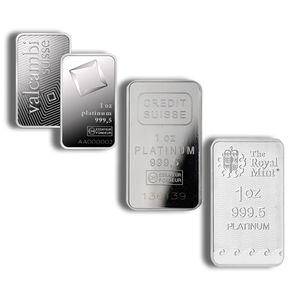
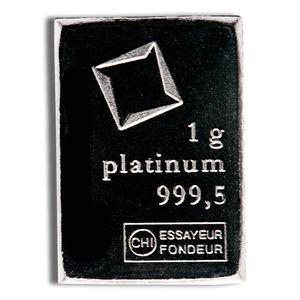
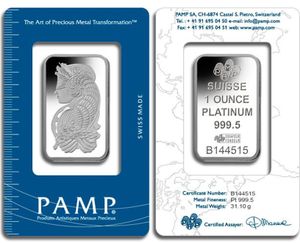
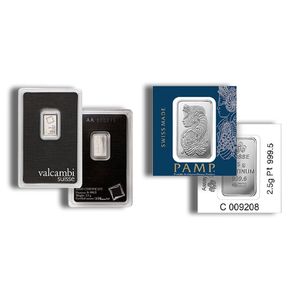
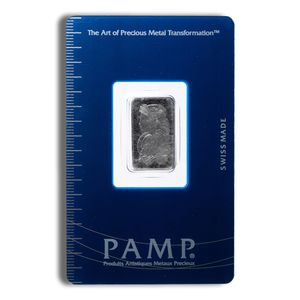
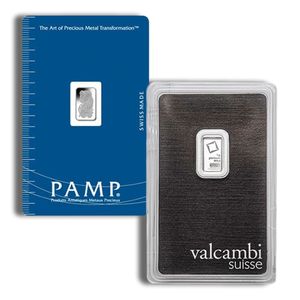
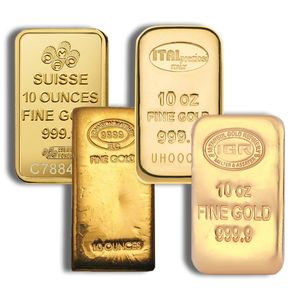
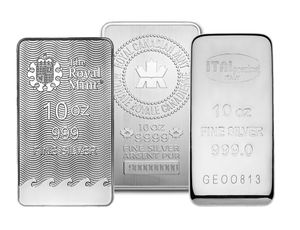
Because these bars come from a variety of refineries, the specific design elements vary by manufacturer. Most feature a clean, flat face with stamped or engraved text indicating the bar's weight, purity, and the producing refinery's name or logo. The reverse is typically plain or carries a simple mirror finish, keeping the overall aesthetic functional and unadorned.
Surface finishes across random brand bars tend toward a brushed matte or satin sheen, which is characteristic of most commercially produced platinum bars at this size. Some refineries incorporate beveled edges or slightly recessed face panels, but the overall format is consistent: rectangular, uniform in thickness, and designed for efficient storage and handling. The stamped specifications are the defining visual element, confirming the bar's authenticity and composition at a glance.
Every bar in this program is stamped with its weight and purity directly on the surface, providing a baseline level of authentication without requiring a separate assay card. While these bars are sold without assay certification, the refineries producing random brand platinum bars are established operations held to recognized production tolerances for weight and fineness. We verify authenticity, weight, and purity on products before they are made available for purchase.
Platinum is a dense, silvery-white metal that is distinctly heavier than silver and visually different from palladium, which helps experienced handlers identify the metal quickly. For buyers who require third-party certification, we maintain authorized dealer relationships with both PCGS and NGC, and graded or certified platinum products are available separately within our catalog. For buyers comfortable with standard refinery production, random brand bars from established sources offer a practical and reliable format.
These bars are sold in bullion condition, meaning they are valued for their metal content rather than collector grade. Individual bars ship in a protective plastic flip to prevent surface contact during transit. When purchasing multiple bars, they may ship together in a sealed box depending on quantity.
Because these bars are sourced from the secondary market as well as primary distribution channels, minor contact marks, surface toning, or light handling signs may be present. These characteristics are entirely normal for secondary market bullion and have no effect on the metal content, weight, or purity of the bar. Buyers focused on platinum content rather than pristine cosmetic condition will find this format entirely appropriate for their needs.
Pricing on 10 oz platinum bars is driven primarily by the current spot price of platinum, which fluctuates continuously based on global supply and demand dynamics. Platinum's premium above spot is typically influenced by production costs, refinery sourcing, and the format itself. The 10 oz size generally carries a lower per-ounce premium than fractional bars, reflecting the efficiencies of producing and distributing larger formats.
Random brand bars carry slightly tighter premiums than named refinery alternatives because buyers are not paying for specific branding. Our pricing reflects real-time market conditions, and the per-ounce cost is displayed transparently so buyers can evaluate the acquisition cost relative to spot without ambiguity. Platinum premiums can also be influenced by industrial demand shifts and available above-ground supply, both of which tend to move more sharply than they do in the gold or silver markets.
The 10 oz platinum bar is a recognized format in the wholesale and secondary bullion markets, with the .999 purity standard accepted by refiners, dealers, and trading firms globally. Liquidity for platinum bars is generally strongest for products that meet LBMA-aligned purity and weight standards, which these bars satisfy. The random brand designation does not meaningfully impair resale potential, as buyers in the secondary market evaluate bars on their metal specifications first.
We operate a two-way market, meaning customers can both purchase and sell platinum bars within the same platform using competitive buyback pricing. We believe liquidity deserves as much consideration before a purchase as after, and our platform is structured to support both sides of the transaction efficiently. Bid pricing for products like this one is displayed on our product pages so buyers have a clear picture of current resale conditions at the time of purchase.
The 10 oz format offers meaningful platinum exposure in a single, manageable unit while keeping the per-ounce premium lower than smaller fractional sizes. For buyers accumulating physical platinum by weight, this format is one of the more cost-efficient entry points in the retail market. The absence of an assay card keeps the premium structure lean without affecting the bar's recognized specifications.
Platinum itself occupies a distinct position among the four primary precious metals. Its scarcity relative to gold, combined with concentrated mine supply primarily from South Africa and Russia, gives it supply characteristics unlike any other bullion metal. Buyers drawn to platinum for its metal properties will find the 10 oz bar a practical and straightforward way to hold a meaningful quantity of the metal at a competitive cost.
We built this platform around the principle that buyers deserve transparent pricing, honest product descriptions, and a two-way market that treats buying and selling with equal seriousness. Our pricing reflects real-time market conditions and is displayed alongside bid pricing so customers understand both the acquisition cost and the current resale value before committing to a purchase. That kind of pricing clarity is central to how we operate.
We maintain an A rating with the Better Business Bureau and hold active memberships in the American Numismatic Association and the National Coin and Bullion Association. We are also an authorized dealer for PCGS and NGC, and we source products from reputable refineries, mints, wholesalers, and distributors. Every product is authenticated before it reaches our customers, and our fulfillment and customer support are designed to back up that commitment with a reliable post-purchase experience.
Bullion Standard Pro gives members access to live, executable wholesale bid and ask pricing on platinum bars and across the broader precious metals catalog. Rather than estimated or indicative pricing, Pro members transact at real-time wholesale market prices without additional dealer markups layered on top. For a product like the 10 oz platinum bar, where the premium structure is already lean, this kind of pricing transparency can make a meaningful difference in the total cost of ownership.
Pro members also benefit from real-time portfolio valuation using current wholesale bid prices, giving a more accurate picture of liquidation value than estimated retail figures provide. Proprietary market intelligence tools allow members to track platinum premiums over time, evaluate bid/ask spread tightness, and compare this product against others in the market using objective data rather than marketing claims. The goal is straightforward: better information leads to more informed decisions on both the buy and the sell side.
We support a broad range of payment methods to make the purchasing process as straightforward as possible. Customers can pay using Visa, Mastercard, American Express, or Discover, as well as PayPal, bank-connected payments through Plaid, wire transfer, paper check, and cryptocurrency via BitPay. Each method is integrated into a secure transaction environment designed to protect buyer information and ensure reliable order processing from start to finish.
Buyback price:
$15,725.34
Product ID: BST-002220835E
| Precious Metal Type | Platinum |
|---|---|
| Format | Bar (Minted) |

| Brand/Mint | Generic/Unbranded |
| Purity | 0.9995 |
| Weight | 10 oz |
| Thickness (mm) | 4.5 mm |
| Bar Length (mm) | 59 mm |
| Bar Width (mm) | 34 mm |
The 10 oz platinum bar is one of the more substantial private mint formats available in the platinum market, offering .999 fine platinum in a compact, stackable form. Produced by a range of refineries and mints operating at recognized industry standards, these bars carry stamped weight and purity markings directly on their surface. We carry these as a random brand product, meaning the specific refinery may vary depending on current inventory, though all bars meet the same fundamental specifications.
For buyers focused on platinum content rather than brand-specific premiums, the random brand format delivers the same metal composition at a typically tighter cost structure than branded alternatives. Each bar contains exactly 10 troy ounces of .999 fine platinum, making it straightforward to evaluate on a per-ounce basis against current spot pricing.
Platinum bars as a modern bullion format emerged alongside growing institutional and retail interest in the metal during the latter half of the twentieth century. Unlike gold and silver, which have centuries of monetary history, platinum's role as a rec
…The 10 oz platinum bar is one of the more substantial private mint formats available in the platinum market, offering .999 fine platinum in a compact, stackable form. Produced by a range of refineries and mints operating at recognized industry standards, these bars carry stamped weight and purity markings directly on their surface. We carry these as a random brand product, meaning the specific refinery may vary depending on current inventory, though all bars meet the same fundamental specifications.
For buyers focused on platinum content rather than brand-specific premiums, the random brand format delivers the same metal composition at a typically tighter cost structure than branded alternatives. Each bar contains exactly 10 troy ounces of .999 fine platinum, making it straightforward to evaluate on a per-ounce basis against current spot pricing.
Platinum bars as a modern bullion format emerged alongside growing institutional and retail interest in the metal during the latter half of the twentieth century. Unlike gold and silver, which have centuries of monetary history, platinum's role as a recognized store of metal value is more recent, shaped largely by its industrial scarcity and its use in automotive catalytic converters, jewelry manufacturing, and various chemical and medical applications.
Private refineries in North America, Europe, and Asia began producing standardized platinum bars as demand from both industrial buyers and retail investors grew. The 10 oz format became a practical size for buyers seeking meaningful platinum exposure without the capital commitment of a kilo bar. Random brand programs were developed as a natural extension of this market, allowing dealers to fulfill demand efficiently across multiple refinery sources while maintaining consistent purity and weight standards.
Because these bars come from a variety of refineries, the specific design elements vary by manufacturer. Most feature a clean, flat face with stamped or engraved text indicating the bar's weight, purity, and the producing refinery's name or logo. The reverse is typically plain or carries a simple mirror finish, keeping the overall aesthetic functional and unadorned.
Surface finishes across random brand bars tend toward a brushed matte or satin sheen, which is characteristic of most commercially produced platinum bars at this size. Some refineries incorporate beveled edges or slightly recessed face panels, but the overall format is consistent: rectangular, uniform in thickness, and designed for efficient storage and handling. The stamped specifications are the defining visual element, confirming the bar's authenticity and composition at a glance.
Every bar in this program is stamped with its weight and purity directly on the surface, providing a baseline level of authentication without requiring a separate assay card. While these bars are sold without assay certification, the refineries producing random brand platinum bars are established operations held to recognized production tolerances for weight and fineness. We verify authenticity, weight, and purity on products before they are made available for purchase.
Platinum is a dense, silvery-white metal that is distinctly heavier than silver and visually different from palladium, which helps experienced handlers identify the metal quickly. For buyers who require third-party certification, we maintain authorized dealer relationships with both PCGS and NGC, and graded or certified platinum products are available separately within our catalog. For buyers comfortable with standard refinery production, random brand bars from established sources offer a practical and reliable format.
These bars are sold in bullion condition, meaning they are valued for their metal content rather than collector grade. Individual bars ship in a protective plastic flip to prevent surface contact during transit. When purchasing multiple bars, they may ship together in a sealed box depending on quantity.
Because these bars are sourced from the secondary market as well as primary distribution channels, minor contact marks, surface toning, or light handling signs may be present. These characteristics are entirely normal for secondary market bullion and have no effect on the metal content, weight, or purity of the bar. Buyers focused on platinum content rather than pristine cosmetic condition will find this format entirely appropriate for their needs.
Pricing on 10 oz platinum bars is driven primarily by the current spot price of platinum, which fluctuates continuously based on global supply and demand dynamics. Platinum's premium above spot is typically influenced by production costs, refinery sourcing, and the format itself. The 10 oz size generally carries a lower per-ounce premium than fractional bars, reflecting the efficiencies of producing and distributing larger formats.
Random brand bars carry slightly tighter premiums than named refinery alternatives because buyers are not paying for specific branding. Our pricing reflects real-time market conditions, and the per-ounce cost is displayed transparently so buyers can evaluate the acquisition cost relative to spot without ambiguity. Platinum premiums can also be influenced by industrial demand shifts and available above-ground supply, both of which tend to move more sharply than they do in the gold or silver markets.
The 10 oz platinum bar is a recognized format in the wholesale and secondary bullion markets, with the .999 purity standard accepted by refiners, dealers, and trading firms globally. Liquidity for platinum bars is generally strongest for products that meet LBMA-aligned purity and weight standards, which these bars satisfy. The random brand designation does not meaningfully impair resale potential, as buyers in the secondary market evaluate bars on their metal specifications first.
We operate a two-way market, meaning customers can both purchase and sell platinum bars within the same platform using competitive buyback pricing. We believe liquidity deserves as much consideration before a purchase as after, and our platform is structured to support both sides of the transaction efficiently. Bid pricing for products like this one is displayed on our product pages so buyers have a clear picture of current resale conditions at the time of purchase.
The 10 oz format offers meaningful platinum exposure in a single, manageable unit while keeping the per-ounce premium lower than smaller fractional sizes. For buyers accumulating physical platinum by weight, this format is one of the more cost-efficient entry points in the retail market. The absence of an assay card keeps the premium structure lean without affecting the bar's recognized specifications.
Platinum itself occupies a distinct position among the four primary precious metals. Its scarcity relative to gold, combined with concentrated mine supply primarily from South Africa and Russia, gives it supply characteristics unlike any other bullion metal. Buyers drawn to platinum for its metal properties will find the 10 oz bar a practical and straightforward way to hold a meaningful quantity of the metal at a competitive cost.
We built this platform around the principle that buyers deserve transparent pricing, honest product descriptions, and a two-way market that treats buying and selling with equal seriousness. Our pricing reflects real-time market conditions and is displayed alongside bid pricing so customers understand both the acquisition cost and the current resale value before committing to a purchase. That kind of pricing clarity is central to how we operate.
We maintain an A rating with the Better Business Bureau and hold active memberships in the American Numismatic Association and the National Coin and Bullion Association. We are also an authorized dealer for PCGS and NGC, and we source products from reputable refineries, mints, wholesalers, and distributors. Every product is authenticated before it reaches our customers, and our fulfillment and customer support are designed to back up that commitment with a reliable post-purchase experience.
Bullion Standard Pro gives members access to live, executable wholesale bid and ask pricing on platinum bars and across the broader precious metals catalog. Rather than estimated or indicative pricing, Pro members transact at real-time wholesale market prices without additional dealer markups layered on top. For a product like the 10 oz platinum bar, where the premium structure is already lean, this kind of pricing transparency can make a meaningful difference in the total cost of ownership.
Pro members also benefit from real-time portfolio valuation using current wholesale bid prices, giving a more accurate picture of liquidation value than estimated retail figures provide. Proprietary market intelligence tools allow members to track platinum premiums over time, evaluate bid/ask spread tightness, and compare this product against others in the market using objective data rather than marketing claims. The goal is straightforward: better information leads to more informed decisions on both the buy and the sell side.
We support a broad range of payment methods to make the purchasing process as straightforward as possible. Customers can pay using Visa, Mastercard, American Express, or Discover, as well as PayPal, bank-connected payments through Plaid, wire transfer, paper check, and cryptocurrency via BitPay. Each method is integrated into a secure transaction environment designed to protect buyer information and ensure reliable order processing from start to finish.