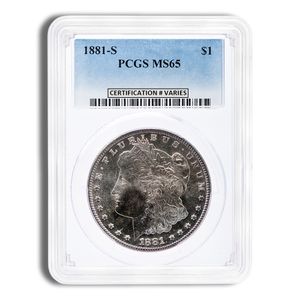
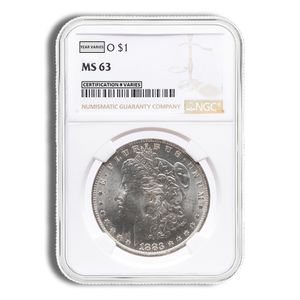
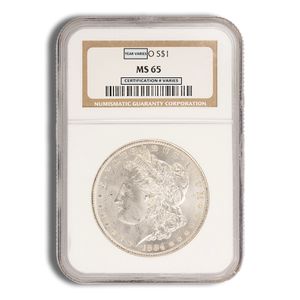
The Morgan Silver Dollar is one of the most widely recognized and traded coins in American numismatic history. Struck in .900 fine silver at a total weight of 0.7734 troy ounces, each coin delivers 26.73 grams of actual silver content and carries the full weight of United States Mint production behind it. The Morgan Dollar was issued as legal tender from 1878 through 1904, with additional production runs in later years, and remains one of the most actively collected and traded silver coins in the secondary market today. We carry BU examples from across the original production window, allowing collectors and buyers to add quality circulated-era coins to their holdings without stepping into certified territory.
History and Background
The Morgan Dollar owes its existence to the Bland-Allison Act of 1878, which required the United States Treasury to purchase substantial quantities of domestic silver and coin it into silver dollars. The series was named for its designer, George T. Morgan, a British-born engraver who joined the United States Mint in 1876 and went on to serve as Chief Engraver. His dollar design replaced the Seated Liberty type…
Overview of the Morgan Silver Dollar (BU)
The Morgan Silver Dollar is one of the most widely recognized and traded coins in American numismatic history. Struck in .900 fine silver at a total weight of 0.7734 troy ounces, each coin delivers 26.73 grams of actual silver content and carries the full weight of United States Mint production behind it. The Morgan Dollar was issued as legal tender from 1878 through 1904, with additional production runs in later years, and remains one of the most actively collected and traded silver coins in the secondary market today. We carry BU examples from across the original production window, allowing collectors and buyers to add quality circulated-era coins to their holdings without stepping into certified territory.
History and Background
The Morgan Dollar owes its existence to the Bland-Allison Act of 1878, which required the United States Treasury to purchase substantial quantities of domestic silver and coin it into silver dollars. The series was named for its designer, George T. Morgan, a British-born engraver who joined the United States Mint in 1876 and went on to serve as Chief Engraver. His dollar design replaced the Seated Liberty type and quickly became the standard large silver coin of the era.
Production spanned five United States Mint facilities across the original run: Philadelphia, Carson City, New Orleans, San Francisco, and New Orleans. Each facility struck coins for different years within the series, and mintmarks on the reverse correspond to their originating facility. The economic and political forces that drove the series, particularly debates over bimetallism and the role of silver in the monetary system, make the Morgan Dollar inseparable from the broader economic history of the Gilded Age.
The series was formally ended by the Pittman Act of 1918, which authorized the melting of millions of silver dollars to support wartime monetary needs. A limited reissue occurred in 1921, but the core of the series remains the original 1878 to 1904 production window that defines these coins today.
Design and Aesthetics
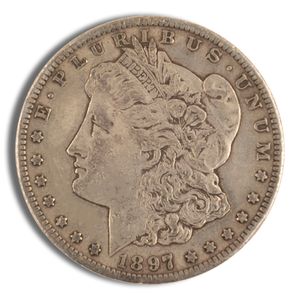
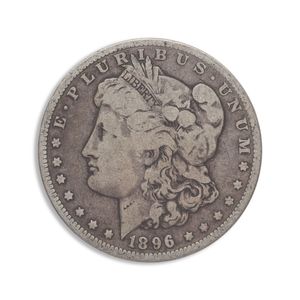
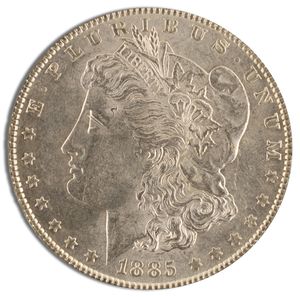
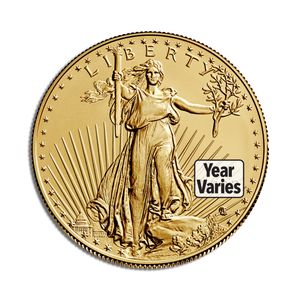
The obverse features a left-facing portrait of Liberty, rendered with a naturalistic quality that distinguished Morgan's work from earlier American coin portraiture. Liberty wears a Phrygian cap adorned with wheat stalks and cotton bolls, a deliberate nod to American agricultural identity. The inscription "E PLURIBUS UNUM" appears along the upper arc, with "LIBERTY" on the headband and the date positioned below the portrait. The portrait model was reportedly a Philadelphia schoolteacher named Anna Willess Williams, though Morgan never confirmed this publicly during her lifetime.
The reverse presents a heraldic eagle with wings spread, clutching arrows and an olive branch, with a wreath below and the inscriptions "UNITED STATES OF AMERICA" and "IN GOD WE TRUST" completing the composition. "ONE DOLLAR" appears along the lower arc, and the mintmark, when present, is struck just above the "O" in "DOLLAR." The design communicates a formal national authority that has made these coins immediately recognizable across more than a century of circulation and collection.
BU examples display the full sharpness of Morgan's original relief work, with luster present across both surfaces. The quality of strike can vary by mint facility and date, which is part of what drives collector interest in specific date and mintmark combinations within the series.
Authenticity and Product Integrity
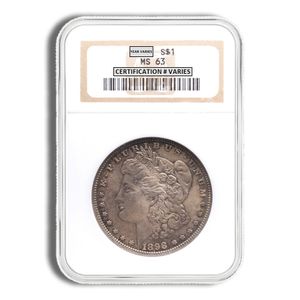
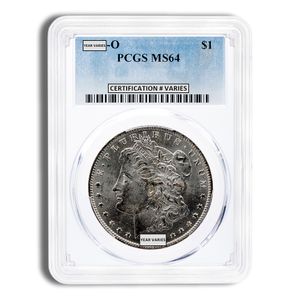
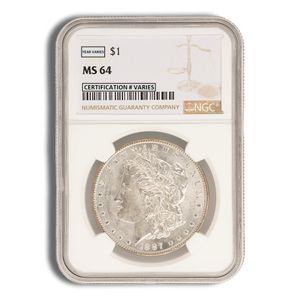
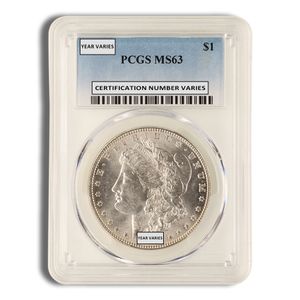
Every Morgan Dollar we offer has been verified for weight and metal content consistent with the original United States Mint specification of 0.7734 troy ounces at .900 fine silver. The coins were struck under federal minting standards that required precise adherence to weight tolerances, and authentic examples carry a distinct heft and ring that experienced handlers recognize immediately. We are authorized dealers for both PCGS and NGC, which means we work regularly with the industry's leading third-party grading services and understand the authentication standards they apply to classic American silver coinage.
The Morgan Dollar has been one of the most counterfeited coins in American numismatic history, particularly in certain date and mintmark combinations. While BU raw examples carry no third-party certification, our sourcing process draws from reputable dealers, wholesalers, and established distribution channels where these coins are routinely handled and reviewed. Buyers with specific authentication concerns about individual high-value date and mintmark combinations can pursue PCGS or NGC grading through our authorized dealer channels.
Condition and Packaging
BU, or Brilliant Uncirculated, means these coins were never released into general circulation and retain their original mint luster. In practice, BU Morgan Dollars from the original 1878 to 1904 production window have typically spent significant time in storage, which can produce light bag marks, minor contact points, or subtle toning from natural oxidation of the silver alloy. These characteristics are normal for classic coinage of this age and do not represent wear from circulation. The coin's design high points, the cheek on the obverse and the eagle's breast feathers on the reverse, should remain fully defined on a genuine BU example.
Individual coins ship in protective plastic flips to preserve their current state. When purchased in quantities consistent with a standard roll or tube, coins ship in a tube. Larger bulk quantities ship in sealed boxes consistent with standard Morgan Dollar packaging formats. We recommend handling coins by their edges and storing them in a stable, low-humidity environment to preserve surface quality over time.
Pricing and Market Factors
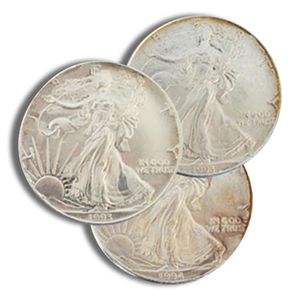
Morgan Dollar pricing reflects both the current spot price of silver and a premium that accounts for the coin's numismatic identity, historical significance, and collector demand. Because these are not modern bullion coins, the premium structure is somewhat different from a contemporary American Silver Eagle or a generic silver round. Silver melt value sets a firm floor, but the BU condition grade and the specific date and mintmark combination both influence where individual examples trade above that floor.
Premiums on Morgan Dollars can shift meaningfully based on broader collector market conditions, the availability of specific date ranges, and overall silver market activity. Our pricing is updated in real time to reflect current spot prices, and the transparent bid and ask structure across our platform allows buyers to evaluate the full cost of ownership before committing to a purchase.
Selling and Liquidity
Few silver coins carry the resale recognition of the Morgan Dollar. It is actively sought by collectors, dealers, and bullion buyers alike, which creates a more diverse secondary market than most modern bullion products can claim. The universal familiarity of the design, combined with the standardized silver content specification, means these coins can be traded through virtually any precious metals dealer, auction house, or numismatic market in the country.
We operate a two-way market that supports both buying and selling within the same platform. Customers who wish to sell their Morgan Dollars back into the market can do so through our competitive buyback pricing structure. Understanding the bid side of the transaction before making a purchase is one of the most useful things a buyer can do, and our platform is built to make that information visible rather than opaque.
Why Buy the Morgan Silver Dollar (BU)?
The Morgan Dollar occupies a category that very few silver coins can claim: meaningful numismatic history combined with a silver content specification that makes it tradeable in the bullion market as well. Buyers who want a classic American silver coin with broad recognition, clear historical context, and established collector demand will find the Morgan to be one of the most straightforward choices available. The BU grade ensures that the coin's design details remain fully intact, which matters for both collector appeal and long-term presentation quality.
The 1878 to 1904 production window covers the heart of the original series and includes coins from multiple mint facilities, giving buyers flexibility in building a collection or simply holding examples from one of the most celebrated silver coin series in American history. The combination of silver melt value and numismatic premium creates a pricing dynamic that is distinct from generic bullion and worth understanding before buying.
Why Buy from Bullion Standard?
We have been in this industry since 2010, and our reputation is built on one straightforward principle: we only get one chance to earn a customer's trust. That shapes how we price, how we source, and how we support every transaction from start to finish. Our A rating with the Better Business Bureau, membership in both the American Numismatic Association and the National Coin and Bullion Association, and authorized dealer relationships with PCGS and NGC reflect a sustained commitment to operating at the highest professional standard in the industry.
Our transparent pricing structure means you can see both the buy and sell sides of a transaction before you make a decision. We believe liquidity should be evaluated at the time of purchase, not after the fact, and our two-way market model is designed to support that. From payment processing through fulfillment and post-purchase support, the experience is designed to feel direct, clear, and without unnecessary friction.
Get Near-Spot Pricing with Bullion Standard Pro
Bullion Standard Pro gives members access to live, executable wholesale bid and ask pricing on Morgan Dollars and across our broader catalog. Rather than working from static retail prices, Pro members transact directly at wholesale market prices, where premiums and spreads reflect real-time supply and demand rather than fixed retail markups. For a coin series like the Morgan Dollar, where premiums can shift meaningfully based on collector activity and silver market conditions, having visibility into live wholesale pricing provides a meaningfully clearer picture of actual market value.
Pro members can also track real-time portfolio valuation based on current wholesale bid prices, which provides a more grounded view of liquidation value than estimated retail figures. Combined with historical premium data, spread analysis, and product research tools that allow direct comparison across the catalog, Bullion Standard Pro is built to help serious buyers make better-informed decisions backed by objective market data.
Flexible and Secure Payment Options
We support a wide range of payment methods to make every transaction as straightforward as possible. Buyers can pay using Visa, Mastercard, American Express, or Discover, as well as PayPal, bank-connected payments through Plaid, wire transfer, paper check, or cryptocurrency through BitPay. Each payment method is processed through a secure system designed to protect your information and confirm your order without unnecessary delays. Whether you are making a single purchase or a larger bulk order, we make sure the payment process is simple, transparent, and secure from start to finish.
Volume Discount Pricing
Orders paid by debit card, credit card, and PayPal are an item's full
list
price
and receive no discount. Orders paid by cryptocurrency receive a 3%
discount
from an item's full list price. Orders paid by eCheck (ACH), paper
check,
and
bank wire receive a 4% discount from an item's full list price.
In Stock
Ships within 1 business day of cleared payment
Select Your Quantity
For Non-Members:
Free shipping on orders
$497+
.
PRO
Pro Member Delivery:
$23.97 flat-rate, true
wholesale pricing. Free shipping on orders
$10,000+.
Product ID: BST-00200545E1
Specifications
Random Year Status
Random Year
Precious Metal Type
Silver
Bullion Coin Type
Morgan Dollar
Format
Coin
Country of Origin
United States
Brand/Mint
U.S. Mint
Mint Mark
Various
Purity
0.9
Weight
0.7734 oz
Thickness (mm)
2.4
mm
Diameter (mm)
38.1
mm
Inner Pack (Quantity)
20
Outer Pack (Quantity)
1000
Grade
BU
Product Details
Overview of the Morgan Silver Dollar (BU)
The Morgan Silver Dollar is one of the most widely recognized and traded coins in American numismatic history. Struck in .900 fine silver at a total weight of 0.7734 troy ounces, each coin delivers 26.73 grams of actual silver content and carries the full weight of United States Mint production behind it. The Morgan Dollar was issued as legal tender from 1878 through 1904, with additional production runs in later years, and remains one of the most actively collected and traded silver coins in the secondary market today. We carry BU examples from across the original production window, allowing collectors and buyers to add quality circulated-era coins to their holdings without stepping into certified territory.
History and Background
The Morgan Dollar owes its existence to the Bland-Allison Act of 1878, which required the United States Treasury to purchase substantial quantities of domestic silver and coin it into silver dollars. The series was named for its designer, George T. Morgan, a British-born engraver who joined the United States Mint in 1876 and went on to serve as Chief Engraver. His dollar design replaced the Seated Liberty type…
Overview of the Morgan Silver Dollar (BU)
The Morgan Silver Dollar is one of the most widely recognized and traded coins in American numismatic history. Struck in .900 fine silver at a total weight of 0.7734 troy ounces, each coin delivers 26.73 grams of actual silver content and carries the full weight of United States Mint production behind it. The Morgan Dollar was issued as legal tender from 1878 through 1904, with additional production runs in later years, and remains one of the most actively collected and traded silver coins in the secondary market today. We carry BU examples from across the original production window, allowing collectors and buyers to add quality circulated-era coins to their holdings without stepping into certified territory.
History and Background
The Morgan Dollar owes its existence to the Bland-Allison Act of 1878, which required the United States Treasury to purchase substantial quantities of domestic silver and coin it into silver dollars. The series was named for its designer, George T. Morgan, a British-born engraver who joined the United States Mint in 1876 and went on to serve as Chief Engraver. His dollar design replaced the Seated Liberty type and quickly became the standard large silver coin of the era.
Production spanned five United States Mint facilities across the original run: Philadelphia, Carson City, New Orleans, San Francisco, and New Orleans. Each facility struck coins for different years within the series, and mintmarks on the reverse correspond to their originating facility. The economic and political forces that drove the series, particularly debates over bimetallism and the role of silver in the monetary system, make the Morgan Dollar inseparable from the broader economic history of the Gilded Age.
The series was formally ended by the Pittman Act of 1918, which authorized the melting of millions of silver dollars to support wartime monetary needs. A limited reissue occurred in 1921, but the core of the series remains the original 1878 to 1904 production window that defines these coins today.
Design and Aesthetics
The obverse features a left-facing portrait of Liberty, rendered with a naturalistic quality that distinguished Morgan's work from earlier American coin portraiture. Liberty wears a Phrygian cap adorned with wheat stalks and cotton bolls, a deliberate nod to American agricultural identity. The inscription "E PLURIBUS UNUM" appears along the upper arc, with "LIBERTY" on the headband and the date positioned below the portrait. The portrait model was reportedly a Philadelphia schoolteacher named Anna Willess Williams, though Morgan never confirmed this publicly during her lifetime.
The reverse presents a heraldic eagle with wings spread, clutching arrows and an olive branch, with a wreath below and the inscriptions "UNITED STATES OF AMERICA" and "IN GOD WE TRUST" completing the composition. "ONE DOLLAR" appears along the lower arc, and the mintmark, when present, is struck just above the "O" in "DOLLAR." The design communicates a formal national authority that has made these coins immediately recognizable across more than a century of circulation and collection.
BU examples display the full sharpness of Morgan's original relief work, with luster present across both surfaces. The quality of strike can vary by mint facility and date, which is part of what drives collector interest in specific date and mintmark combinations within the series.
Authenticity and Product Integrity
Every Morgan Dollar we offer has been verified for weight and metal content consistent with the original United States Mint specification of 0.7734 troy ounces at .900 fine silver. The coins were struck under federal minting standards that required precise adherence to weight tolerances, and authentic examples carry a distinct heft and ring that experienced handlers recognize immediately. We are authorized dealers for both PCGS and NGC, which means we work regularly with the industry's leading third-party grading services and understand the authentication standards they apply to classic American silver coinage.
The Morgan Dollar has been one of the most counterfeited coins in American numismatic history, particularly in certain date and mintmark combinations. While BU raw examples carry no third-party certification, our sourcing process draws from reputable dealers, wholesalers, and established distribution channels where these coins are routinely handled and reviewed. Buyers with specific authentication concerns about individual high-value date and mintmark combinations can pursue PCGS or NGC grading through our authorized dealer channels.
Condition and Packaging
BU, or Brilliant Uncirculated, means these coins were never released into general circulation and retain their original mint luster. In practice, BU Morgan Dollars from the original 1878 to 1904 production window have typically spent significant time in storage, which can produce light bag marks, minor contact points, or subtle toning from natural oxidation of the silver alloy. These characteristics are normal for classic coinage of this age and do not represent wear from circulation. The coin's design high points, the cheek on the obverse and the eagle's breast feathers on the reverse, should remain fully defined on a genuine BU example.
Individual coins ship in protective plastic flips to preserve their current state. When purchased in quantities consistent with a standard roll or tube, coins ship in a tube. Larger bulk quantities ship in sealed boxes consistent with standard Morgan Dollar packaging formats. We recommend handling coins by their edges and storing them in a stable, low-humidity environment to preserve surface quality over time.
Pricing and Market Factors
Morgan Dollar pricing reflects both the current spot price of silver and a premium that accounts for the coin's numismatic identity, historical significance, and collector demand. Because these are not modern bullion coins, the premium structure is somewhat different from a contemporary American Silver Eagle or a generic silver round. Silver melt value sets a firm floor, but the BU condition grade and the specific date and mintmark combination both influence where individual examples trade above that floor.
Premiums on Morgan Dollars can shift meaningfully based on broader collector market conditions, the availability of specific date ranges, and overall silver market activity. Our pricing is updated in real time to reflect current spot prices, and the transparent bid and ask structure across our platform allows buyers to evaluate the full cost of ownership before committing to a purchase.
Selling and Liquidity
Few silver coins carry the resale recognition of the Morgan Dollar. It is actively sought by collectors, dealers, and bullion buyers alike, which creates a more diverse secondary market than most modern bullion products can claim. The universal familiarity of the design, combined with the standardized silver content specification, means these coins can be traded through virtually any precious metals dealer, auction house, or numismatic market in the country.
We operate a two-way market that supports both buying and selling within the same platform. Customers who wish to sell their Morgan Dollars back into the market can do so through our competitive buyback pricing structure. Understanding the bid side of the transaction before making a purchase is one of the most useful things a buyer can do, and our platform is built to make that information visible rather than opaque.
Why Buy the Morgan Silver Dollar (BU)?
The Morgan Dollar occupies a category that very few silver coins can claim: meaningful numismatic history combined with a silver content specification that makes it tradeable in the bullion market as well. Buyers who want a classic American silver coin with broad recognition, clear historical context, and established collector demand will find the Morgan to be one of the most straightforward choices available. The BU grade ensures that the coin's design details remain fully intact, which matters for both collector appeal and long-term presentation quality.
The 1878 to 1904 production window covers the heart of the original series and includes coins from multiple mint facilities, giving buyers flexibility in building a collection or simply holding examples from one of the most celebrated silver coin series in American history. The combination of silver melt value and numismatic premium creates a pricing dynamic that is distinct from generic bullion and worth understanding before buying.
Why Buy from Bullion Standard?
We have been in this industry since 2010, and our reputation is built on one straightforward principle: we only get one chance to earn a customer's trust. That shapes how we price, how we source, and how we support every transaction from start to finish. Our A rating with the Better Business Bureau, membership in both the American Numismatic Association and the National Coin and Bullion Association, and authorized dealer relationships with PCGS and NGC reflect a sustained commitment to operating at the highest professional standard in the industry.
Our transparent pricing structure means you can see both the buy and sell sides of a transaction before you make a decision. We believe liquidity should be evaluated at the time of purchase, not after the fact, and our two-way market model is designed to support that. From payment processing through fulfillment and post-purchase support, the experience is designed to feel direct, clear, and without unnecessary friction.
Get Near-Spot Pricing with Bullion Standard Pro
Bullion Standard Pro gives members access to live, executable wholesale bid and ask pricing on Morgan Dollars and across our broader catalog. Rather than working from static retail prices, Pro members transact directly at wholesale market prices, where premiums and spreads reflect real-time supply and demand rather than fixed retail markups. For a coin series like the Morgan Dollar, where premiums can shift meaningfully based on collector activity and silver market conditions, having visibility into live wholesale pricing provides a meaningfully clearer picture of actual market value.
Pro members can also track real-time portfolio valuation based on current wholesale bid prices, which provides a more grounded view of liquidation value than estimated retail figures. Combined with historical premium data, spread analysis, and product research tools that allow direct comparison across the catalog, Bullion Standard Pro is built to help serious buyers make better-informed decisions backed by objective market data.
Flexible and Secure Payment Options
We support a wide range of payment methods to make every transaction as straightforward as possible. Buyers can pay using Visa, Mastercard, American Express, or Discover, as well as PayPal, bank-connected payments through Plaid, wire transfer, paper check, or cryptocurrency through BitPay. Each payment method is processed through a secure system designed to protect your information and confirm your order without unnecessary delays. Whether you are making a single purchase or a larger bulk order, we make sure the payment process is simple, transparent, and secure from start to finish.
This website uses cookies for analytics and to deliver personalized content. By continuing to
use our site, you acknowledge that you have read and agree to our Privacy Policy and Cookie
Policy.
Current Quantities Available
Unfortunately, we only have 0
of
this item in
stock.
Please call us at (833) 278-4653
or email us at support@bullionstandard.com
if you wish to purchase a larger quantity than what is available on our website.
We can often locate additional quantities.

 (833) 278-4653


.png)