Overview of the $2.5 Gold Classic Head Quarter Eagle
The Classic Head Quarter Eagle is a 90% pure gold coin produced by the United States Mint, carrying a face value of $2.50 and containing 0.1209 troy ounces of gold. These coins circulated during the nineteenth century and represent one of the earlier expressions of domestic gold coinage in the United States. We carry these coins in About Uncirculated condition on a random year basis, meaning the specific date may vary but the grade remains consistent across the listing. For collectors and buyers who prioritize the metal content and historical character of the piece over a precise date, this is a practical and accessible option.
History and Background
The Classic Head Quarter Eagle was minted from 1834 to 1839, produced at the Philadelphia Mint and later at branch facilities in Charlotte, Dahlonega, and New Orleans as those mints came online. The series was introduced following the Coinage Act of 1834, which reduced the gold content in U.S. coinage to bring circulating gold coins back into commerce after years of being hoarded or melted due to the previous overvaluation of silver relative to gold. The redesign was not merely ae…
Overview of the $2.5 Gold Classic Head Quarter Eagle
The Classic Head Quarter Eagle is a 90% pure gold coin produced by the United States Mint, carrying a face value of $2.50 and containing 0.1209 troy ounces of gold. These coins circulated during the nineteenth century and represent one of the earlier expressions of domestic gold coinage in the United States. We carry these coins in About Uncirculated condition on a random year basis, meaning the specific date may vary but the grade remains consistent across the listing. For collectors and buyers who prioritize the metal content and historical character of the piece over a precise date, this is a practical and accessible option.
History and Background
The Classic Head Quarter Eagle was minted from 1834 to 1839, produced at the Philadelphia Mint and later at branch facilities in Charlotte, Dahlonega, and New Orleans as those mints came online. The series was introduced following the Coinage Act of 1834, which reduced the gold content in U.S. coinage to bring circulating gold coins back into commerce after years of being hoarded or melted due to the previous overvaluation of silver relative to gold. The redesign was not merely aesthetic but was driven by monetary policy, making this series unusually significant in American numismatic history.
Christian Gobrecht, who would later become Chief Engraver of the United States Mint, is closely associated with the broader era of artistry that shaped these coins. The Classic Head design represented a departure from the earlier Capped Bust style and established a cleaner, more classical idiom for American coinage that would influence subsequent issues. The short production window of just six years gives the series a defined historical identity that appeals to collectors interested in early American monetary history.
Design and Aesthetics
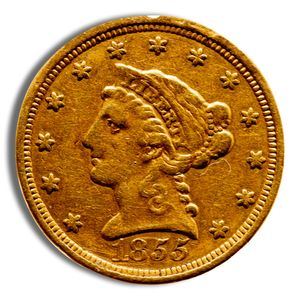
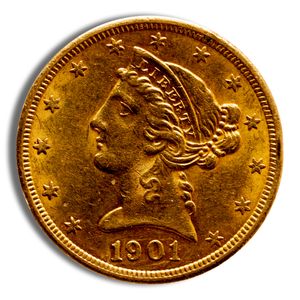
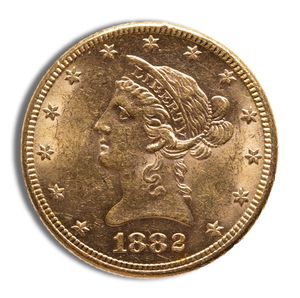
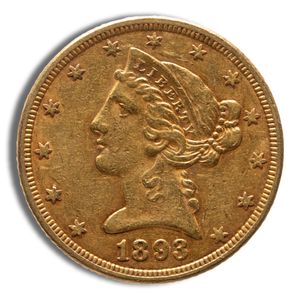
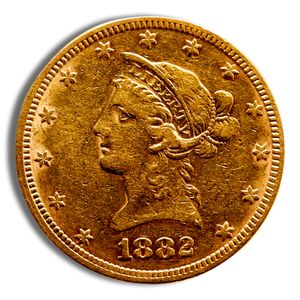
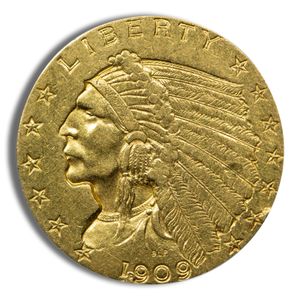
The obverse of the Classic Head Quarter Eagle features a left-facing portrait of Liberty wearing a plain coronet or headband inscribed with the word LIBERTY, surrounded by thirteen stars representing the original colonies and the date below. The portrait is restrained and classical in character, reflecting the aesthetic sensibilities of early nineteenth-century American coinage rather than the more elaborate designs that would follow in later decades.
The reverse carries a heraldic eagle with a shield on its breast, clutching arrows and an olive branch, with a scroll inscribed E PLURIBUS UNUM above and the denomination and country name arranged around the perimeter. The overall composition is compact and precisely engraved, appropriate to the small physical format of the quarter eagle denomination. On coins grading About Uncirculated, the high points of the design will show light wear but the overall detail and field surfaces remain well-defined.
Fractional Size and Accessibility
At 0.1209 troy ounces, the Classic Head Quarter Eagle occupies the lighter end of the U.S. gold coin spectrum, making it approachable for buyers who want genuine nineteenth-century American gold without committing to the cost of a half eagle or eagle. The smaller size also makes these coins easier to handle and store in quantity without significant spatial requirements.
For buyers building a collection of early American gold types, the quarter eagle denomination fills a specific slot that neither larger nor smaller denominations can replicate. The fractional format also allows for more granular decisions about acquisition size relative to current gold prices.
Authenticity and Product Integrity
Classic Head Quarter Eagles were struck by the United States Mint to exacting standards for the era, with weight and fineness specifications set by federal law. Each coin contains exactly 0.1209 troy ounces of gold at 90% purity, a standard that remained consistent throughout the series. Because these are genuine U.S. Mint issues with well-documented specifications, authentication is straightforward for experienced numismatists and grading services alike.
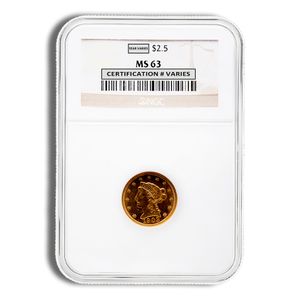
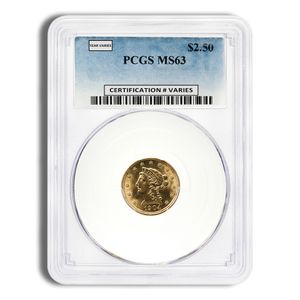
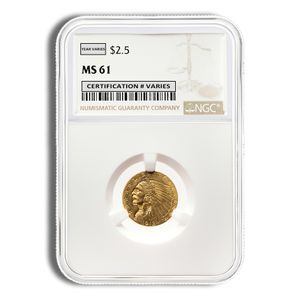
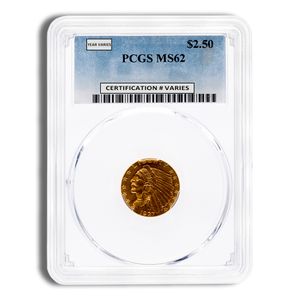
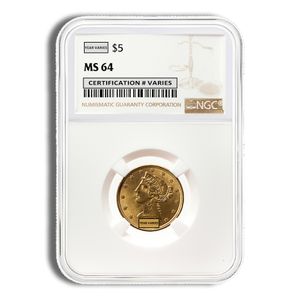
We are authorized dealers for both PCGS and NGC, the two leading third-party grading services in the numismatic industry, which gives our customers direct access to professional certification when they want additional assurance. Every product we handle is verified for authenticity and metal integrity before it is offered for sale. Given the age and collectible nature of pre-1933 U.S. gold coinage, buying from a reputable source with established industry credentials matters considerably.
Condition and Packaging
About Uncirculated coins exhibit light friction on the high points of the design from limited handling or circulation, but retain most of their original surface detail and significant remaining luster in the protected areas. For a coin series that dates to the 1830s, AU condition represents a genuinely well-preserved example and is considered desirable by collectors who want a presentable piece with original character intact.
Individual coins ship in protective plastic flips to prevent additional contact damage during transit. Because these are vintage coins sold on a random year basis rather than freshly minted bullion, each piece arrives as a single item rather than in a mint tube or sealed box. Buyers should expect coins that are consistent with the assigned grade but may show minor toning or surface characteristics typical of coins of this age and provenance.
Pricing and Market Factors
Pricing for Classic Head Quarter Eagles reflects the current spot price of gold combined with a numismatic premium that accounts for age, rarity, collector demand, and condition. Because these coins are no longer in production and available supply is finite, premiums tend to be higher than those on modern gold bullion coins and are more sensitive to collector market conditions than to raw gold spot movements alone.
The random year designation means pricing does not factor in date-specific rarity, which keeps the cost relatively consistent across the listing and ensures buyers are not paying for a specific date they may or may not receive. Our pricing is structured to reflect real-time market conditions transparently, without unnecessary layering of costs that obscure the actual basis for what you pay.
Selling and Liquidity
Classic Head Quarter Eagles trade in both the numismatic collector market and the broader pre-1933 U.S. gold coin market, giving them a dual audience that supports relatively consistent demand. The combination of recognized gold content and historical collectibility means these coins appeal to a wider group of potential buyers than generic bullion products of similar weight.
We operate within a two-way market that supports both buying and selling, so customers who acquired these coins through us have a direct path to competitive buyback pricing when they decide to sell. Liquidity for pre-1933 U.S. gold coinage is generally solid among established dealers and auction houses, particularly for coins in well-documented condition grades.
Why Buy the Classic Head Quarter Eagle?
The Classic Head Quarter Eagle is one of a small number of nineteenth-century U.S. gold coin types that collectors can acquire in circulated and About Uncirculated grades without entering the extreme rarity tier. The six-year production window and multiple mint origins give the series genuine historical depth, while the gold content provides a tangible metal component that complements the numismatic story.
For buyers interested in early American coinage specifically, this series represents a distinct design type that cannot be replicated by later issues. The AU condition grade ensures you are receiving a coin with meaningful detail and surface preservation, not a heavily worn piece that has lost much of its engraved character. The random year format makes this listing well-suited to type collectors or buyers more focused on the series as a whole than on a particular date.
Why Buy from Bullion Standard?
We have built our reputation on straightforward pricing, genuine product expertise, and a commitment to treating every customer as a long-term relationship rather than a single transaction. Our A rating with the Better Business Bureau, membership in the American Numismatic Association, and membership in the National Coin and Bullion Association reflect a standard of professionalism we take seriously across every category we carry, including pre-1933 U.S. gold coinage.
As authorized dealers for both PCGS and NGC, we maintain direct access to the industry's leading certification services, which matters particularly when buying coins where condition and authenticity carry real weight in the market. Our two-way market model means you can both buy and sell within the same ecosystem, with competitive buyback pricing and transparent terms. Every aspect of our platform is designed to give you a clearer picture of what you own, what it is worth, and what it costs to buy or sell, so the decisions you make are based on real information rather than guesswork.
Get Near-Spot Pricing with Bullion Standard Pro
Bullion Standard Pro gives members access to live, executable wholesale bid and ask pricing, which is particularly useful when evaluating products like the Classic Head Quarter Eagle where numismatic premiums and market conditions can shift independently of gold spot prices. Rather than working from static retail prices, Pro members can see real-time pricing that reflects current wholesale market supply and demand for specific products, providing a more accurate basis for buying and selling decisions.
Pro also includes real-time portfolio valuation using current wholesale bid pricing, so members can track the liquidation value of their holdings rather than relying on estimated retail figures. For collectors and buyers building positions in pre-1933 U.S. gold, the combination of live pricing data, premium analytics, and proprietary market intelligence tools provides a more transparent and informed experience than most platforms offer in this category.
Flexible and Secure Payment Options
We support a broad range of payment methods to make every transaction straightforward and secure. Customers can pay using major credit cards including Visa, Mastercard, American Express, and Discover, as well as PayPal, bank-connected payments through Plaid, wire transfer, paper check, and cryptocurrency via BitPay. Each method is supported by secure transaction handling, and our fulfillment process is built to match the same standard of reliability we apply to every other part of the buying experience.
$2.5 Gold Classic Head Quarter Eagle - AU (Random Year)
Overview of the $2.5 Gold Classic Head Quarter Eagle
The Classic Head Quarter Eagle is a 90% pure gold coin produced by the United States Mint, carrying a face value of $2.50 and containing 0.1209 troy ounces of gold. These coins circulated during the nineteenth century and represent one of the earlier expressions of domestic gold coinage in the United States. We carry these coins in About Uncirculated condition on a random year basis, meaning the specific date may vary but the grade remains consistent across the listing. For collectors and buyers who prioritize the metal content and historical character of the piece over a precise date, this is a practical and accessible option.
History and Background
The Classic Head Quarter Eagle was minted from 1834 to 1839, produced at the Philadelphia Mint and later at branch facilities in Charlotte, Dahlonega, and New Orleans as those mints came online. The series was introduced following the Coinage Act of 1834, which reduced the gold content in U.S. coinage to bring circulating gold coins back into commerce after years of being hoarded or melted due to the previous overvaluation of silver relative to gold. The redesign was not merely ae…
Overview of the $2.5 Gold Classic Head Quarter Eagle
The Classic Head Quarter Eagle is a 90% pure gold coin produced by the United States Mint, carrying a face value of $2.50 and containing 0.1209 troy ounces of gold. These coins circulated during the nineteenth century and represent one of the earlier expressions of domestic gold coinage in the United States. We carry these coins in About Uncirculated condition on a random year basis, meaning the specific date may vary but the grade remains consistent across the listing. For collectors and buyers who prioritize the metal content and historical character of the piece over a precise date, this is a practical and accessible option.
History and Background
The Classic Head Quarter Eagle was minted from 1834 to 1839, produced at the Philadelphia Mint and later at branch facilities in Charlotte, Dahlonega, and New Orleans as those mints came online. The series was introduced following the Coinage Act of 1834, which reduced the gold content in U.S. coinage to bring circulating gold coins back into commerce after years of being hoarded or melted due to the previous overvaluation of silver relative to gold. The redesign was not merely aesthetic but was driven by monetary policy, making this series unusually significant in American numismatic history.
Christian Gobrecht, who would later become Chief Engraver of the United States Mint, is closely associated with the broader era of artistry that shaped these coins. The Classic Head design represented a departure from the earlier Capped Bust style and established a cleaner, more classical idiom for American coinage that would influence subsequent issues. The short production window of just six years gives the series a defined historical identity that appeals to collectors interested in early American monetary history.
Design and Aesthetics
The obverse of the Classic Head Quarter Eagle features a left-facing portrait of Liberty wearing a plain coronet or headband inscribed with the word LIBERTY, surrounded by thirteen stars representing the original colonies and the date below. The portrait is restrained and classical in character, reflecting the aesthetic sensibilities of early nineteenth-century American coinage rather than the more elaborate designs that would follow in later decades.
The reverse carries a heraldic eagle with a shield on its breast, clutching arrows and an olive branch, with a scroll inscribed E PLURIBUS UNUM above and the denomination and country name arranged around the perimeter. The overall composition is compact and precisely engraved, appropriate to the small physical format of the quarter eagle denomination. On coins grading About Uncirculated, the high points of the design will show light wear but the overall detail and field surfaces remain well-defined.
Fractional Size and Accessibility
At 0.1209 troy ounces, the Classic Head Quarter Eagle occupies the lighter end of the U.S. gold coin spectrum, making it approachable for buyers who want genuine nineteenth-century American gold without committing to the cost of a half eagle or eagle. The smaller size also makes these coins easier to handle and store in quantity without significant spatial requirements.
For buyers building a collection of early American gold types, the quarter eagle denomination fills a specific slot that neither larger nor smaller denominations can replicate. The fractional format also allows for more granular decisions about acquisition size relative to current gold prices.
Authenticity and Product Integrity
Classic Head Quarter Eagles were struck by the United States Mint to exacting standards for the era, with weight and fineness specifications set by federal law. Each coin contains exactly 0.1209 troy ounces of gold at 90% purity, a standard that remained consistent throughout the series. Because these are genuine U.S. Mint issues with well-documented specifications, authentication is straightforward for experienced numismatists and grading services alike.
We are authorized dealers for both PCGS and NGC, the two leading third-party grading services in the numismatic industry, which gives our customers direct access to professional certification when they want additional assurance. Every product we handle is verified for authenticity and metal integrity before it is offered for sale. Given the age and collectible nature of pre-1933 U.S. gold coinage, buying from a reputable source with established industry credentials matters considerably.
Condition and Packaging
About Uncirculated coins exhibit light friction on the high points of the design from limited handling or circulation, but retain most of their original surface detail and significant remaining luster in the protected areas. For a coin series that dates to the 1830s, AU condition represents a genuinely well-preserved example and is considered desirable by collectors who want a presentable piece with original character intact.
Individual coins ship in protective plastic flips to prevent additional contact damage during transit. Because these are vintage coins sold on a random year basis rather than freshly minted bullion, each piece arrives as a single item rather than in a mint tube or sealed box. Buyers should expect coins that are consistent with the assigned grade but may show minor toning or surface characteristics typical of coins of this age and provenance.
Pricing and Market Factors
Pricing for Classic Head Quarter Eagles reflects the current spot price of gold combined with a numismatic premium that accounts for age, rarity, collector demand, and condition. Because these coins are no longer in production and available supply is finite, premiums tend to be higher than those on modern gold bullion coins and are more sensitive to collector market conditions than to raw gold spot movements alone.
The random year designation means pricing does not factor in date-specific rarity, which keeps the cost relatively consistent across the listing and ensures buyers are not paying for a specific date they may or may not receive. Our pricing is structured to reflect real-time market conditions transparently, without unnecessary layering of costs that obscure the actual basis for what you pay.
Selling and Liquidity
Classic Head Quarter Eagles trade in both the numismatic collector market and the broader pre-1933 U.S. gold coin market, giving them a dual audience that supports relatively consistent demand. The combination of recognized gold content and historical collectibility means these coins appeal to a wider group of potential buyers than generic bullion products of similar weight.
We operate within a two-way market that supports both buying and selling, so customers who acquired these coins through us have a direct path to competitive buyback pricing when they decide to sell. Liquidity for pre-1933 U.S. gold coinage is generally solid among established dealers and auction houses, particularly for coins in well-documented condition grades.
Why Buy the Classic Head Quarter Eagle?
The Classic Head Quarter Eagle is one of a small number of nineteenth-century U.S. gold coin types that collectors can acquire in circulated and About Uncirculated grades without entering the extreme rarity tier. The six-year production window and multiple mint origins give the series genuine historical depth, while the gold content provides a tangible metal component that complements the numismatic story.
For buyers interested in early American coinage specifically, this series represents a distinct design type that cannot be replicated by later issues. The AU condition grade ensures you are receiving a coin with meaningful detail and surface preservation, not a heavily worn piece that has lost much of its engraved character. The random year format makes this listing well-suited to type collectors or buyers more focused on the series as a whole than on a particular date.
Why Buy from Bullion Standard?
We have built our reputation on straightforward pricing, genuine product expertise, and a commitment to treating every customer as a long-term relationship rather than a single transaction. Our A rating with the Better Business Bureau, membership in the American Numismatic Association, and membership in the National Coin and Bullion Association reflect a standard of professionalism we take seriously across every category we carry, including pre-1933 U.S. gold coinage.
As authorized dealers for both PCGS and NGC, we maintain direct access to the industry's leading certification services, which matters particularly when buying coins where condition and authenticity carry real weight in the market. Our two-way market model means you can both buy and sell within the same ecosystem, with competitive buyback pricing and transparent terms. Every aspect of our platform is designed to give you a clearer picture of what you own, what it is worth, and what it costs to buy or sell, so the decisions you make are based on real information rather than guesswork.
Get Near-Spot Pricing with Bullion Standard Pro
Bullion Standard Pro gives members access to live, executable wholesale bid and ask pricing, which is particularly useful when evaluating products like the Classic Head Quarter Eagle where numismatic premiums and market conditions can shift independently of gold spot prices. Rather than working from static retail prices, Pro members can see real-time pricing that reflects current wholesale market supply and demand for specific products, providing a more accurate basis for buying and selling decisions.
Pro also includes real-time portfolio valuation using current wholesale bid pricing, so members can track the liquidation value of their holdings rather than relying on estimated retail figures. For collectors and buyers building positions in pre-1933 U.S. gold, the combination of live pricing data, premium analytics, and proprietary market intelligence tools provides a more transparent and informed experience than most platforms offer in this category.
Flexible and Secure Payment Options
We support a broad range of payment methods to make every transaction straightforward and secure. Customers can pay using major credit cards including Visa, Mastercard, American Express, and Discover, as well as PayPal, bank-connected payments through Plaid, wire transfer, paper check, and cryptocurrency via BitPay. Each method is supported by secure transaction handling, and our fulfillment process is built to match the same standard of reliability we apply to every other part of the buying experience.
This website uses cookies for analytics and to deliver personalized content. By continuing to
use our site, you acknowledge that you have read and agree to our Privacy Policy and Cookie
Policy.
Current Quantities Available
Unfortunately, we only have 0
of
this item in
stock.
Please call us at (833) 278-4653
or email us at support@bullionstandard.com
if you wish to purchase a larger quantity than what is available on our website.
We can often locate additional quantities.

 (833) 278-4653


.png)