The Classic Head Quarter Eagle is a genuine United States gold coin struck at a fineness of .900 with a gold weight of 0.1209 troy ounces. Issued by the United States Mint with a face value of two and a half dollars, this coin occupies a distinct place among early American gold coinage as both a legally issued tender and a historically grounded piece of numismatic significance. The XF, or Extremely Fine, grade designation indicates a coin that retains sharp detail across most of its design elements with only light wear on the higher points of the relief. We carry these coins as random year examples drawn from the Classic Head series, making each piece a genuine artifact of 19th-century American minting.
History and Background
The Classic Head design was introduced on the Quarter Eagle in 1834 as part of a broader effort by the United States Mint to address the problems caused by the overvaluation of gold in the earlier Capped Bust series. Prior to 1834, American gold coins were frequently melted for their bullion value because the face value did not reflect the actual market value of the metal. The Coinage Act of 1834 reduced the standa…
Overview of the Classic Head Quarter Eagle
The Classic Head Quarter Eagle is a genuine United States gold coin struck at a fineness of .900 with a gold weight of 0.1209 troy ounces. Issued by the United States Mint with a face value of two and a half dollars, this coin occupies a distinct place among early American gold coinage as both a legally issued tender and a historically grounded piece of numismatic significance. The XF, or Extremely Fine, grade designation indicates a coin that retains sharp detail across most of its design elements with only light wear on the higher points of the relief. We carry these coins as random year examples drawn from the Classic Head series, making each piece a genuine artifact of 19th-century American minting.
History and Background
The Classic Head design was introduced on the Quarter Eagle in 1834 as part of a broader effort by the United States Mint to address the problems caused by the overvaluation of gold in the earlier Capped Bust series. Prior to 1834, American gold coins were frequently melted for their bullion value because the face value did not reflect the actual market value of the metal. The Coinage Act of 1834 reduced the standard gold content in American coins, making the new issues more practical for circulation and eliminating the incentive to melt them.
Christian Gobrecht, a gifted engraver who would later produce the iconic Seated Liberty design, is credited with the Classic Head portrait. The series ran from 1834 through 1839, produced at the Philadelphia Mint and, later, the Charlotte, Dahlonega, and New Orleans Mints. This relatively short production window makes surviving examples meaningful to collectors of early American coinage, particularly those with clear mint marks and readable design details.
Design and Aesthetics
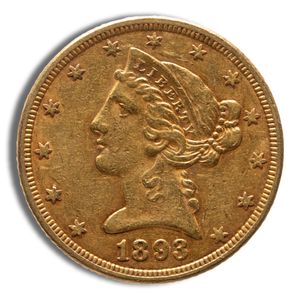
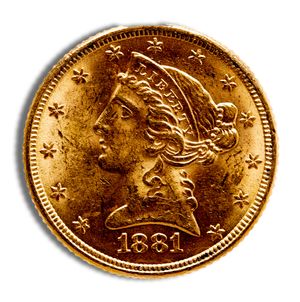
The obverse of the Classic Head Quarter Eagle features a forward-facing portrait of Liberty wearing a headband inscribed with the word LIBERTY. The portrait is rendered with a classical Roman influence that was characteristic of early 19th-century American numismatic design. Thirteen stars surround the portrait, and the date appears along the lower rim.
The reverse displays a heraldic eagle at center, its wings spread and its chest bearing a shield. The eagle holds an olive branch in one talon and a bundle of arrows in the other, with a scroll above reading E PLURIBUS UNUM. The inscriptions UNITED STATES OF AMERICA and 2 1/2 D. frame the design along the periphery, clearly identifying both the issuing authority and the denomination. At the XF grade level, these design elements remain well-defined, with visible feather detail on the eagle and clear lettering throughout, though the highest points of the relief typically show evidence of light circulation wear.
Fractional Size and Accessibility
At 0.1209 troy ounces of gold, the Classic Head Quarter Eagle represents one of the smaller gold denominations produced by the United States Mint during the 19th century. This size makes it a practical entry point for buyers who want genuine American gold coinage without committing to the cost of a full half or full eagle. The smaller format also means individual pieces fit naturally into focused type sets or collections built around early American gold coinage.
Because the premium on these coins reflects both the gold content and the numismatic character of the piece, the Classic Head Quarter Eagle appeals to buyers who value historical authenticity alongside the underlying metal. The accessible size allows collectors and buyers to acquire a legitimate piece of U.S. Mint history at a scale that suits a range of budgets and collecting goals.
Authenticity and Product Integrity
Every Classic Head Quarter Eagle we offer has been reviewed for authenticity, weight, and purity prior to being listed. Coins of this age and type require careful handling and evaluation, which is why our assessment process draws on established numismatic standards and grading knowledge consistent with the practices of PCGS and NGC, both of which we are authorized dealers for. While these particular pieces are listed without third-party encapsulation, their authenticity is taken seriously at every stage of our handling process.
The .900 gold standard used in U.S. Mint coinage during this era was a clearly defined government specification, and the weight of 0.1209 troy ounces is consistent across the Classic Head series. Buyers can have confidence that the metal content meets the original minting standard. For buyers who prefer third-party certification, submission to PCGS or NGC is an option worth considering given the age and collectibility of these coins.
Condition and Packaging
The XF, or Extremely Fine, grade means these coins exhibit only light to moderate wear across the highest relief areas while retaining strong definition throughout the design. Liberty's portrait and the eagle's feathers will show some smoothing from circulation, but the lettering, stars, and major design elements remain sharp and fully legible. At this grade level, coins carry genuine visual appeal while reflecting the reality that they circulated during the 19th century.
Individual coins ship in protective plastic flips to keep the surfaces stable during transit and storage. Because these are offered as random year examples, specific dates and mint marks are assigned based on available inventory at the time of order. Given the age and numismatic nature of these pieces, no two examples will be identical, and minor differences in surface character, toning, or strike are to be expected as normal characteristics of coins from this era rather than defects.
Pricing and Market Factors
Pricing for the Classic Head Quarter Eagle reflects both the current spot price of gold and the numismatic premium associated with a genuine 19th-century U.S. Mint coin. Because these coins carry collector interest beyond their raw gold content, the premium above spot tends to be higher than what you would expect from modern bullion coins or bars of similar weight. Supply is a meaningful driver here as well, since no new Classic Head Quarter Eagles can be produced and the available supply of XF examples is finite.
We price these coins in real time to reflect current gold market conditions, and the bid/ask spread displayed on our product page gives buyers a transparent view of both the acquisition cost and the current repurchase value. This dual-sided pricing reflects our commitment to helping buyers understand the full transaction rather than focusing only on the purchase premium.
Selling and Liquidity
Classic Head Quarter Eagles are recognized across the numismatic and bullion markets as genuine early American gold coinage, which supports consistent demand from a range of buyers including type collectors, early American gold specialists, and buyers focused on the underlying metal content. The coin's U.S. Mint origin, standardized gold content, and historical status all contribute to its recognizability in resale environments.
We operate a two-way market that supports both buying and selling of products like this one. Customers who decide to sell can work within the same ecosystem where they purchased, with competitive buyback pricing that reflects current wholesale market conditions. Liquidity for coins at the XF grade level is generally supported by the collector community as well as broader dealer networks, which gives sellers access to multiple market channels when the time comes.
Why Buy the Classic Head Quarter Eagle?
The Classic Head Quarter Eagle occupies a specific and meaningful position in American numismatic history. It was minted during a relatively narrow window between 1834 and 1839, and surviving examples in XF condition offer a genuine connection to the early years of U.S. gold coinage. For buyers building a type set of early American gold, this coin fills a distinct slot that cannot be replicated with a modern issue.
Beyond the historical dimension, the coin's .900 gold content and standardized weight give it a material foundation that supports value independent of its collector premium. Buying at the XF grade level offers a meaningful balance between affordability and visual quality, since the design remains readable and attractive without the cost associated with AU or mint state examples. For buyers who want real American gold history with clear numismatic identity, this coin delivers on both counts.
Why Buy from Bullion Standard?
We have been operating in the precious metals market since 2010, and our approach has consistently emphasized transparency, fair pricing, and long-term customer relationships over high-pressure sales tactics. Our A rating with the Better Business Bureau and memberships in both the American Numismatic Association and the National Coin and Bullion Association reflect the standards we hold ourselves to across every transaction. As authorized dealers for both PCGS and NGC, we are equipped to assist buyers who want to explore third-party certification for coins like this one.
Our two-way market model means we are as focused on the selling side of the transaction as we are on the buying side. We believe that knowing your exit options before you purchase is part of making an informed decision, and our buyback pricing is structured to reflect that philosophy. Every purchase is backed by responsive customer support, secure fulfillment, and the same commitment to product authenticity that has defined our operation since the beginning.
Get Near-Spot Pricing with Bullion Standard Pro
Bullion Standard Pro gives members access to live, executable wholesale bid and ask pricing across a wide range of products, including numismatic coins like the Classic Head Quarter Eagle. Because coins of this type carry premiums that reflect both gold content and collector demand, understanding how those premiums move over time provides meaningful context for buyers evaluating whether the current market presents an efficient entry point. Pro members can track this using historical premium data, spread analysis, and real-time wholesale pricing tools built directly into the platform.
Portfolio valuation through Bullion Standard Pro uses live wholesale bid pricing rather than estimated retail values, which gives members a more accurate picture of current liquidation value. For collectors or buyers holding multiple early American gold coins, this real-time portfolio view offers a level of transparency that static account tools simply do not provide.
Flexible and Secure Payment Options
We support a wide range of payment methods to make the buying process as straightforward as possible. Customers can pay using Visa, Mastercard, American Express, or Discover, as well as PayPal, bank-connected payments through Plaid, wire transfer, paper check, or cryptocurrency through BitPay. Every transaction is processed with security and reliability as the baseline standard, so buyers can focus on the purchase rather than the payment mechanics.
$2.5 Gold Classic Head Quarter Eagle - XF (Random Year)
The Classic Head Quarter Eagle is a genuine United States gold coin struck at a fineness of .900 with a gold weight of 0.1209 troy ounces. Issued by the United States Mint with a face value of two and a half dollars, this coin occupies a distinct place among early American gold coinage as both a legally issued tender and a historically grounded piece of numismatic significance. The XF, or Extremely Fine, grade designation indicates a coin that retains sharp detail across most of its design elements with only light wear on the higher points of the relief. We carry these coins as random year examples drawn from the Classic Head series, making each piece a genuine artifact of 19th-century American minting.
History and Background
The Classic Head design was introduced on the Quarter Eagle in 1834 as part of a broader effort by the United States Mint to address the problems caused by the overvaluation of gold in the earlier Capped Bust series. Prior to 1834, American gold coins were frequently melted for their bullion value because the face value did not reflect the actual market value of the metal. The Coinage Act of 1834 reduced the standa…
Overview of the Classic Head Quarter Eagle
The Classic Head Quarter Eagle is a genuine United States gold coin struck at a fineness of .900 with a gold weight of 0.1209 troy ounces. Issued by the United States Mint with a face value of two and a half dollars, this coin occupies a distinct place among early American gold coinage as both a legally issued tender and a historically grounded piece of numismatic significance. The XF, or Extremely Fine, grade designation indicates a coin that retains sharp detail across most of its design elements with only light wear on the higher points of the relief. We carry these coins as random year examples drawn from the Classic Head series, making each piece a genuine artifact of 19th-century American minting.
History and Background
The Classic Head design was introduced on the Quarter Eagle in 1834 as part of a broader effort by the United States Mint to address the problems caused by the overvaluation of gold in the earlier Capped Bust series. Prior to 1834, American gold coins were frequently melted for their bullion value because the face value did not reflect the actual market value of the metal. The Coinage Act of 1834 reduced the standard gold content in American coins, making the new issues more practical for circulation and eliminating the incentive to melt them.
Christian Gobrecht, a gifted engraver who would later produce the iconic Seated Liberty design, is credited with the Classic Head portrait. The series ran from 1834 through 1839, produced at the Philadelphia Mint and, later, the Charlotte, Dahlonega, and New Orleans Mints. This relatively short production window makes surviving examples meaningful to collectors of early American coinage, particularly those with clear mint marks and readable design details.
Design and Aesthetics
The obverse of the Classic Head Quarter Eagle features a forward-facing portrait of Liberty wearing a headband inscribed with the word LIBERTY. The portrait is rendered with a classical Roman influence that was characteristic of early 19th-century American numismatic design. Thirteen stars surround the portrait, and the date appears along the lower rim.
The reverse displays a heraldic eagle at center, its wings spread and its chest bearing a shield. The eagle holds an olive branch in one talon and a bundle of arrows in the other, with a scroll above reading E PLURIBUS UNUM. The inscriptions UNITED STATES OF AMERICA and 2 1/2 D. frame the design along the periphery, clearly identifying both the issuing authority and the denomination. At the XF grade level, these design elements remain well-defined, with visible feather detail on the eagle and clear lettering throughout, though the highest points of the relief typically show evidence of light circulation wear.
Fractional Size and Accessibility
At 0.1209 troy ounces of gold, the Classic Head Quarter Eagle represents one of the smaller gold denominations produced by the United States Mint during the 19th century. This size makes it a practical entry point for buyers who want genuine American gold coinage without committing to the cost of a full half or full eagle. The smaller format also means individual pieces fit naturally into focused type sets or collections built around early American gold coinage.
Because the premium on these coins reflects both the gold content and the numismatic character of the piece, the Classic Head Quarter Eagle appeals to buyers who value historical authenticity alongside the underlying metal. The accessible size allows collectors and buyers to acquire a legitimate piece of U.S. Mint history at a scale that suits a range of budgets and collecting goals.
Authenticity and Product Integrity
Every Classic Head Quarter Eagle we offer has been reviewed for authenticity, weight, and purity prior to being listed. Coins of this age and type require careful handling and evaluation, which is why our assessment process draws on established numismatic standards and grading knowledge consistent with the practices of PCGS and NGC, both of which we are authorized dealers for. While these particular pieces are listed without third-party encapsulation, their authenticity is taken seriously at every stage of our handling process.
The .900 gold standard used in U.S. Mint coinage during this era was a clearly defined government specification, and the weight of 0.1209 troy ounces is consistent across the Classic Head series. Buyers can have confidence that the metal content meets the original minting standard. For buyers who prefer third-party certification, submission to PCGS or NGC is an option worth considering given the age and collectibility of these coins.
Condition and Packaging
The XF, or Extremely Fine, grade means these coins exhibit only light to moderate wear across the highest relief areas while retaining strong definition throughout the design. Liberty's portrait and the eagle's feathers will show some smoothing from circulation, but the lettering, stars, and major design elements remain sharp and fully legible. At this grade level, coins carry genuine visual appeal while reflecting the reality that they circulated during the 19th century.
Individual coins ship in protective plastic flips to keep the surfaces stable during transit and storage. Because these are offered as random year examples, specific dates and mint marks are assigned based on available inventory at the time of order. Given the age and numismatic nature of these pieces, no two examples will be identical, and minor differences in surface character, toning, or strike are to be expected as normal characteristics of coins from this era rather than defects.
Pricing and Market Factors
Pricing for the Classic Head Quarter Eagle reflects both the current spot price of gold and the numismatic premium associated with a genuine 19th-century U.S. Mint coin. Because these coins carry collector interest beyond their raw gold content, the premium above spot tends to be higher than what you would expect from modern bullion coins or bars of similar weight. Supply is a meaningful driver here as well, since no new Classic Head Quarter Eagles can be produced and the available supply of XF examples is finite.
We price these coins in real time to reflect current gold market conditions, and the bid/ask spread displayed on our product page gives buyers a transparent view of both the acquisition cost and the current repurchase value. This dual-sided pricing reflects our commitment to helping buyers understand the full transaction rather than focusing only on the purchase premium.
Selling and Liquidity
Classic Head Quarter Eagles are recognized across the numismatic and bullion markets as genuine early American gold coinage, which supports consistent demand from a range of buyers including type collectors, early American gold specialists, and buyers focused on the underlying metal content. The coin's U.S. Mint origin, standardized gold content, and historical status all contribute to its recognizability in resale environments.
We operate a two-way market that supports both buying and selling of products like this one. Customers who decide to sell can work within the same ecosystem where they purchased, with competitive buyback pricing that reflects current wholesale market conditions. Liquidity for coins at the XF grade level is generally supported by the collector community as well as broader dealer networks, which gives sellers access to multiple market channels when the time comes.
Why Buy the Classic Head Quarter Eagle?
The Classic Head Quarter Eagle occupies a specific and meaningful position in American numismatic history. It was minted during a relatively narrow window between 1834 and 1839, and surviving examples in XF condition offer a genuine connection to the early years of U.S. gold coinage. For buyers building a type set of early American gold, this coin fills a distinct slot that cannot be replicated with a modern issue.
Beyond the historical dimension, the coin's .900 gold content and standardized weight give it a material foundation that supports value independent of its collector premium. Buying at the XF grade level offers a meaningful balance between affordability and visual quality, since the design remains readable and attractive without the cost associated with AU or mint state examples. For buyers who want real American gold history with clear numismatic identity, this coin delivers on both counts.
Why Buy from Bullion Standard?
We have been operating in the precious metals market since 2010, and our approach has consistently emphasized transparency, fair pricing, and long-term customer relationships over high-pressure sales tactics. Our A rating with the Better Business Bureau and memberships in both the American Numismatic Association and the National Coin and Bullion Association reflect the standards we hold ourselves to across every transaction. As authorized dealers for both PCGS and NGC, we are equipped to assist buyers who want to explore third-party certification for coins like this one.
Our two-way market model means we are as focused on the selling side of the transaction as we are on the buying side. We believe that knowing your exit options before you purchase is part of making an informed decision, and our buyback pricing is structured to reflect that philosophy. Every purchase is backed by responsive customer support, secure fulfillment, and the same commitment to product authenticity that has defined our operation since the beginning.
Get Near-Spot Pricing with Bullion Standard Pro
Bullion Standard Pro gives members access to live, executable wholesale bid and ask pricing across a wide range of products, including numismatic coins like the Classic Head Quarter Eagle. Because coins of this type carry premiums that reflect both gold content and collector demand, understanding how those premiums move over time provides meaningful context for buyers evaluating whether the current market presents an efficient entry point. Pro members can track this using historical premium data, spread analysis, and real-time wholesale pricing tools built directly into the platform.
Portfolio valuation through Bullion Standard Pro uses live wholesale bid pricing rather than estimated retail values, which gives members a more accurate picture of current liquidation value. For collectors or buyers holding multiple early American gold coins, this real-time portfolio view offers a level of transparency that static account tools simply do not provide.
Flexible and Secure Payment Options
We support a wide range of payment methods to make the buying process as straightforward as possible. Customers can pay using Visa, Mastercard, American Express, or Discover, as well as PayPal, bank-connected payments through Plaid, wire transfer, paper check, or cryptocurrency through BitPay. Every transaction is processed with security and reliability as the baseline standard, so buyers can focus on the purchase rather than the payment mechanics.
This website uses cookies for analytics and to deliver personalized content. By continuing to
use our site, you acknowledge that you have read and agree to our Privacy Policy and Cookie
Policy.
Current Quantities Available
Unfortunately, we only have 0
of
this item in
stock.
Please call us at (833) 278-4653
or email us at support@bullionstandard.com
if you wish to purchase a larger quantity than what is available on our website.
We can often locate additional quantities.

 (833) 278-4653


.png)