Overview of Peace Silver Dollar - PCGS MS60-MS62 Toned (Random Year)
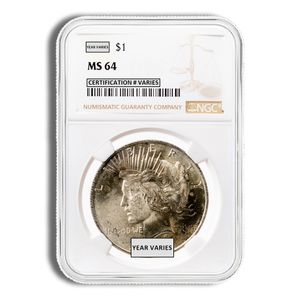
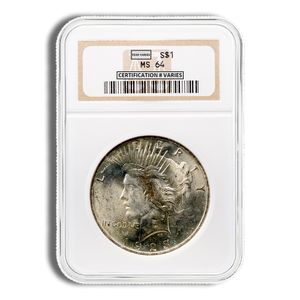
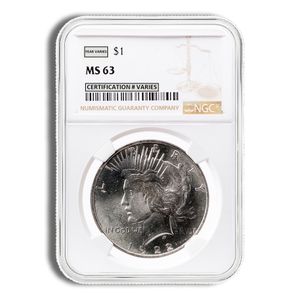
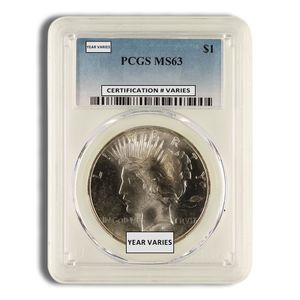
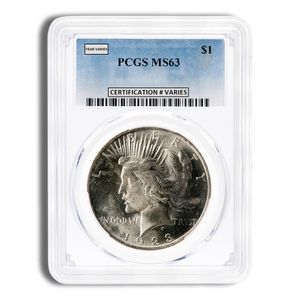
The Peace dollar is a 90% silver coin struck by the United States Mint between 1921 and 1935, carrying a face value of one dollar and containing 0.7734 troy ounces of silver. These pieces represent the final regular-issue silver dollar design in American coinage history, and they remain among the most widely recognized 90% silver coins traded in today's market. The examples we carry are graded MS60 through MS62 by PCGS, placing them firmly in the Mint State range despite the presence of visible contact marks or surface distractions that keep them from higher grades.
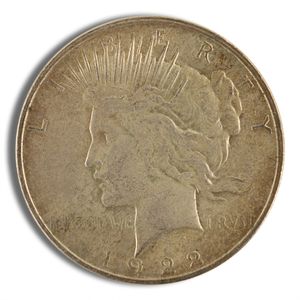
Toning on these coins adds a layer of visual character that sets them apart from typical Mint State examples. The specific year will vary, drawing from the full production run across multiple United States Mint facilities, which means each coin carries its own date and often its own toning personality.
History and Background
The Peace dollar emerged in the aftermath of World War I as both a practical coinage solution and a symbolic gesture toward global peace. Congress authorized the new design following a competitive submission process, and sculptor Anthony de Francisci's design was selected in 1921. The coin entered circulation that same year, produced briefly in the classic high-relief style before transitioning to a more workable bas-relief format in 1922.
Production continued through 1928, paused entirely, and resumed in 1934 and 1935 before the series ended. Coins were struck at the Philadelphia, Denver, and San Francisco Mint facilities, with mintmarks appearing on the reverse. A planned 1964 revival was halted before distribution, leaving the 1935 issue as the last Peace dollar struck for circulation.
The coin holds a distinctive place in United States Mint history because it coincided with an era when large silver dollars still served a practical monetary function in parts of the country, particularly in the American West. Survivors in Mint State today are disproportionately drawn from Treasury bag releases decades after their original minting, which explains why so many circulated examples and genuine Mint State pieces coexist in the market.
Design and Aesthetics
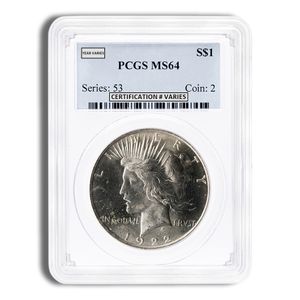
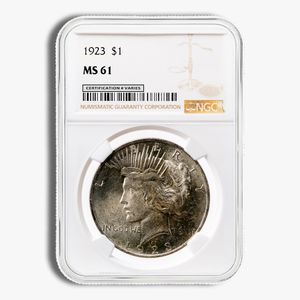
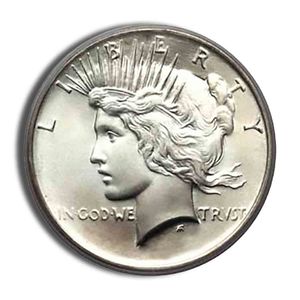
The obverse features a forward-facing portrait of Lady Liberty wearing a radiate crown, rendered with a softer, more naturalistic quality than earlier American coinage. De Francisci modeled the portrait after his wife, Teresa, and the result carries a sense of idealism that distinguished it immediately from the more formal Morgan dollar it replaced. The word LIBERTY arcs above, with the date below and IN GOD WE TRUST to the left of the portrait.
The reverse depicts a bald eagle perched on a mountain peak, clutching an olive branch, with the sun rising behind it. The inscription PEACE appears beneath the eagle, a direct reference to the coin's symbolic purpose. The overall composition has a restrained, almost sculptural quality that stands out among early twentieth-century American coin designs.
Toned examples at the MS60 to MS62 level often exhibit a range of colors across the coin's surfaces, from golden and amber hues to deeper blues and grays depending on how the coin was stored over the decades. Because toning develops naturally over time through chemical interaction with the coin's environment, no two toned pieces look identical. PCGS examines each coin to distinguish original, naturally developed toning from artificial or post-mint treatments before assigning a grade.
Authenticity and Product Integrity
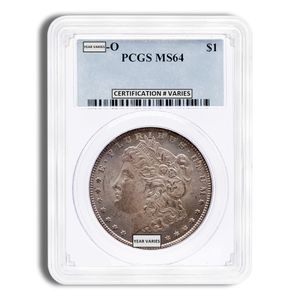
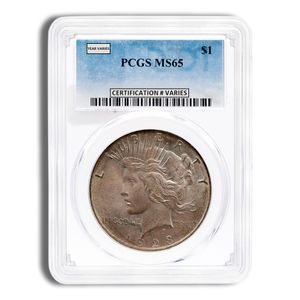
Every coin in this listing has been examined and encapsulated by PCGS, one of the two most respected third-party grading services in the numismatic industry. The PCGS holder seals the coin in a tamper-evident plastic slab that carries the assigned grade, certification number, and a description noting the toned designation. This encapsulation allows buyers to verify authenticity through PCGS's online database using the certification number on the holder.
We are an authorized PCGS dealer, which means the coins we carry have been authenticated and graded through a process we stand behind directly. The 90% silver content and 0.7734 troy ounce weight of each coin is consistent across the Peace dollar series, a fixed specification established at the United States Mint and verified through PCGS's grading process. Buyers can purchase with confidence knowing that the grading, metal content, and authenticity have all been independently confirmed before the coin reaches them.
Condition and Packaging
PCGS grades of MS60 through MS62 indicate coins that have never been in circulation but show varying degrees of contact marks, bag marks, or minor surface abrasions acquired during the original minting and storage process. At MS60, these distractions are more numerous or more noticeable, while MS62 coins have fewer or lighter marks and may show better overall eye appeal. These grades are considered the entry point into Mint State territory and are priced accordingly relative to higher-grade examples.
The toned designation applied by PCGS indicates that the coin's surfaces display original, naturally developed coloration rather than artificial treatment. This distinction matters because PCGS will not straight-grade a coin with artificial toning, so the MS60-MS62 Toned label confirms the color is original to the coin. Each coin ships securely in its PCGS holder, which provides both physical protection and a clear display of the assigned grade and certification details.
Pricing and Market Factors
Peace dollar pricing at the MS60 to MS62 level reflects both the current silver spot price and a numismatic premium driven by the coin's historic status, PCGS certification, and collector demand. Because these coins carry 0.7734 troy ounces of 90% silver, their floor value moves in tandem with the silver market, but the certified grade and toning designation push premiums above what raw 90% silver typically commands.
Toned examples in this grade range often attract a narrower but engaged segment of buyers who value the visual character that original toning brings to a coin at an accessible price point. The combination of a PCGS holder, a recognizable classic American design, and naturally developed color creates a pricing profile that differs meaningfully from generic 90% silver or raw Peace dollars. Our pricing reflects real-time market conditions and is structured to give buyers a clear picture of what they are paying relative to spot.
Selling and Liquidity
The Peace dollar is one of the most liquid 90% silver coins in the American market, recognized by dealers, collectors, and bullion buyers alike. PCGS certification adds a layer of confidence for secondary market transactions because the grade and authenticity have already been independently verified, removing a common source of friction in resale. MS60 to MS62 toned examples occupy a specific niche that appeals to both silver buyers and entry-level collectors, which broadens the potential buyer pool compared to higher-grade coins priced further above spot.
We operate a two-way market, meaning customers who purchased PCGS-graded Peace dollars through us have a straightforward path to sell within the same ecosystem at competitive buyback pricing. Understanding the resale side of a transaction before making a purchase is something we actively encourage, and our platform is built to support that kind of informed decision-making from the start.
Why Buy a PCGS MS60-MS62 Toned Peace Dollar?
For buyers looking to acquire a historic American silver coin with third-party authentication at a price point that stays close to the coin's underlying silver value, the MS60 to MS62 toned Peace dollar represents a practical and visually interesting choice. The PCGS holder eliminates authenticity concerns, and the toning adds character that plain, ungradded examples simply cannot offer at the same price. These coins occupy a compelling space between raw 90% silver and premium numismatic material.
The Peace dollar series is finite. Production ended in 1935 and the total population of surviving Mint State examples is fixed. While MS60 to MS62 coins represent the lower end of the certified Mint State range, they carry the same historic and symbolic weight as higher-grade examples at a fraction of the cost. The random year format means each purchase delivers a piece of a genuinely storied series without requiring the buyer to pay a specific-date premium.
Why Buy from Bullion Standard?
We have been operating in the physical precious metals market since 2010, and our focus has always been on transparency, honest pricing, and treating customers as informed adults rather than sales targets. Our authorized dealer status with both PCGS and NGC means we handle certified coins through channels that align with the grading services' own standards. That relationship matters when it comes to graded numismatic products, where authenticity and proper handling are non-negotiable.
Our A rating with the Better Business Bureau, membership in the American Numismatic Association, and membership in the National Coin and Bullion Association reflect a track record built over more than a decade of consistent service. We display bid and ask spreads directly on product pages so buyers can evaluate the complete cost of a transaction, not just the purchase price. Our two-way market model means liquidity is part of the conversation before the purchase is made, not only after.
Get Near-Spot Pricing with Bullion Standard Pro
Bullion Standard Pro gives members access to live, executable wholesale bid and ask pricing on products across our catalog, including PCGS-certified 90% silver coins. For toned Mint State Peace dollars, where premiums can shift based on collector demand, seasonal buying patterns, and broader silver market conditions, having direct visibility into wholesale pricing levels provides a meaningful advantage over relying on standard retail price displays. Members can track how premiums on graded 90% silver move over time using historical analytics and premium percentile rankings, which helps put any given price into clearer context.
Portfolio valuation through Pro uses live wholesale bid pricing rather than estimated retail values, giving members a more realistic picture of current liquidation value for holdings like certified Peace dollars. Combined with proprietary spread analysis and market intelligence tools, Pro transforms how members evaluate graded coins, moving the process away from assumptions and toward objective, data-driven decision-making.
Flexible and Secure Payment Options
We support a broad range of payment methods to make purchasing straightforward and secure regardless of how you prefer to transact. Accepted options include Visa, Mastercard, American Express, Discover, PayPal, bank-connected payments through Plaid, wire transfer, paper check, and cryptocurrency via BitPay. Each method is processed through a secure transaction environment designed to protect your information at every step.
Different payment methods may carry different processing fees or pricing adjustments, and those details are made clear during checkout so there are no surprises. Our goal is to give buyers flexibility without sacrificing the transaction security that comes standard across every order we fulfill.

 (833) 278-4653


.png)