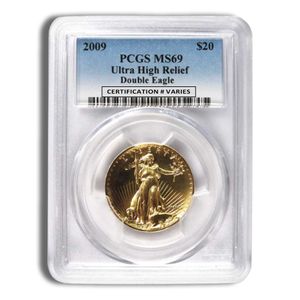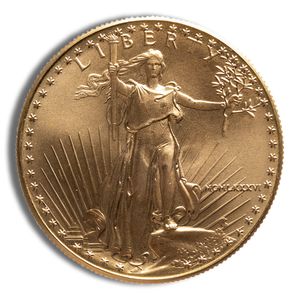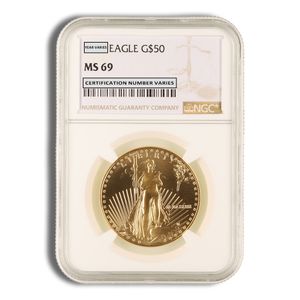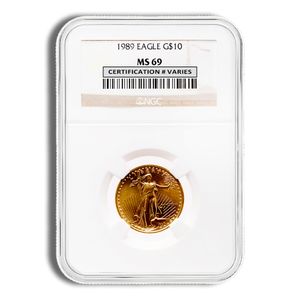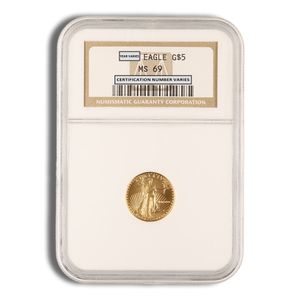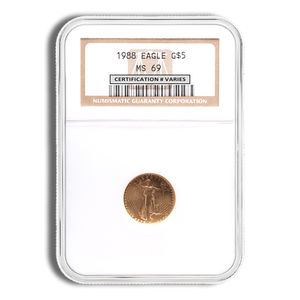
2026 1/2 Oz Gold American Eagle - BU
1995 1/4 Oz Gold American Eagle - NGC MS69

1994 1/4 Oz Gold American Eagle - NGC MS69
1991 1/2 Oz Gold American Eagle - NGC MS69
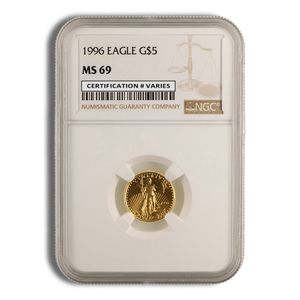
1996 1/4 Oz Gold American Eagle - NGC MS69
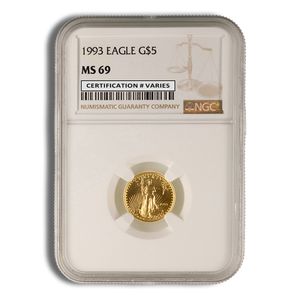
1993 1/4 Oz Gold American Eagle - NGC MS69
2026 1 Oz Gold American Eagle - BU
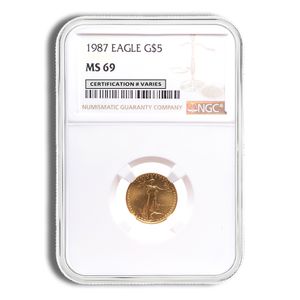
1995 1/10 oz Gold Eagle $5 NGC MS69
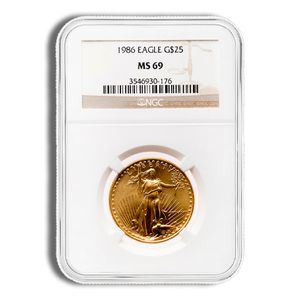
1986 1/4 Oz Gold American Eagle - NGC MS69
2001 1/4 Oz Gold American Eagle - PCGS MS69
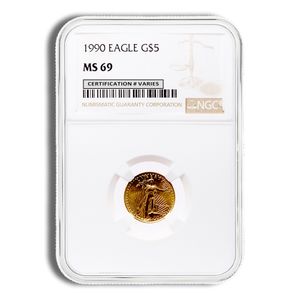
1990 1/4 Oz Gold American Eagle - NGC MS69
2026 1/4 Oz Gold American Eagle - BU
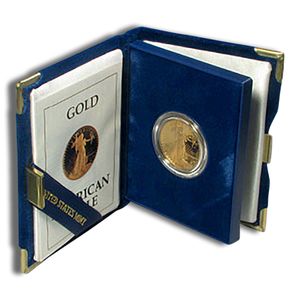
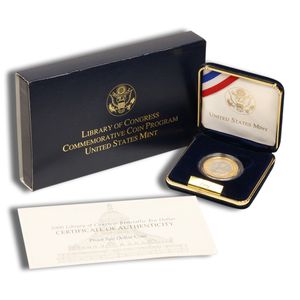
1986-W 1 oz Proof Gold Eagle $50 - Box & COA
2016-W 1 oz Proof Gold Eagle $50 - Box & COA
1988-W 1 oz Proof Gold Eagle $50 - Box & COA
2012-W 1 oz Proof Gold Eagle $50 - Box & COA
1995 1/2 Oz Gold American Eagle - NGC MS69
1989 1/2 Oz Gold American Eagle - NGC MS69

Buy United States Gold Coins Online

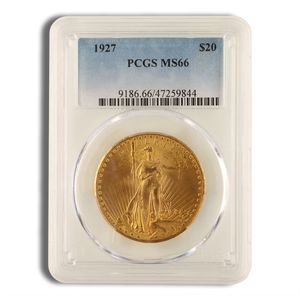
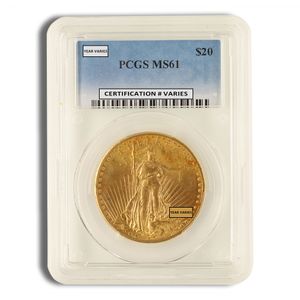
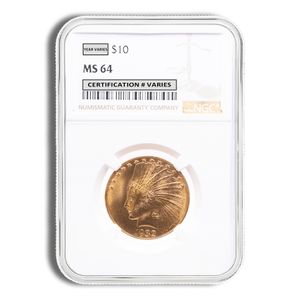
Our catalog of united states gold coins spans the full range of historic American coinage, from the diminutive $1 gold pieces struck by the United States Mint in the mid-nineteenth century to the imposing $20 Liberty double eagles and $10 Indian eagles that circulated well into the twentieth century. Whether you're looking for a circulated example in VF or XF condition, an ungraded brilliant uncirculated coin, or a third-party certified specimen slabbed by NGC or PCGS, the selection here covers each major series across multiple grade levels.

You'll find $1 gold coins across three distinct design types, including the Liberty Type 1, the Princess Type 2, and the Indian Type 3, alongside the classic head and Indian design quarter eagles at $2.50, Indian and Liberty quarter eagles, Liberty and Indian eagles at $10, and the Liberty double eagle at $20. Each product listing reflects real-time market pricing with full transparency on the premium structure. Certified examples are available with NGC and PCGS holders across grades from MS61 through MS65, alongside raw circulated coins at grades from cleaned or low grade through AU.

Bullion Standard sources these coins from reputable wholesale networks, which means you're purchasing through a dealer with established provenance rather than an opaque private listing. As an authorized dealer for both PCGS and NGC, we can confirm the authenticity and grading integrity of every certified product in this section of our catalog.

What Are United States Gold Coins?

United States gold coins are federally authorized circulating coinage struck by the United States Mint in gold alloys, produced from the late eighteenth century through 1933, when the federal government officially ended domestic gold coin circulation. These coins carry legal tender face values established by Congress and were minted primarily at facilities including Philadelphia, San Francisco, New Orleans, Denver, and Carson City. They were made from a .900 fine gold alloy, meaning 90% gold and 10% copper for durability, which places them in a distinct category from modern .9999 fine bullion coins like the American Gold Eagle or Buffalo.

Collectors and buyers approach these coins from two overlapping angles. The first is numismatic, focusing on grade, date, mint mark, design type, and historical significance. The second is intrinsic, where the gold content itself is the primary consideration. Many of the circulated coins in this catalog, particularly the lower-grade examples, trade at premiums closely tied to their gold content rather than numismatic scarcity. Higher-grade certified examples from NGC and PCGS command premiums that reflect both condition rarity and collector demand.

The distinction between raw and certified examples is meaningful here. A raw coin graded AU or XF by a seller carries no independent verification, while a coin in an NGC or PCGS holder has been authenticated, graded, and encapsulated by a recognized third-party grading service. For buyers who prioritize certainty, certified coins remove ambiguity about condition and eliminate the need to assess originality independently.

History and Background

American gold coinage traces its origins to the Coinage Act of 1792, which established the first formal monetary system for the United States and authorized the production of gold denominations including the eagle, half eagle, and quarter eagle. The $1 gold denomination was added later, first struck in 1849 following the California Gold Rush and the sudden availability of large quantities of domestic gold. That coin went through three design types over its lifespan, transitioning from the small Liberty head to the larger Indian head design before the denomination was discontinued in 1889.

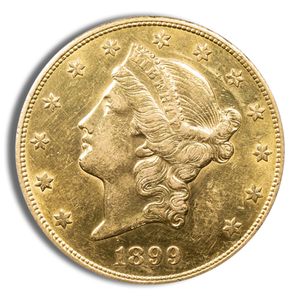
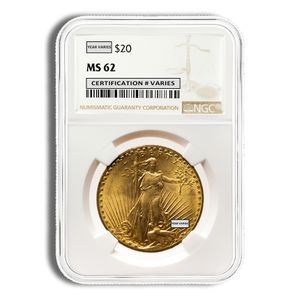
The $2.50 quarter eagle and $10 eagle denominations have longer histories that stretch across multiple design eras. The Liberty head designs, introduced in the mid-nineteenth century, were gradually replaced by the sculptural incuse Indian head designs created by Bela Lyon Pratt for the quarter eagle and half eagle, and by Augustus Saint-Gaudens for the double eagle, in the early twentieth century. These later designs are widely regarded as among the most artistically accomplished in American coinage history. The $20 Saint-Gaudens double eagle, in particular, has become one of the most recognized and traded historic gold coins in the world, though our catalog at present focuses on the Liberty double eagle series.

Domestic gold coin production effectively ended with Executive Order 6102 in 1933, which required most citizens to turn in gold coins and certificates to the Federal Reserve. This makes all pre-1933 United States gold coins inherently finite in supply, with no possibility of new production. That fixed supply dynamic has made them a persistent presence in both the numismatic and physical precious metals markets for decades.

Purity, Weight, and Specifications

All united states gold coins listed in our catalog carry a purity of .900 fine gold, the standard alloy used throughout the period of domestic gold coin production. The remaining 10% is copper, which provided the hardness necessary for circulating coinage while maintaining consistent weight. Each denomination has a defined gold content that remains constant regardless of date or mint mark, making them straightforward to evaluate on a per-ounce basis.

The $1 gold coins contain approximately 0.0483 troy ounces of gold. Quarter eagles at $2.50 contain approximately 0.1209 troy ounces. The $10 eagle contains approximately 0.4837 troy ounces, and the $20 double eagle contains approximately 0.9675 troy ounces. These figures reflect the actual gold content rather than the total coin weight, which is slightly higher due to the copper alloy. When evaluating premiums on circulated examples, buyers often compare the purchase price against the current spot value of the gold content to understand the intrinsic floor relative to the asking price.

Certified examples will carry a coin holder with a label indicating the grade, certification number, and series designation. These labels are issued by NGC or PCGS and allow the coin's grading record to be verified directly through each service's online registry. The grading scale used for these coins runs from Poor (P-1) at the low end through MS70 at the theoretical maximum, with the Mint State grades in our catalog ranging from MS61 through MS65.

Available Brands, Mints, and Product Variations

Every coin in this section was struck by the United States Mint, the sole authorized producer of American circulating coinage. The specific mint facility that produced a given coin is identified by a mint mark, or in the case of Philadelphia-struck coins from certain eras, the absence of one. Coins from San Francisco carry an "S," New Orleans coins carry an "O," Denver coins carry a "D," and Carson City coins carry a "CC." Because our catalog lists products as random year, the specific date and mint mark will vary based on available inventory at the time of fulfillment.

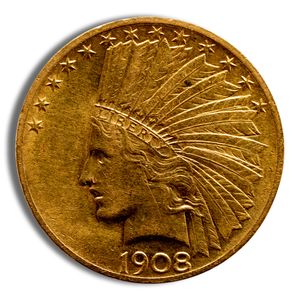
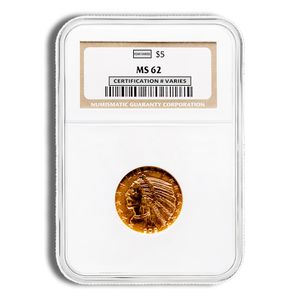
Design variations within each denomination are reflected directly in the product names. The $1 gold series includes the Liberty Type 1 (1849 to 1854), the small Indian Princess Type 2 (1854 to 1856), and the large Indian Princess Type 3 (1856 to 1889). The quarter eagle series includes the Classic Head design, the Liberty head design, and the Indian head incuse design by Bela Lyon Pratt. The eagle series includes the Liberty head design and the Indian head design. Each type has distinct physical characteristics, and buyers purchasing random year products should expect variation within the specified type based on available supply.

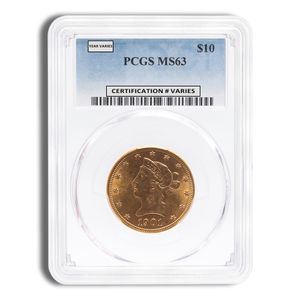
Grade options span a wide range. Uncertified circulated examples are offered at VF, XF, and AU grades alongside cleaned or low-grade options for buyers focused primarily on gold content. Brilliant uncirculated raw examples are available for select series. Certified options through both NGC and PCGS are listed at MS61, MS62, MS63, MS64, and MS65, giving buyers the ability to target a precise grade tier based on their budget and collecting objectives.

Pricing, Premiums, and Market Factors

Pricing on united states gold coins is determined by two separate but related factors: the intrinsic value of the gold content, which moves in real time with the spot price of gold, and the numismatic premium, which reflects condition, grade, series, design type, and overall collector demand. For lower-grade circulated examples, the numismatic premium above intrinsic gold value is relatively modest. For certified MS65 examples of scarcer types, the numismatic component can represent a significant portion of the total price.

Within the Mint State range, each grade step carries a meaningful pricing difference. Moving from MS61 to MS62, or from MS63 to MS64, reflects not just cosmetic improvement but statistically greater scarcity, since higher-grade examples have survived in better condition over more than a century. This scarcity at upper grade levels is priced into the market by NGC and PCGS population data, which tracks how many examples of each coin exist at each grade. Buyers targeting certified coins should consider where a given series sits in terms of available population before comparing prices across grade tiers.

Bullion Standard displays real-time pricing that adjusts with spot market moves throughout the trading day. The bid/ask spread is shown on individual product pages, giving buyers a transparent view of both the acquisition cost and the current resale estimate at the time of purchase. Products with higher numismatic components tend to carry wider spreads than pure bullion products, reflecting the more specialized market for certified coins relative to standardized modern bullion.

Condition, Packaging, and What to Expect

Raw circulated examples in grades from VF through AU will show wear consistent with their grade designation. VF coins display moderate wear with most major design details visible but high points smoothed. XF coins retain sharper detail with light wear limited to the highest relief areas. AU coins show only the faintest traces of wear and often retain partial or full mint luster in the fields. These coins will not be in holders and will arrive loose or in protective flips for transit.

Brilliant uncirculated raw examples should be handled carefully, as contact marks and light bag marks are normal for coins that were produced for circulation rather than as collector pieces. These coins were handled in bulk during the minting process and were never intended to be preserved in perfect condition from the outset. Minor surface imperfections are consistent with the grade and do not indicate a problem with the coin's authenticity or quality.

Certified examples arrive in tamper-evident NGC or PCGS holders with full labeling. These holders should not be cracked open or altered, as doing so removes the certification and typically reduces resale value significantly. Cleaned or low-grade options represent coins with environmental damage, cleaning, or other impairments that prevent straightforward numismatic grading and are priced accordingly for buyers focused on gold content rather than collectibility.

Authenticity and Verification

Every coin sold through Bullion Standard is verified for authenticity before leaving our facility. For raw coins, this means physical examination for weight, dimensions, and surface characteristics consistent with genuine United States Mint production. Counterfeit pre-1933 gold coins do exist in the market, and our sourcing protocols prioritize coins obtained through reputable wholesale networks with established provenance rather than anonymous private transactions.

Certified coins in NGC or PCGS holders carry an additional layer of independent verification. Both NGC and PCGS offer online verification tools where the certification number printed on the label can be cross-referenced against their databases to confirm authenticity, grade, and coin identification. This registry check is a straightforward way for buyers to independently verify the certificate matches the coin in hand before completing a purchase or upon receipt.

Bullion Standard is an authorized dealer for both PCGS and NGC, which reinforces our access to legitimately graded inventory and our commitment to the grading standards maintained by both services. Buyers who have questions about specific coins, including questions about authentication methodology or how to interpret holder labeling, can reach our team directly through our customer support channels.

Liquidity and Resale Considerations

United States gold coins are among the most widely recognized and actively traded historic gold coins in the world, which supports consistent liquidity across most series and grade levels. Circulated examples close to their intrinsic gold value trade with relative ease because the market for pre-1933 gold is broad and well-established among both collectors and dealers. Certified Mint State examples trade within a more specialized collector market, where liquidity is generally strong for common dates but can narrow for scarcer die varieties or unusual die pairings within a given series.

The format of a coin matters when considering resale. Coins in original NGC or PCGS holders are easier to resell at full market value than raw coins, because the independent certification removes the need for a buyer to independently assess condition and authenticity. This is particularly relevant for higher-grade examples where the price difference between grades is substantial and buyers are understandably more cautious. Raw coins in lower circulated grades, priced near their gold content, typically change hands with less friction because the price is less dependent on subjective condition assessment.

Series recognition also plays a role. The $20 Liberty double eagle, the $10 Liberty eagle, and the $10 Indian eagle are among the most commonly traded historic American gold coins and benefit from the broadest dealer and collector demand. Smaller denominations like the $1 gold series attract a more specialized collector base, which can affect both pricing and the time required to find a buyer at full market value.

Storage and Security

Certified coins in NGC or PCGS holders are already well-protected against direct handling and most environmental exposure. The hard plastic holder is impermeable to most common contaminants and protects the coin's surface from fingerprints, moisture, and airborne particulates. These holders should be stored upright or flat in a stable environment away from temperature extremes, and they should never be stored in direct contact with materials that off-gas sulfur compounds, which can discolor gold through the holder's seams over long periods.

Raw coins require more active protective measures. Individual protective flips made from Mylar or inert plastics are appropriate for single-coin storage. Avoid PVC-based flips, which can cause surface damage over time. Coin tubes are suitable for storing multiple coins of the same size, though the $1 gold denomination requires a tube sized for smaller coins to prevent excessive movement and contact marking during handling and transit.

For larger holdings, a home safe rated for fire and theft protection provides reasonable security for modest quantities. Bank safe deposit boxes offer an additional layer of physical security at low cost for coins that don't need to be accessed frequently. Third-party vault storage is worth considering for collections of significant size, both for security and for the insurance coverage that typically accompanies professional storage arrangements.

Selling and Buyback Options

Bullion Standard operates as a two-way market, meaning we actively purchase united states gold coins in addition to selling them. Our buyback pricing is structured to reflect real-time market conditions rather than arbitrary dealer discounts, and buyers who understand the spread at the time of purchase have a clearer picture of what to expect when they're ready to sell. This transparency is central to how we approach the full transaction lifecycle rather than treating the buy side and sell side as separate processes.

When submitting coins for buyback, the factors that most directly influence pricing include the denomination, design type, grade or condition, whether the coin is raw or certified, the specific NGC or PCGS grade for certified examples, and current spot prices. Certified coins in original holders from NGC or PCGS are evaluated at their graded market value, while raw coins are assessed based on visual grade and gold content. Coins with cleaning, environmental damage, or impairments that affect the numismatic grade will be priced closer to their intrinsic gold value regardless of surface appearance.

The streamlined nature of our buyback process reflects our broader philosophy: liquidity should be a known quantity before a purchase is made, not an afterthought when it's time to exit a position. Buyers who use our platform to research current buyback pricing before purchasing can evaluate the true cost of ownership with a clearer understanding of the spread they're accepting at entry.

Why Buy United States Gold Coins?

Pre-1933 american gold coins occupy a distinct position in the physical precious metals market because they combine tangible gold content with historical significance and the backing of the United States government at their time of issue. This dual appeal draws buyers from two directions: those focused on the metal content and those drawn to the numismatic history of the coins themselves. The convergence of these buyer groups supports relatively consistent market activity across most series and condition levels.

For buyers primarily interested in gold content, the circulated examples priced near intrinsic value offer exposure to physical gold at modest premiums above spot. The .900 fine alloy is universally recognized, the denominations are well-documented, and the coins themselves are widely authenticated by dealers and collectors. For those interested in the certified market, the combination of third-party grading, finite supply, and well-established collector demand creates a more specialized but broadly understood pricing structure.

The range of available denominations also allows buyers to customize their exposure by gold content per coin. A $1 gold piece at 0.0483 troy ounces, a $2.50 quarter eagle at 0.1209 troy ounces, a $10 eagle at 0.4837 troy ounces, and a $20 double eagle at 0.9675 troy ounces each represent a different entry point in terms of both price and gold weight, making it practical to assemble a collection or holding that reflects specific priorities around denomination, design, and budget.

Why Buy from Bullion Standard?

Bullion Standard was founded in 2010 and has grown into a nationally recognized precious metals marketplace built around a core commitment to transparent pricing and long-term customer trust. Our San Diego-based operation maintains an A rating with the Better Business Bureau, holds membership in both the American Numismatic Association and the National Coin and Bullion Association, and operates as an authorized dealer for both PCGS and NGC. These affiliations reflect a consistent standard of practice that buyers can verify independently.

Our sourcing process prioritizes coins obtained through reputable wholesale channels, and every product is reviewed for authenticity, weight, and purity before fulfillment. We believe the physical precious metals market should operate with the same level of pricing transparency and market data access found in traditional financial markets, and that philosophy shapes how we structure both our pricing and our product research tools. Buyers on our platform can evaluate bid/ask spreads, compare premiums across products, and access market intelligence that puts them in a more informed position at the time of purchase.

Payment flexibility extends across a broad range of options including Visa, Mastercard, American Express, Discover, PayPal, bank-connected payments through Plaid, wire transfer, paper check, and cryptocurrency through BitPay. Fulfillment is handled through a logistics process designed around security and reliability, with customer support available for questions at any point in the transaction. Our goal is to make buying, holding, and eventually selling physical gold through our platform a straightforward, well-supported experience.

Get Near-Spot Pricing with Bullion Standard Pro

Bullion Standard Pro is designed for buyers who want direct access to live, executable wholesale bid and ask pricing across our product catalog. Rather than purchasing at fixed retail markups, Pro members transact at wholesale market prices that fluctuate naturally with real-time supply and demand, without the additional dealer spreads common in traditional retail precious metals purchasing. For repeat buyers or those focused on pricing efficiency, this structure provides a materially different experience than standard retail.

Pro members also gain access to real-time portfolio valuation using live wholesale bid pricing rather than estimated retail values, which gives a more accurate picture of current liquidation value at any given moment. This is supported by proprietary analytics including historical premium analysis, spread analysis, liquidity metrics, buy/sell ratio indicators, and market sentiment tools that aggregate activity across the broader wholesale precious metals market. These tools are designed to surface pricing dynamics and market conditions that aren't visible from spot prices alone.

For buyers researching united states gold coins across multiple series, grade levels, and certification tiers, the comparison and research tools within Pro allow products to be evaluated side by side using objective data including premiums, historical premiums, spread tightness, and relative liquidity. The platform is built around the principle that better information leads to better decisions, and Pro is where that philosophy is most fully expressed for buyers who want to engage with the market at a more sophisticated level.