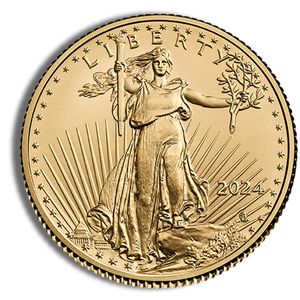
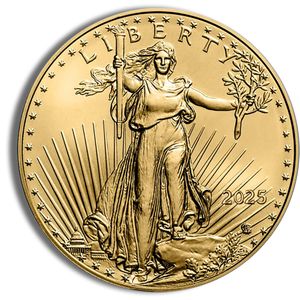
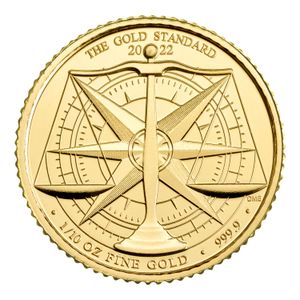
Buy Physical Gold Bars, Rounds, & Coins Online
Our catalog of physical gold bars, rounds, and coins spans one of the broadest selections available from a single U.S.-based dealer, covering everything from fractional $1 gold dollar coins to full-ounce and multi-ounce formats in graded, raw, and random year configurations. Buyers will find classic American numismatic coinage including the $1 Gold Liberty Type 1, $1 Gold Indian Type 3, $1 Gold Princess Type 2, $2.5 Gold Liberty Quarter Eagle, $2.5 Gold Indian Quarter Eagle, $2.5 Gold Classic Head Quarter Eagle, $10 Gold Liberty Eagle, $10 Gold Indian Eagle, and $20 Gold Liberty Double Eagle, among many others. Products are available in circulated grades such as VF, XF, and AU, as well as brilliant uncirculated and professionally certified examples graded by NGC and PCGS across the MS61 through MS65 spectrum.
Each product listing reflects real-time market pricing built around transparent premium structures and current spot conditions. Whether you are searching for a circulated $10 gold Indian eagle at a modest premium, a PCGS MS63-certified $2.5 gold liberty quarter eagle, or an NGC MS65-graded $1 gold Indian type 3, the product grid above displays what is actively available, current premiums, and Bullion Standard's live bid/ask spread so you can evaluate the complete cost of ownership before completing any purchase.
Bullion Standard operates as a two-way marketplace, meaning the same products visible here can also be sold back through our platform. That operational structure shapes how we present pricing, product data, and market intelligence across every listing in this section of our catalog.
What Are Physical Gold Bars, Rounds, & Coins?
Physical gold takes several distinct forms, each with its own manufacturing process, market characteristics, and use case. Gold coins are struck under the authority of a government mint and carry a face value denomination, though their market value is determined by gold content and condition rather than the stamped denomination. Gold rounds are privately minted and designed to resemble coins but carry no government-backed face value. Gold bars, whether cast or minted, are produced by accredited refineries and mints primarily to deliver a specific gold content at a tight premium to spot.
The products visible in this section are predominantly government-issued American coins produced by the United States Mint, many of which circulated as legal tender during the 19th and early 20th centuries. These coins now trade primarily as numismatic or semi-numismatic bullion, where both gold content and condition influence pricing. Graded examples certified by NGC or PCGS carry additional market confidence because the coin's condition has been independently authenticated and assigned a standardized numerical grade.
For buyers new to this segment of the gold market, it helps to understand that circulated coins in VF or XF condition carry the lowest premiums over spot while certified examples in MS63 or above typically command meaningfully higher premiums due to their comparative scarcity and established collector demand. Random year products, which make up the majority of this catalog, are fulfilled from whatever year is available in current inventory, keeping fulfillment efficient without materially affecting the gold content or purity of the product delivered.
History and Background
Gold coinage in the United States dates to the Coinage Act of 1792, which established the U.S. Mint and authorized the production of gold denominations ranging from the small $1 piece to the $10 eagle and $20 double eagle. The $1 gold coin was first introduced in 1849 in response to the California Gold Rush, which dramatically increased the domestic supply of gold and made smaller-denomination gold coinage practical for everyday commerce. Over the following decades, the Mint produced three distinct types of gold dollars: the Liberty Head Type 1, the Small Indian Head Type 2 (Princess), and the larger Indian Head Type 3, the last of which remained in production until 1889.
Quarter eagles, half eagles, and eagles followed similar design evolution across the 19th and early 20th centuries, cycling through Liberty Head, Classic Head, Indian Head, and other iconic designs that now define American numismatic history. The $10 Indian Eagle, designed by Augustus Saint-Gaudens's student Bela Lyon Pratt and introduced in 1907, and the $20 Liberty Double Eagle, struck from 1849 through 1907, represent the two most widely traded large-denomination U.S. gold coins in today's bullion market. Gold coinage production in the United States effectively ended in 1933 following Executive Order 6102, which required American citizens to surrender most privately held gold coins, cementing the historical and numismatic significance of pre-1933 gold.
The modern secondary market for pre-1933 U.S. gold coins developed significantly after 1974, when private gold ownership was fully legalized again in the United States. The introduction of third-party grading services, particularly NGC in 1987 and PCGS in 1986, brought greater standardization and transparency to coin grading, which in turn deepened the market for certified examples and helped investors better compare condition-based pricing across different coins and grades.
Purity, Weight, and Specifications
All U.S. pre-1933 gold coins listed in this catalog contain 90% gold by composition, with the remaining 10% consisting of copper alloy added to improve durability during circulation. The $1 gold pieces contain approximately 0.0483 troy ounces of gold, while $2.5 quarter eagles contain approximately 0.1209 troy ounces. The $10 eagle carries approximately 0.4837 troy ounces and the $20 double eagle contains approximately 0.9675 troy ounces of gold. These specifications are consistent across all grade levels and grading services listed in the product grid.
Diameter and thickness vary by denomination and design type. The $1 Gold Liberty Type 1, for example, measures 12.7mm in diameter and approximately 1mm in thickness, while the $1 Gold Indian Type 3 measures 15mm in diameter. The $10 Indian Eagle has a diameter of approximately 26.8mm and a thickness near 2.02mm. These physical dimensions are relevant when selecting storage capsules, tubes, or slabs compatible with certified holders from NGC or PCGS.
Certified coins are encapsulated within tamper-evident slabs issued by the grading service, which display the assigned numerical grade, certification number, and coin description. This encapsulation protects the coin's surfaces while providing a standardized, independently verified record of its condition. Raw or uncertified coins, including circulated grades and BU examples, ship loose or in protective packaging depending on their condition category.
Available Brands, Mints, and Product Variations
Every coin in this catalog was originally struck by the United States Mint at various facilities, which is reflected in the "Various" mint mark designation across random year products. Depending on the year and denomination, original production occurred at the Philadelphia, New Orleans, San Francisco, Denver, and Carson City Mint facilities. Mint marks, where present, are a meaningful part of a coin's numismatic identity, though for random year bullion purposes the specific strike location is not guaranteed.
Grade variations span the full spectrum from Cull and Cleaned condition through Circulated grades (VF Very Fine and XF Extremely Fine), About Uncirculated (AU), Brilliant Uncirculated (BU), and professionally graded Mint State examples from MS61 through MS65. NGC and PCGS certifications are available across most major denominations within this catalog, including the $1 gold Indian type 3, $1 gold liberty type 1, $2.5 gold Indian quarter eagle, $2.5 gold liberty quarter eagle, $10 gold Indian eagle, and $10 gold liberty eagle. The $2.5 Classic Head Quarter Eagle is currently available in circulated and cleaned grades only.
Product availability in this section reflects current inventory. Random year fulfillment applies across all grade tiers, which means the specific year stamped on the coin cannot be requested or guaranteed. This is standard practice for bullion-grade pre-1933 gold and does not affect the coin's gold content, purity, or grade-assigned condition. Buyers seeking a specific year or mint mark should contact our team directly to inquire about special inventory availability.
Pricing, Premiums, and Market Factors
Gold pricing begins with the spot price, which reflects the real-time wholesale market value of one troy ounce of pure gold traded on global commodity exchanges. The premium above spot on any specific coin represents the additional cost associated with manufacturing, distribution, grading, market demand, numismatic significance, and product-specific liquidity. Circulated coins typically carry the lowest premiums because they are widely available and valued primarily for their gold content. Certified coins in higher grades such as MS63, MS64, or MS65 carry substantially higher premiums reflecting the relative scarcity of well-preserved examples.
The difference between buying and selling prices, known as the bid/ask spread, is displayed on each product page at Bullion Standard. This spread reflects the true cost of ownership beyond the premium paid at purchase and is an important data point for anyone evaluating pre-1933 gold coins relative to other bullion formats. Products with narrow spreads trade more efficiently and tend to have deeper market liquidity. Graded coins at the top of the MS scale can carry wider spreads due to reduced transaction volume compared to widely traded raw bullion products.
Market factors that influence premiums on pre-1933 U.S. gold include overall gold spot price movement, collector demand cycles, the relative scarcity of specific denominations and types, grading service population reports, and broader economic conditions that affect discretionary purchases of numismatic bullion. Premiums can expand or contract meaningfully across economic cycles, and Bullion Standard's pricing reflects current executable market conditions rather than fixed retail schedules.
Condition, Packaging, and What to Expect
Circulated coins in VF, XF, and AU condition show varying degrees of wear from their original time in commerce. VF coins display moderate wear on high points with some detail remaining; XF coins retain significantly more detail with only light high-point wear; AU coins show minimal circulation evidence with luster still visible across most of the coin's surface. These coins are shipped loose in protective flips or padded packaging appropriate for their condition.
BU-grade coins are brilliant uncirculated but not certified by a third-party grading service. They may display light contact marks or bag marks consistent with mint handling and storage but have never circulated. Certified coins from NGC or PCGS arrive within their original sealed slabs and should not be removed, as breaking the encapsulation voids the certification and can significantly reduce the coin's resale value.
Products marked Cleaned or Low Grade, labeled with a "C" or "Cull" designation, represent coins that may have been cleaned, polished, or otherwise altered, or that carry damage beyond normal circulation wear. These products are priced accordingly and are typically purchased by buyers prioritizing gold content at the lowest possible premium over spot. Packaging for cull-grade coins is basic and functional. Random year fulfillment means the year on the coin received may differ from any example shown in product images.
Authenticity and Verification
Every product sold through Bullion Standard is verified for authenticity, weight, and purity before it reaches a customer. For certified coins, the NGC or PCGS certification number stamped on the slab can be verified directly through each grading service's online registry, which confirms the coin's grade, denomination, and authentication history. These registries are publicly accessible and represent one of the most reliable verification tools available in the numismatic market.
Pre-1933 U.S. gold coins have been extensively cataloged and researched, making counterfeit detection more reliable than with many modern bullion products. Professional graders at NGC and PCGS examine coins for weight, diameter, strike quality, surface characteristics, and known counterfeiting patterns before assigning a grade and encapsulating the coin. The tamper-evident slab itself serves as a physical indicator of whether a coin has been examined or altered after grading.
Bullion Standard is an authorized dealer for both PCGS and NGC, which reinforces our sourcing standards and gives customers confidence that certified coins moving through our platform meet the authentication criteria required by these organizations. Our sourcing network includes reputable wholesalers, distributors, and institutional market participants, and our internal verification process ensures that raw coins also meet expected weight and purity standards before being listed or fulfilled.
Liquidity and Resale Considerations
Pre-1933 U.S. gold coins are among the most widely recognized and actively traded numismatic gold products in the American market. The $10 gold Indian eagle, $10 gold liberty eagle, $20 gold liberty double eagle, and the various quarter eagle denominations have deep dealer networks, established auction markets, and robust collector demand that contribute to consistent secondary market activity. Recognition and standardization are foundational to liquidity, and U.S. gold coinage benefits from over a century of documented market history.
Graded coins typically sell through a somewhat narrower channel than raw bullion, as the strongest demand comes from collectors, numismatic dealers, and auction platforms that specialize in certified coinage. NGC and PCGS certification meaningfully expands resale options because buyers can transact with confidence in the coin's authenticated condition without the need for independent verification. Higher-grade certified examples in MS64 or MS65 may require more time to find a buyer at the right price point compared to lower-grade circulated coins, which trade more freely on gold content alone.
Cull and circulated coins are the most straightforwardly liquid within the bullion dealer network because pricing is primarily driven by gold content rather than condition nuance. Buyers who prioritize ease of resale often favor products in this segment of the pre-1933 gold market for that reason. Understanding where a specific coin sits along the spectrum between bullion-grade and collector-grade is a useful starting point for evaluating resale expectations before purchasing.
Storage and Security
Storing pre-1933 gold coins properly protects both their physical condition and their numismatic value. Certified coins in NGC or PCGS slabs should be kept in a stable environment away from extreme temperature swings, humidity, and direct sunlight. The polycarbonate slabs used by both grading services are designed to protect coin surfaces from contact and contamination, but they are not immune to physical damage if mishandled or dropped.
A quality home safe rated for fire and moisture resistance provides reliable everyday storage for moderate quantities. For larger holdings or particularly valuable certified examples, a bank safe deposit box or professional vault storage through an insured depository offers additional physical security and environmental stability. Vault storage is particularly practical for coins stored over longer time horizons where regular access is not required.
Raw circulated coins should be stored in individual coin flips made from inert materials such as mylar or polypropylene to prevent PVC damage, which can cause irreversible surface degradation over time. Avoid storing coins loose in proximity to other metals or abrasive materials that could scratch surfaces. For collectors holding higher-grade raw coins, individual hard capsules sized to the coin's diameter provide better physical protection than soft flips alone.
Selling and Buyback Options
Bullion Standard operates a two-way market, meaning customers can sell pre-1933 gold coins back through the same platform where they were purchased. Our purchasing team evaluates products based on current spot price, gold content, coin type, grade, certification status, condition, and prevailing market demand. Products that are widely recognized, appropriately graded, and in unaltered condition typically move through our buyback process most efficiently.
For certified coins, the NGC or PCGS slab must be intact and unaltered at the time of sale. Broken slabs or coins that have been removed from their encapsulation are evaluated as raw coins, which may affect the buyback price relative to what the certified version would have commanded. For circulated raw coins, condition assessment at the time of purchase is straightforward, and pricing reflects current gold content value plus any applicable numismatic premium for the specific denomination and grade.
Our live bid pricing is displayed on each product page and reflects what we are currently prepared to pay for that specific product under current market conditions. This transparency is intentional. Rather than discovering a buyback price only at the point of sale, customers can view the expected liquidation value before they purchase and monitor how that value evolves alongside gold spot price movement and market demand. Selling through Bullion Standard does not require creating a new account if you are already a customer, and our team can guide you through the submission and valuation process directly.
Why Buy Physical Gold Bars, Rounds, & Coins?
Physical gold in coin and bar form occupies a distinct position compared to paper-based gold instruments such as ETFs, futures contracts, or certificates. When you own a physical gold coin, you hold the metal directly with no counterparty dependency or intermediary obligation attached to the asset. For many buyers, that directness is a fundamental part of why they choose physical gold in the first place.
Pre-1933 U.S. gold coins carry an additional dimension beyond raw gold content. They represent documented American numismatic history, and their condition-based grading creates a well-defined market structure that allows for meaningful product differentiation. A circulated $10 gold liberty eagle and an NGC MS63-certified example of the same coin are different products serving different buyers, which is one reason this segment of the market has maintained consistent depth across generations of collectors and bullion buyers alike.
The flexibility of this catalog also serves practical purposes. Fractional denominations like the $1 gold piece and $2.5 quarter eagle allow buyers to hold gold in smaller, more divisible units without committing to larger bar or coin formats. This can make portfolio management more granular and resale more flexible compared to holding only large-denomination pieces. The breadth of grades, certifications, and denominations visible in this catalog reflects genuine market demand for all of these formats simultaneously.
Why Buy from Bullion Standard?
Bullion Standard was founded in 2010 and is headquartered in San Diego, California. Over the past decade and a half, we have built our reputation on pricing transparency, sourcing integrity, and a customer-first approach that treats every transaction as the beginning of a long-term relationship rather than a one-time sale. We hold an A rating with the Better Business Bureau and maintain active memberships with both the American Numismatic Association and the National Coin and Bullion Association. We are also authorized dealers for both NGC and PCGS, which directly informs how we source, verify, and price certified coinage.
Our platform is designed to provide buyers with more information than they would typically receive through a traditional dealer. Live bid/ask spreads, current premiums, and product-specific market data are displayed at the listing level so customers can evaluate the complete cost of ownership and expected liquidity before making any decision. This approach reflects our belief that better information consistently produces better outcomes for buyers.
Secure checkout is supported by a broad range of payment options including Visa, Mastercard, American Express, Discover, PayPal, Plaid-connected bank payments, wire transfer, paper check, and cryptocurrency through BitPay. Fulfillment is handled through a reliable operational infrastructure with professional packaging standards appropriate to each product type. Our customer service team is accessible for pre-purchase questions, product guidance, and post-purchase support, and our goal throughout is to ensure the experience feels clear and straightforward rather than pressured or opaque.
Get Near-Spot Pricing with Bullion Standard Pro
Bullion Standard Pro is designed for buyers who want direct access to live, executable wholesale pricing across the gold market. Rather than transacting at fixed retail prices with dealer markups layered on top, Pro members access wholesale bid and ask pricing that reflects real-time supply and demand conditions. This structure eliminates the additional dealer spread that is standard in traditional retail bullion transactions and allows premiums and spreads to fluctuate naturally based on actual market activity.
Beyond pricing efficiency, Pro members gain access to a suite of market intelligence tools including historical premium analysis, premium percentile rankings, spread analysis, liquidity and volatility metrics, buy/sell ratio indicators, wholesale market activity data, and portfolio valuation based on live executable bid pricing rather than estimated retail values. These tools are built to help buyers evaluate physical gold using the kind of objective, data-driven analysis more commonly associated with traditional financial markets.
For buyers who transact regularly, hold meaningful positions across multiple gold denominations, or want to monitor how individual products are priced and traded at the wholesale level, Bullion Standard Pro provides a level of market visibility that is not typically available through a retail bullion dealer. The platform is designed to reduce information asymmetry and help buyers make decisions based on transparent, observable market data rather than assumptions or marketing claims.

 (833) 278-4653