Buy Olympic Commemorative Coins Online
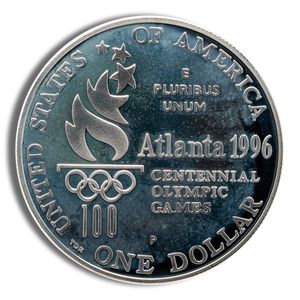
The olympic commemorative coins in our catalog follow the U.S. Mint's silver dollars for American athletes, from the Los Angeles Games of 1984 through the 2002 Salt Lake City Winter Games. Each of those dollars holds 0.7734 troy ounces of silver in a .900 fine alloy, and they appear here in Brilliant Uncirculated and proof finishes from the Philadelphia, Denver and San Francisco mints. The run includes the 1983 and 1984 Los Angeles dollars, the 1988 and 1992 issues, all eight silver designs from the 1995 and 1996 Atlanta Centennial program and both versions of the 2002 Salt Lake City dollar.
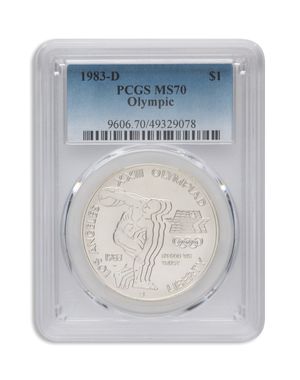
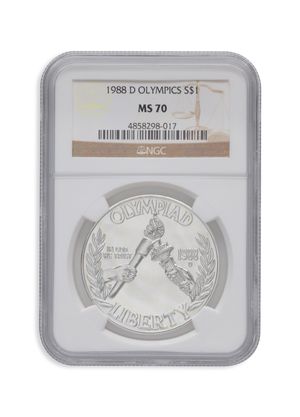
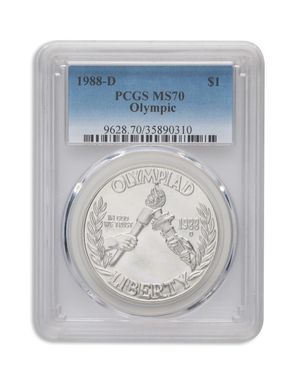
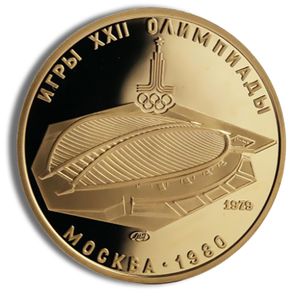
Certified coins sit alongside the raw ones. The 1983-P and 1983-D Los Angeles dollars are offered graded MS70 by PCGS, the 1988-D dollar appears in MS70 holders from both PCGS and NGC, and the 1983-S proof is available graded PF70 by PCGS. Two foreign Olympic issues widen the selection: Mexico's 1968 silver 25 pesos from the Mexico City Mint, in extremely fine condition, and a gold 100 roubles coin from the Soviet Union's program for the 1980 Moscow Olympics.
Every product page lists our live ask next to our bid, so you can see what a given Olympic dollar costs and what it would bring if you sold it back today. With commemoratives, where finish and grade shape the price far more than silver content does, that two-sided view is the quickest way to weigh a proof against its uncirculated counterpart.
What Are Olympic Commemorative Coins?
Olympic commemorative coins are legal tender issues struck by a government mint to mark an Olympic Games, usually with part of the proceeds going to the organizing committee or the national team. In the United States, each program was authorized by Congress, and a surcharge built into the Mint's sale price was paid to Olympic organizations. That fundraising role explains why the U.S. issued so many Olympic coins between 1983 and 2002, and why their designs focus so heavily on athletes, torches and the Olympic rings.
They differ from bullion coins in both purpose and pricing. An American Silver Eagle is struck every year in large numbers to deliver one ounce of .999 silver at a modest premium, while an Olympic silver dollar was produced during a limited ordering window, in an older 90% silver alloy, and sold mainly to collectors. Its silver content sets a floor, but its market price depends on the date, design, finish and condition of the individual coin.
Buyers approach Olympic coins in different ways. Some collect every design from a single Games, such as the eight Atlanta dollars, some want one coin per Olympiad from Los Angeles to Salt Lake City, and others follow a single sport like cycling, rowing or track and field. International pieces such as the Mexico 25 pesos let a collection reach beyond U.S. issues.
History and Background
Finland's 500 markkaa, struck for the 1952 Helsinki Games, is generally regarded as the first modern Olympic coin, and host nations soon made commemorative coinage a standard way to raise money for the Games. Mexico's 1968 25 pesos was produced in very large numbers and circulated widely at home, which is why it remains one of the most familiar Olympic silver coins. Moscow's program for 1980 went much further, with a long series of silver, gold and platinum coins issued over several years before the Games opened.
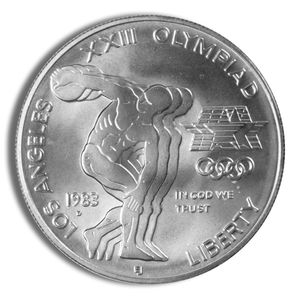
The United States entered the field with the Los Angeles program, which Congress authorized in 1982. The 1983 discus thrower dollar was the first U.S. commemorative silver dollar since the 1900 Lafayette dollar, and the same program produced the 1984 $10 gold eagle, the first U.S. gold coin struck since 1933. Congress went on to authorize Olympic coins for the 1988 and 1992 Games, the 1996 Atlanta Centennial Games, with coins dated 1995 and 1996, and the 2002 Salt Lake City Winter Games.
Collector budgets didn't keep pace with the number of programs. Several Atlanta designs sold far below their authorized limits, and the 1996 uncirculated dollars finished with mintages under 20,000 apiece, very low figures for a modern U.S. silver commemorative. The 2002 Salt Lake City dollar is the most recent U.S. Olympic coin in our catalog.
Purity, Weight, and Specifications
Each U.S. Olympic silver dollar here is struck to the same specification Congress set for modern commemorative dollars, weighing 26.73 grams in a 90% silver, 10% copper alloy that yields 0.7734 troy ounces of pure silver. That's the same alloy used in Morgan and Peace dollars, so a 1983 discus thrower and a 1996 wheelchair racer hold exactly the same silver. Each carries a one dollar face value, and none states its weight or fineness on the coin the way a bullion issue would.
The foreign coins follow their own standards. The 1968 Mexico 25 pesos is struck in .720 fine silver, with a gross weight of 22.5 grams and 0.5209 troy ounces of pure silver. The Soviet 100 roubles gold coins of the Moscow program are .900 fine gold, with a gross weight of about 17.28 grams that contains one half troy ounce of pure gold.
Mint marks show where each U.S. coin was struck. The Los Angeles dollars were made in uncirculated form at Philadelphia, Denver and San Francisco, with proofs from San Francisco. The 1988 and 1992 programs used Denver for uncirculated coins and San Francisco for proofs, Atlanta paired Denver uncirculated coins with Philadelphia proofs, and both versions of the 2002 dollar carry the P mint mark.
Available Brands, Mints, and Product Variations
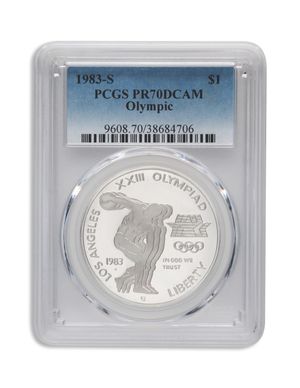
The Los Angeles program is the deepest part of our catalog. The 1983 dollar, with Chief Engraver Elizabeth Jones's stylized discus thrower, appears as uncirculated coins from all three mints, as PCGS MS70 examples from Philadelphia and Denver, and as a PCGS PF70 proof from San Francisco. The 1984 dollar, which shows the headless bronze athletes sculptor Robert Graham created for the gateway of the Los Angeles Memorial Coliseum, is offered in uncirculated form from Philadelphia, Denver and San Francisco along with the 1984-S proof.
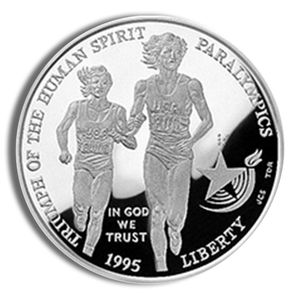
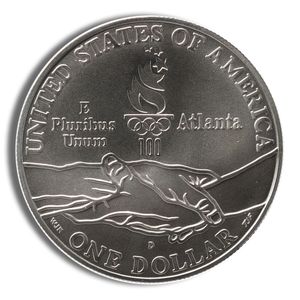
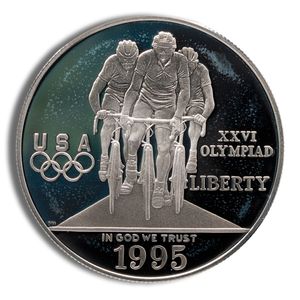
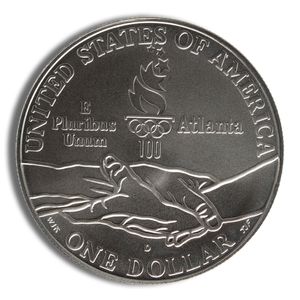
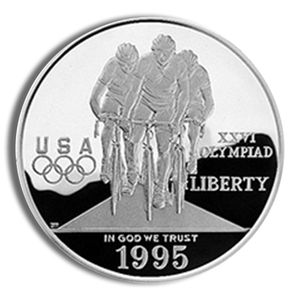
From the next two Olympiads come the 1988-D dollar, raw and graded MS70 by PCGS or NGC, the 1988-S proof, and the 1992-D uncirculated and 1992-S proof dollars, whose obverse shows a baseball pitcher in mid-delivery. The Atlanta Centennial dollars are all here: gymnastics, cycling, track and field and the Paralympic blind runner from 1995, and tennis, rowing, high jump and the Paralympic wheelchair racer from 1996, each in Denver uncirculated and Philadelphia proof versions.
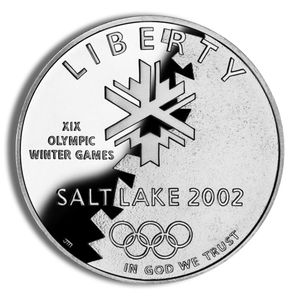
The 2002 Salt Lake City dollar appears in uncirculated and proof form, with the Games' crystal emblem on the obverse and the city skyline set against the Wasatch Mountains on the reverse. Beyond U.S. issues, the 1968 25 pesos from the Casa de Moneda de México shows an ancient Mesoamerican ballplayer alongside the Olympic rings, and the 1980 100 roubles is one of the gold designs the Soviet Union issued for the Moscow Games.
Pricing, Premiums, and Market Factors
Silver content puts a floor under every Olympic dollar, but it rarely sets the price. A 1983 Los Angeles dollar and a 1996 rowing dollar contain the same 0.7734 oz of silver, yet they trade at very different levels because collectors price them on scarcity, finish and condition. These coins sell at collector premiums over their metal value, and those premiums don't move in step with spot.
Mintage is usually the biggest factor. The Los Angeles, 1988 and 1992 dollars were struck in large numbers and tend to carry the smallest premiums, while the low-mintage 1996-D Atlanta dollars sit at the other end. Proof versus uncirculated matters as well, and it doesn't always favor the proof: for many Atlanta designs, buyers ordered far more proofs than uncirculated coins, which leaves the uncirculated version as the scarcer coin.
Grade and packaging add another layer. A PCGS or NGC coin graded MS70 or PF70 costs more than a raw coin of the same date because perfect grades are hard to achieve, and raw coins in original government packaging, with the Mint's box and certificate of authenticity, generally bring more than loose ones. Collector demand for a particular subject, such as a favorite sport or the Paralympic designs, shifts prices too. Because we buy as well as sell, the live bid and ask on each listing show how tightly a specific coin trades before you commit.
Condition, Packaging, and What to Expect
Uncirculated Olympic dollars were struck for collectors and never released into circulation, so expect full mint luster, with only the light contact marks that occur during production and packaging. Proofs have mirrored fields and frosted devices, and they're the most likely to show haze, spotting or fingerprints if they've spent time outside their capsules.
Slabbed Olympic dollars come exactly as graded, sealed in their PCGS or NGC holders with the grade shown on the label. Ungraded coins may or may not include the Mint's original box and certificate, and each listing notes what's included. The 1968 Mexico 25 pesos is a circulated coin graded extremely fine, so light wear on the highest points of the design is normal.
Silver commemoratives can develop natural toning over decades, especially when stored in their original packaging. Product photos are representative, and the coin you receive may differ slightly in toning and surface appearance.
Authenticity and Verification
U.S. Olympic dollars are comparatively easy to authenticate because their specifications never changed. A genuine coin weighs 26.73 grams, carries the correct mint mark for its finish and shows design details that match the Mint's dies, so a precise weight check and close inspection catch most problems. The Mexico 25 pesos and the Soviet gold have their own published weights and fineness, and they're checked against those standards.
Grading adds independent confirmation. Both PCGS and NGC verify that a coin is genuine before grading it, and the certification number on every holder can be checked against the service's online database to match the date, mint mark and grade. As an authorized dealer for both services, we inspect every coin before it ships so that the piece you receive matches the listing.
Liquidity and Resale Considerations
Olympic silver dollars are well known throughout the U.S. coin market, and their uniform specifications make them easy for dealers to identify and price. The Los Angeles dollars trade often enough that pricing tends to be consistent, whether raw or in MS70 and PF70 holders.
Liquidity narrows as coins become more specialized. Individual Atlanta designs, top-graded examples and foreign issues depend more on demand for that specific coin, and it can take longer to match them with a buyer at a given price. Raw coins in complete original packaging are generally easier to sell than loose examples, and certified coins can be priced without being seen in person.
Comparing the bid with the ask on our product pages gives a realistic picture of how each coin trades today. That check is worth making before you buy, particularly on the scarcer Atlanta dollars, where spreads can be wider.
Storage and Security
Proof Olympic dollars need the most care. Leave them in their capsules, handle them only by the edges if they must come out, and keep them away from humidity, heat and household chemicals, since mirrored surfaces show spotting quickly. The Mint's presentation boxes are fine for storage but aren't airtight, so a dry environment matters.
A full Atlanta set or a run of Los Angeles dollars takes up far more space than its silver weight suggests once boxes and slabs are included. For a few dozen coins, a fire-rated home safe is usually enough, and once a collection grows past that, a bank safe deposit box or professional depository is worth considering. Keep each certificate of authenticity with the coin it belongs to, because separating them can affect resale.
Selling and Buyback Options
Selling an Olympic dollar back works through the same two-way platform used to buy it. Start with the bid shown on the coin's product page. From there, our purchasing team locks in the price, inspects the coin when it arrives and sends payment.
Buyback pricing reflects the specific issue, its finish and grade, whether original packaging is included and current collector demand. Common dates such as the Los Angeles dollars tend to see steady bids, while low-mintage Atlanta coins and certified top grades are priced on recent trading in that particular coin. Movements in the silver price affect the floor under every bid.
Why Buy Olympic Commemorative Coins?
Subject matter is the first draw. Olympic coins tie a fixed amount of silver or gold to a specific Games and sport, and the U.S. series from Los Angeles to Salt Lake City forms a finite set that a collector can realistically finish. Many buyers choose a theme, such as the two Paralympic dollars or the Summer Games issues, and build outward from there.
Government issue and consistency matter too. Every U.S. Olympic dollar shares the same .900 silver standard and legal tender status, so a collection assembled across two decades of issues holds uniform metal content. Mint packaging and third-party grading make condition easy to document, and the wide spread of mintages offers accessible starting points alongside scarcer coins for a longer search.
Why Buy from Bullion Standard?
Bullion Standard has operated from San Diego, California since 2010, growing from a local business into a national online marketplace on the belief that you only get one chance to earn someone's trust. With Olympic coins, that shows up in listings that state the mint mark, finish and grade of each coin plainly.
PCGS and NGC both list us as an authorized dealer, and our memberships in the American Numismatic Association and the National Coin and Bullion Association sit alongside an A+ rating from the Better Business Bureau. Inventory is sourced from established wholesalers and distributors, and we confirm authenticity, weight and purity on every coin before it goes out.
Orders can be paid by Visa, Mastercard, American Express or Discover card, PayPal, a Plaid-linked bank account, wire transfer, paper check or BitPay cryptocurrency. Since we also buy coins back, the bid you see reflects a working two-way market, and our research tools let you compare premiums and spreads across products with objective data.
Get Near-Spot Pricing with Bullion Standard Pro
Olympic collectors who buy often can trade closer to the wholesale market through Bullion Standard Pro. Members transact at live, executable wholesale bids and offers rather than retail list prices, Pro adds no dealer markup or dealer spread of its own, and each product's premium and spread shift with actual wholesale supply and demand.
For a collector adding Olympic dollars over several years, Pro also values holdings at live wholesale bid prices rather than estimated retail figures. Its market intelligence tools, including historical premium analysis, spread analysis and liquidity metrics, show how individual products have traded over time, giving regular buyers the clearest view of what they're paying and what their coins would bring.


 (833) 278-4653