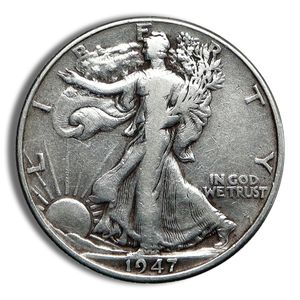
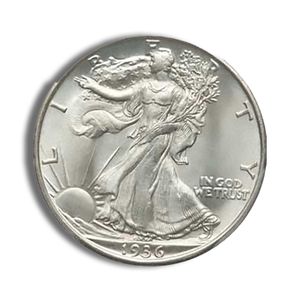
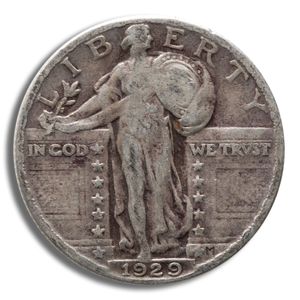
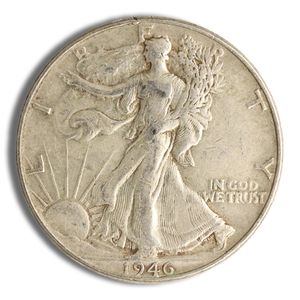
Barber half dollars are classic United States silver coins struck by the United States Mint beginning in the 1890s. Each coin contains 0.715 troy ounces of silver at .900 purity, making the $1 face value lot a straightforward and recognized unit for acquiring 90% silver. We carry these coins in average circulated condition, which reflects pieces that have seen real-world use but retain their silver content fully intact. This format appeals to buyers who want pre-1965 U.S. silver content without paying the premium associated with higher-grade examples.
History and Background
The Barber coinage series was introduced in 1892 following a design competition organized by the United States Mint. Chief Engraver Charles E. Barber ultimately submitted the winning design, which was adopted simultaneously for the dime, quarter, and half dollar. The series ran continuously through 1915, spanning a period of significant industrial and monetary change in the United States.
The Barber half dollar was produced at multiple mint facilities, including Philadelphia, New Orleans, San Francisco, and Denver over the course of the series. Its longevity and…
Overview of Barber Half Dollars in 90% Silver
Barber half dollars are classic United States silver coins struck by the United States Mint beginning in the 1890s. Each coin contains 0.715 troy ounces of silver at .900 purity, making the $1 face value lot a straightforward and recognized unit for acquiring 90% silver. We carry these coins in average circulated condition, which reflects pieces that have seen real-world use but retain their silver content fully intact. This format appeals to buyers who want pre-1965 U.S. silver content without paying the premium associated with higher-grade examples.
History and Background
The Barber coinage series was introduced in 1892 following a design competition organized by the United States Mint. Chief Engraver Charles E. Barber ultimately submitted the winning design, which was adopted simultaneously for the dime, quarter, and half dollar. The series ran continuously through 1915, spanning a period of significant industrial and monetary change in the United States.
The Barber half dollar was produced at multiple mint facilities, including Philadelphia, New Orleans, San Francisco, and Denver over the course of the series. Its longevity and wide circulation mean that surviving examples span a broad range of dates and mint marks, adding a layer of variety that appeals to date collectors alongside those focused purely on silver content. The series represents one of the last major U.S. coinage designs produced before the artistic renaissance that brought sculptors like Augustus Saint-Gaudens into the minting process.
Design and Aesthetics
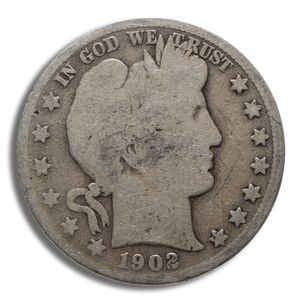
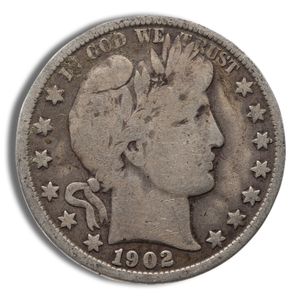
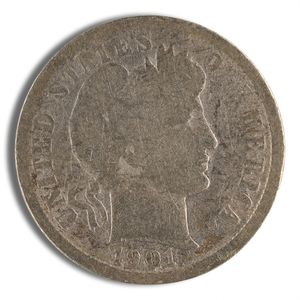
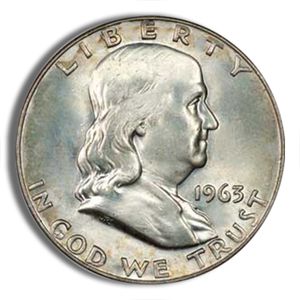
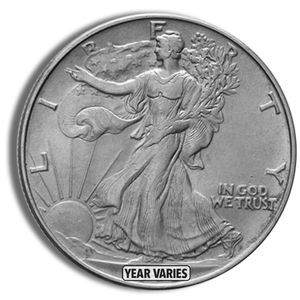
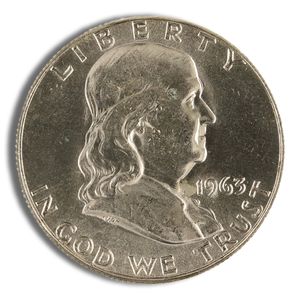
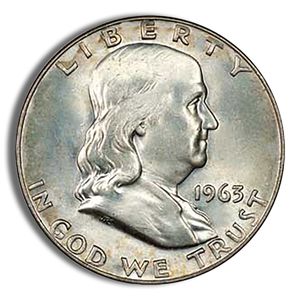
The obverse features a right-facing portrait of Liberty wearing a laurel wreath and a Phrygian cap, encircled by the inscriptions "UNITED STATES OF AMERICA" and "IN GOD WE TRUST," with the date appearing at the base. The design is classical in character, drawing from Greco-Roman numismatic traditions and reflecting the formal aesthetic preferences of late nineteenth-century American coinage.
The reverse carries a heraldic eagle displayed with a shield on its breast, clutching an olive branch and arrows. The inscription "HALF DOLLAR" appears below the eagle, with "E PLURIBUS UNUM" on a ribbon held in the eagle's beak. On circulated examples, the relief details of both the portrait and the eagle will show varying degrees of wear, which is entirely expected for coins of this era.
Fractional Size and Accessibility
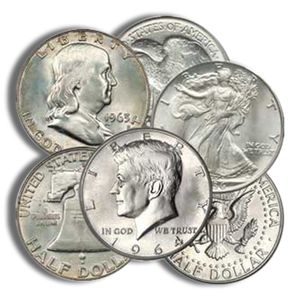
At 0.715 troy ounces per $1 face value, this format gives buyers a well-established and convenient entry point into pre-1965 U.S. silver. The face value denomination has long served as a standard unit in the junk silver market, making it easy to scale purchases up or down based on how much silver content a buyer wants to accumulate.
The half dollar denomination is also one of the more practical sizes within the Barber series for handling and sorting. Compared to dimes and quarters, the larger coin is easier to store individually and contains more silver per piece, which can simplify the counting and verification process for buyers building a position in 90% silver.
Authenticity and Product Integrity
The Barber half dollar was produced by the United States Mint under strict federal standards, and its composition of 90% silver and 10% copper is consistent across the entire series. The silver content per $1 face value has been standardized at 0.715 troy ounces, a figure that is universally recognized across the bullion and numismatic markets.
We verify authenticity, weight, and metal content before products reach our customers, and our authorized dealer relationships with both PCGS and NGC reflect our commitment to working within established authentication frameworks. For pre-1965 U.S. silver, the combination of government issuance and widely understood composition standards provides a strong baseline for authenticity verification.
Condition and Packaging
Average circulated condition describes coins that have seen genuine circulation and show visible wear on the high points of the design. This is the standard grade range for the junk silver market, and buyers should expect coins with worn lettering, softened portrait detail, and surface marks consistent with decades of handling. The silver content remains completely unaffected by surface wear, and these coins trade based on metal value rather than numismatic grade.
Individual pieces ship in protective plastic flips. Larger orders are typically packaged in tubes or sealed bags consistent with standard junk silver handling. Because these coins are sourced from the secondary market, minor toning, contact marks, and handling signs are normal and expected. These characteristics have no bearing on the silver content or the recognized value of the coins in the bullion market.
Pricing and Market Factors
Barber half dollars in average circulated condition are priced based on the current spot price of silver, applied against the 0.715 troy ounce silver content per $1 face value. The premium above spot for junk silver tends to be lower than for modern sovereign coins, since the appeal here is primarily about silver content rather than collectibility or presentation.
Premiums on 90% silver can shift based on supply availability in the secondary market, overall silver demand, and the relative cost of acquiring pre-1965 coins compared to modern alternatives. Our pricing reflects live market conditions and is structured to give buyers a clear picture of what they are paying relative to the underlying metal value. The bid/ask spread displayed on our product pages provides additional context for understanding the full cost of ownership.
Selling and Liquidity
Pre-1965 U.S. 90% silver is among the most liquid categories in the physical silver market. The $1 face value unit is a universally recognized quantity, and Barber halves are accepted by dealers, coin shops, and private buyers with minimal friction because the silver content is well established and easy to verify. Recognizability matters in resale environments, and this series has been traded in the junk silver market for decades.
We operate a two-way market that allows customers to both purchase and sell 90% silver within the same platform. Liquidity should factor into any buying decision, and the broad recognition of pre-1965 U.S. silver makes this product well-suited to customers who want a market they can move in and out of efficiently.
Why Buy Barber Half Dollars in 90% Silver?
Barber half dollars offer a combination of recognized silver content, historical significance, and accessible pricing that makes them a practical choice for buyers focused on accumulating pre-1965 U.S. silver. The 0.715 troy ounce per dollar face value is one of the most familiar units in the junk silver market, and the half dollar format is easy to handle and store in meaningful quantities.
For buyers who want silver with a degree of numismatic character, Barber halves carry more visual interest than modern rounds or bars while still trading primarily on metal value. The historical production span of the series also means that buyers may encounter a range of dates and mint marks, which can add appeal without affecting the price paid for silver content.
Why Buy from Bullion Standard?
Our pricing is tied directly to live market conditions, and we display the bid/ask spread on each product page so buyers can evaluate the complete cost of ownership rather than just the purchase price. We maintain an A rating with the Better Business Bureau and hold memberships in the American Numismatic Association and the National Coin and Bullion Association, which reflect a genuine commitment to operating with professionalism and accountability in this industry.
We source products from reputable mints, refineries, wholesalers, and distributors, and every product is verified for authenticity, weight, and purity before it reaches a customer. Our two-way market model means we take buyback pricing as seriously as purchase pricing, so customers can evaluate liquidity before they buy rather than discovering it only when they decide to sell. The experience is built around transparency, straightforward pricing, and long-term trust rather than high-pressure sales tactics.
Get Near-Spot Pricing with Bullion Standard Pro
Bullion Standard Pro gives members access to live, executable wholesale bid and ask pricing, which is particularly relevant for a product like 90% silver where the premium above spot is a central factor in evaluating value. Rather than static retail pricing, Pro members see real-time pricing that reflects actual wholesale market conditions, which allows for a more precise understanding of what pre-1965 silver is trading for at any given moment.
Pro also includes real-time portfolio valuation based on current wholesale bid prices, along with product research tools that allow members to compare premiums, bid/ask spreads, and liquidity metrics across different silver products. For buyers who regularly accumulate junk silver or manage a position in pre-1965 U.S. coinage, these tools provide the kind of market transparency that supports more informed decision-making on both the buying and selling side.
Flexible and Secure Payment Options
We support a wide range of payment methods designed to make transactions straightforward and secure. Buyers can complete purchases using Visa, Mastercard, American Express, Discover, PayPal, bank-connected payments through Plaid, wire transfer, paper check, or cryptocurrency through BitPay. Each option is integrated into a secure checkout process built around protecting customer information and providing a reliable purchasing experience from start to finish.
90% Silver Barber Half Dollars - Average Circulated - $1 Face Value
Volume Discount Pricing
Orders paid by debit card, credit card, and PayPal are an item's full
list
price
and receive no discount. Orders paid by cryptocurrency receive a 3%
discount
from an item's full list price. Orders paid by eCheck (ACH), paper
check,
and
bank wire receive a 4% discount from an item's full list price.
Quantity
(e)Check/Wire
Crypto
CC/PayPal
1 - 19
$48.84
$49.85
$50.87
20 - 99
$48.60
$49.61
$50.62
100 - 499
$48.36
$49.36
$50.37
500 - 999
$48.12
$49.12
$50.12
1000+
$47.88
$48.88
$49.87
1+
$46.99
$47.97
$48.94
In Stock
Ships within 1 business day of cleared payment
Select Your Quantity
For Non-Members:
Free shipping on orders
$497+
.
PRO
Pro Member Delivery:
$23.97 flat-rate, true
wholesale pricing. Free shipping on orders
$10,000+.
Product ID: BST-0012022196
Specifications
Random Year Status
Random Year
Precious Metal Type
Silver
Bullion Coin Type
Barber Half
Format
Coin
Country of Origin
United States
Brand/Mint
U.S. Mint
Mint Mark
Various
Purity
0.9
Weight
0.715 oz
Thickness (mm)
1.8
mm
Diameter (mm)
30.6
mm
Inner Pack (Quantity)
2
Grade
Circulated
Product Details
Overview of Barber Half Dollars in 90% Silver
Barber half dollars are classic United States silver coins struck by the United States Mint beginning in the 1890s. Each coin contains 0.715 troy ounces of silver at .900 purity, making the $1 face value lot a straightforward and recognized unit for acquiring 90% silver. We carry these coins in average circulated condition, which reflects pieces that have seen real-world use but retain their silver content fully intact. This format appeals to buyers who want pre-1965 U.S. silver content without paying the premium associated with higher-grade examples.
History and Background
The Barber coinage series was introduced in 1892 following a design competition organized by the United States Mint. Chief Engraver Charles E. Barber ultimately submitted the winning design, which was adopted simultaneously for the dime, quarter, and half dollar. The series ran continuously through 1915, spanning a period of significant industrial and monetary change in the United States.
The Barber half dollar was produced at multiple mint facilities, including Philadelphia, New Orleans, San Francisco, and Denver over the course of the series. Its longevity and…
Overview of Barber Half Dollars in 90% Silver
Barber half dollars are classic United States silver coins struck by the United States Mint beginning in the 1890s. Each coin contains 0.715 troy ounces of silver at .900 purity, making the $1 face value lot a straightforward and recognized unit for acquiring 90% silver. We carry these coins in average circulated condition, which reflects pieces that have seen real-world use but retain their silver content fully intact. This format appeals to buyers who want pre-1965 U.S. silver content without paying the premium associated with higher-grade examples.
History and Background
The Barber coinage series was introduced in 1892 following a design competition organized by the United States Mint. Chief Engraver Charles E. Barber ultimately submitted the winning design, which was adopted simultaneously for the dime, quarter, and half dollar. The series ran continuously through 1915, spanning a period of significant industrial and monetary change in the United States.
The Barber half dollar was produced at multiple mint facilities, including Philadelphia, New Orleans, San Francisco, and Denver over the course of the series. Its longevity and wide circulation mean that surviving examples span a broad range of dates and mint marks, adding a layer of variety that appeals to date collectors alongside those focused purely on silver content. The series represents one of the last major U.S. coinage designs produced before the artistic renaissance that brought sculptors like Augustus Saint-Gaudens into the minting process.
Design and Aesthetics
The obverse features a right-facing portrait of Liberty wearing a laurel wreath and a Phrygian cap, encircled by the inscriptions "UNITED STATES OF AMERICA" and "IN GOD WE TRUST," with the date appearing at the base. The design is classical in character, drawing from Greco-Roman numismatic traditions and reflecting the formal aesthetic preferences of late nineteenth-century American coinage.
The reverse carries a heraldic eagle displayed with a shield on its breast, clutching an olive branch and arrows. The inscription "HALF DOLLAR" appears below the eagle, with "E PLURIBUS UNUM" on a ribbon held in the eagle's beak. On circulated examples, the relief details of both the portrait and the eagle will show varying degrees of wear, which is entirely expected for coins of this era.
Fractional Size and Accessibility
At 0.715 troy ounces per $1 face value, this format gives buyers a well-established and convenient entry point into pre-1965 U.S. silver. The face value denomination has long served as a standard unit in the junk silver market, making it easy to scale purchases up or down based on how much silver content a buyer wants to accumulate.
The half dollar denomination is also one of the more practical sizes within the Barber series for handling and sorting. Compared to dimes and quarters, the larger coin is easier to store individually and contains more silver per piece, which can simplify the counting and verification process for buyers building a position in 90% silver.
Authenticity and Product Integrity
The Barber half dollar was produced by the United States Mint under strict federal standards, and its composition of 90% silver and 10% copper is consistent across the entire series. The silver content per $1 face value has been standardized at 0.715 troy ounces, a figure that is universally recognized across the bullion and numismatic markets.
We verify authenticity, weight, and metal content before products reach our customers, and our authorized dealer relationships with both PCGS and NGC reflect our commitment to working within established authentication frameworks. For pre-1965 U.S. silver, the combination of government issuance and widely understood composition standards provides a strong baseline for authenticity verification.
Condition and Packaging
Average circulated condition describes coins that have seen genuine circulation and show visible wear on the high points of the design. This is the standard grade range for the junk silver market, and buyers should expect coins with worn lettering, softened portrait detail, and surface marks consistent with decades of handling. The silver content remains completely unaffected by surface wear, and these coins trade based on metal value rather than numismatic grade.
Individual pieces ship in protective plastic flips. Larger orders are typically packaged in tubes or sealed bags consistent with standard junk silver handling. Because these coins are sourced from the secondary market, minor toning, contact marks, and handling signs are normal and expected. These characteristics have no bearing on the silver content or the recognized value of the coins in the bullion market.
Pricing and Market Factors
Barber half dollars in average circulated condition are priced based on the current spot price of silver, applied against the 0.715 troy ounce silver content per $1 face value. The premium above spot for junk silver tends to be lower than for modern sovereign coins, since the appeal here is primarily about silver content rather than collectibility or presentation.
Premiums on 90% silver can shift based on supply availability in the secondary market, overall silver demand, and the relative cost of acquiring pre-1965 coins compared to modern alternatives. Our pricing reflects live market conditions and is structured to give buyers a clear picture of what they are paying relative to the underlying metal value. The bid/ask spread displayed on our product pages provides additional context for understanding the full cost of ownership.
Selling and Liquidity
Pre-1965 U.S. 90% silver is among the most liquid categories in the physical silver market. The $1 face value unit is a universally recognized quantity, and Barber halves are accepted by dealers, coin shops, and private buyers with minimal friction because the silver content is well established and easy to verify. Recognizability matters in resale environments, and this series has been traded in the junk silver market for decades.
We operate a two-way market that allows customers to both purchase and sell 90% silver within the same platform. Liquidity should factor into any buying decision, and the broad recognition of pre-1965 U.S. silver makes this product well-suited to customers who want a market they can move in and out of efficiently.
Why Buy Barber Half Dollars in 90% Silver?
Barber half dollars offer a combination of recognized silver content, historical significance, and accessible pricing that makes them a practical choice for buyers focused on accumulating pre-1965 U.S. silver. The 0.715 troy ounce per dollar face value is one of the most familiar units in the junk silver market, and the half dollar format is easy to handle and store in meaningful quantities.
For buyers who want silver with a degree of numismatic character, Barber halves carry more visual interest than modern rounds or bars while still trading primarily on metal value. The historical production span of the series also means that buyers may encounter a range of dates and mint marks, which can add appeal without affecting the price paid for silver content.
Why Buy from Bullion Standard?
Our pricing is tied directly to live market conditions, and we display the bid/ask spread on each product page so buyers can evaluate the complete cost of ownership rather than just the purchase price. We maintain an A rating with the Better Business Bureau and hold memberships in the American Numismatic Association and the National Coin and Bullion Association, which reflect a genuine commitment to operating with professionalism and accountability in this industry.
We source products from reputable mints, refineries, wholesalers, and distributors, and every product is verified for authenticity, weight, and purity before it reaches a customer. Our two-way market model means we take buyback pricing as seriously as purchase pricing, so customers can evaluate liquidity before they buy rather than discovering it only when they decide to sell. The experience is built around transparency, straightforward pricing, and long-term trust rather than high-pressure sales tactics.
Get Near-Spot Pricing with Bullion Standard Pro
Bullion Standard Pro gives members access to live, executable wholesale bid and ask pricing, which is particularly relevant for a product like 90% silver where the premium above spot is a central factor in evaluating value. Rather than static retail pricing, Pro members see real-time pricing that reflects actual wholesale market conditions, which allows for a more precise understanding of what pre-1965 silver is trading for at any given moment.
Pro also includes real-time portfolio valuation based on current wholesale bid prices, along with product research tools that allow members to compare premiums, bid/ask spreads, and liquidity metrics across different silver products. For buyers who regularly accumulate junk silver or manage a position in pre-1965 U.S. coinage, these tools provide the kind of market transparency that supports more informed decision-making on both the buying and selling side.
Flexible and Secure Payment Options
We support a wide range of payment methods designed to make transactions straightforward and secure. Buyers can complete purchases using Visa, Mastercard, American Express, Discover, PayPal, bank-connected payments through Plaid, wire transfer, paper check, or cryptocurrency through BitPay. Each option is integrated into a secure checkout process built around protecting customer information and providing a reliable purchasing experience from start to finish.
This website uses cookies for analytics and to deliver personalized content. By continuing to
use our site, you acknowledge that you have read and agree to our Privacy Policy and Cookie
Policy.
Current Quantities Available
Unfortunately, we only have 0
of
this item in
stock.
Please call us at (833) 278-4653
or email us at support@bullionstandard.com
if you wish to purchase a larger quantity than what is available on our website.
We can often locate additional quantities.

 (833) 278-4653

.png)