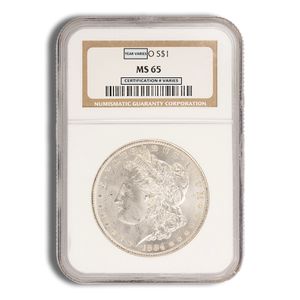
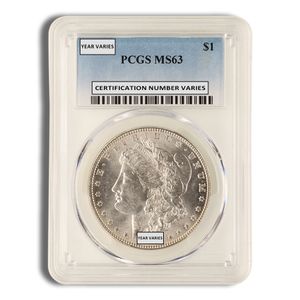
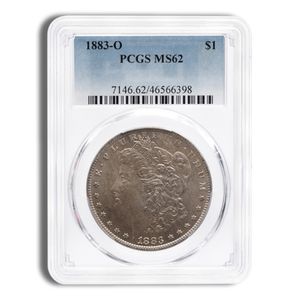
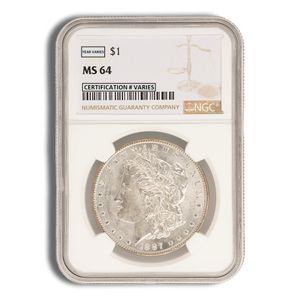
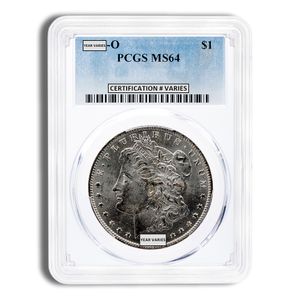
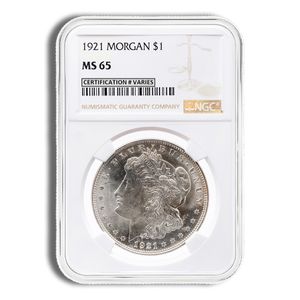
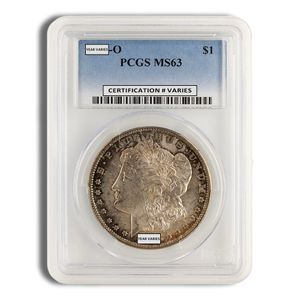
The 1881-CC GSA Morgan Silver Dollar graded MS66 by NGC represents one of the more historically significant offerings within the Morgan Dollar series. Struck at the Carson City Mint in 1881, each coin contains 0.7734 oz of silver at .900 purity and carries a face value of one dollar as a United States legal tender issue. What sets this particular example apart is its GSA provenance and its exceptional numerical grade, placing it firmly in the upper tier of surviving specimens. We carry this coin as part of our broader numismatic silver inventory, where graded and certified pieces receive dedicated attention alongside standard bullion offerings.
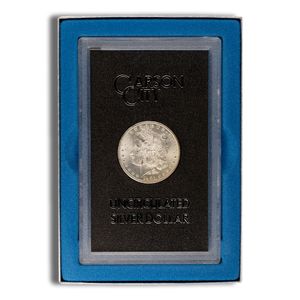
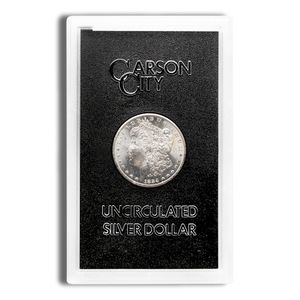
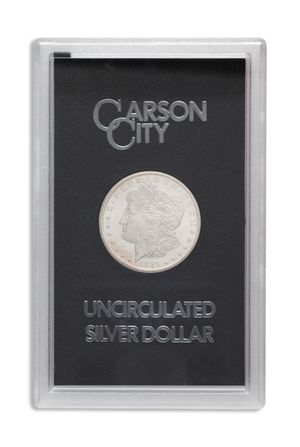
The GSA designation refers to the General Services Administration, the federal agency that conducted a series of public sales in the 1970s distributing Carson City Morgan Dollars from long-held Treasury reserves. Coins sold through those GSA programs were originally packaged in distinctive hard plastic holders along with certificates of authenticity, and many examples entering the market today retain that original GSA packaging as part of their documented history.
History and Background
The…
Overview of 1881-CC GSA Morgan Silver Dollar
The 1881-CC GSA Morgan Silver Dollar graded MS66 by NGC represents one of the more historically significant offerings within the Morgan Dollar series. Struck at the Carson City Mint in 1881, each coin contains 0.7734 oz of silver at .900 purity and carries a face value of one dollar as a United States legal tender issue. What sets this particular example apart is its GSA provenance and its exceptional numerical grade, placing it firmly in the upper tier of surviving specimens. We carry this coin as part of our broader numismatic silver inventory, where graded and certified pieces receive dedicated attention alongside standard bullion offerings.
The GSA designation refers to the General Services Administration, the federal agency that conducted a series of public sales in the 1970s distributing Carson City Morgan Dollars from long-held Treasury reserves. Coins sold through those GSA programs were originally packaged in distinctive hard plastic holders along with certificates of authenticity, and many examples entering the market today retain that original GSA packaging as part of their documented history.
History and Background
The Morgan Dollar series was introduced in 1878, designed by United States Mint engraver George T. Morgan. The series ran through 1904 and was briefly revived in 1921, becoming one of the most widely collected American silver coin series in numismatic history. The coins were struck at multiple branch mints throughout their production run, with each mint mark carrying its own collector significance tied to production volumes, survival rates, and regional history.
The Carson City Mint, identified by the CC mint mark, operated from 1870 to 1893 and drew its silver supply primarily from the nearby Comstock Lode in Nevada. Carson City Morgans consistently command attention from collectors because of the mint's short operational window and its direct connection to the American silver mining era of the late 19th century. The 1881-CC had a relatively modest mintage of approximately 296,000 pieces, which is low even by Carson City standards, contributing meaningfully to its numismatic appeal.
The GSA sales of the 1970s introduced a new chapter for many of these coins. When the Treasury's long-held reserves of Carson City Morgans were liquidated through public auctions and mail-bid sales between 1972 and 1980, collectors gained access to original mint-bag specimens that had spent decades in government storage. Many of those coins emerged in exceptional condition precisely because of that undisturbed storage, and the 1881-CC was among the dates distributed through those sales.
Design and Aesthetics
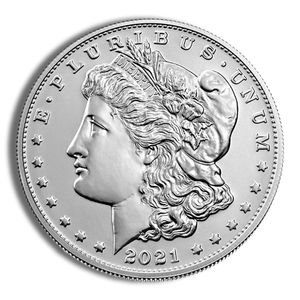
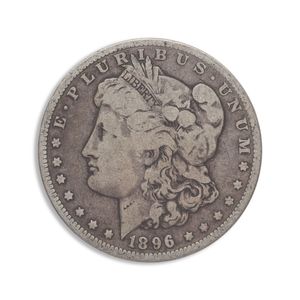
The obverse of the Morgan Dollar features a left-facing portrait of Lady Liberty designed by George T. Morgan, rendered with a level of sculptural depth that reflects the artistic ambitions of late 19th-century American coinage. Liberty wears a Phrygian cap adorned with a headband inscribed "LIBERTY," and her hair is styled with fine detail that rewards close examination. The inscription "E PLURIBUS UNUM" curves above the portrait, with the date and stars arranged along the lower field.
The reverse presents a heraldic eagle with wings spread, clutching an olive branch and a bundle of arrows. The eagle is centered within a wreath and surrounded by the inscriptions "UNITED STATES OF AMERICA" and "IN GOD WE TRUST," with the denomination "ONE DOLLAR" appearing at the base. The CC mint mark is positioned below the eagle on the reverse, clearly identifying this coin's Carson City origin.
At MS66, the surfaces of this coin display the kind of sharpness and luster that distinguish it from the broader population of circulated or lower-grade examples. NGC's MS66 designation indicates strong eye appeal with at most a few minor contact marks and no significant distractions, making this a visually compelling example of the date and mint combination.
Authenticity and Product Integrity
NGC certification provides independent third-party verification of this coin's authenticity, grade, and condition. As an authorized NGC dealer, we handle graded submissions and certified products with full confidence in the authentication process behind them. The NGC holder encapsulates the coin in a tamper-evident plastic slab that displays the coin's assigned grade, certification number, and other identifying information that can be verified directly through NGC's online registry.
The Morgan Dollar's specifications, including its .900 silver purity and 0.7734 oz silver weight per coin, are firmly established within the United States Mint's historical production records. The NGC grading process includes verification of the coin's physical characteristics against these known parameters. For a coin with GSA provenance, the combination of original government documentation and independent third-party grading creates a well-documented chain of authenticity that collectors and buyers can evaluate objectively.
Condition and Packaging
An NGC MS66 designation places this coin well above the typical Mint State threshold, reflecting surfaces that are sharp, lustrous, and largely free from distracting marks or blemishes. Within the MS65 to MS67 range, each incremental grade point represents a meaningful jump in eye appeal and, correspondingly, in collector demand and market value. MS66 is a grade that serious collectors recognize as a strong example of the date without reaching into the rarefied territory where pricing becomes highly unpredictable.
This coin ships encapsulated in its original NGC holder, which provides both physical protection and the visual presentation expected of a certified numismatic piece. If this coin retains its original GSA packaging alongside the NGC slab, that presentation will be noted and reflected in the product listing. For single certified coins, no additional packaging beyond the protective holder is required, and the item arrives ready for display or storage in standard certified coin storage solutions.
Pricing and Market Factors
Pricing for a certified numismatic piece like the 1881-CC GSA Morgan Dollar in NGC MS66 reflects several distinct layers. The underlying silver spot price establishes a minimum floor based on the coin's 0.7734 oz silver content, but the numismatic premium above that floor is driven primarily by collector demand, the coin's grade, its relative population within NGC's census, and the historical significance of the CC mint mark. For a date with a mintage of fewer than 300,000 pieces graded at MS66, the numismatic component of the price is the dominant factor rather than spot silver.
We price certified numismatic silver transparently, reflecting current market conditions for the specific date, mint mark, and grade rather than applying a static or arbitrary premium. The bid and ask spread visible on our product pages gives buyers a clear picture of both acquisition cost and current wholesale resale pricing, which is particularly useful when evaluating a coin with a significant numismatic premium over melt value.
Selling and Liquidity
Carson City Morgan Dollars in graded condition are actively traded within both the dealer-to-dealer wholesale market and the collector-to-collector secondary market. The 1881-CC is a recognized date within the series, and NGC-certified examples in the MS65 to MS67 range consistently attract buyer interest at auction and through dealer networks. The combination of the GSA provenance story and the NGC certification makes this a coin that communicates its credentials clearly to any knowledgeable buyer.
We operate as a two-way market, meaning we actively bid on coins of this type alongside offering them for sale. Customers who eventually decide to sell can do so within the same ecosystem rather than having to seek out separate dealers or auction platforms. The buyback pricing visible on our product pages reflects current wholesale market conditions and provides a transparent benchmark before a purchase is ever made.
Why Buy This 1881-CC GSA Morgan Dollar?
Few combinations within the Morgan Dollar series carry as much collector narrative as a Carson City date with GSA provenance graded by NGC at the MS66 level. The 1881-CC brings together a low original mintage, a historically significant and short-lived mint, a documented government distribution history through the GSA program, and a grade that places it in the upper fraction of surviving examples. Each of those elements contributes independently to why this coin holds its appeal across multiple generations of collectors.
For buyers who want a Morgan Dollar that tells a specific and verifiable story, the 1881-CC GSA example in MS66 delivers that without ambiguity. The NGC holder removes questions about authenticity and condition, the CC mint mark connects the coin directly to the Nevada silver era, and the GSA background situates it within a distinct chapter of American monetary history. This is not a generic type coin; it is a specific, documented piece with attributes that matter to collectors who understand the series.
Why Buy from Bullion Standard?
We are an authorized dealer for both NGC and PCGS, which means our inventory of certified numismatic coins comes with the dealer relationships and verification standards those designations require. Our A rating with the Better Business Bureau, along with our memberships in the American Numismatic Association and the National Coin and Bullion Association, reflects a consistent commitment to authenticity, professionalism, and customer-first service since our founding in 2010.
Transparent pricing is central to how we operate. We display both buy and sell pricing on product pages so customers can evaluate the full cost of ownership before committing to a purchase. Our two-way market model means you are not left searching for a buyer when you eventually decide to sell, and our buyback pricing is competitive because it reflects real-time wholesale market conditions rather than fixed dealer quotes. We believe liquidity deserves as much attention at the point of purchase as the acquisition price itself.
Get Near-Spot Pricing with Bullion Standard Pro
For a coin with significant numismatic premium over melt value, understanding the spread between wholesale bid and ask pricing is especially valuable. Bullion Standard Pro gives members access to live, executable wholesale pricing for products like this 1881-CC GSA Morgan Dollar, along with tools to analyze premium levels, bid/ask spread tightness, and liquidity characteristics specific to this date and grade. Rather than relying on auction records that may be weeks or months old, Pro members can evaluate current wholesale market conditions in real time.
Portfolio valuation through Bullion Standard Pro uses live wholesale bid pricing rather than estimated retail values, which gives a more realistic picture of what certified numismatic holdings are worth at any given moment. For collectors and buyers managing multiple graded coins across different series and mint marks, that kind of objective, live-data valuation creates clarity that static price guides cannot match.
Flexible and Secure Payment Options
We support a broad range of payment methods so customers can complete purchases with confidence and convenience. Accepted options include Visa, Mastercard, American Express, and Discover, along with PayPal, bank-connected payments through Plaid, wire transfer, paper check, and cryptocurrency payments processed through BitPay. Every transaction is handled with the security standards and reliability expected of a nationally recognized precious metals marketplace.
The 1881-CC GSA Morgan Silver Dollar graded MS66 by NGC represents one of the more historically significant offerings within the Morgan Dollar series. Struck at the Carson City Mint in 1881, each coin contains 0.7734 oz of silver at .900 purity and carries a face value of one dollar as a United States legal tender issue. What sets this particular example apart is its GSA provenance and its exceptional numerical grade, placing it firmly in the upper tier of surviving specimens. We carry this coin as part of our broader numismatic silver inventory, where graded and certified pieces receive dedicated attention alongside standard bullion offerings.
The GSA designation refers to the General Services Administration, the federal agency that conducted a series of public sales in the 1970s distributing Carson City Morgan Dollars from long-held Treasury reserves. Coins sold through those GSA programs were originally packaged in distinctive hard plastic holders along with certificates of authenticity, and many examples entering the market today retain that original GSA packaging as part of their documented history.
History and Background
The…
Overview of 1881-CC GSA Morgan Silver Dollar
The 1881-CC GSA Morgan Silver Dollar graded MS66 by NGC represents one of the more historically significant offerings within the Morgan Dollar series. Struck at the Carson City Mint in 1881, each coin contains 0.7734 oz of silver at .900 purity and carries a face value of one dollar as a United States legal tender issue. What sets this particular example apart is its GSA provenance and its exceptional numerical grade, placing it firmly in the upper tier of surviving specimens. We carry this coin as part of our broader numismatic silver inventory, where graded and certified pieces receive dedicated attention alongside standard bullion offerings.
The GSA designation refers to the General Services Administration, the federal agency that conducted a series of public sales in the 1970s distributing Carson City Morgan Dollars from long-held Treasury reserves. Coins sold through those GSA programs were originally packaged in distinctive hard plastic holders along with certificates of authenticity, and many examples entering the market today retain that original GSA packaging as part of their documented history.
History and Background
The Morgan Dollar series was introduced in 1878, designed by United States Mint engraver George T. Morgan. The series ran through 1904 and was briefly revived in 1921, becoming one of the most widely collected American silver coin series in numismatic history. The coins were struck at multiple branch mints throughout their production run, with each mint mark carrying its own collector significance tied to production volumes, survival rates, and regional history.
The Carson City Mint, identified by the CC mint mark, operated from 1870 to 1893 and drew its silver supply primarily from the nearby Comstock Lode in Nevada. Carson City Morgans consistently command attention from collectors because of the mint's short operational window and its direct connection to the American silver mining era of the late 19th century. The 1881-CC had a relatively modest mintage of approximately 296,000 pieces, which is low even by Carson City standards, contributing meaningfully to its numismatic appeal.
The GSA sales of the 1970s introduced a new chapter for many of these coins. When the Treasury's long-held reserves of Carson City Morgans were liquidated through public auctions and mail-bid sales between 1972 and 1980, collectors gained access to original mint-bag specimens that had spent decades in government storage. Many of those coins emerged in exceptional condition precisely because of that undisturbed storage, and the 1881-CC was among the dates distributed through those sales.
Design and Aesthetics
The obverse of the Morgan Dollar features a left-facing portrait of Lady Liberty designed by George T. Morgan, rendered with a level of sculptural depth that reflects the artistic ambitions of late 19th-century American coinage. Liberty wears a Phrygian cap adorned with a headband inscribed "LIBERTY," and her hair is styled with fine detail that rewards close examination. The inscription "E PLURIBUS UNUM" curves above the portrait, with the date and stars arranged along the lower field.
The reverse presents a heraldic eagle with wings spread, clutching an olive branch and a bundle of arrows. The eagle is centered within a wreath and surrounded by the inscriptions "UNITED STATES OF AMERICA" and "IN GOD WE TRUST," with the denomination "ONE DOLLAR" appearing at the base. The CC mint mark is positioned below the eagle on the reverse, clearly identifying this coin's Carson City origin.
At MS66, the surfaces of this coin display the kind of sharpness and luster that distinguish it from the broader population of circulated or lower-grade examples. NGC's MS66 designation indicates strong eye appeal with at most a few minor contact marks and no significant distractions, making this a visually compelling example of the date and mint combination.
Authenticity and Product Integrity
NGC certification provides independent third-party verification of this coin's authenticity, grade, and condition. As an authorized NGC dealer, we handle graded submissions and certified products with full confidence in the authentication process behind them. The NGC holder encapsulates the coin in a tamper-evident plastic slab that displays the coin's assigned grade, certification number, and other identifying information that can be verified directly through NGC's online registry.
The Morgan Dollar's specifications, including its .900 silver purity and 0.7734 oz silver weight per coin, are firmly established within the United States Mint's historical production records. The NGC grading process includes verification of the coin's physical characteristics against these known parameters. For a coin with GSA provenance, the combination of original government documentation and independent third-party grading creates a well-documented chain of authenticity that collectors and buyers can evaluate objectively.
Condition and Packaging
An NGC MS66 designation places this coin well above the typical Mint State threshold, reflecting surfaces that are sharp, lustrous, and largely free from distracting marks or blemishes. Within the MS65 to MS67 range, each incremental grade point represents a meaningful jump in eye appeal and, correspondingly, in collector demand and market value. MS66 is a grade that serious collectors recognize as a strong example of the date without reaching into the rarefied territory where pricing becomes highly unpredictable.
This coin ships encapsulated in its original NGC holder, which provides both physical protection and the visual presentation expected of a certified numismatic piece. If this coin retains its original GSA packaging alongside the NGC slab, that presentation will be noted and reflected in the product listing. For single certified coins, no additional packaging beyond the protective holder is required, and the item arrives ready for display or storage in standard certified coin storage solutions.
Pricing and Market Factors
Pricing for a certified numismatic piece like the 1881-CC GSA Morgan Dollar in NGC MS66 reflects several distinct layers. The underlying silver spot price establishes a minimum floor based on the coin's 0.7734 oz silver content, but the numismatic premium above that floor is driven primarily by collector demand, the coin's grade, its relative population within NGC's census, and the historical significance of the CC mint mark. For a date with a mintage of fewer than 300,000 pieces graded at MS66, the numismatic component of the price is the dominant factor rather than spot silver.
We price certified numismatic silver transparently, reflecting current market conditions for the specific date, mint mark, and grade rather than applying a static or arbitrary premium. The bid and ask spread visible on our product pages gives buyers a clear picture of both acquisition cost and current wholesale resale pricing, which is particularly useful when evaluating a coin with a significant numismatic premium over melt value.
Selling and Liquidity
Carson City Morgan Dollars in graded condition are actively traded within both the dealer-to-dealer wholesale market and the collector-to-collector secondary market. The 1881-CC is a recognized date within the series, and NGC-certified examples in the MS65 to MS67 range consistently attract buyer interest at auction and through dealer networks. The combination of the GSA provenance story and the NGC certification makes this a coin that communicates its credentials clearly to any knowledgeable buyer.
We operate as a two-way market, meaning we actively bid on coins of this type alongside offering them for sale. Customers who eventually decide to sell can do so within the same ecosystem rather than having to seek out separate dealers or auction platforms. The buyback pricing visible on our product pages reflects current wholesale market conditions and provides a transparent benchmark before a purchase is ever made.
Why Buy This 1881-CC GSA Morgan Dollar?
Few combinations within the Morgan Dollar series carry as much collector narrative as a Carson City date with GSA provenance graded by NGC at the MS66 level. The 1881-CC brings together a low original mintage, a historically significant and short-lived mint, a documented government distribution history through the GSA program, and a grade that places it in the upper fraction of surviving examples. Each of those elements contributes independently to why this coin holds its appeal across multiple generations of collectors.
For buyers who want a Morgan Dollar that tells a specific and verifiable story, the 1881-CC GSA example in MS66 delivers that without ambiguity. The NGC holder removes questions about authenticity and condition, the CC mint mark connects the coin directly to the Nevada silver era, and the GSA background situates it within a distinct chapter of American monetary history. This is not a generic type coin; it is a specific, documented piece with attributes that matter to collectors who understand the series.
Why Buy from Bullion Standard?
We are an authorized dealer for both NGC and PCGS, which means our inventory of certified numismatic coins comes with the dealer relationships and verification standards those designations require. Our A rating with the Better Business Bureau, along with our memberships in the American Numismatic Association and the National Coin and Bullion Association, reflects a consistent commitment to authenticity, professionalism, and customer-first service since our founding in 2010.
Transparent pricing is central to how we operate. We display both buy and sell pricing on product pages so customers can evaluate the full cost of ownership before committing to a purchase. Our two-way market model means you are not left searching for a buyer when you eventually decide to sell, and our buyback pricing is competitive because it reflects real-time wholesale market conditions rather than fixed dealer quotes. We believe liquidity deserves as much attention at the point of purchase as the acquisition price itself.
Get Near-Spot Pricing with Bullion Standard Pro
For a coin with significant numismatic premium over melt value, understanding the spread between wholesale bid and ask pricing is especially valuable. Bullion Standard Pro gives members access to live, executable wholesale pricing for products like this 1881-CC GSA Morgan Dollar, along with tools to analyze premium levels, bid/ask spread tightness, and liquidity characteristics specific to this date and grade. Rather than relying on auction records that may be weeks or months old, Pro members can evaluate current wholesale market conditions in real time.
Portfolio valuation through Bullion Standard Pro uses live wholesale bid pricing rather than estimated retail values, which gives a more realistic picture of what certified numismatic holdings are worth at any given moment. For collectors and buyers managing multiple graded coins across different series and mint marks, that kind of objective, live-data valuation creates clarity that static price guides cannot match.
Flexible and Secure Payment Options
We support a broad range of payment methods so customers can complete purchases with confidence and convenience. Accepted options include Visa, Mastercard, American Express, and Discover, along with PayPal, bank-connected payments through Plaid, wire transfer, paper check, and cryptocurrency payments processed through BitPay. Every transaction is handled with the security standards and reliability expected of a nationally recognized precious metals marketplace.
This website uses cookies for analytics and to deliver personalized content. By continuing to
use our site, you acknowledge that you have read and agree to our Privacy Policy and Cookie
Policy.
Current Quantities Available
Unfortunately, we only have 0
of
this item in
stock.
Please call us at (833) 278-4653
or email us at support@bullionstandard.com
if you wish to purchase a larger quantity than what is available on our website.
We can often locate additional quantities.

 (833) 278-4653

.png)