Overview of 1878-1904 Morgan Silver Dollar (PCGS MS67)
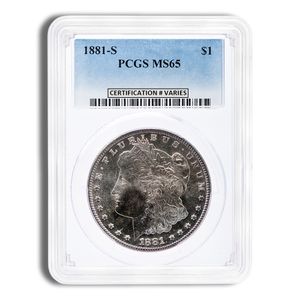
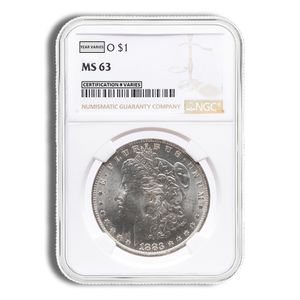
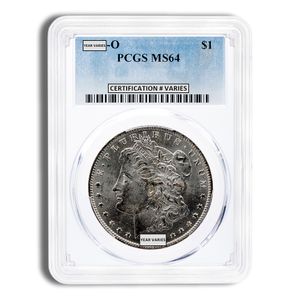
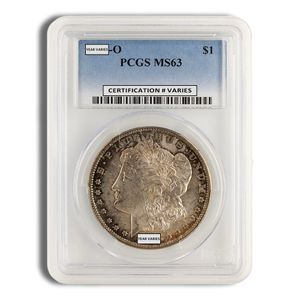
The pre-1921 Morgan Silver Dollar is one of the most widely recognized coins in American numismatic history, struck in .900 fine silver with a total weight of 0.7734 troy ounces. Produced by the United States Mint between 1878 and 1904, these coins carry a face value of one dollar and were struck across multiple mint facilities, each potentially adding its own mint mark to the reverse. The example offered here has been certified and graded MS67 by the Professional Coin Grading Service, placing it among the finest survivors of its era. We carry PCGS-graded Morgans because the third-party certification removes ambiguity and provides buyers with an objective, industry-accepted standard for condition and authenticity.
History and Background
The Morgan Dollar owes its existence to the Bland-Allison Act of 1878, which required the federal government to purchase silver from domestic mines and convert it into coinage. The coin was designed by George T. Morgan, an engraver hired by the United States Mint who drew heavily on classical traditions to create a distinctly American image. Its production ran without interruption from 1878 t…
Overview of 1878-1904 Morgan Silver Dollar (PCGS MS67)
The pre-1921 Morgan Silver Dollar is one of the most widely recognized coins in American numismatic history, struck in .900 fine silver with a total weight of 0.7734 troy ounces. Produced by the United States Mint between 1878 and 1904, these coins carry a face value of one dollar and were struck across multiple mint facilities, each potentially adding its own mint mark to the reverse. The example offered here has been certified and graded MS67 by the Professional Coin Grading Service, placing it among the finest survivors of its era. We carry PCGS-graded Morgans because the third-party certification removes ambiguity and provides buyers with an objective, industry-accepted standard for condition and authenticity.
History and Background
The Morgan Dollar owes its existence to the Bland-Allison Act of 1878, which required the federal government to purchase silver from domestic mines and convert it into coinage. The coin was designed by George T. Morgan, an engraver hired by the United States Mint who drew heavily on classical traditions to create a distinctly American image. Its production ran without interruption from 1878 through 1904, at which point a sharp decline in silver reserves led to a halt that lasted until a brief revival in 1921.
During the original production run, five mint facilities produced Morgan Dollars at various points: Philadelphia, New Orleans, Carson City, San Francisco, and Denver. Each location introduced its own mint mark, and the combination of date and mint mark is central to understanding the relative scarcity and collector appeal of individual coins. Tens of millions were struck overall, yet high-grade survivors are far less common than raw mintage figures suggest, largely because many coins were released into circulation or melted under the Pittman Act of 1918.
The Morgan Dollar occupies a unique position as both a circulating relic of the late 19th century American economy and a benchmark for American numismatic collecting. Its long production history, varied mint marks, and enormous collector base have made it one of the most studied series in United States coinage.
Design and Aesthetics
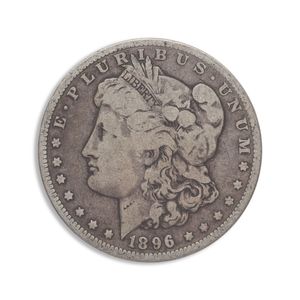
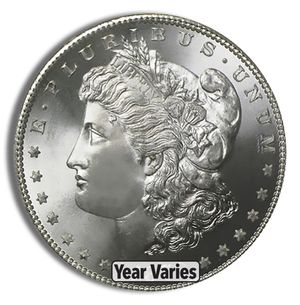
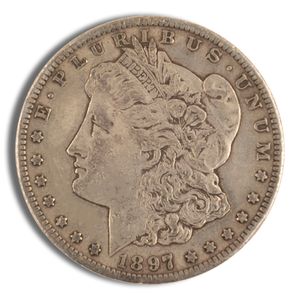
The obverse features a left-facing portrait of Liberty designed by George T. Morgan, modeled in part after Anna Willess Williams, a Philadelphia schoolteacher. Liberty wears a Phrygian cap adorned with a wreath of wheat and cotton, with stars encircling the field and the date positioned below the portrait. The word "LIBERTY" appears across the headband of her cap, and the inscriptions "E PLURIBUS UNUM" and "IN GOD WE TRUST" are also present on this side.
The reverse centers on a heraldic eagle with wings spread, clutching an olive branch and arrows in its talons, with a ribbon in its beak bearing the national motto. The eagle is encircled by the inscription "UNITED STATES OF AMERICA" and the denomination "ONE DOLLAR," with the mint mark, when present, appearing just above the DO in DOLLAR. The overall composition reflects the formal engraving style of the period, combining classical symbolism with a distinctly American character.
At the MS67 grade level, the surfaces exhibit exceptional preservation, with full original mint luster, sharp strike definition, and an essentially mark-free appearance. PCGS applies this grade only to coins that meet extremely demanding standards for surface quality, making MS67 examples visually striking and sharply distinguished from circulated or lower-grade Morgans.
Authenticity and Product Integrity
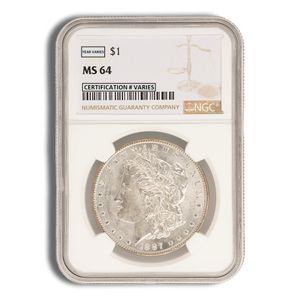
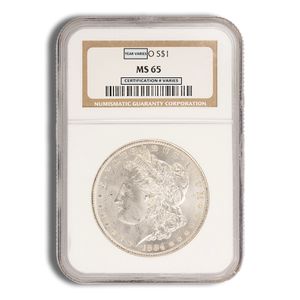
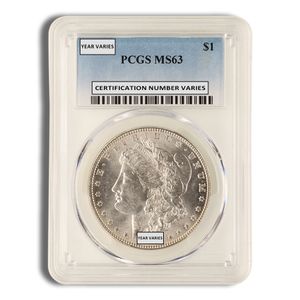
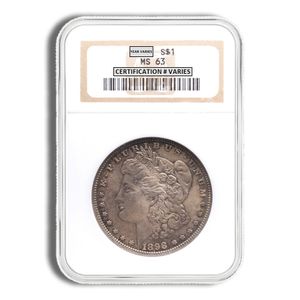
PCGS certification is the most direct assurance of authenticity for this coin. Each graded coin is examined by professional numismatists, assigned an objective grade on the Sheldon scale, and encapsulated in a tamper-evident holder with a unique certification number that can be verified through the PCGS registry. The holder itself includes security features designed to prevent counterfeiting of the slab. We are an authorized PCGS dealer, which means we operate within the framework of dealers who meet PCGS standards for handling and representing their certified products.
The Morgan Dollar's .900 fine silver composition and 0.7734 troy ounce weight are well-documented historical specifications that have been exhaustively studied. At the MS67 grade, PCGS has confirmed not only the coin's authenticity and silver content but also the exceptional quality of its surfaces. Buyers can verify the certification directly through the PCGS website using the number printed on the holder.
Condition and Packaging
MS67 is an elite grade within the Mint State classification, indicating a coin with virtually no post-mint handling marks visible to the naked eye and full, vibrant luster across both surfaces. The Sheldon scale runs from 1 to 70, and a grade of 67 places this coin well within the top tier of surviving examples. For many dates and mint marks within the Morgan series, the population of PCGS MS67 coins is quite small, making this grade meaningful beyond the number alone.
Each coin ships in its original PCGS tamper-evident holder, which protects the surfaces from contact and preserves the assigned grade. We do not remove coins from their slabs, and the holder itself is considered part of the product's integrity. Whether purchased individually or as part of a larger order, PCGS-graded coins are packaged to prevent movement or damage during transit.
Pricing and Market Factors
Pricing for a PCGS MS67 Morgan Dollar reflects several layered factors rather than silver spot price alone. The base metal value is tied to the 0.7734 troy ounce of .900 fine silver, but numismatic premiums driven by collector demand, population data, and date and mint mark scarcity account for the majority of the coin's market value at this grade level. A coin certified MS67 commands a substantially higher premium than the same date in MS63 or MS64, because the population of coins grading that high is often very limited.
Specific dates and mint marks within the pre-1921 series vary enormously in relative value. Key dates such as the 1893-S or 1895 Philadelphia proof carry premiums orders of magnitude above common dates regardless of grade. Within the context of this listing, the specific date and mint mark will directly influence the price, and we price accordingly based on current market conditions and the PCGS population for that particular coin.
Selling and Liquidity
Morgan Dollars are among the most actively traded coins in the American numismatic market, with a broad collector base that creates consistent demand across all grades. At the MS67 level, the audience is more specialized, consisting primarily of serious registry collectors, type coin buyers, and numismatists focused on acquiring the best available examples of specific dates. This narrows the pool somewhat compared to lower-grade Morgans but does not limit liquidity within the right channels.
We operate a two-way market that allows customers to both purchase and sell coins within the same platform. Understanding the bid side of any coin before purchasing is a practical consideration, and our marketplace is structured to make that information accessible rather than opaque. Liquidity for graded numismatic coins is also supported by major auction houses, dealer networks, and the PCGS registry ecosystem.
Why Buy a 1878-1904 Morgan Silver Dollar (PCGS MS67)?
A PCGS MS67 Morgan Dollar represents a convergence of historical significance, silver content, and top-tier preservation that is genuinely uncommon. Most Morgan Dollars that survived more than a century did so in circulated condition or, at best, in Mint State grades below 65. An MS67 example is a coin that avoided circulation, was stored without significant contact, and has maintained its original luster and surface quality to a degree that PCGS's professional graders found exceptional.
For buyers focused on the numismatic market, the PCGS holder provides objective assurance of quality that eliminates the uncertainty present when buying raw coins. For buyers who also care about the underlying silver content, the 0.7734 troy ounce base provides a tangible metal floor beneath the numismatic premium. The combination of verifiable authenticity, documented grade, and strong collector demand makes this a coin that is straightforward to understand and relatively straightforward to resell within the right market context.
Why Buy from Bullion Standard?
We have been operating as a precious metals dealer since 2010, and our approach to numismatic products reflects the same emphasis on transparency that defines how we handle bullion. As an authorized PCGS dealer, we represent certified coins within the standards PCGS sets for its dealer network. Our A rating with the Better Business Bureau and membership in both the American Numismatic Association and the National Coin and Bullion Association reflect a consistent record of operating with integrity across both the bullion and numismatic segments of the market.
Our pricing on PCGS-graded coins reflects real market conditions, current population data, and honest premiums rather than inflated retail markups. Every product we list has been verified for authenticity before it reaches a customer. We also operate a two-way market, meaning we are prepared to discuss buyback pricing when the time comes rather than leaving customers to find their own exit. Our payment options, fulfillment standards, and customer support are built for buyers who treat their purchases seriously and expect to be treated the same way.
Get Near-Spot Pricing with Bullion Standard Pro
Bullion Standard Pro gives members access to live, executable wholesale bid and ask pricing, which is particularly useful when evaluating numismatic products where premiums can shift based on market activity and population dynamics. For PCGS-graded Morgans, understanding the current wholesale bid relative to the listed ask provides meaningful context for the real cost of ownership, not just the sticker price. Pro members also gain access to proprietary market intelligence tools, including spread analysis and historical premium data, that help put any individual coin's pricing into a broader market perspective.
Portfolio valuation through Bullion Standard Pro uses live wholesale bid pricing rather than estimated retail values, giving members a more realistic picture of what their holdings are worth under current market conditions. For numismatic coins that carry significant premiums above spot, this distinction matters. The platform is designed to reduce the information asymmetry that has traditionally made the numismatic segment of the precious metals market difficult to navigate with confidence.
Flexible and Secure Payment Options
We support a wide range of payment methods to make every transaction straightforward and secure. Customers can pay using major credit cards including Visa, Mastercard, American Express, and Discover, as well as PayPal, bank-connected payments through Plaid, wire transfer, paper check, and cryptocurrency via BitPay. Each payment method is processed through a secure environment, and our fulfillment process is designed to move efficiently regardless of which option a buyer selects. The breadth of options reflects our commitment to accommodating different buyer preferences without adding unnecessary friction to the purchase process.
Overview of 1878-1904 Morgan Silver Dollar (PCGS MS67)
The pre-1921 Morgan Silver Dollar is one of the most widely recognized coins in American numismatic history, struck in .900 fine silver with a total weight of 0.7734 troy ounces. Produced by the United States Mint between 1878 and 1904, these coins carry a face value of one dollar and were struck across multiple mint facilities, each potentially adding its own mint mark to the reverse. The example offered here has been certified and graded MS67 by the Professional Coin Grading Service, placing it among the finest survivors of its era. We carry PCGS-graded Morgans because the third-party certification removes ambiguity and provides buyers with an objective, industry-accepted standard for condition and authenticity.
History and Background
The Morgan Dollar owes its existence to the Bland-Allison Act of 1878, which required the federal government to purchase silver from domestic mines and convert it into coinage. The coin was designed by George T. Morgan, an engraver hired by the United States Mint who drew heavily on classical traditions to create a distinctly American image. Its production ran without interruption from 1878 t…
Overview of 1878-1904 Morgan Silver Dollar (PCGS MS67)
The pre-1921 Morgan Silver Dollar is one of the most widely recognized coins in American numismatic history, struck in .900 fine silver with a total weight of 0.7734 troy ounces. Produced by the United States Mint between 1878 and 1904, these coins carry a face value of one dollar and were struck across multiple mint facilities, each potentially adding its own mint mark to the reverse. The example offered here has been certified and graded MS67 by the Professional Coin Grading Service, placing it among the finest survivors of its era. We carry PCGS-graded Morgans because the third-party certification removes ambiguity and provides buyers with an objective, industry-accepted standard for condition and authenticity.
History and Background
The Morgan Dollar owes its existence to the Bland-Allison Act of 1878, which required the federal government to purchase silver from domestic mines and convert it into coinage. The coin was designed by George T. Morgan, an engraver hired by the United States Mint who drew heavily on classical traditions to create a distinctly American image. Its production ran without interruption from 1878 through 1904, at which point a sharp decline in silver reserves led to a halt that lasted until a brief revival in 1921.
During the original production run, five mint facilities produced Morgan Dollars at various points: Philadelphia, New Orleans, Carson City, San Francisco, and Denver. Each location introduced its own mint mark, and the combination of date and mint mark is central to understanding the relative scarcity and collector appeal of individual coins. Tens of millions were struck overall, yet high-grade survivors are far less common than raw mintage figures suggest, largely because many coins were released into circulation or melted under the Pittman Act of 1918.
The Morgan Dollar occupies a unique position as both a circulating relic of the late 19th century American economy and a benchmark for American numismatic collecting. Its long production history, varied mint marks, and enormous collector base have made it one of the most studied series in United States coinage.
Design and Aesthetics
The obverse features a left-facing portrait of Liberty designed by George T. Morgan, modeled in part after Anna Willess Williams, a Philadelphia schoolteacher. Liberty wears a Phrygian cap adorned with a wreath of wheat and cotton, with stars encircling the field and the date positioned below the portrait. The word "LIBERTY" appears across the headband of her cap, and the inscriptions "E PLURIBUS UNUM" and "IN GOD WE TRUST" are also present on this side.
The reverse centers on a heraldic eagle with wings spread, clutching an olive branch and arrows in its talons, with a ribbon in its beak bearing the national motto. The eagle is encircled by the inscription "UNITED STATES OF AMERICA" and the denomination "ONE DOLLAR," with the mint mark, when present, appearing just above the DO in DOLLAR. The overall composition reflects the formal engraving style of the period, combining classical symbolism with a distinctly American character.
At the MS67 grade level, the surfaces exhibit exceptional preservation, with full original mint luster, sharp strike definition, and an essentially mark-free appearance. PCGS applies this grade only to coins that meet extremely demanding standards for surface quality, making MS67 examples visually striking and sharply distinguished from circulated or lower-grade Morgans.
Authenticity and Product Integrity
PCGS certification is the most direct assurance of authenticity for this coin. Each graded coin is examined by professional numismatists, assigned an objective grade on the Sheldon scale, and encapsulated in a tamper-evident holder with a unique certification number that can be verified through the PCGS registry. The holder itself includes security features designed to prevent counterfeiting of the slab. We are an authorized PCGS dealer, which means we operate within the framework of dealers who meet PCGS standards for handling and representing their certified products.
The Morgan Dollar's .900 fine silver composition and 0.7734 troy ounce weight are well-documented historical specifications that have been exhaustively studied. At the MS67 grade, PCGS has confirmed not only the coin's authenticity and silver content but also the exceptional quality of its surfaces. Buyers can verify the certification directly through the PCGS website using the number printed on the holder.
Condition and Packaging
MS67 is an elite grade within the Mint State classification, indicating a coin with virtually no post-mint handling marks visible to the naked eye and full, vibrant luster across both surfaces. The Sheldon scale runs from 1 to 70, and a grade of 67 places this coin well within the top tier of surviving examples. For many dates and mint marks within the Morgan series, the population of PCGS MS67 coins is quite small, making this grade meaningful beyond the number alone.
Each coin ships in its original PCGS tamper-evident holder, which protects the surfaces from contact and preserves the assigned grade. We do not remove coins from their slabs, and the holder itself is considered part of the product's integrity. Whether purchased individually or as part of a larger order, PCGS-graded coins are packaged to prevent movement or damage during transit.
Pricing and Market Factors
Pricing for a PCGS MS67 Morgan Dollar reflects several layered factors rather than silver spot price alone. The base metal value is tied to the 0.7734 troy ounce of .900 fine silver, but numismatic premiums driven by collector demand, population data, and date and mint mark scarcity account for the majority of the coin's market value at this grade level. A coin certified MS67 commands a substantially higher premium than the same date in MS63 or MS64, because the population of coins grading that high is often very limited.
Specific dates and mint marks within the pre-1921 series vary enormously in relative value. Key dates such as the 1893-S or 1895 Philadelphia proof carry premiums orders of magnitude above common dates regardless of grade. Within the context of this listing, the specific date and mint mark will directly influence the price, and we price accordingly based on current market conditions and the PCGS population for that particular coin.
Selling and Liquidity
Morgan Dollars are among the most actively traded coins in the American numismatic market, with a broad collector base that creates consistent demand across all grades. At the MS67 level, the audience is more specialized, consisting primarily of serious registry collectors, type coin buyers, and numismatists focused on acquiring the best available examples of specific dates. This narrows the pool somewhat compared to lower-grade Morgans but does not limit liquidity within the right channels.
We operate a two-way market that allows customers to both purchase and sell coins within the same platform. Understanding the bid side of any coin before purchasing is a practical consideration, and our marketplace is structured to make that information accessible rather than opaque. Liquidity for graded numismatic coins is also supported by major auction houses, dealer networks, and the PCGS registry ecosystem.
Why Buy a 1878-1904 Morgan Silver Dollar (PCGS MS67)?
A PCGS MS67 Morgan Dollar represents a convergence of historical significance, silver content, and top-tier preservation that is genuinely uncommon. Most Morgan Dollars that survived more than a century did so in circulated condition or, at best, in Mint State grades below 65. An MS67 example is a coin that avoided circulation, was stored without significant contact, and has maintained its original luster and surface quality to a degree that PCGS's professional graders found exceptional.
For buyers focused on the numismatic market, the PCGS holder provides objective assurance of quality that eliminates the uncertainty present when buying raw coins. For buyers who also care about the underlying silver content, the 0.7734 troy ounce base provides a tangible metal floor beneath the numismatic premium. The combination of verifiable authenticity, documented grade, and strong collector demand makes this a coin that is straightforward to understand and relatively straightforward to resell within the right market context.
Why Buy from Bullion Standard?
We have been operating as a precious metals dealer since 2010, and our approach to numismatic products reflects the same emphasis on transparency that defines how we handle bullion. As an authorized PCGS dealer, we represent certified coins within the standards PCGS sets for its dealer network. Our A rating with the Better Business Bureau and membership in both the American Numismatic Association and the National Coin and Bullion Association reflect a consistent record of operating with integrity across both the bullion and numismatic segments of the market.
Our pricing on PCGS-graded coins reflects real market conditions, current population data, and honest premiums rather than inflated retail markups. Every product we list has been verified for authenticity before it reaches a customer. We also operate a two-way market, meaning we are prepared to discuss buyback pricing when the time comes rather than leaving customers to find their own exit. Our payment options, fulfillment standards, and customer support are built for buyers who treat their purchases seriously and expect to be treated the same way.
Get Near-Spot Pricing with Bullion Standard Pro
Bullion Standard Pro gives members access to live, executable wholesale bid and ask pricing, which is particularly useful when evaluating numismatic products where premiums can shift based on market activity and population dynamics. For PCGS-graded Morgans, understanding the current wholesale bid relative to the listed ask provides meaningful context for the real cost of ownership, not just the sticker price. Pro members also gain access to proprietary market intelligence tools, including spread analysis and historical premium data, that help put any individual coin's pricing into a broader market perspective.
Portfolio valuation through Bullion Standard Pro uses live wholesale bid pricing rather than estimated retail values, giving members a more realistic picture of what their holdings are worth under current market conditions. For numismatic coins that carry significant premiums above spot, this distinction matters. The platform is designed to reduce the information asymmetry that has traditionally made the numismatic segment of the precious metals market difficult to navigate with confidence.
Flexible and Secure Payment Options
We support a wide range of payment methods to make every transaction straightforward and secure. Customers can pay using major credit cards including Visa, Mastercard, American Express, and Discover, as well as PayPal, bank-connected payments through Plaid, wire transfer, paper check, and cryptocurrency via BitPay. Each payment method is processed through a secure environment, and our fulfillment process is designed to move efficiently regardless of which option a buyer selects. The breadth of options reflects our commitment to accommodating different buyer preferences without adding unnecessary friction to the purchase process.
This website uses cookies for analytics and to deliver personalized content. By continuing to
use our site, you acknowledge that you have read and agree to our Privacy Policy and Cookie
Policy.
Current Quantities Available
Unfortunately, we only have 0
of
this item in
stock.
Please call us at (833) 278-4653
or email us at support@bullionstandard.com
if you wish to purchase a larger quantity than what is available on our website.
We can often locate additional quantities.

 (833) 278-4653

.png)