Buy Vintage World Gold Coins Online
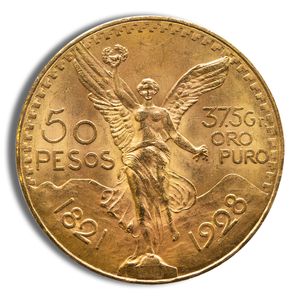
Vintage world gold coins are gold coins struck outside the United States and dated before 1950, from the era when gold still served as everyday money across Europe and Latin America. Our selection of vintage world gold is led by Mexico's 50 Peso Centenario and 20 Peso, France's 20 Francs and its larger 40, 50 and 100 Francs, British sovereigns, and Swiss 20 Francs.
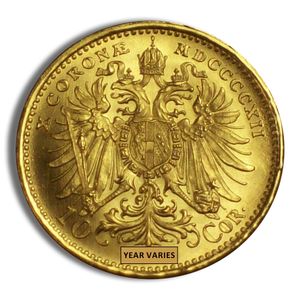
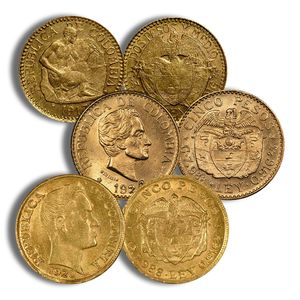
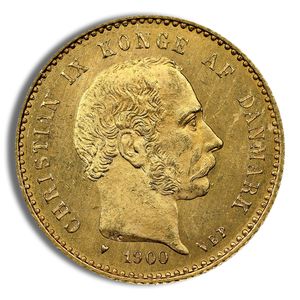
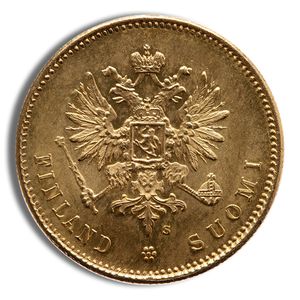
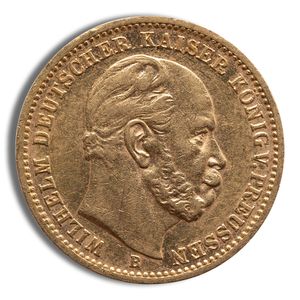
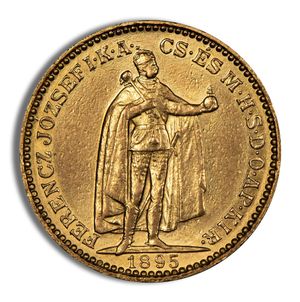
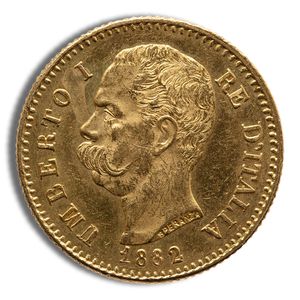
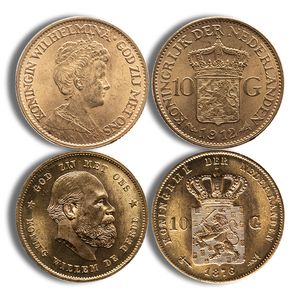
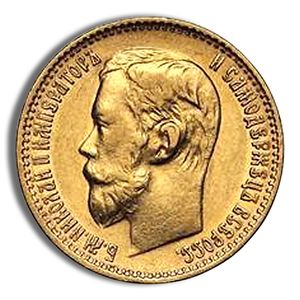
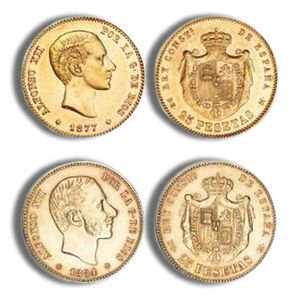
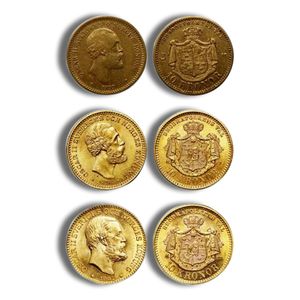
Beyond those core coins you'll find Austrian Coronas, Ducats, Florins and Schillings, Hungarian Korona, German Marks, Imperial Russian Roubles, Danish and Norwegian Kroner, Swedish Kronor, Finnish Markkaa, Italian and Sardinian Lire, and Spanish Pesetas. Smaller groups come from Belgium, the Netherlands, Poland, Colombia, Cuba, Argentina, Uruguay, Monaco, Tunisia, Turkey and South Africa, offered as specific dates or as random year listings in XF, AU and BU condition.
Each listing identifies the coin's country, denomination, era and grade, and every product page shows our bid alongside our ask. That's how we approach historic gold at Bullion Standard: clear descriptions of what you're buying and a transparent view of how the market prices it on both sides of the trade.
What Are Vintage World Gold Coins?
On this page, vintage world gold coins means non-U.S. gold coins dated before 1950. Nearly all were issued as circulating currency under the classical gold standard, when a coin's face value was defined by a fixed amount of gold. That's why a French 20 Francs, an Italian 20 Lire and a Swiss 20 Francs all contain the same 0.1867 oz of gold.
These coins sit between modern bullion and rare numismatics. Their prices track gold closely because gold content is the main driver of value, but they usually carry a modest extra premium for age, design and condition. Compared with a modern 1/4 oz bullion coin, a sovereign or 20 Francs offers a similar amount of gold in a piece that circulated for decades and reflects the history of the country that issued it.
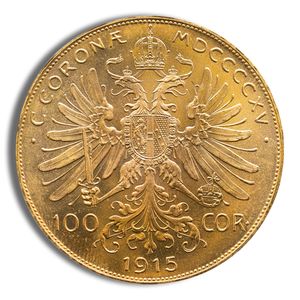
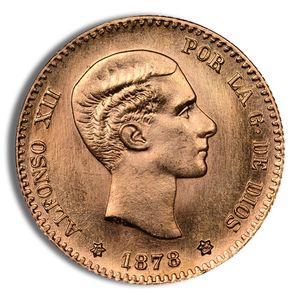
A few coins here are official restrikes, such as the 1915 Austrian 100 Corona and Ducats, the 1908 Hungarian 100 Korona and the 1878 Spanish 10 Pesetas, which were struck later by government mints but carry their original dates. All of the coins on this page are raw rather than in NGC or PCGS holders, so condition is described with standard grade terms like XF, AU and BU, explained further below.
History and Background
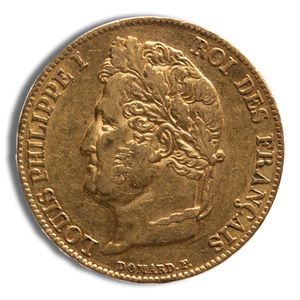
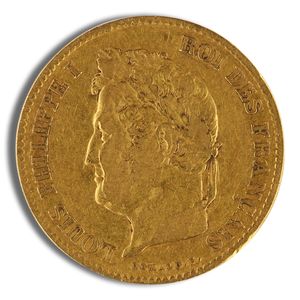
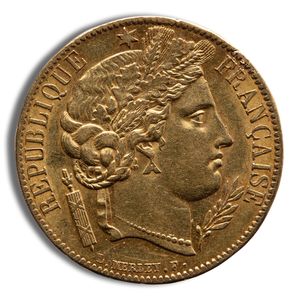
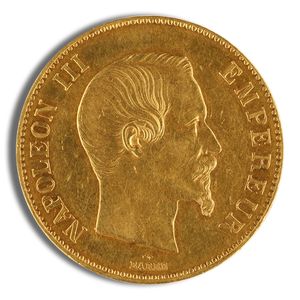
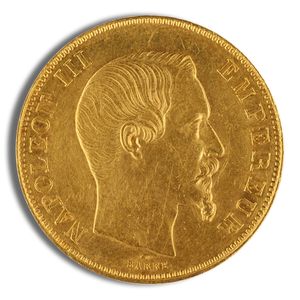
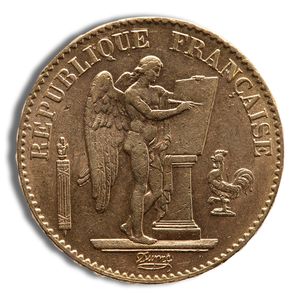
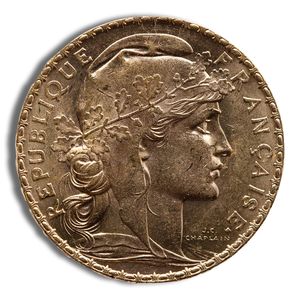
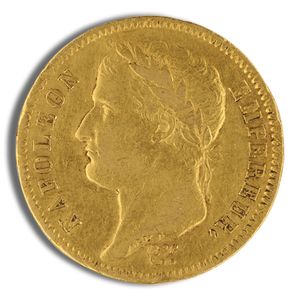
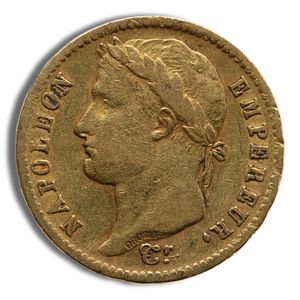
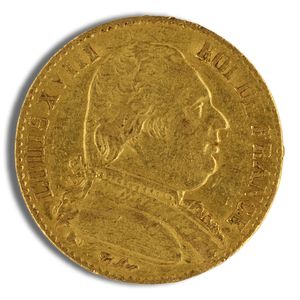
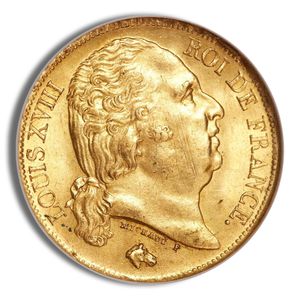
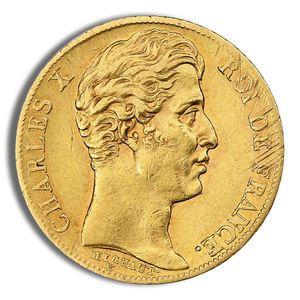
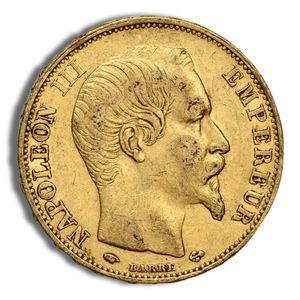
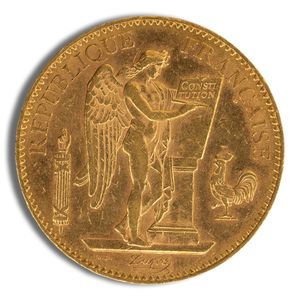
France set much of the template. The Germinal franc of 1803 defined the French currency in fixed amounts of gold and silver, and the 20 Francs coin, often simply called a Napoleon, was struck under one regime after another. Our catalog follows that run from Napoleon I through Louis XVIII, Charles X, Louis Philippe, the Second Republic's Ceres design and Napoleon III, to the Third Republic's Lucky Angel and Rooster designs, along with 40, 50 and 100 Francs pieces from several of those reigns.
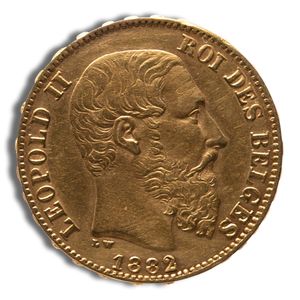
In 1865 France, Belgium, Italy and Switzerland formed the Latin Monetary Union, standardizing gold coins at .900 fineness and common weights. Other issuers adopted the same standard, which is why Austria-Hungary's 8 Florin/20 Francs, Finland's 20 Markkaa, Poland's 1925 20 Zlotych, Tunisia's 20 Francs and Belgium's 20 Francs of Leopold II all match the French coin's gold content. Britain followed its own system, built around the sovereign introduced in 1817 at 22 karat, a standard South Africa later used for its Pond.
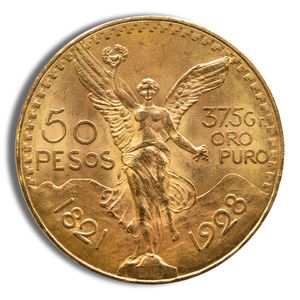
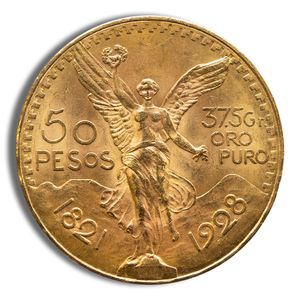
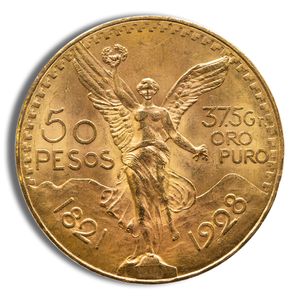
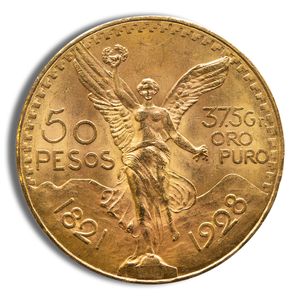
Elsewhere, the German Empire's gold Mark coinage from 1871, the Scandinavian kroner and kronor of the 1870s, and Russia's 1897 currency reform under Sergei Witte all tied national money to gold. In Mexico, the 50 Peso was first struck in 1921 to mark the centennial of independence, earning it the name Centenario. World War I ended gold coin circulation across most of Europe, and the decades that followed saw many coins recalled or melted, leaving the pieces on this page as surviving examples of that monetary era.
Purity, Weight, and Specifications
Most coins in our catalog are .900 fine, meaning 90% gold alloyed mainly with copper for durability. Sovereigns and the South African Pond are .9167 fine, or 22 karat, while Austria's Ducats are .986 fine, reflecting the high-purity ducat tradition used for trade coinage.
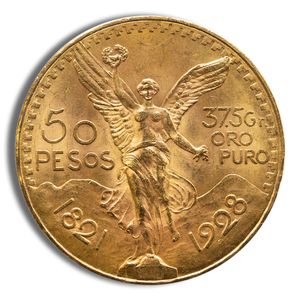
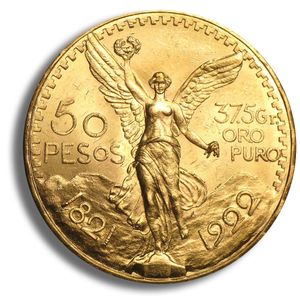
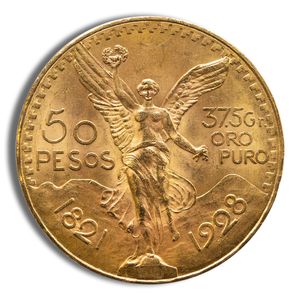
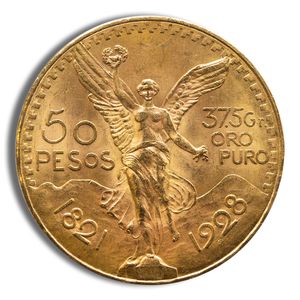
Because these coins were struck to currency standards rather than ounce weights, their gold content comes in precise fractional amounts. The Mexico 50 Peso contains 1.2057 troy oz of gold, the Mexico 20 Peso 0.4823 oz and the 10 Peso 0.2411 oz, while the Austrian 100 Corona contains 0.9802 oz and the 20 Corona 0.1960 oz. The sovereign holds 0.2354 oz, the 20 Francs 0.1867 oz and the 10 Francs 0.0933 oz, and the French 40, 50 and 100 Francs scale up to 0.3734, 0.4667 and 0.9335 oz.
Few of these coins state their fineness or weight on their face, so gold content depends on correctly identifying the type, denomination and issuer. That's why our listings name each coin precisely, so you can compare the gold in a Danish 20 Kroner, a German 20 Mark and a French 20 Francs on equal terms.
Available Brands, Mints, and Product Variations
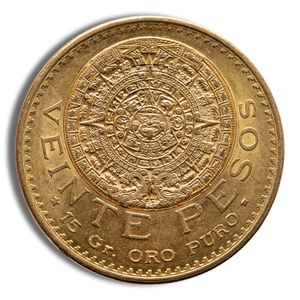
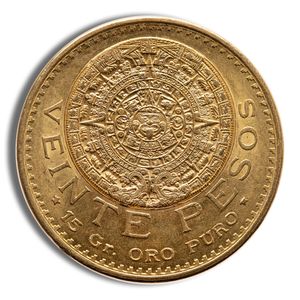
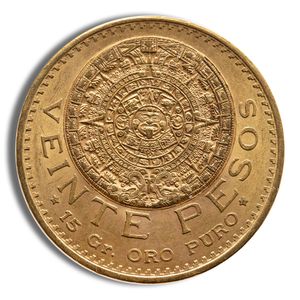
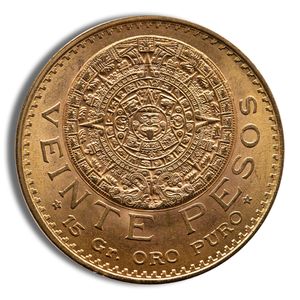
The Casa de Moneda de México supplies the largest group: dated 50 Peso Centenarios from 1921 through 1931 and from 1943 through 1946, 20 Peso coins dated 1917 to 1921, 10 Peso coins from 1907 and 1908, and random year 2 Peso and 50 Peso listings. Many are offered in BU, with AU, VF/XF and cleaned examples for buyers who prefer to pay closer to gold value.
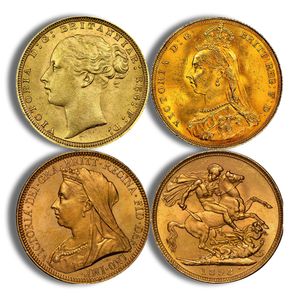
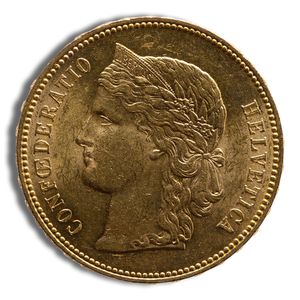
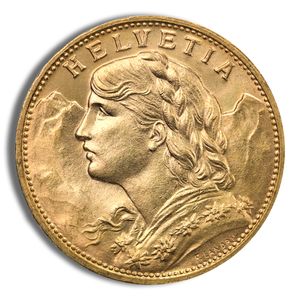
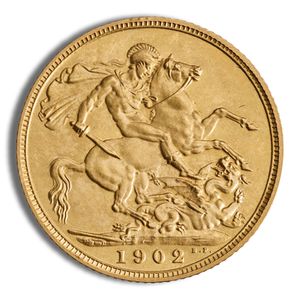
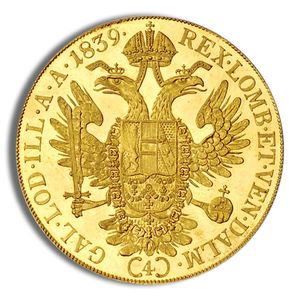
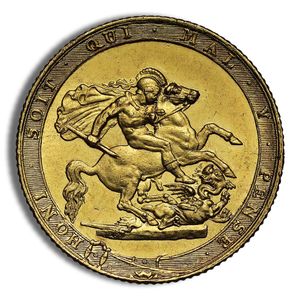
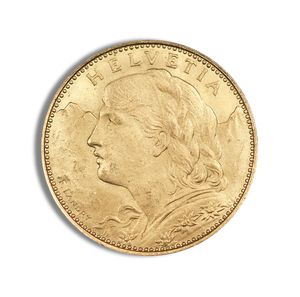
The Monnaie de Paris accounts for the French series, from Napoleon I 20 and 40 Francs through the Angel 50 and 100 Francs of the Third Republic. The Austrian Mint is represented by its 1915 restrikes of the 100 Corona and the 1 and 4 Ducat, along with 10 and 20 Corona, 4 and 8 Florin, and interwar 25 and 100 Schilling coins. The Royal Mint's sovereigns span George III, Queen Victoria and the kings who followed from 1901, and Swiss issues include the Helvetia bust 20 Francs of 1883 to 1896, the Helvetia 20 Francs dated 1897 to 1949 and the 10 Francs dated 1911 to 1922.
Smaller groups come from the Royal Danish Mint, the Swedish Royal Mint, the Norwegian Mint, the Mint of Finland, the Imperial Russian Mint in Saint Petersburg, the Turin Mint for the Kingdom of Sardinia, the Spanish Royal Mint, the Buenos Aires Mint, the Royal Belgian and Royal Dutch mints, the Kremnica Mint, the Mint of Poland and the South African Mint. Cuba's 5 and 10 Peso coins were struck for Cuba by the U.S. Mint, and Monaco's 100 Francs, Turkey's 100 Kurush and Uruguay's 5 Peso round out the selection.
Pricing, Premiums, and Market Factors
Vintage world gold coins are priced from the spot price of gold multiplied by each coin's gold content, plus a premium. Because many types were struck in large numbers for circulation, common dates often trade at modest premiums, especially in circulated grades and random year listings.
Several factors widen that premium. Higher grades, specific dates and earlier types such as Napoleon I 40 Francs or George III sovereigns attract collector interest beyond metal value, while high-volume coins like the Rooster 20 Francs or a random year Mexico 50 Peso stay closer to their gold content. Size matters too, since small pieces like the 10 Francs or 2 Peso carry higher costs per ounce of gold, just as fractional bullion coins do.
Supply of original coins is fixed, so availability depends on what comes back to market through estates, collections and wholesale channels in Europe and Latin America. We show both bid and ask on each product page, so you can see the spread on a 50 Peso or a sovereign before you buy and judge the full cost of ownership rather than the premium alone.
Condition, Packaging, and What to Expect
Every coin on this page is raw, meaning it isn't sealed in a third-party grading holder. Grades are stated as XF (Extremely Fine), AU (About Uncirculated) or BU (Brilliant Uncirculated), and a plus sign, as in XF+ or AU+, indicates a coin at or above that level. Expect light wear on the high points of XF coins, minimal friction on AU coins, and original luster with possible bag marks on BU coins.
These coins circulated or sat in bags and vaults for decades, so contact marks, rim nicks and toning are normal. A few listings are explicitly described as cleaned, or as uncirculated details with a cleaned reverse, and are priced with that in mind. Random year listings ship at our discretion within the stated type and grade, so the exact date and design variety may differ from the photo.
Because these coins predate modern mint packaging, they don't come with boxes, certificates or assay cards. We pack every order to protect coins from contact in transit, and we recommend keeping them in their holders and handling them only by the edges.
Authenticity and Verification
Historic gold coins have long attracted counterfeiters, especially widely traded types like sovereigns and Mexico 50 Pesos, so verification matters. We source from established wholesale channels, and every coin is checked for authenticity, weight and purity before it reaches a customer.
Because these coins were struck to precise published specifications, weight, diameter and thickness make reliable first checks, and design details, lettering and edge reeding are compared against known genuine examples. Gold's high density exposes many fakes, but well-made counterfeits take experience to spot, which is why buying from a dealer with a consistent verification process is so important.
Bullion Standard is a member of the American Numismatic Association and the National Coin and Bullion Association, and an authorized dealer for both PCGS and NGC. If you'd like independent confirmation of a coin's authenticity and grade, it can be submitted to either service for certification.
Liquidity and Resale Considerations
The easiest coins on this page to resell are the ones dealers see most often: the sovereign, the French and Swiss 20 Francs, and the Mexico 50 Peso. Their gold content is widely known, so a dealer can price them quickly against spot, which tends to keep bids close to metal value.
Less common types, such as Finnish Markkaa, Uruguayan Pesos or Monaco 100 Francs, hold just as much real gold for their size but may draw fewer bidders, so their resale price often leans more heavily on melt value. Scarce dates and higher grades can attract collector interest, but that demand varies and shouldn't be assumed.
Condition and originality matter at resale as well. Cleaned, damaged or altered coins are typically bought closer to gold value, while attractive original coins are easier to place. Checking the bid on a product page before you buy shows how the market prices each type today.
Storage and Security
Vintage gold coins are small and dense, so space is rarely the issue. A secure, fire-rated home safe works for modest holdings, while a bank safe deposit box or professional depository vault suits larger collections. Keep an inventory listing each coin's country, denomination, date and grade.
Raw coins need more care than sealed bullion. Store each one in an inert, PVC-free flip, capsule or album, and avoid loose storage where coins can rub together, since contact marks lower grade. Handle coins only by the edges, and never clean them, as cleaning permanently reduces their collector value.
Gold doesn't corrode, but the copper in .900 and .9167 alloys can tone over time, and humidity can damage paper flips and labels. A dry, stable environment with a desiccant such as silica gel keeps both coins and holders in good condition.
Selling and Buyback Options
Bullion Standard runs a two-way market, so the vintage world gold coins you buy here can also be sold back to us. Our purchasing team quotes based on current gold prices and the type and condition of each coin, and payment is issued once the coins arrive and pass verification.
Buyback pricing for historic gold reflects gold content first, then recognizability, condition and current demand. Common types like sovereigns, 20 Francs and 50 Pesos usually receive the most consistent bids, while unusual denominations or cleaned coins may be priced closer to melt.
Selling a mixed group from several countries is straightforward when each coin is clearly identified by type and date. Keeping coins in the holders they arrived in and retaining your purchase records makes identification and verification faster.
Why Buy Vintage World Gold Coins?
Vintage world gold coins let you own gold in the form it took when it was money. A 20 Francs struck under Napoleon III or a sovereign bearing Queen Victoria's portrait carries a defined amount of gold along with a direct link to the monetary history of its country.
They're also practical. Many common types hold roughly a fifth to a quarter of an ounce of gold, a convenient size for buyers who prefer smaller units, and coins struck to shared standards like the Latin Monetary Union's are easy to value across borders. For larger amounts, the Mexico 50 Peso and Austrian 100 Corona deliver about an ounce or more of gold in a single piece.
For collectors, the range is the draw. Assembling French 20 Francs across successive regimes, a selection of European gold from before World War I, or a date run of Mexico 50 Pesos is achievable with coins that are still priced largely on their gold content.
Why Buy from Bullion Standard?
Bullion Standard was founded in San Diego in 2010 on a simple principle: you only get one chance to earn someone's trust in this industry. For historic coins, that means accurate descriptions, honest grading and clear disclosure of restrikes, cleaning and random year terms.
We hold an A+ rating with the Better Business Bureau, belong to the ANA and NCBA, and are an authorized dealer for PCGS and NGC. Every coin is verified for authenticity, weight and purity, and checkout supports Visa, Mastercard, American Express, Discover, PayPal, bank-connected payment through Plaid, wire transfer, paper check and cryptocurrency through BitPay.
Our pricing reflects real-time market conditions, every product page displays the bid/ask spread, and our research tools let you compare products by premium, historical premium and liquidity. Combined with our buyback program, that gives you a full picture of what it costs to buy, hold and eventually sell historic gold.
Get Near-Spot Pricing with Bullion Standard Pro
Bullion Standard Pro gives members access to live, executable wholesale bid and ask pricing across a broad range of precious metals products. Pro does not apply additional dealer markups or dealer spreads to member pricing, so members transact at wholesale market prices and premiums move with real supply and demand.
For buyers of vintage world gold, that wholesale view helps show how coins like sovereigns, 20 Francs and 50 Pesos are priced relative to spot and to each other. Members also see their holdings valued at live wholesale bid prices, giving a realistic picture of liquidation value rather than an estimated retail figure.
Pro also includes market intelligence such as historical premium analysis, premium percentile rankings, spread and liquidity metrics, and buy/sell ratio indicators. For repeat or price-sensitive buyers, it's a more direct and efficient way to buy and sell physical gold.


 (833) 278-4653