Buy Graded Coins (NGC & PCGS) Online
Our catalog of graded coins brings together gold, silver, platinum and palladium coins that have been authenticated, graded and sealed by the two largest third-party grading services, Numismatic Guaranty Company (NGC) and Professional Coin Grading Service (PCGS). You'll find modern American Eagles in MS70 and PF70, Morgan and Peace silver dollars, 5 oz America the Beautiful silver coins, modern commemorative silver dollars and classic pre-1933 U.S. gold from the $1 gold dollar up to the $20 double eagle.
Nearly every coin here was struck by the United States Mint, with a handful of world issues such as the 2023 1 kilo Australian Silver Lunar Rabbit from the Perth Mint in NGC MS70. Sizes run from 1/20 oz fractional gold through 1 oz and 5 oz pieces, and grades range from MS60 classic dollars to perfect 70 grades in Mint State, proof and specimen finishes. Silver makes up the larger share of the selection, with gold close behind.
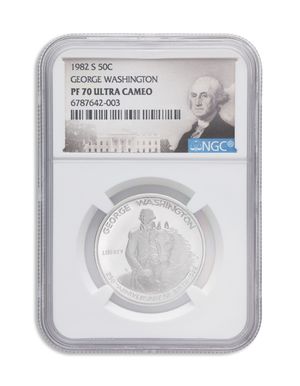
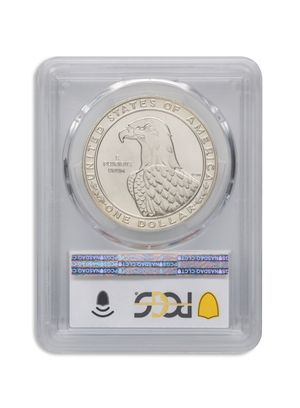
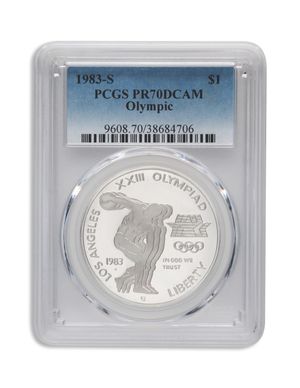
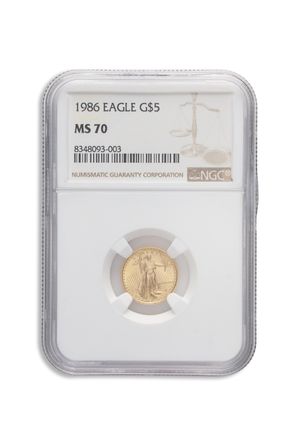
Every coin is sold in its original certification holder, with the grading service, grade, designation and certification number printed on a sealed label. As an authorized dealer for both NGC and PCGS, we price each listing against live market conditions and show its bid/ask spread on the product page, so you can see what a graded coin costs today and what we'd pay to buy it back.
What Are Graded Coins (NGC & PCGS)?
A graded coin is one that's been submitted to an independent grading service, examined by professional graders, assigned a numerical grade and sealed in a tamper-evident plastic holder, often called a slab. Grades follow the 70-point Sheldon scale, where 1 is the lowest identifiable condition and 70 is perfect. Grades from 60 to 70 describe Mint State coins with no wear from circulation, and an MS70 means graders found no post-production imperfections under 5x magnification, while an MS69 may show a minor flaw that's only visible under magnification.
The letters in front of the number describe how the coin was made. MS (Mint State) applies to business strikes and bullion-finish coins, while PF or PR (proof) covers coins struck more than once with polished dies to create mirrored or frosted surfaces. SP (specimen) is used for special collector strikes that are neither standard business strikes nor true proofs, such as the matte-finish 5 oz America the Beautiful coins with the P mint mark and the 2016-W gold centennial coins. NGC writes proof grades as PF and PCGS uses PR, so an NGC PF70 and a PCGS PR70 sit at the same point on the scale.
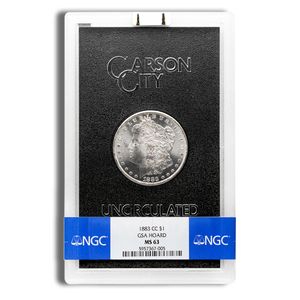
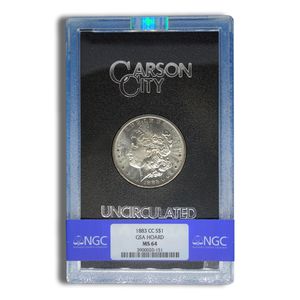
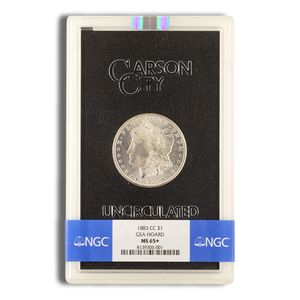
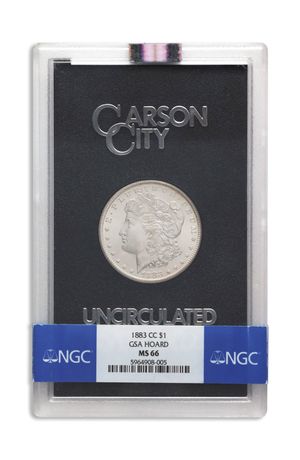
Compared with raw coins, which sell without third-party certification, graded coins give buyer and seller a shared, independent reference for authenticity and condition. That matters most where small grade differences carry real price differences, as with an MS69 versus an MS70 Silver Eagle, and on classic coins like a Liberty Head double eagle or a Carson City Morgan dollar, where condition varies widely from one example to the next.
History and Background
The numbers came before the holders. In 1949 Dr. William Sheldon introduced a 1 to 70 scale for grading early American large cents, and collectors gradually applied it to all U.S. coinage as a more precise alternative to terms like "fine" or "uncirculated." For decades, though, grades were assigned by whoever was selling the coin, and the same piece could be described very differently from one dealer to another.
Third-party grading changed that. PCGS was founded in California in 1986 and NGC followed in 1987 in Sarasota, Florida, and both built the model the market still relies on: coins examined by graders with no stake in the sale, then sealed with a unique certification number. Because a sealed, independently graded coin could be bought and sold without everyone re-examining it, dealers began trading certified coins far more efficiently than raw ones.
The coins on this page trace that history. Pre-1933 gold, struck before the 1933 gold recall ended U.S. gold coinage for circulation, and Morgan dollars minted from 1878 to 1904 and again in 1921 were among the first coins to be widely certified. As the U.S. Mint launched modern programs like the American Eagle in 1986, the American Buffalo gold coin in 2006 and the 5 oz America the Beautiful series in 2010, top-grade modern coins became a major part of the graded market alongside the classics.
Purity, Weight, and Specifications
Grading doesn't change a coin's metal content, so specifications follow the original issue. American Gold Eagles are .9167 fine (22 karat), while the American Gold Buffalo, the American Liberty High Relief coins, the 2009 Ultra High Relief Double Eagle, the 2014-W 3/4 oz gold Kennedy half dollar and the 2016-W gold Mercury dime, Standing Liberty quarter and Walking Liberty half dollar centennial coins are .9999 fine 24 karat gold. Silver Eagles and 5 oz America the Beautiful coins are .999 fine silver, and the platinum and palladium American Eagles in our catalog are .9995 fine.
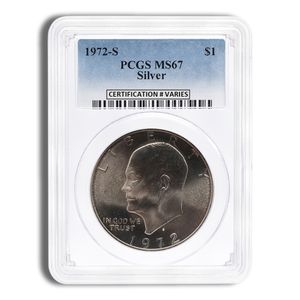
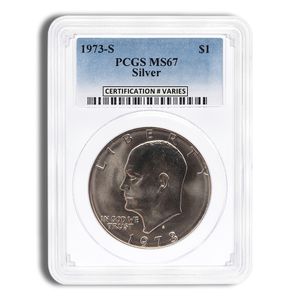
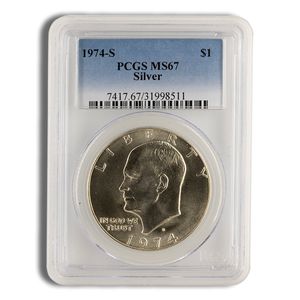
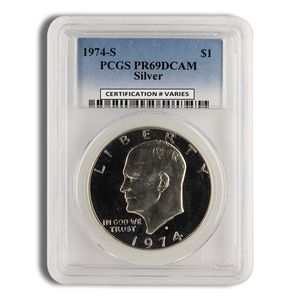
Classic U.S. coinage follows the older 90% standard. Pre-1933 gold coins are .900 gold, and Morgan dollars, Peace dollars and modern commemorative silver dollars are .900 silver. That's why some listings show weights like 0.7734 oz, the actual silver weight of a Morgan or Peace dollar, or 0.9675 oz, 0.4837 oz, 0.2419 oz and 0.1209 oz, the actual gold weights of the $20, $10, $5 and $2.50 gold pieces. A few 40% silver Eisenhower dollars from the San Francisco Mint round out the mix.
Bullion weights are expressed in troy ounces, with one troy ounce equal to 31.1035 grams. On a graded coin, the label typically lists the date, mint mark, denomination or weight, grade and any designation, along with the certification number and a barcode. Mint marks such as P for Philadelphia, D for Denver, S for San Francisco, W for West Point and CC for Carson City appear both on the coin and on the label.
Available Brands, Mints, and Product Variations
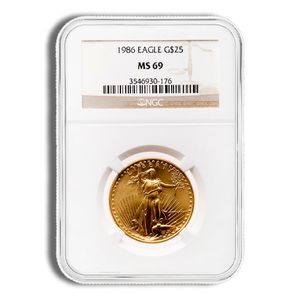
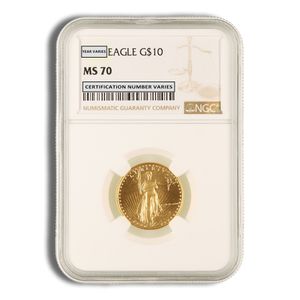
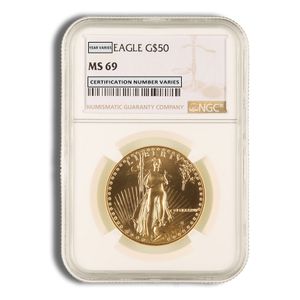
American Eagles make up the largest share of our graded catalog. The selection covers Silver Eagles, West Point Burnished Silver Eagles, and 1 oz and fractional Gold Eagles going back to the program's first year, such as a 1986 1 oz Gold American Eagle in NGC MS69 and a 1991 1/10 oz Gold American Eagle in PCGS MS69. Pre-1933 gold is the next largest group, with Indian Princess Head and Liberty Head gold dollars, Liberty Head quarter eagles, Liberty Head and Indian Head half eagles and eagles, and Liberty Head and Saint-Gaudens double eagles, mostly offered as random year coins in a stated grade.
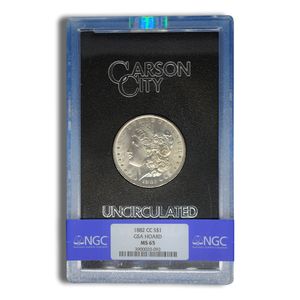
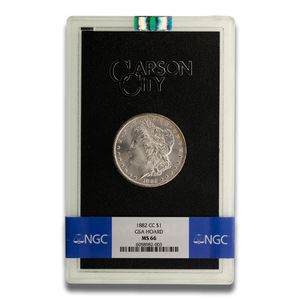
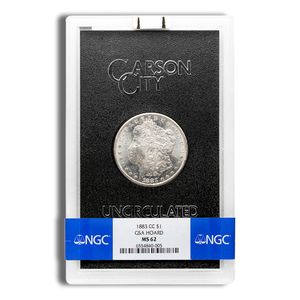
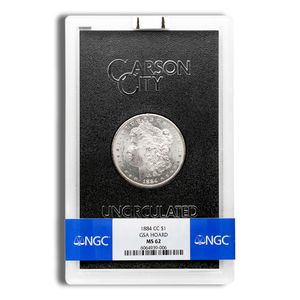
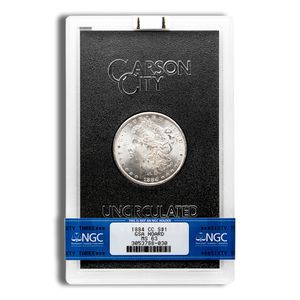
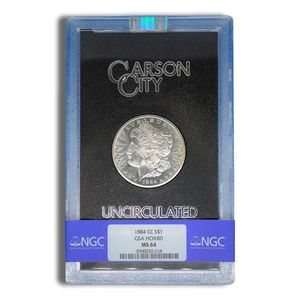
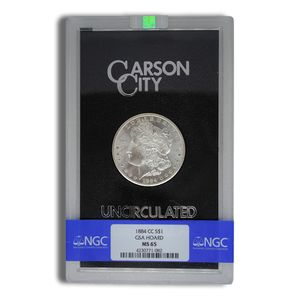
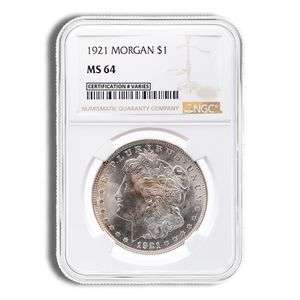
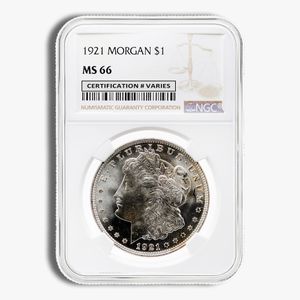
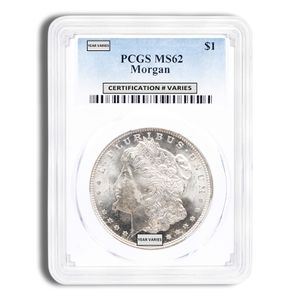
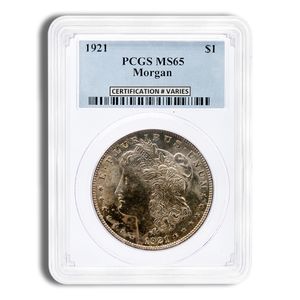
Silver dollars are well represented. Morgan dollars include random year examples graded MS60 to MS62, toned pieces and Carson City dates from the General Services Administration sales of the 1970s, such as the 1882-CC and 1885-CC GSA Morgan dollars in NGC MS62. Peace dollars run from classic random year coins in Mint State grades to the modern 2021-P Peace dollar in NGC MS70, and the 5 oz America the Beautiful series appears both in bullion finish, often with a PL (prooflike) designation, and in the P mint mark specimen finish graded SP70.
Beyond those core series you'll find modern commemorative silver dollars from the 1983-D Los Angeles Olympic dollar to the 2013-P Five Star Generals dollar, the 2001 American Buffalo silver commemorative including NGC black slab examples, proof Gold Buffalos, American Liberty High Relief gold and the 2009 Ultra High Relief Double Eagle. Label designations add another layer: NGC Early Releases (ER) and PCGS First Strike (FS) identify coins received by the grading service within the first 30 days of release, and a few listings are sold with a random label design.
Pricing, Premiums, and Market Factors
A graded coin's price has two layers. The first is melt value, set by the spot price of its metal and its actual metal weight. The second is the numismatic premium, which reflects the grade, the designation, the date and mint mark, and how readily that coin turns up in that grade. On a bullion-oriented coin like an MS69 Silver Eagle the premium over melt is usually modest, while on an MS70 example or a Carson City Morgan dollar it can be a large share of the price.
Grade is the biggest single driver. A one-point step from 69 to 70 can change a modern coin's price sharply, because perfect examples are a smaller share of what gets submitted. Designations and labels matter too: ER and FS labels, prooflike surfaces, natural toning and provenance such as GSA can each carry a different premium than a standard label on the same coin, and the same coin in the same grade may trade at slightly different levels depending on whether NGC or PCGS graded it.
Because graded premiums respond to collector demand as well as to spot, we price each listing in real time and display its bid/ask spread. Seeing the gap between what you pay and what we'd pay back gives you the full cost of owning a graded coin, not just the purchase price, and our two-way market means the same team quoting the sale will quote the buyback.
Condition, Packaging, and What to Expect
Every coin on this page ships in the holder it was graded in. NGC and PCGS both encapsulate coins in clear, inert, sonically sealed holders with the label sealed inside, so the coin can be viewed on both sides but can't be removed without visibly breaking the holder. Once a slab is opened the certification no longer applies, so coins are shipped exactly as encapsulated.
The grade describes the coin, not the plastic. Holders can pick up light scuffs and hairlines from handling and storage, and those marks don't change the grade on the label. On classic silver dollars, natural toning is normal, and listings described as toned feature noticeable color that's part of the coin's appeal rather than a flaw.
Random year listings work differently from date-specific ones. When you order a random year Morgan dollar, Peace dollar or pre-1933 gold piece, the coin type, grading service and grade are fixed, while the date and mint mark come from available inventory. Random label listings follow the same logic: the coin and grade are set, and the label design may vary. Holders are packed to prevent movement in transit, so coins arrive exactly as they were encapsulated.
Authenticity and Verification
Third-party grading is first an authentication process. Before a coin receives a grade, NGC and PCGS examine it for genuineness, checking weight, dimensions and the diagnostic details of the genuine dies, and coins found to be counterfeit or altered aren't encapsulated with a grade. That screening is a major reason buyers prefer certified examples for higher-value pieces like pre-1933 gold and the Ultra High Relief Double Eagle.
Each holder carries a unique certification number and barcode, along with security features built into the holder and label. You can enter the number in the grading service's online verification tool to confirm that the coin's description and grade match the official record, and many records include images. It's also good practice to confirm that the label matches the service's known holder styles and that the edges of the slab show no signs of tampering.
On our side, every product is verified before it reaches a customer, and for graded coins that verification centers on the holder, the label and the certification record. We source certified coins from established wholesalers and distributors as an authorized NGC and PCGS dealer, and we hold them to the same verification standards as everything else in our catalog.
Liquidity and Resale Considerations
NGC and PCGS are the grading services most widely recognized by dealers, auction houses and collectors, which is why our catalog of graded coins focuses on them. A coin in one of their holders can be described and priced from its label alone, which shortens the resale process and removes most disagreement about condition.
Liquidity still varies from coin to coin. Modern issues like MS70 Silver Eagles and the 2021-P Peace dollar trade in a standardized form with frequent comparable sales, while pre-1933 gold and Morgan dollars benefit from long collector familiarity across a wide range of grades. Narrowly collected pieces, such as a single commemorative in one proof grade, may have a smaller pool of buyers.
It's worth remembering that the grade premium is set by collector demand and can widen or narrow on its own, separate from spot. Buyers focused mainly on metal content often lean toward lower-premium MS69 or random year coins, while those focused on condition pay for top grades knowing part of the price reflects the grade rather than the metal.
Storage and Security
Slabs protect coins from fingerprints, handling and much of the environment, but they aren't a substitute for secure storage. Keep graded coins in a home safe, a bank safe deposit box or a professional depository, and store holders upright in slab boxes sized for them so they don't rub against one another. Oversized holders for 5 oz America the Beautiful coins and the 1 kilo Lunar Rabbit need storage boxes made for that larger format.
Avoid heat, humidity and direct sunlight, and keep holders away from PVC plastics and household chemical fumes. Holders are sealed but not airtight vaults, so silver coins can still tone slowly over the years, which is a normal process and doesn't alter what's printed on the label.
Keep a written or digital record of each coin's grading service, certification number and purchase details. That record makes insurance documentation simpler and lets you verify each coin in seconds if you decide to sell.
Selling and Buyback Options
Selling a graded coin starts with the label. Because the grading service, grade and certification number are already established, our purchasing team can quote from those details and confirm the record when the coin arrives. Send coins in their original, unopened holders, since a cracked or opened slab no longer carries its certification.
Buyback pricing reflects the same factors that shape retail pricing: the spot price, the grade, the designation and label, the condition of the holder and current wholesale demand for that specific coin. Top-grade modern coins and recognizable classic types tend to draw the most consistent bids, while unusual labels or narrowly collected issues may be priced more conservatively.
Our two-way market is designed so you can see buyback pricing before you buy, through the bid/ask spread shown on each product page. When you're ready to sell, our team handles the quote, the shipping instructions and the payment in a streamlined process, with each coin checked against its certification record on arrival.
Why Buy Graded Coins (NGC & PCGS)?
The main reason is confidence. A coin authenticated and graded by NGC or PCGS comes with an independent opinion of genuineness and condition that's recognized across the market, which removes much of the guesswork from buying gold and silver coins whose condition affects their price.
Certification also makes comparison straightforward. With a standard grade, designation and certification number, you can weigh an MS69 against an MS70, an NGC coin against a PCGS coin, or a random year Morgan dollar against a specific Carson City date on equal terms. Both services offer collector-focused labels and designations as well, so you can choose between plain graded bullion coins and distinctive pieces for a collection.
Graded coins also combine metal content with collectibility. Government-issued coins like the American Gold Eagle and the Morgan dollar carry legal tender status and broad recognition, and the holder protects them through storage and transfer. For many buyers, that mix of precious metal, protection and standardized documentation is what sets graded coins apart from raw coins and bars.
Why Buy from Bullion Standard?
Bullion Standard is a U.S. precious metals dealer founded in 2010 and headquartered in San Diego, California, and we run the business on the idea that you only get one chance to earn someone's trust. We're an authorized dealer for both NGC and PCGS, a member of the American Numismatic Association and the National Coin and Bullion Association, and we hold an A+ rating with the Better Business Bureau.
Our pricing reflects real-time market conditions, and each product page shows the bid/ask spread so you can see both sides of the transaction. Products are sourced from reputable mints, wholesalers and distributors and verified before they ship, and checkout supports Visa, Mastercard, American Express, Discover, PayPal, bank-connected payments through Plaid, wire transfer, paper check and cryptocurrency through BitPay.
Beyond the transaction, we offer product research tools that compare premiums, historical premiums, spreads and liquidity across our catalog, along with educational resources that explain how products are priced. The aim is a marketplace where decisions rest on transparent data rather than sales pressure.
Get Near-Spot Pricing with Bullion Standard Pro
Bullion Standard Pro gives members access to live, executable wholesale bid and ask pricing across a broad range of precious metals products. Instead of indicative quotes, members see the prices products are actually trading at in the wholesale market, and Pro doesn't add a dealer markup or dealer spread to member pricing.
That structure is especially useful for graded coins, where premiums vary so much by grade, label and series. Where a coin is available through Pro, members can watch its wholesale bid and ask move over time and transact at prices that reflect real supply and demand rather than a fixed retail markup. Bullion-oriented coins with smaller grade premiums come closest to near-spot execution, while top-grade and classic coins carry whatever grade premium the wholesale market assigns.
Members also get real-time portfolio valuation based on live wholesale bid prices, historical premium analysis, spread and liquidity metrics, and wholesale market activity data. For repeat or price-sensitive buyers putting together a collection of graded coins, it offers a level of pricing visibility that's rare in the physical precious metals market.


 (833) 278-4653