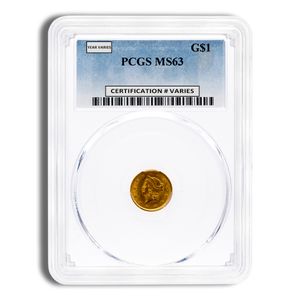
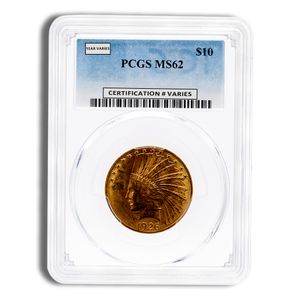
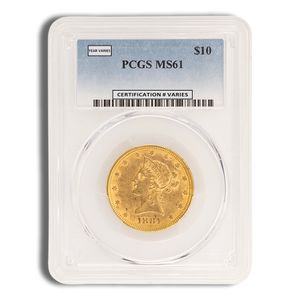
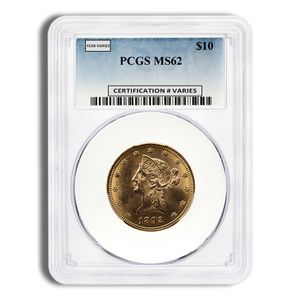
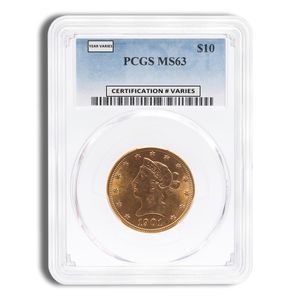
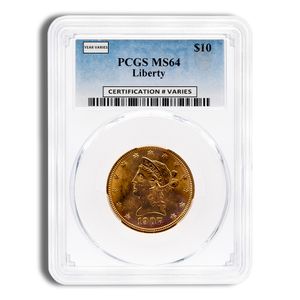
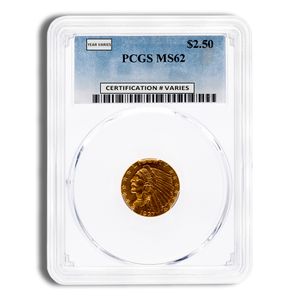
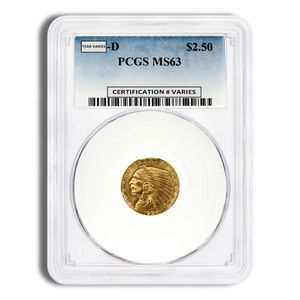
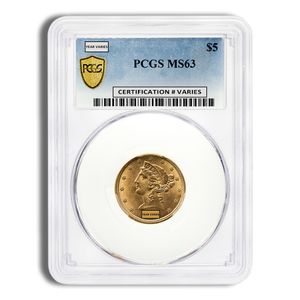
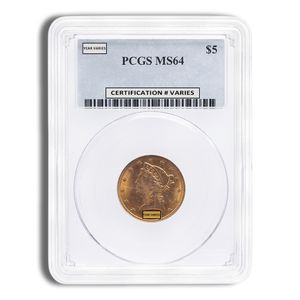
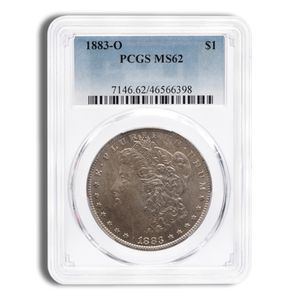
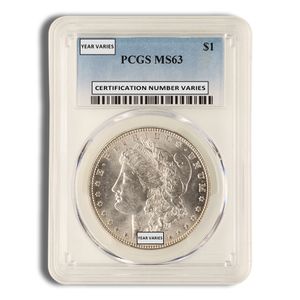
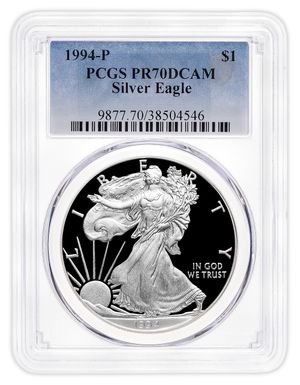
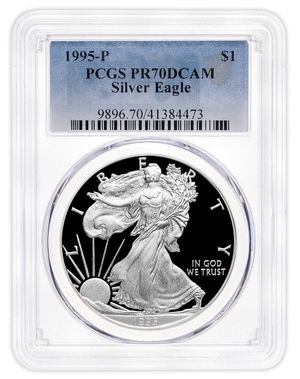
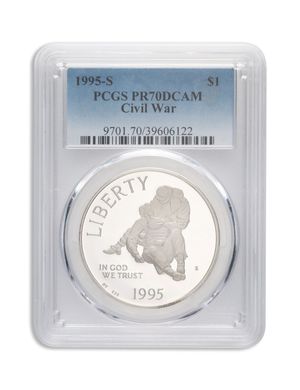
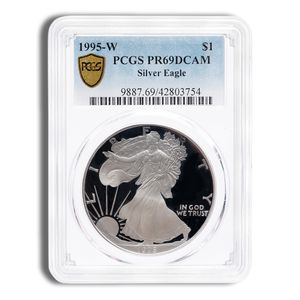
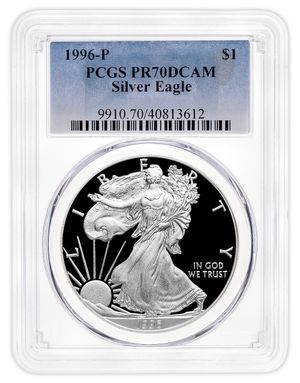
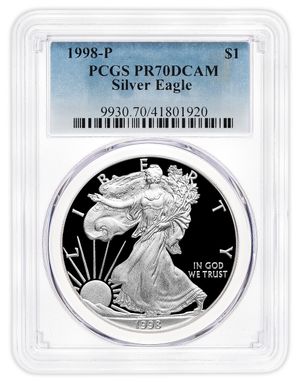
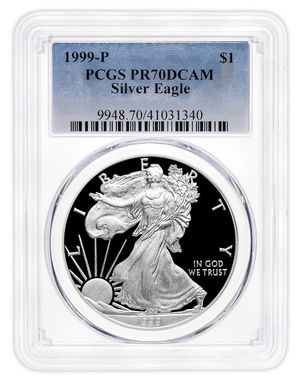
Buy PCGS Graded Coins Online
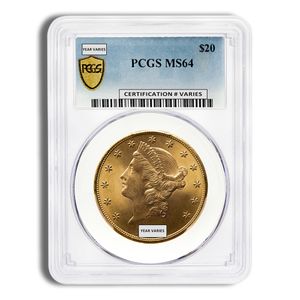
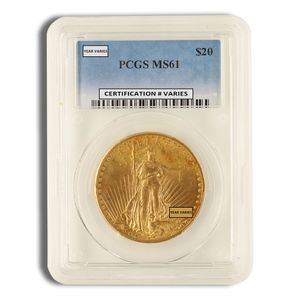
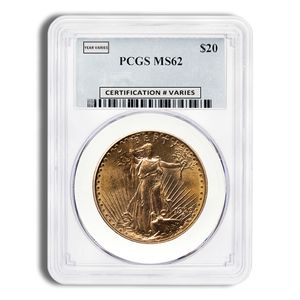
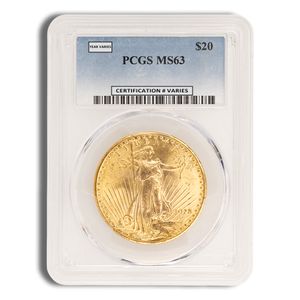
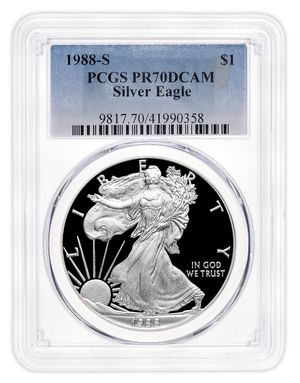
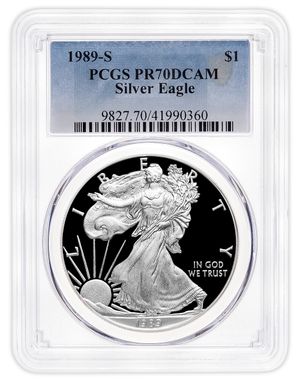
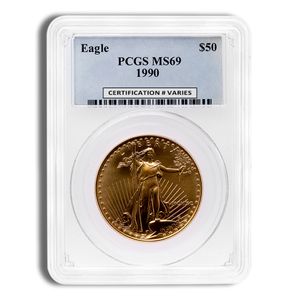
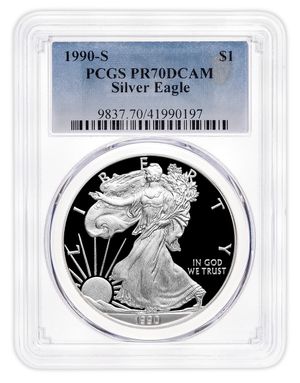
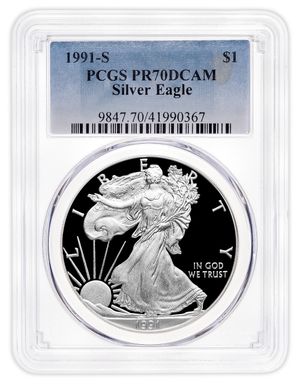
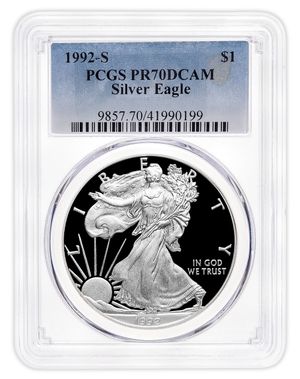
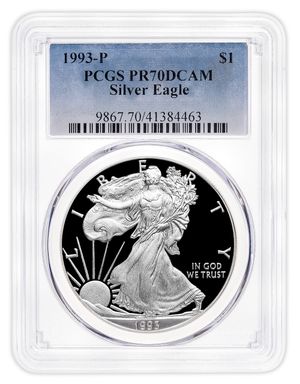
PCGS coins have been authenticated, graded and sealed in a protective holder by the Professional Coin Grading Service, and our catalog brings together PCGS certified silver, gold, platinum and palladium coins struck by the U.S. Mint. You'll find American Silver and Gold Eagles in MS69 and MS70, pre-1933 gold from $1 gold dollars to $20 double eagles, Morgan and Peace silver dollars, modern commemoratives and 5 oz America the Beautiful silver coins.
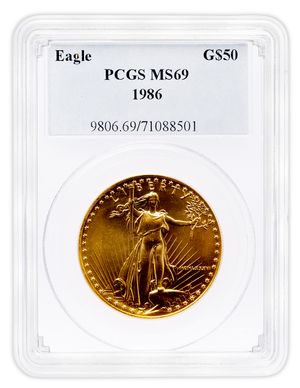
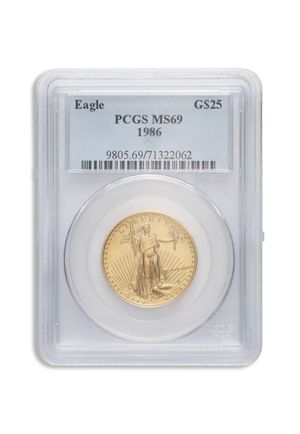
Many listings carry PCGS designations that matter to collectors, including First Strike, prooflike and toned, alongside proof coins graded PR69 and PR70 and burnished specimens graded SP69 and SP70. Some are specific dated coins, such as the 1986 1 oz Gold American Eagle in MS69 or the 2009 Ultra High Relief Double Eagle in MS70, while others are random year listings where we select the date and you receive the stated grade.
Each product page shows live pricing and the current bid/ask spread, so you can see both what a PCGS coin costs and what it brings when you sell. With certified coins, where grade drives much of the price, that visibility makes it far easier to compare one grade against the next.
What Are PCGS Graded Coins?
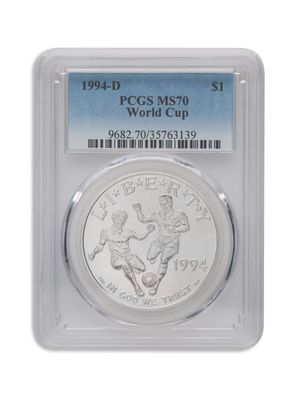
A PCGS graded coin has been examined by the Professional Coin Grading Service, a third-party grading company founded in 1986 and headquartered in Santa Ana, California. Its graders authenticate the coin, assign a numeric grade on the Sheldon scale, note any qualifying designations and seal it in a clear, tamper-evident holder. The label records the coin's date, mint mark, denomination, grade and a unique certification number.
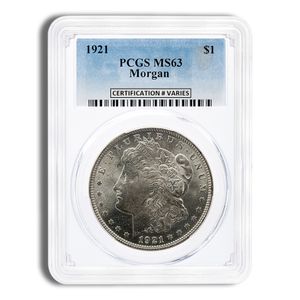
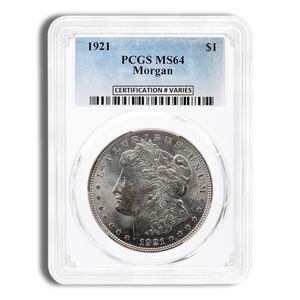
The difference between a PCGS coin and a raw coin is independent assessment. A raw 1921 Morgan dollar's condition is a matter of opinion between buyer and seller, while a PCGS MS63 example has a documented grade that dealers and collectors can price consistently. Certification also protects the coin physically, since the holder keeps it away from fingers, moisture and contact with other coins.
Buyers choose PCGS coins for different reasons. Collectors building sets or chasing top grades want MS70 and PR70 examples, buyers of pre-1933 gold want authentication without having to judge the coin themselves, and others simply prefer the confidence of a standardized grade when buying online.
History and Background
Before third-party grading, a coin's grade was largely set by whoever was selling it, and the same coin could be called mint state by one dealer and about uncirculated by another. PCGS was founded in 1986 by a group of dealers that included David Hall, with the goal of bringing a consistent, independent standard to the market. Coins were graded by multiple experts and sealed in holders so the grade traveled with the coin.
The grades themselves come from the Sheldon scale, a 1 to 70 system introduced by William Sheldon in 1949 to describe early American large cents. The hobby adopted it broadly, and PCGS applied it across American coinage with standardized definitions for each grade. Over time the company added designations for strike quality, surface and release timing, along with a published population report and online certification lookup.
Modern bullion programs created a second wave of demand. The U.S. Mint launched both the American Gold Eagle and the American Silver Eagle in 1986, and collectors soon began submitting them in volume in pursuit of perfect MS70 grades. Today modern issues make up the largest share of the PCGS coins in our catalog, alongside classic Morgan and Peace dollars and pre-1933 gold.
Purity, Weight, and Specifications
A PCGS holder doesn't change a coin's metal content, so specifications follow the original issue. American Silver Eagles contain one troy ounce of .999 fine silver, American Gold Eagles are 22 karat at .9167 fine, and the American Gold Buffalo, the American Liberty High Relief and the 2009 Ultra High Relief Double Eagle are 24 karat gold at .9999 fine. The platinum and palladium coins in our catalog are .9995 fine.
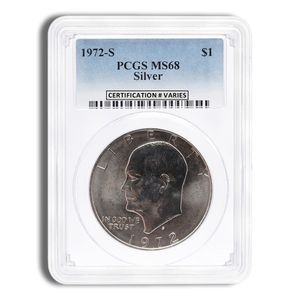
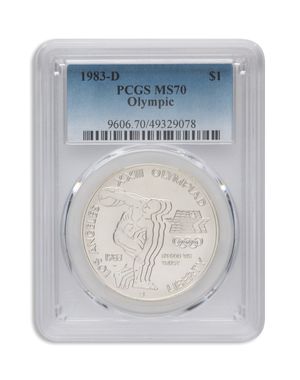
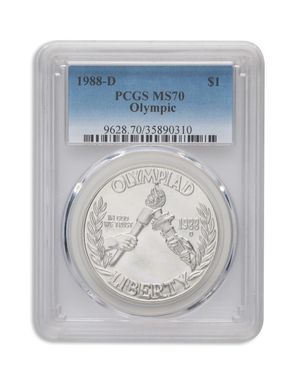
Classic American coinage uses the older .900 standard. Morgan and Peace dollars each contain 0.7734 troy ounces of silver, and pre-1933 gold ranges from 0.0484 oz in a gold dollar to 0.9675 oz in a $20 double eagle. Modern commemorative silver dollars such as the 1983 Los Angeles Olympic, 1994 World Cup and 2006 Old San Francisco Mint issues are also .900 fine, while the S-mint silver Eisenhower dollars are 40% silver with 0.316 oz of silver each.
The 2016-W gold centennial coins follow their own specifications, with the Mercury dime containing 1/10 oz, the Standing Liberty quarter 1/4 oz and the Walking Liberty half dollar 1/2 oz of .9999 fine gold. The 2014-W JFK half dollar gold coin holds 3/4 oz of .9999 gold, and the 5 oz America the Beautiful coins are .999 fine silver. On most modern issues the weight and fineness are struck into the coin itself, while the PCGS label adds the grade and certification details.
Available Brands, Mints, and Product Variations
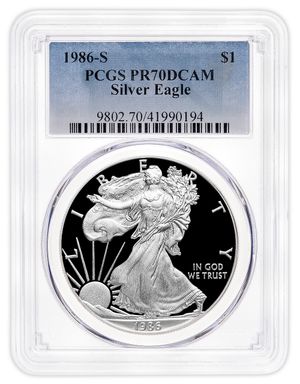
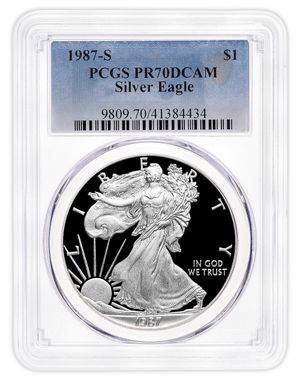
Nearly every PCGS coin in our catalog comes from the U.S. Mint, with American Eagles forming the largest group. That includes Silver Eagles such as the 1996 in MS70 and the 2005 in MS70 First Strike, burnished 2016-W Silver Eagles graded SP70, and early Gold Eagles like the 1986 1 oz and the 1990 1/2 oz, both in MS69. Proof Gold Buffalos from 2009-W, 2016-W and 2022-W in PR70 First Strike sit alongside American Liberty High Relief gold coins from 2015, 2017 and 2019.
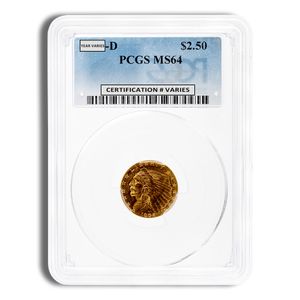
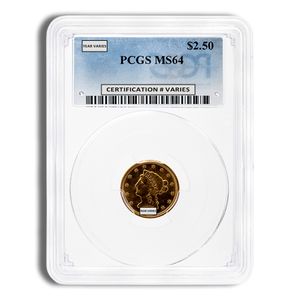
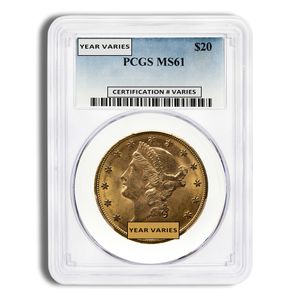
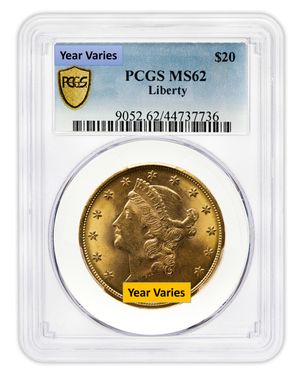
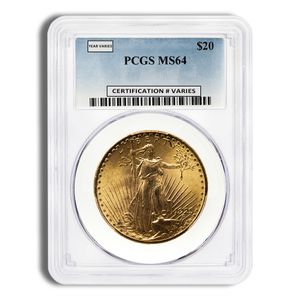
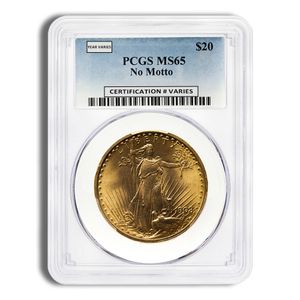
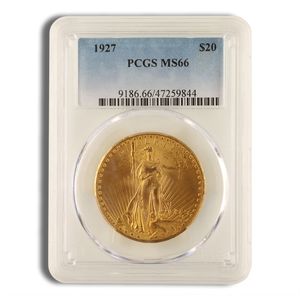
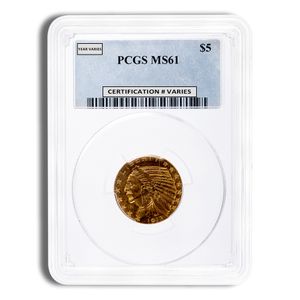
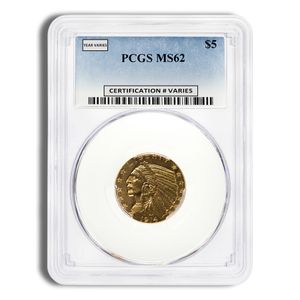
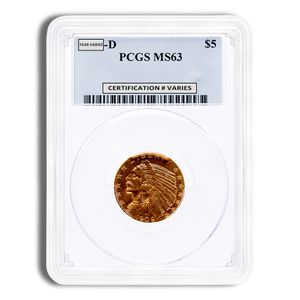
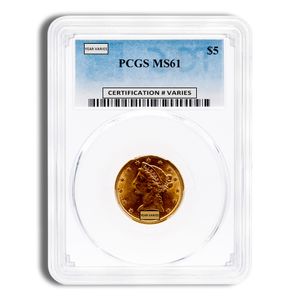
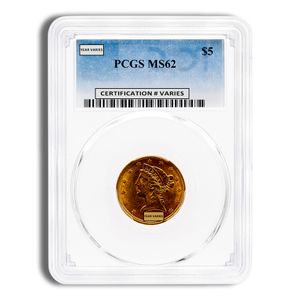
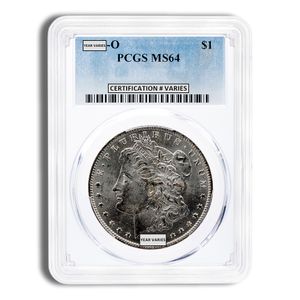
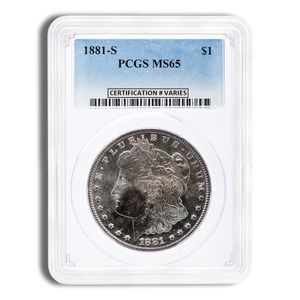
Classic coinage is well represented. Pre-1933 gold covers Liberty and Indian Princess gold dollars, Liberty quarter eagles, Liberty and Indian half eagles and eagles, and Liberty and Saint-Gaudens double eagles, mostly as random year listings in mint state grades. Morgan dollars appear from MS60 through MS67, including toned examples and 1921 coins, while Peace dollars range from MS60 to MS64 with toned options.
Rounding out the selection are 5 oz America the Beautiful silver coins graded MS69PL, such as Grand Canyon, Hot Springs, Mount Hood, Chickasaw, Gettysburg and Glacier, and modern silver commemoratives including the 1992 White House, 1998 Black Patriots and 2001 Silver Buffalo dollars. You'll also find S-mint Eisenhower dollars from 1972 through 1974, the 2016-W gold Mercury dime, Standing Liberty quarter and Walking Liberty half, and a smaller group of PCGS graded platinum and palladium coins.
Pricing, Premiums, and Market Factors
PCGS coins are priced in two layers: the metal content, which moves with spot, and the numismatic premium tied to grade, designation and scarcity. For modern bullion issues in MS69, metal value usually makes up most of the price, while for an MS70 First Strike coin or a key date the grade premium can outweigh the metal entirely.
Small steps in grade can mean large differences in price. The gap between MS69 and MS70 on a modern Eagle, or between MS63 and MS65 on a Morgan dollar, reflects how much harder the higher grade is to achieve and how much collectors will pay for it. Designations such as First Strike, prooflike and toned add their own premium, and demand for specific dates like the 1996 Silver Eagle or the 1986 Gold Eagle shifts prices independently of the metals market.
Because certified coin pricing is less standardized than bullion pricing, transparency matters even more here. We display the live ask and bid on each product page, so you can see the spread on a specific PCGS coin before buying and compare how tightly different grades and series trade.
Condition, Packaging, and What to Expect
Every coin on this page arrives in a sealed PCGS holder, and the grade on the label is the grade you receive. The holder is meant to stay sealed, since opening it voids the certification, so coins should be kept in the slab as delivered. Light scuffs on the outside of the plastic are common and don't affect the coin inside.
Random year listings, such as Peace dollars in MS60 to MS62 or $1 gold dollars in MS61, mean we select the date from available inventory at the stated grade, so your coin's date and appearance can differ from the photo. Toned listings vary the most, because natural toning is unique to each coin, and photos for these listings are representative rather than of the exact piece.
PCGS label styles have changed over the years, and some listings, like the 2014-W JFK half dollar gold coin, are sold with a random label. Unless a listing names a particular label or holder generation, expect the grade and designation shown in the title, with label design depending on when the coin was certified.
Authenticity and Verification
Authentication is the first thing PCGS does with any submission. Its experts examine weight, dimensions, design details and surfaces to confirm a coin is genuine before it's graded, and coins that fail that review aren't encapsulated with a grade.
Each PCGS holder carries a unique certification number and barcode, and entering that number in PCGS's online certification verification tool confirms the coin's date, denomination and grade. Labels also include a hologram and other security features that make counterfeit holders easier to spot, so checking the certification number against the coin in hand is a simple step worth taking.
We're an authorized PCGS dealer and a member of the American Numismatic Association, and we source certified coins from established wholesalers and distributors. Every coin is inspected before it ships so that the coin and its holder match the listing you ordered.
Liquidity and Resale Considerations
PCGS holders are recognized by dealers, auction houses and collectors across the country, and that recognition lets a PCGS coin be priced from its grade without being examined in person. Compared with a raw coin of similar quality, that makes selling considerably simpler.
Liquidity still varies within certified coins. Common PCGS issues, such as MS69 and MS70 Silver Eagles or mid-grade Morgan dollars, have active markets and fairly consistent pricing. Narrower items, like specific toned coins, high grade commemoratives or First Strike proof gold, depend more on collector demand and can take longer to match with a buyer at a given price.
Grade premiums can also change independently of metal prices. Comparing the bid on our product pages with the ask gives a realistic picture of how a particular PCGS coin trades today, and it's worth checking before you buy rather than after.
Storage and Security
PCGS holders are built for long-term storage, but they still benefit from care. Store slabs upright in purpose-made slab boxes away from heat, humidity and direct sunlight, and avoid stacking them loosely where the plastic can scratch or crack.
Certified coins take up more space than bullion of the same weight, so plan storage around the holder rather than the coin. A fire-rated home safe works for smaller collections, while bank safe deposit boxes or a professional depository suit larger or higher priced holdings. Keeping a separate record of each certification number makes insurance documentation and inventory tracking much easier.
Never remove a coin from its PCGS holder for cleaning or inspection. Cleaning damages surfaces permanently, and once the coin leaves the slab it loses its certification and would need to be resubmitted to be graded again.
Selling and Buyback Options
PCGS coins can be sold back to us through the same two-way market where you buy them. Product pages show the current bid alongside the ask, and our purchasing team handles the sale from price confirmation through verification and payment.
Buyback pricing on certified coins depends on the coin, its grade and designation, and current demand. Widely traded issues like PCGS MS70 Silver Eagles or MS63 Morgan dollars tend to have the most consistent bids, while specialized items are priced on recent market activity for that coin and grade. Bids on gold, silver and platinum issues also move with spot.
The holder itself matters when selling. Coins in intact PCGS slabs with clean, undamaged labels are the simplest to price, while a cracked holder or damaged label may need reholdering before the coin can be valued at its full grade.
Why Buy PCGS Graded Coins?
The strongest case is certainty. A PCGS coin comes with independent authentication and a grade on a widely used standard, which matters most for pre-1933 gold, classic silver dollars and other coins where condition and authenticity are hard to judge from a photo.
Recognizability is the second reason. Pairing government-issued coinage from the U.S. Mint with a grading service known throughout the American market gives buyers and sellers a common reference point. PCGS designations like First Strike and prooflike add detail that helps collectors find exactly the coin they want.
Protection and collectibility round it out. The holder shields the coin from handling and environmental damage, and consistent grading makes it practical to build sets by grade, date or series, from Morgan dollars to the American Liberty High Relief gold coins.
Why Buy from Bullion Standard?
Bullion Standard was founded in 2010 and is headquartered in San Diego, California, and we've grown from a local operation into a national online marketplace by putting pricing integrity first. We believe you only get one chance to earn a customer's trust, and that belief shapes how we source, price and support every order.
As an authorized dealer for both PCGS and NGC, we carry certified coins through established channels, and every product is verified before it reaches you. We hold an A+ rating with the Better Business Bureau and are members of the American Numismatic Association and the National Coin and Bullion Association.
Payment options include Visa, Mastercard, American Express, Discover, PayPal, bank-connected payments through Plaid, wire transfer, paper check and cryptocurrency through BitPay. Because we buy as well as sell, the bid on each product page reflects a real two-way market, and our research tools let you compare premiums and spreads across products using objective data.
Get Near-Spot Pricing with Bullion Standard Pro
Bullion Standard Pro gives members access to live, executable wholesale bid and ask pricing across a broad range of precious metals products, with no additional dealer markup or dealer spread applied to member pricing. Premiums and spreads move with real wholesale supply and demand rather than a fixed retail structure.
Members also see their holdings valued at live wholesale bid prices, which gives a more realistic picture of what a portfolio would bring today than an estimated retail figure. Market intelligence tools, including historical premium analysis, spread analysis, liquidity metrics and buy/sell ratio indicators, show how individual products are priced and traded over time.
For repeat buyers and anyone sensitive to cost, that structure brings the same pricing discipline to certified purchases that it brings to bullion. If PCGS coins are a regular part of what you buy, Bullion Standard Pro is the most direct way to see how they trade at the wholesale level.


 (833) 278-4653